 Pin it
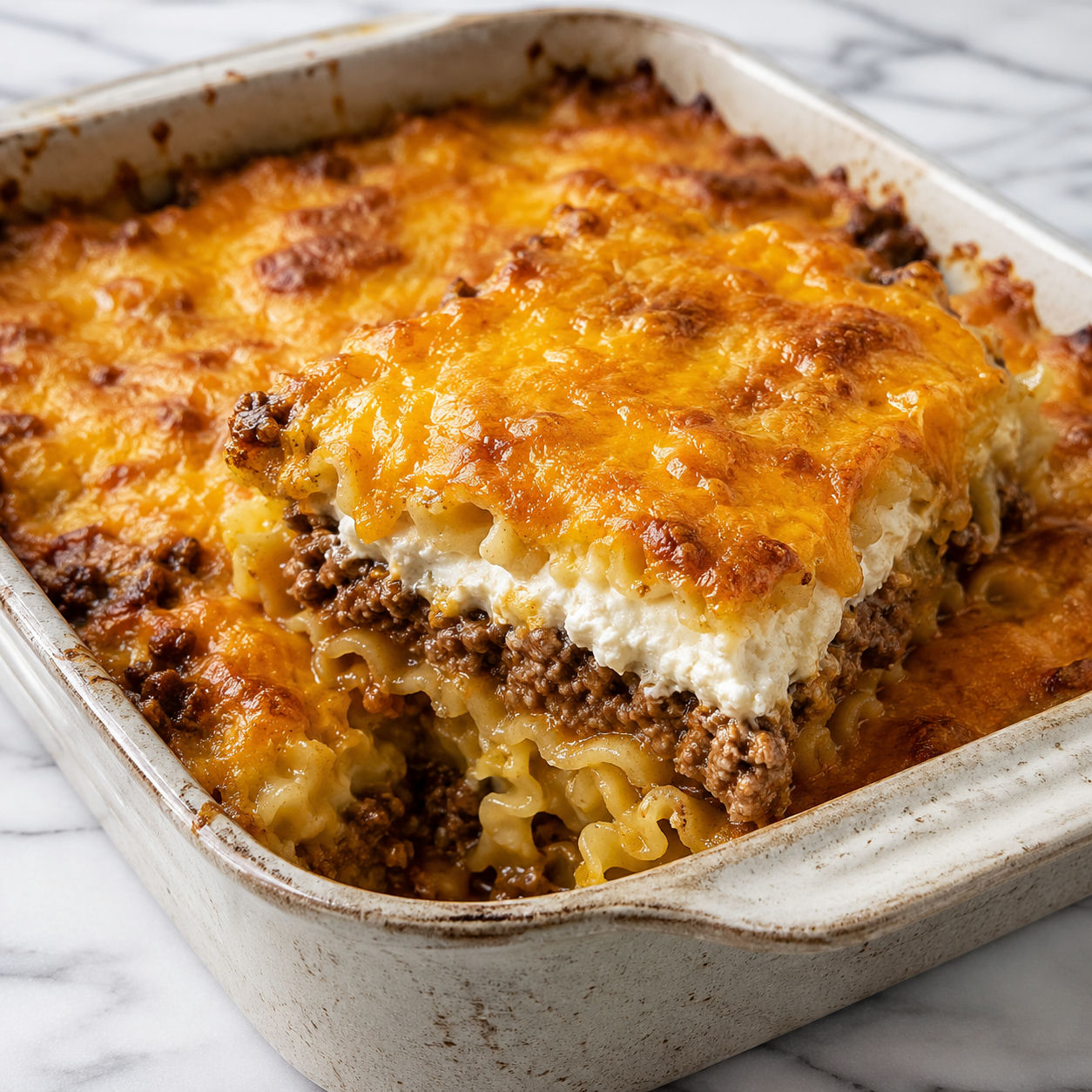
The name sounds like a joke until you taste it. This casserole has been at the center of more potluck tables and rainy-Tuesday dinners in our house than I can count, and the reaction is always the same: people want to know what is in it.
The secret is a hidden layer of cream cheese, sour cream, and cottage cheese tucked between the beef and the noodles. It melts into something rich and velvety during baking that you cannot quite place but cannot stop eating. The top crisps up golden, the inside stays creamy, and the whole thing comes together in under an hour with ingredients you probably already have.
This feeds six without fuss. Make it on Sunday and you have lunch covered for two more days.
The short lineup behind the big flavor
Every ingredient here is doing real work. The cream cheese needs to be fully softened before mixing, so pull it from the fridge about 30 minutes before you start cooking.
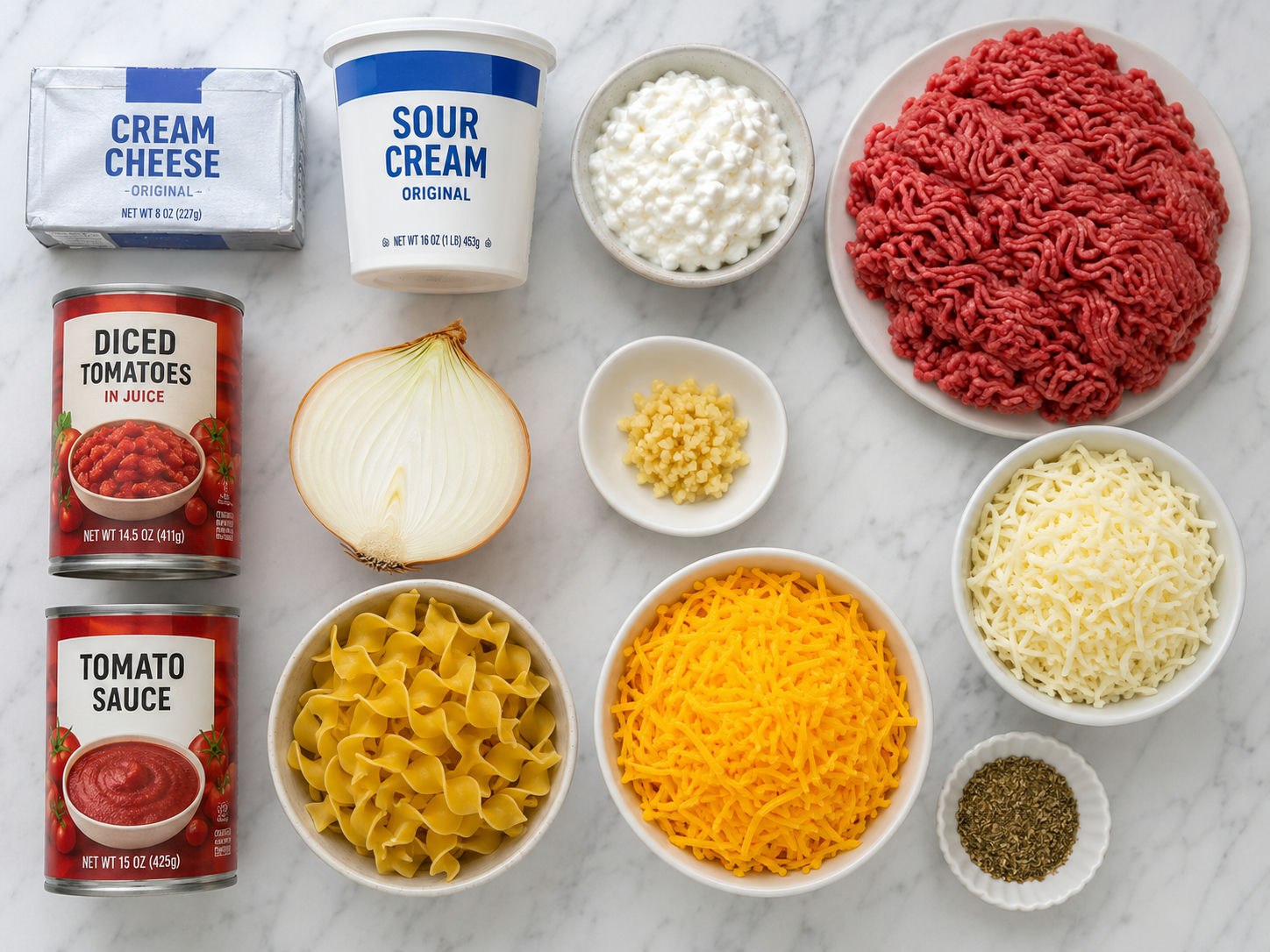
- Ground beef. The backbone of the dish. 80/20 gives you enough fat to stay juicy and carry the seasoning without leaving the pan greasy.
- Wide egg noodles. Flat, sturdy, and perfect for layering. They hold up to the cream filling without turning soft during baking.
- Cream cheese. The hidden element. It melts into the creamy middle layer and is what makes people lean in and ask what is in this.
- Sour cream. Adds a gentle tang and lightens the cream cheese so the filling does not feel too heavy.
- Cottage cheese. Blends into the layer and gives it body. It breaks down during baking into something smooth and barely noticeable in texture.
- Diced tomatoes and tomato sauce. Bring acidity and body to the beef so it is a proper saucy ragu rather than dry browned meat.
- Sharp cheddar and mozzarella. Cheddar for flavor, mozzarella for pull and melt. Together they form a crispy-edged, stretchy lid over the whole casserole.
Building the layers, step by step
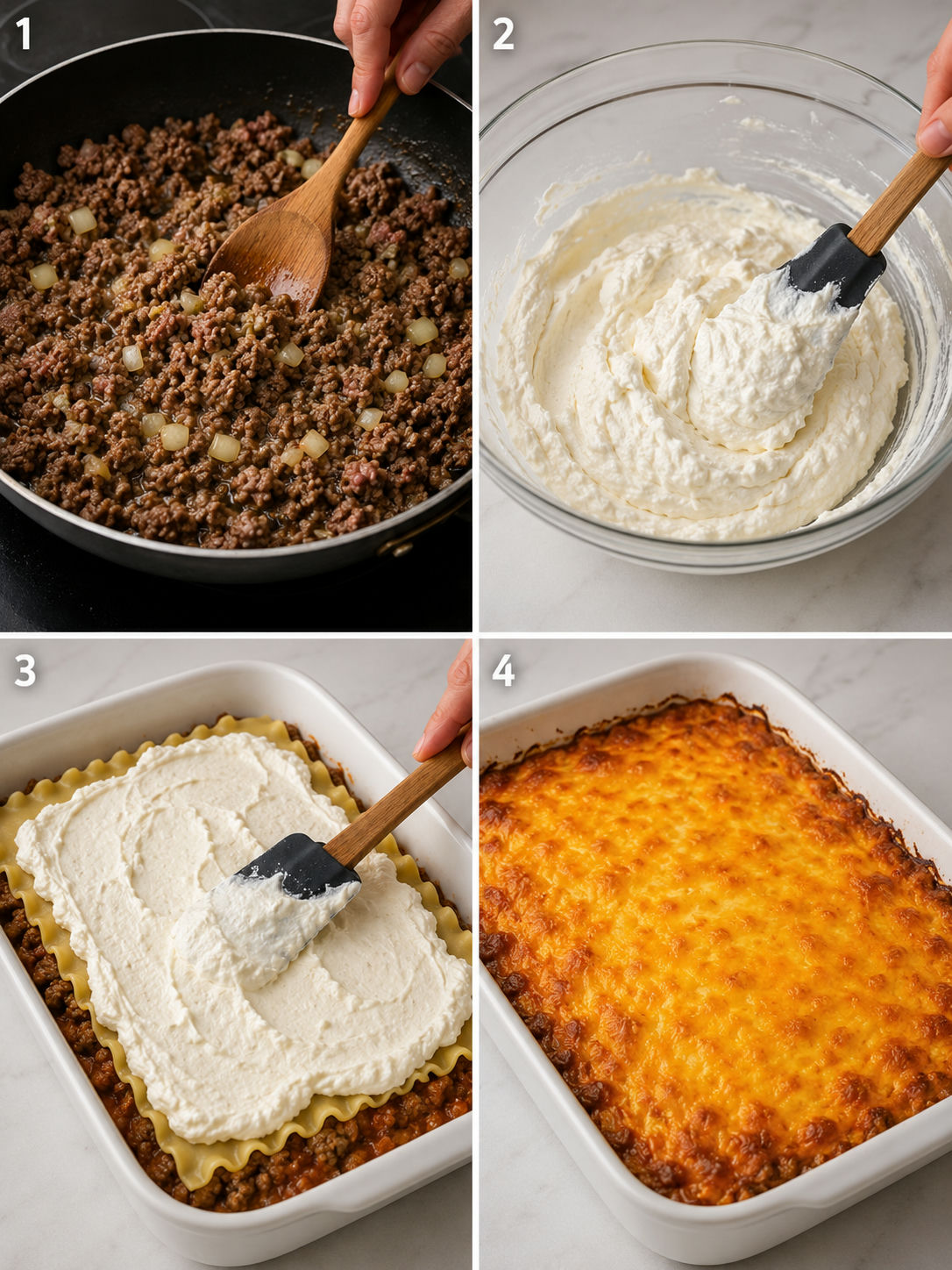
- Preheat and cook the noodles. Set your oven to 375°F (190°C). Cook the egg noodles in well-salted boiling water until just shy of al dente, about 1 minute less than the package directs. They finish cooking in the oven. Drain and set aside.
- Brown the beef. In a large skillet over medium-high heat, cook the ground beef and diced onion, breaking the meat up, until no pink remains and the onion is soft, about 8 minutes. Drain excess fat. Add the garlic and stir for 30 seconds.
- Build the tomato layer. Stir in the drained diced tomatoes, tomato sauce, Italian seasoning, garlic powder, salt, and pepper. Simmer over medium heat for 5 minutes until slightly thickened, then remove from heat.
- Mix the cream filling. In a bowl, beat the softened cream cheese until smooth. Add the sour cream and cottage cheese and stir until fully combined with no lumps remaining.
- Assemble the casserole. Grease a 9x13 baking dish. Spread half the beef sauce evenly across the bottom. Add all the cooked noodles in one even layer. Spread the cream cheese mixture over the noodles. Spoon the remaining beef sauce on top. Finish with cheddar and mozzarella.
- Bake until golden and bubbly. Bake uncovered for 25 to 30 minutes until the cheese is melted and golden at the edges and the sides are visibly bubbling. Rest for 5 minutes before slicing.
Why the cream layer changes everything
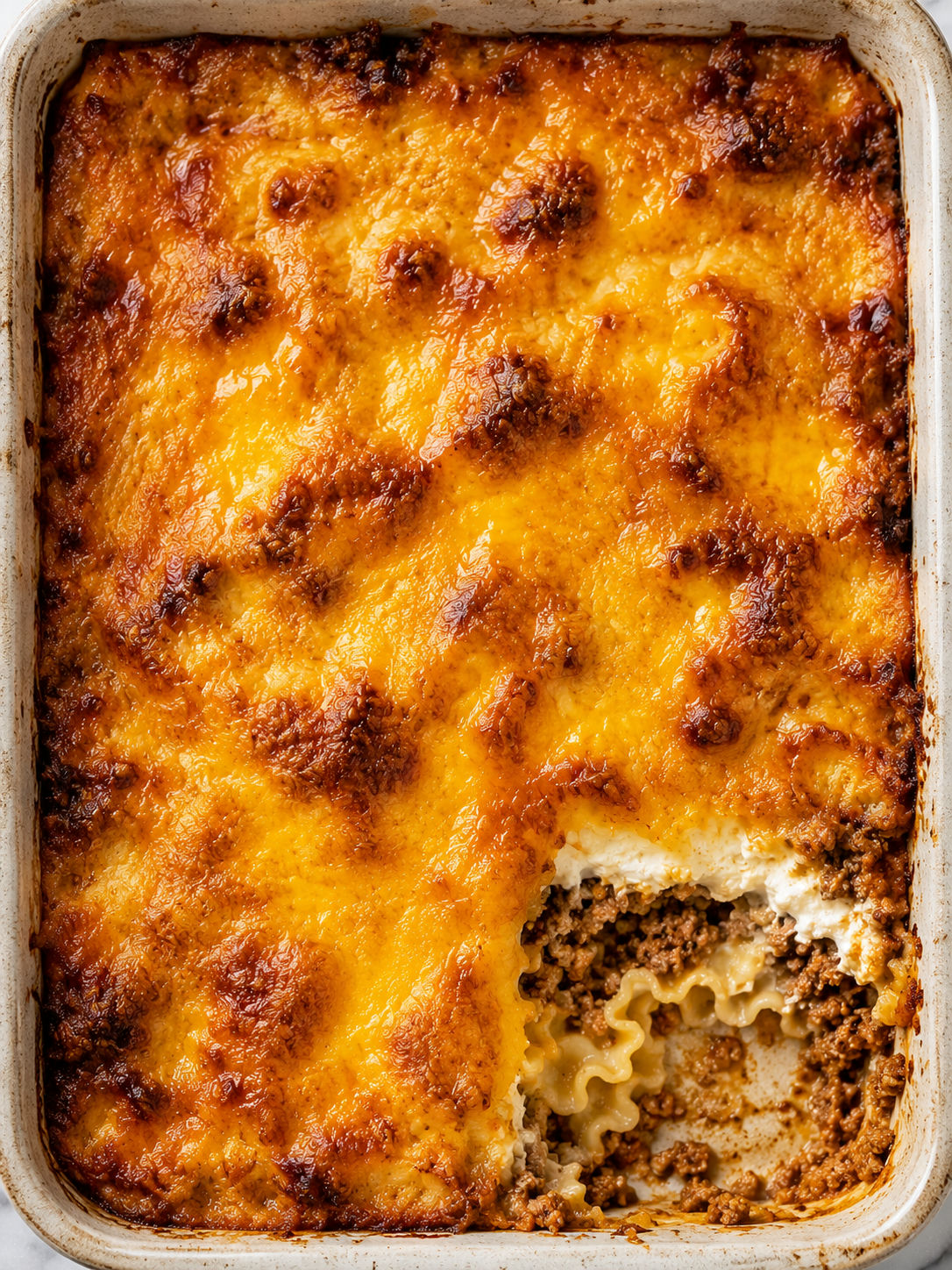
Most beef casseroles follow the same path: meat, pasta, cheese. This one adds a hidden center that changes the texture of every bite. When you cut a square and lift it, you see a creamy white band between the noodles and the beef that stays soft and tangy even after 30 minutes in the oven.
Cream cheese is what anchors it. Unlike sour cream alone, it holds its shape under heat and does not break or turn watery. The cottage cheese adds protein and subtle curd texture that dissolves during baking into something smooth and rich. If you have already made the easy sour cream beef noodle casserole, you know how well the tangy-cream pairing works with beef. This version takes that combination further with a full triple-cream filling.
Swaps that still work beautifully
Ground beef is standard, but ground turkey works just as well if you want something leaner. Season it a bit more generously since turkey is milder. Italian sausage with the casings removed is the richest-tasting swap and adds flavor without any extra effort on your part.
For the cheese topping, Colby jack melts more smoothly than straight cheddar and has a milder flavor that younger kids often prefer. Pepper jack adds a kick if your crowd likes heat. A handful of panko breadcrumbs mixed into the top cheese layer gives a little crunch that plays nicely against the soft cream filling underneath.
If you want to try a similar layered bake without the noodles, the keto chicken bacon ranch casserole uses the same bake-and-layer method and is worth keeping in your rotation.
The one mistake worth avoiding
Pull this out of the oven and wait a full 5 minutes before you cut into it. The cream layer is still molten right out of the oven and will run when you slice too soon. Five minutes sets it just enough that a square comes out cleanly with the layers intact on the plate.
The same logic applies to the beef layer. Hot tomato sauce is liquid. Give it time to settle and the casserole holds together instead of pooling. Layered bakes like the classic hamburger casserole and the cheesy hamburger casserole with pasta and beef both call for a rest period for exactly this reason. Skipping it is the fastest way to a messy plate.
Storing, freezing, and making it ahead
Leftovers keep in the fridge for up to 4 days, tightly covered. Reheat individual portions in the microwave with a small splash of water to keep the cream layer from drying out. To warm the whole dish, cover with foil and heat at 325°F for about 20 minutes.
To freeze before baking, assemble in a freezer-safe dish, wrap tight in plastic wrap and foil, and freeze for up to 3 months. Thaw overnight in the fridge, then bake as directed with an extra 5 to 10 minutes added. Avoid freezing after baking since the cream layer can separate when thawed and reheated from frozen.
To make it the night before, assemble completely, cover, and refrigerate. Pull it out while the oven preheats so it is not stone cold when it goes in.
FAQs
- Can I use a different pasta instead of egg noodles?
Wide egg noodles are the classic choice because they hold their shape and absorb the sauce without going mushy. Rotini, penne, or bow ties all work well as substitutes. Avoid thin pasta like angel hair, which collapses under the weight of the layers during baking.
- Can I substitute the cottage cheese?
Yes. Ricotta is the closest swap, same quantity, and gives a slightly smoother, denser texture. You can also leave it out entirely and use just cream cheese and sour cream. The filling will be a bit richer and thicker but it still works perfectly.
- How do I store and reheat leftovers?
Cover tightly and refrigerate for up to 4 days. To reheat a portion, microwave it with a small splash of water to keep the cream layer from drying out. To warm the whole dish, cover with foil and heat at 325°F for about 20 minutes. It reheats very well.
- Can I make this casserole ahead of time?
Absolutely. Assemble the whole thing up to 24 hours ahead, cover with foil, and refrigerate. Pull it out while the oven preheats, then bake as directed and add an extra 5 to 10 minutes since it starts cold. This makes it a reliable option for busy nights and potlucks alike.
- Can I freeze crazy good casserole?
Yes, but freeze it before baking for best results. Assemble in a freezer-safe dish, wrap tight in plastic and foil, and freeze for up to 3 months. Thaw overnight in the fridge and bake as directed. Avoid freezing after baking since the cream cheese layer can separate slightly when reheated from frozen.
- What goes well alongside this casserole?
A simple green salad with a vinegary dressing cuts through the richness nicely. Roasted green beans or steamed broccoli work well on the side too. Garlic bread is always popular, especially for scooping up any extra sauce from the baking dish.
- How do I know when the casserole is done?
Look for bubbling edges and a golden, slightly crisped cheese top. The center should feel set when you press it lightly with a spatula rather than jiggly. If the cheese browns too fast before the center is done, lay a sheet of foil loosely over the top for the last 10 minutes.
