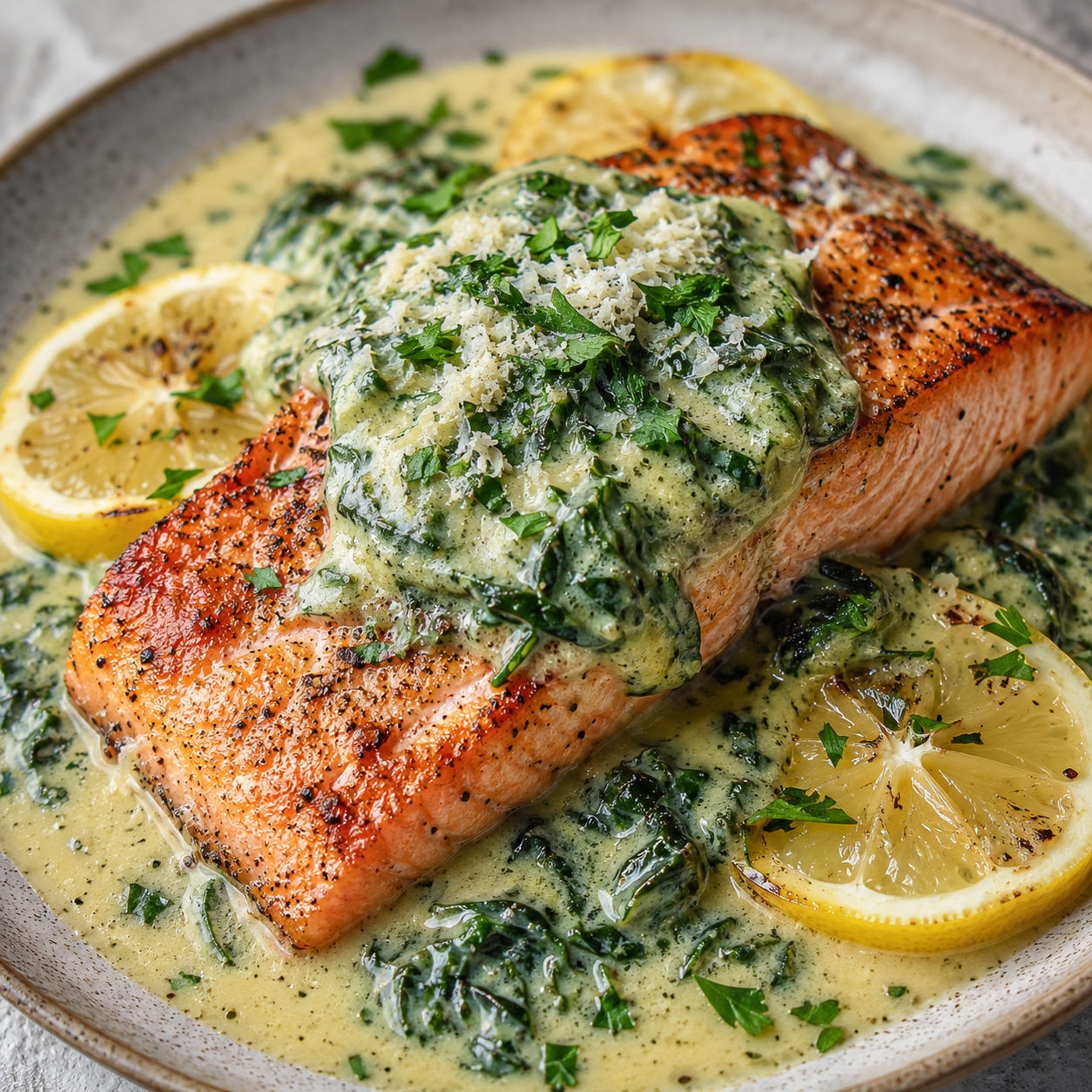
 Pin it
Oven Baked Salmon with Creamy Spinach Sauce for Dinner is the kind of meal that feels calm and generous at the end of a busy day. The salmon bakes hands-off while the sauce comes together on the stove, so you are not juggling three pans at once.
The sauce is rich, but lemon and spinach keep it from feeling flat. I like the salmon just barely cooked through, with the cream sauce spooned over at the table so the top stays tender and the edges stay clean.
Creamy Salmon Lineup
Choose salmon fillets that are similar in thickness so they finish at the same time. Fresh spinach wilts fast, and freshly grated Parmesan melts smoother than the powdery kind.
- Salmon fillets. They bake quickly and stay moist when pulled from the oven before they look dry.
- Olive oil. Helps the seasonings cling and protects the surface of the fish.
- Smoked paprika. Adds a warm color and a quiet smoky note without taking over.
- Baby spinach. Wilts into the sauce and brings freshness to the cream.
- Butter. Gives the garlic a gentle base and rounds out the sauce.
- Garlic. The main flavor in the spinach cream, cooked briefly so it stays sweet.
- Heavy cream. Creates the silky sauce that coats the fish.
- Parmesan cheese. Thickens the sauce and adds salty, nutty depth.
- Lemon. Brightens the salmon and cuts through the richness.
- Nutmeg. A tiny pinch makes the spinach taste fuller and warmer.
Bake Then Sauce
- Heat the oven. Set the oven to 400°F and line a baking sheet with parchment so the salmon lifts cleanly.
- Season the fillets. Pat the salmon dry, rub with olive oil, then season with salt, pepper, and smoked paprika.
- Bake the salmon. Bake for 10-14 minutes, depending on thickness, until the center is just opaque and flakes gently.
- Start the sauce. Melt butter in a skillet, add garlic, and cook for about 30 seconds until fragrant.
- Wilt the spinach. Add spinach and cook until it collapses and most of its moisture cooks off.
- Finish and serve. Stir in cream, Parmesan, lemon juice, and nutmeg, then spoon the sauce over the warm salmon.
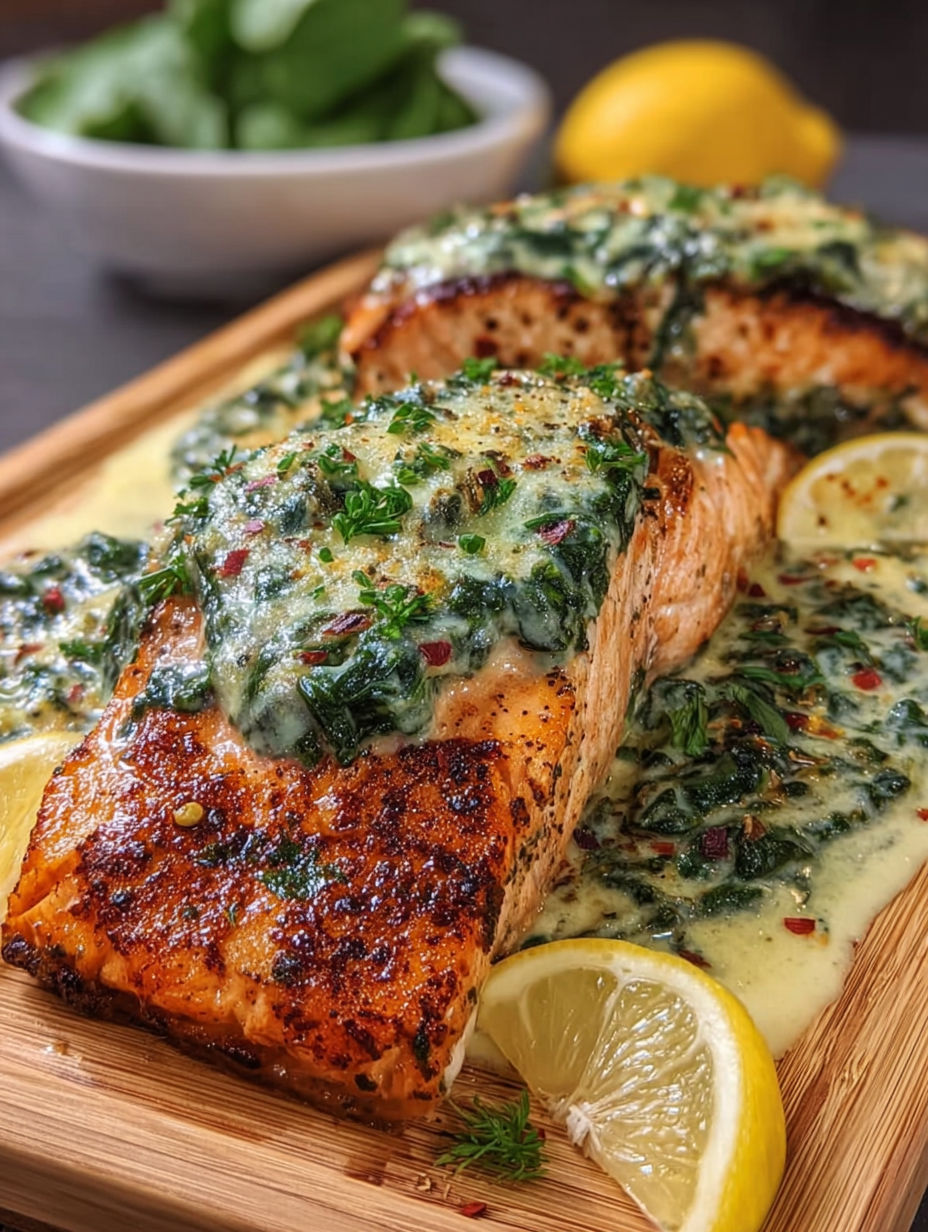
Keep The Salmon Tender
The biggest mistake with baked salmon is waiting until it looks firm all the way through. It keeps cooking for a minute or two after it leaves the oven. Pull it when the thickest part flakes with light pressure and still looks moist in the center. The FDA seafood guide notes that fish should reach 145°F for safety, which is useful if you prefer checking with a thermometer. You can read their guide here: FDA seafood safety.
If you like a simpler baked version, try garlic butter salmon with herbs and lemon. It uses the same quick oven method with a brighter finish.
Make A Smooth Sauce
Spinach gives off more water than you expect, so let it wilt before adding the cream. If the pan looks watery, cook it for another minute. Once the cream goes in, keep the heat low. Parmesan melts best when the sauce is hot but not boiling hard. A small squeeze of lemon at the end wakes it up. Add it after the cream has thickened so the sauce stays smooth.
The same spinach and cream idea works in pasta too. For a fuller bowl, Tuscan salmon pasta with creamy sauce and spinach takes the flavors in a cozy direction.
Easy Swaps
Half-and-half can replace heavy cream if you want a lighter sauce. It will not be quite as thick, so let it simmer a little longer before adding the cheese. Pecorino can stand in for Parmesan, but use less because it is saltier. Frozen spinach is fine when squeezed dry. For more vegetables, saute sliced mushrooms before adding the spinach, or stir in halved cherry tomatoes at the end.
If chicken is what you have, the creamy spinach sauce also feels right with chicken with spinach and mushrooms in creamy Parmesan sauce.
Serving It For Dinner
This dish has plenty of sauce, so give it something to catch the extra. Mashed potatoes, rice, couscous, or crusty bread all make sense. For a lighter plate, serve it with roasted asparagus or a sharp cucumber salad. I like lemon wedges on the table because people usually want one more squeeze. If you are serving guests, plate the salmon first and spoon the green sauce over the middle so the edges of the fish still show.
Leftovers Without Dry Fish
Leftover salmon is best treated gently. Store the fish and sauce together in the fridge for up to 2 days. Warm it in a covered skillet over low heat with a tablespoon of water or cream. The microwave works in a pinch, but use half power and short bursts. Cold leftovers are good flaked over salad with a little extra lemon. I would not freeze this one because cream sauces can separate after thawing.
Summary
Oven baked salmon with creamy spinach sauce is fast enough for a weeknight and polished enough for company. Keep the fish just cooked, simmer the sauce gently, and finish with lemon.

FAQs
- How long should I bake salmon at 400°F?
Most 6-ounce salmon fillets bake in 10-14 minutes at 400°F. Start checking early if the fillets are thin. The flesh should look opaque and flake with gentle pressure.
- Can I use frozen salmon?
Yes. Thaw it overnight in the fridge, then pat it very dry before seasoning. Extra moisture on the surface can make the salmon steam instead of bake nicely.
- Can I use frozen spinach in the sauce?
Frozen spinach works well if you thaw it and squeeze out as much water as possible. Use about 3/4 cup thawed spinach in place of the fresh baby spinach.
- What can I use instead of heavy cream?
Half-and-half makes a lighter sauce, though it will be thinner. For a tangier finish, stir in a few spoonfuls of cream cheese or Greek yogurt off the heat so it does not split.
- How do I store leftovers?
Store the salmon and sauce in an airtight container in the fridge for up to 2 days. Reheat gently in a covered skillet over low heat with a splash of cream or water.
- What should I serve with creamy spinach salmon?
Mashed potatoes, rice, roasted asparagus, or a lemony green salad all work. If you want to keep it low carb, serve it with cauliflower mash or steamed green beans.
