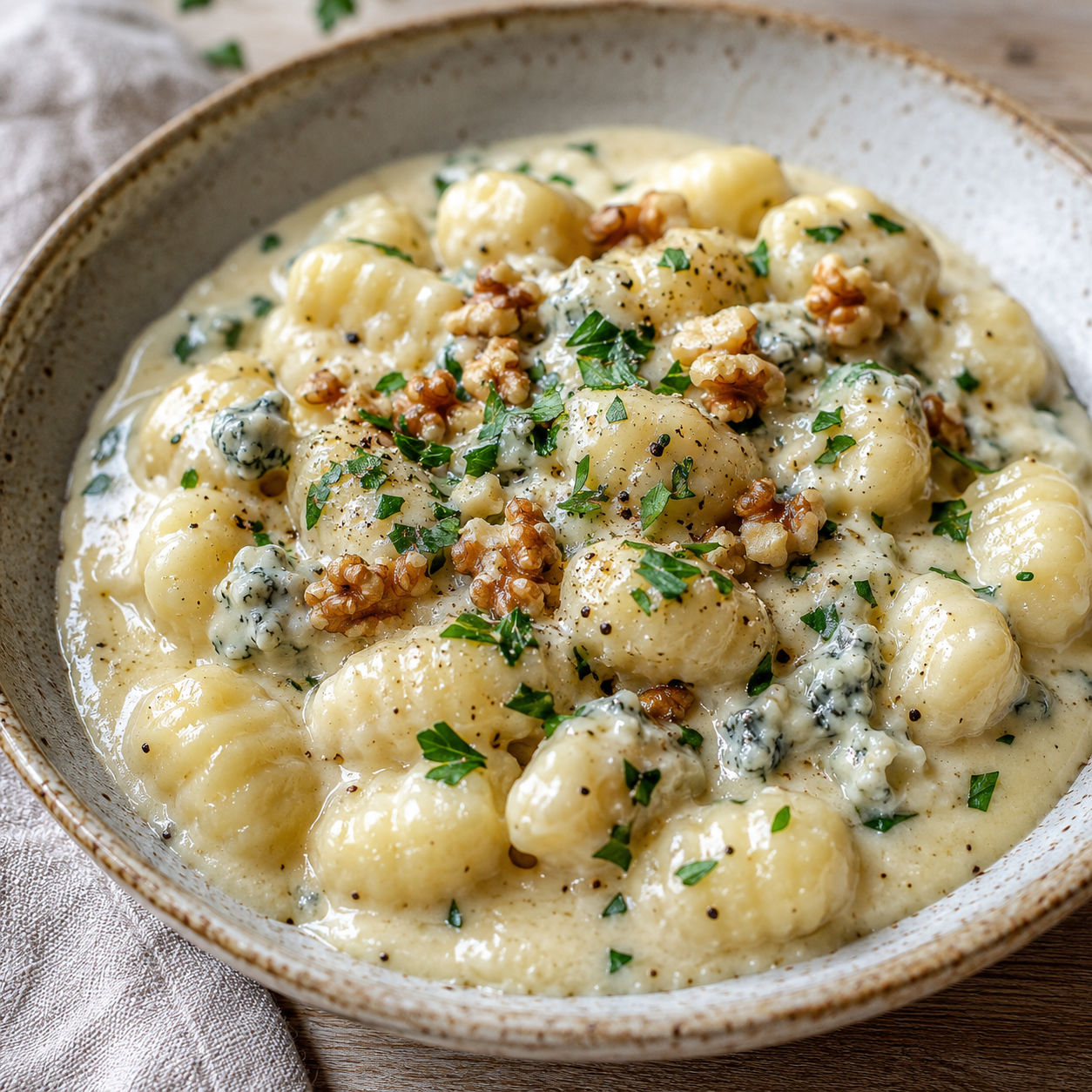
 Pin it
This is the dinner I make when the weather turns and I want something that feels like a warm blanket. Potato gnocchi are soft and filling, and a gorgonzola cream sauce brings just enough boldness to keep every bite interesting. The whole thing is ready before the bread finishes warming in the oven.
What goes into the sauce
A short list of rich ingredients means quality matters more than quantity. Buy real Italian gorgonzola and a wedge of Parmigiano Reggiano. The pre-grated stuff will not give you the same creamy melt or deep savor.
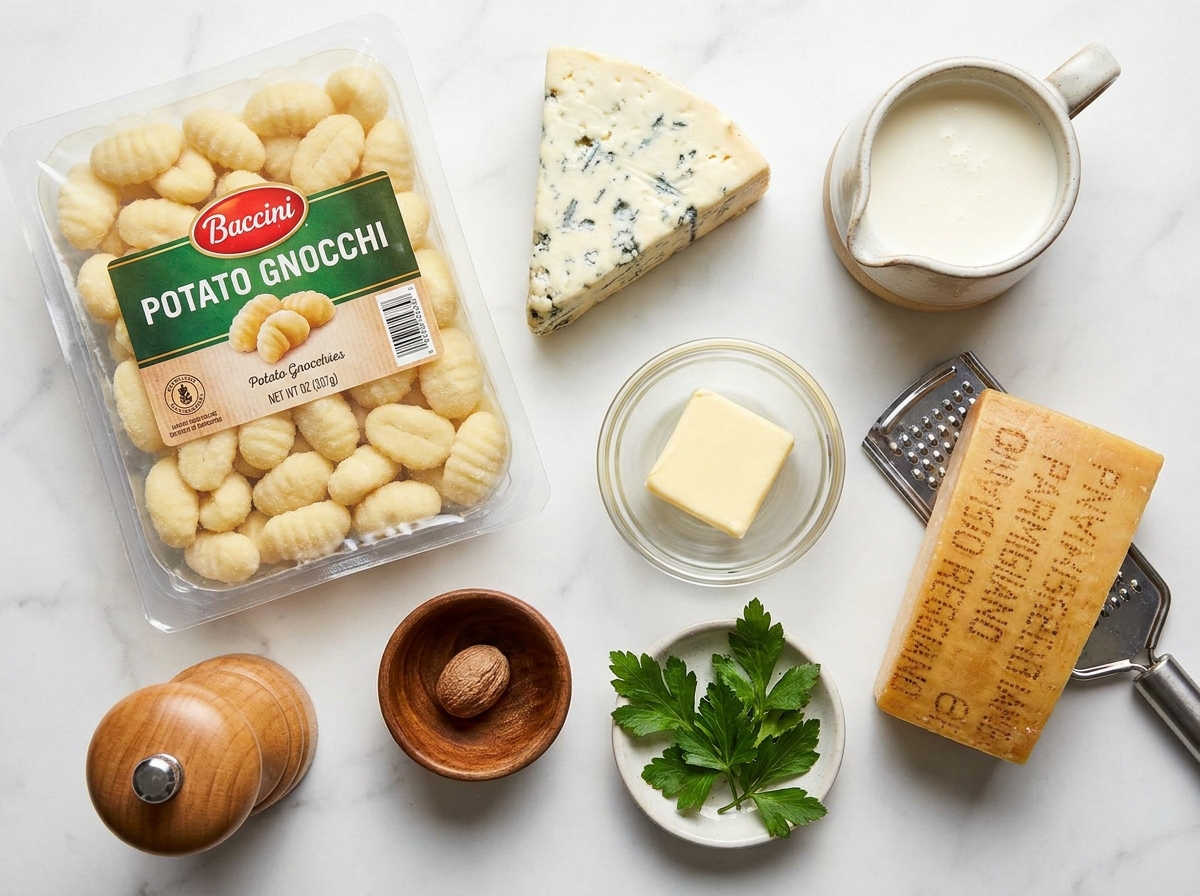
- Potato gnocchi. Store-bought is perfectly fine here and keeps this a weeknight meal. Choose a brand with a short ingredient list.
- Gorgonzola cheese. The heart of the sauce. Dolce is mild and creamy; piccante is sharper and more assertive.
- Heavy cream. Creates the silky body that carries the cheese. Do not substitute milk or the sauce will be too thin.
- Parmigiano Reggiano. A small amount deepens the savory base and adds a nutty, crystalline edge.
- Unsalted butter. Just a tablespoon rounds out the sauce and helps it cling to the gnocchi.
- Fresh nutmeg. A few grates add warmth without competing with the cheese.
- Black pepper and parsley. Pepper cuts the richness; parsley brings a clean, fresh finish.
How it comes together
- Boil the gnocchi. Bring a large pot of salted water to a boil. Add the gnocchi and cook until they float to the surface, about 2-3 minutes. Scoop them out with a slotted spoon and set aside. Reserve 1/2 cup of the starchy water.
- Melt the gorgonzola. In a wide skillet over medium-low heat, combine the cream, butter, and crumbled gorgonzola. Stir gently until the cheese melts into a smooth sauce, about 3-4 minutes. Do not let it boil or the cheese may separate.
- Add the parmesan. Stir in the grated Parmigiano Reggiano and a generous pinch of freshly grated nutmeg. The sauce should look glossy and coat the back of a spoon.
- Toss and finish. Add the cooked gnocchi to the skillet along with a splash of the reserved water. Toss gently over low heat until every piece is coated. The starchy water should loosen the sauce just enough to make it cling.
- Season and serve. Taste for salt and pepper. Divide among warm bowls and finish with chopped parsley and an extra crack of black pepper.
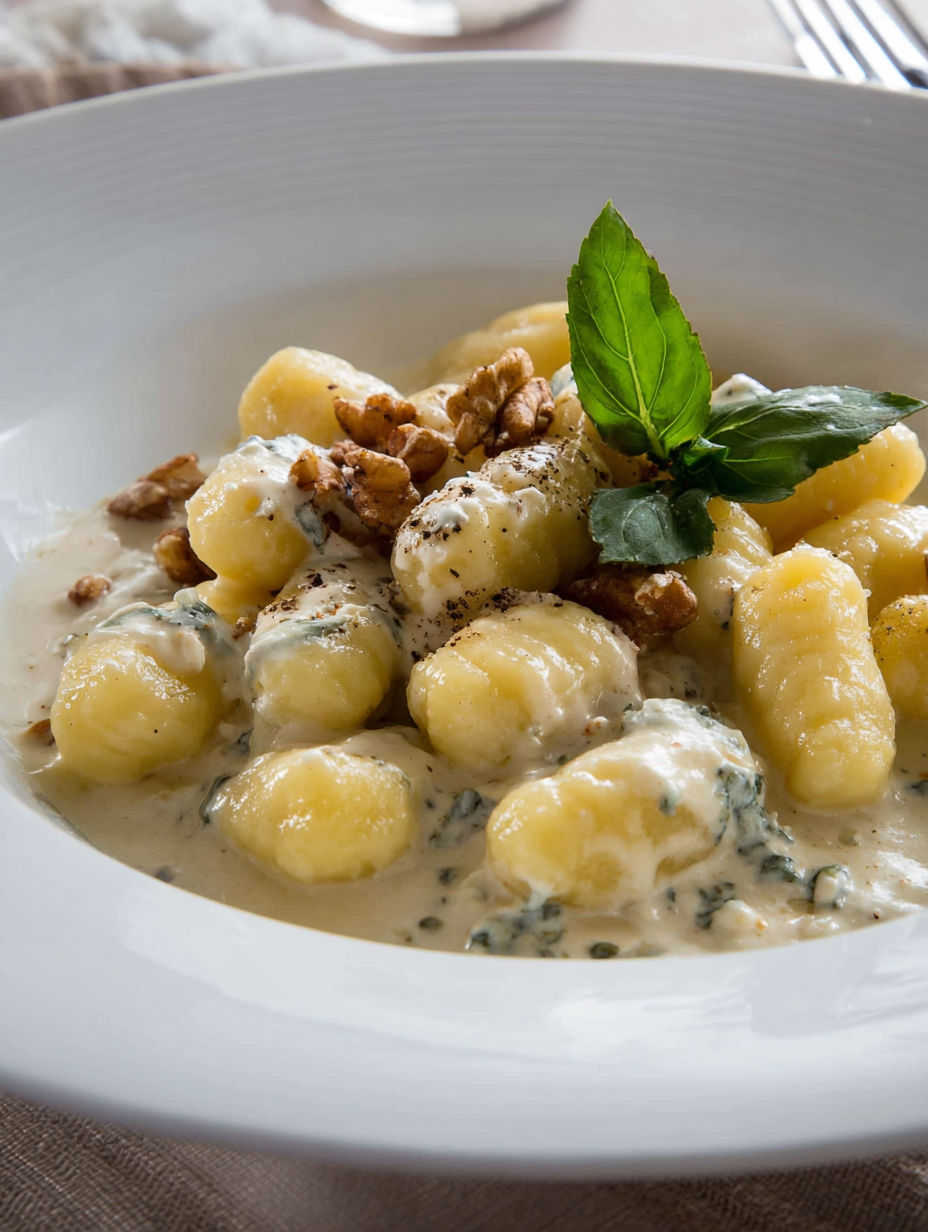
Pick the right gorgonzola
Gorgonzola dolce is younger, softer, and creamier with a gentle funk that most people love. Gorgonzola piccante is aged longer, firmer, and carries a much stronger bite. If you are serving guests who are unsure about blue cheese, start with dolce. You can always add a small crumble of piccante on top for contrast. Buy your Parmigiano Reggiano in a wedge and grate it fresh. The pre-grated kind lacks the crystalline texture and deep savor of the real Parmigiano Reggiano. For another cozy gnocchi idea, try our pumpkin gnocchi with caramelized onion cream sauce.
The starch-water secret
The reserved cooking water is not an afterthought. The starch in it emulsifies with the cream and cheese, turning what could be a puddle into a sauce that actually sticks to the gnocchi. Add it a tablespoon at a time off the heat and toss vigorously. If you run out of pasta water, a few tablespoons of warm whole milk will work in a pinch, but the texture will be slightly less glossy. A similar technique anchors the sauce in our quick creamy tomato gnocchi with burrata.
Add crunch or sweetness
Toasted walnuts or crispy sage leaves turn this into something restaurant-worthy without extra work. A few walnut halves in a dry skillet over medium heat for three minutes is all it takes. If you want a sweet-savory twist, thin slices of pear seared in butter until caramelized are a classic Italian pairing with gorgonzola. Even a handful of baby spinach wilted into the warm sauce adds color and a little balance. For another cozy pasta night, try our ravioli paired with sage butter sauce.
Storing and reheating leftovers
Leftovers keep in an airtight container in the fridge for up to three days. The sauce will thicken and the gnocchi will soften a little, which is normal. Reheat gently in a skillet with a splash of cream or milk over low heat, stirring often. The microwave works in a hurry, but stir between thirty-second bursts to avoid hot spots that can break the sauce.
What to serve with it
This is a rich plate, so pair it with something sharp and fresh. A simple arugula salad with lemon juice and shaved parmesan cleans the palate between bites. A crisp white wine like Pinot Grigio or a light Verdicchio cuts through the cream without overpowering the cheese. If you want bread, make it a crusty loaf with a chewy interior to mop up any sauce left in the bowl.
FAQs
- Can I use store-bought gnocchi for this recipe?
Yes, and it is what most Italian home cooks reach for on a busy night. Look for refrigerated potato gnocchi with a short ingredient list, usually just potato, flour, and salt. Avoid shelf-stable versions that can be dense and gummy.
- What is the difference between gorgonzola dolce and piccante?
Gorgonzola dolce is aged for about two months. It is soft, spreadable, and mild with a sweet finish. Piccante is aged for six months or longer, becoming firmer, saltier, and much more pungent. For this sauce, dolce melts more smoothly, but piccante works if you want a stronger punch.
- How do I stop the cream sauce from separating?
Keep the heat low and never let the sauce boil once the cheese goes in. High heat breaks the emulsion between fat and dairy, causing an oily layer to form. Stir constantly and pull the pan off the heat if it starts to bubble aggressively.
- Can I make the sauce ahead of time?
The gorgonzola cream sauce can be made up to two days ahead and stored in the refrigerator. Reheat it gently in a skillet over low heat while the gnocchi cooks, thinning with a splash of cream or milk if it has thickened too much.
- What can I use instead of gorgonzola?
Any creamy blue cheese will work. Dolcelatte is a good mild alternative. If blue cheese is too strong for your taste, replace half of it with mascarpone or cream cheese to soften the flavor while keeping the texture rich.
- Is this recipe vegetarian?
The dish is vegetarian as written. However, traditional Parmigiano Reggiano uses animal rennet. If you need a fully vegetarian version, look for a parmesan-style cheese made with microbial rennet, or simply omit it and add a little extra gorgonzola.
