 Pin it
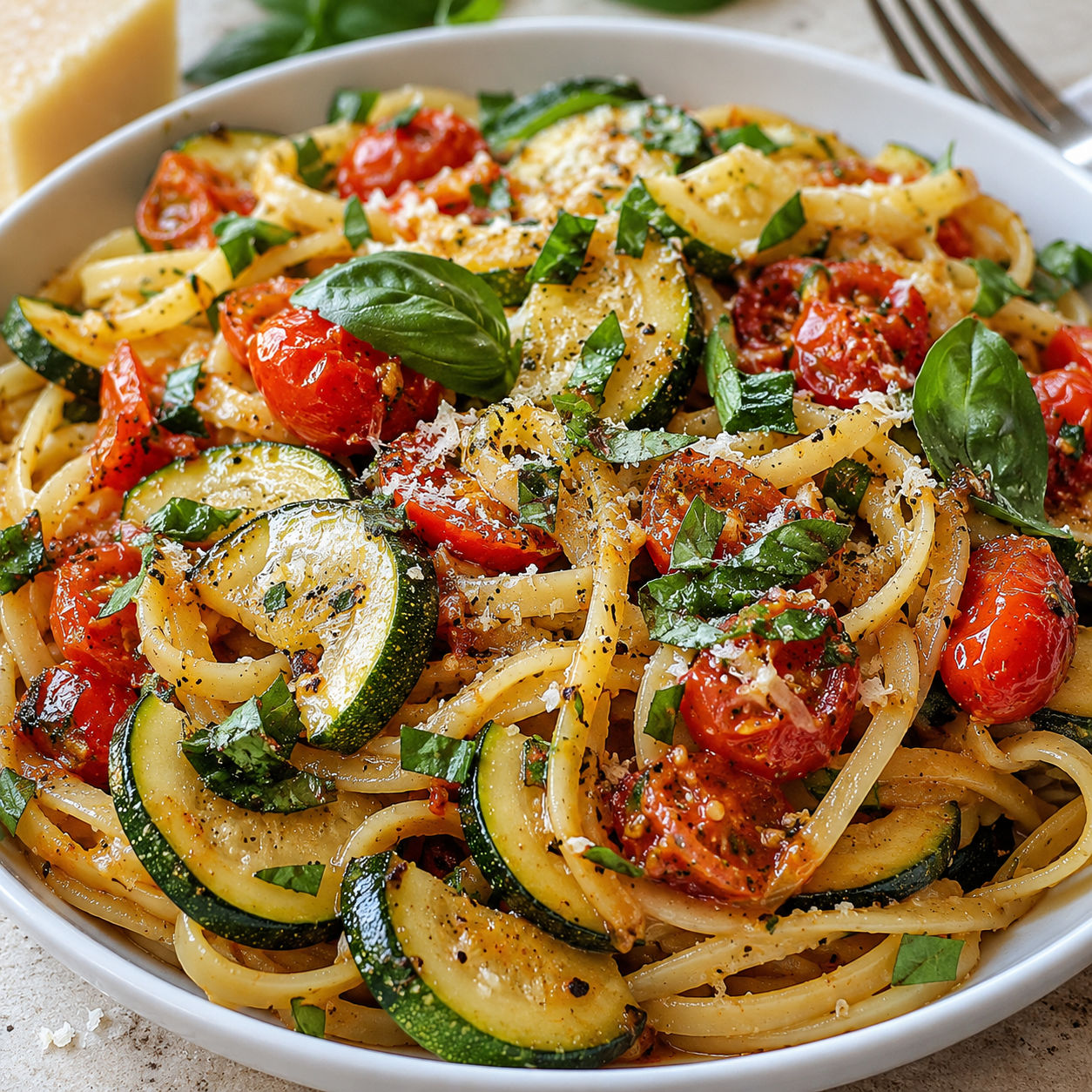
Tomato Zucchini Pasta with Fresh Herbs and Parmesan is the kind of dinner I make when the counter has a few summer vegetables and I do not want a heavy sauce. The tomatoes soften just enough to turn juicy, the zucchini keeps a little bite, and the Parmesan melts into the starchy pasta water.
Use this as a flexible weeknight pasta. It works with spaghetti, penne, fusilli, or whatever shape is already open in the pantry. The only part I do not rush is the zucchini. A hot pan gives it golden edges before the tomatoes go in.
Tomato Zucchini Pasta Basics
Choose vegetables that still feel firm and fresh. Small to medium zucchini have better texture than oversized ones, and cherry tomatoes are sweet enough to make a quick sauce without long simmering.
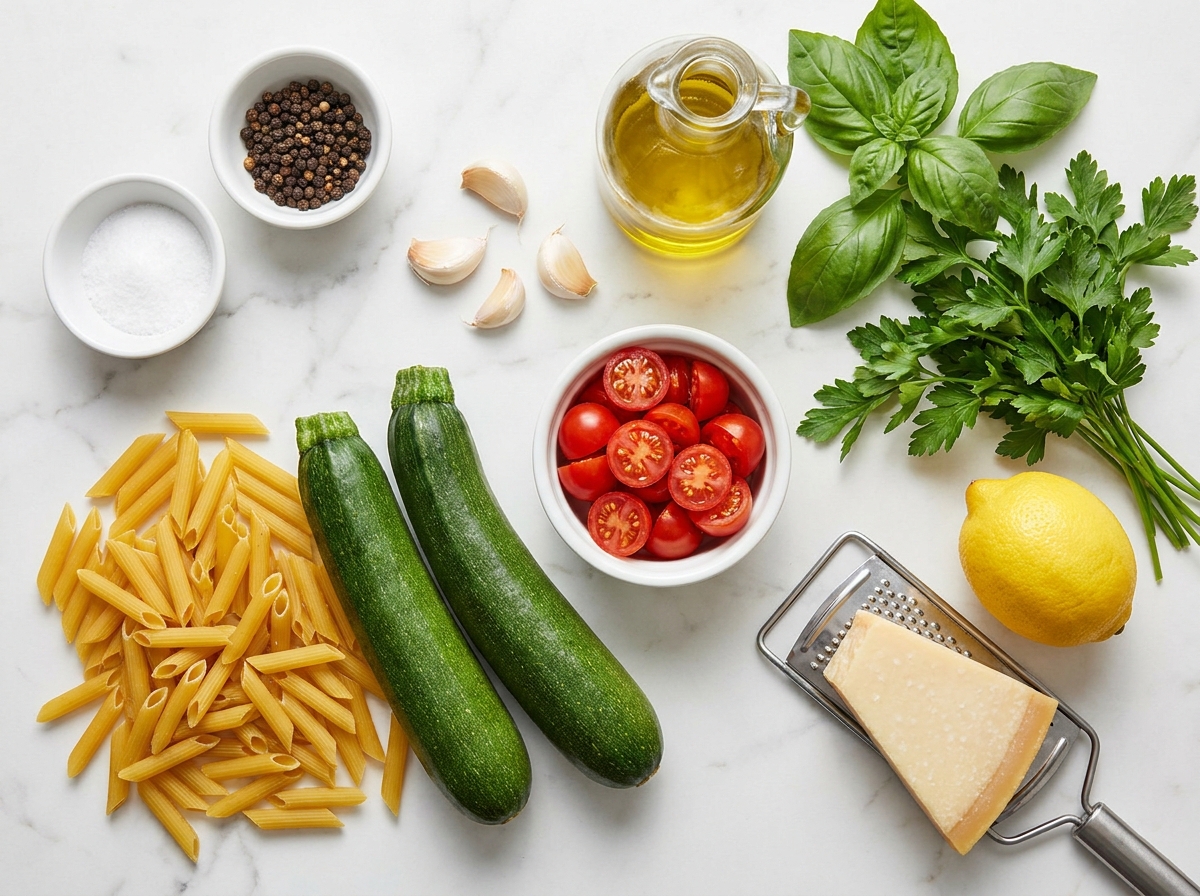
- Pasta. Penne, fusilli, spaghetti, or linguine all work, but ridged or twisted shapes hold the vegetables especially well.
- Zucchini. It brings a mild sweetness and tender bite. Slice it into half moons so it cooks quickly without falling apart.
- Cherry tomatoes. They soften into a light juicy sauce and keep the dish bright.
- Garlic. Fresh garlic gives the oil a savory base before the tomatoes release their juices.
- Olive oil. It helps brown the zucchini and carries the herbs through the pasta.
- Fresh basil and parsley. Basil adds sweetness, while parsley keeps the finish clean and green.
- Parmesan cheese. Freshly grated Parmesan melts into the pasta water and gives the sauce body.
- Lemon zest. A little zest wakes up the vegetables without making the pasta taste lemony.
The Quick Skillet Method
- Boil the pasta. Cook it in well-salted water until al dente. Save 3/4 cup of the starchy cooking water before draining.
- Brown the zucchini. Heat olive oil in a wide skillet. Cook the zucchini until the edges turn golden and the centers are just tender.
- Add garlic and tomatoes. Stir in the garlic for a few seconds, then add the tomatoes. Cook until the skins wrinkle and the juices collect in the pan.
- Toss with pasta water. Add the drained pasta and a splash of reserved water. Toss until the oil, tomato juices, and starch turn glossy.
- Finish with herbs and cheese. Turn off the heat. Fold in Parmesan, basil, parsley, lemon zest, and black pepper. Add more pasta water if the pan looks dry.
Why The Sauce Clings
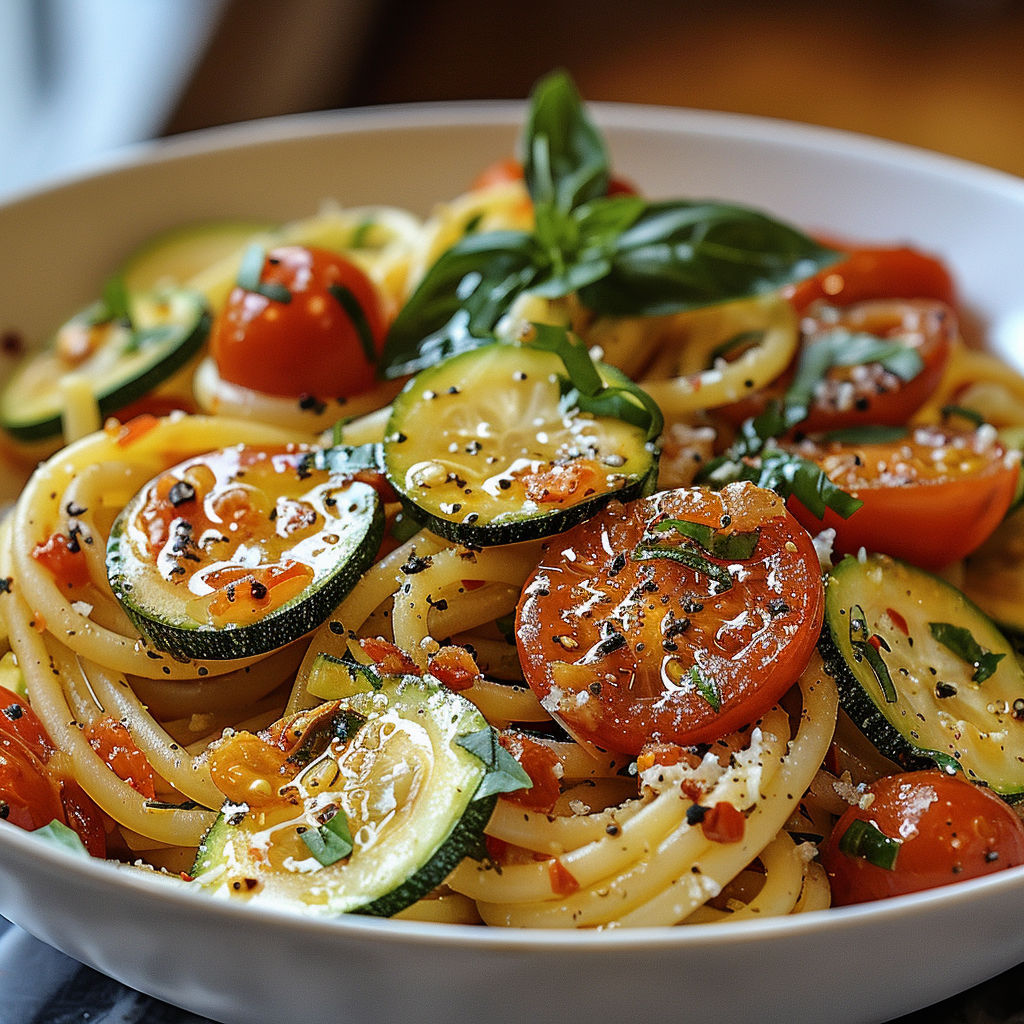
This is not a simmered red sauce. It is a quick pan sauce made from olive oil, tomato juices, Parmesan, and pasta water. The starch in the cooking water is what pulls everything together. Add it slowly and toss hard for a minute. The pasta should look shiny, not wet.
If the cheese clumps, the pan was probably too hot. Take the skillet off the burner before adding Parmesan. This same gentle finishing move is useful in Garlic Parmesan Pasta when you want cheese to melt into the sauce instead of sticking to the spoon.
Getting Zucchini Right
Zucchini has a lot of moisture, so the pan matters. Use your widest skillet and let it preheat before the vegetables go in. If the zucchini piles up, it steams and turns soft before it browns. Cook in two batches if your skillet is small.
I like half moons about 1/4 inch thick. Thinner slices disappear into the pasta. Thicker chunks stay watery in the middle. For another way to use the same vegetable with a different texture, try Skillet Zucchini and Mushrooms.
Fresh Herbs Do The Lifting
Add tender herbs at the end. Basil darkens and loses its perfume if it sits in a hot pan for too long. Parsley is sturdier, but it still tastes fresher when folded in off the heat. A few oregano leaves are good too, as long as they do not take over.
Vegetables like tomatoes and zucchini count toward daily produce goals, and the MyPlate vegetable guide is a useful reference for mixing colors and types through the week. Here, the herbs make a simple pasta feel brighter without adding another sauce.
Easy Swaps For Dinner
Use yellow squash in place of some or all of the zucchini. Add baby spinach at the end if you want more greens, or stir in white beans for protein. Red pepper flakes are optional, but a small pinch gives the tomatoes a little warmth.
If you want a fuller tomato and basil direction, Tomato Zucchini Pasta Basil stays close to the same flavors. For a filled-pasta version with more vegetables, Fresh Ravioli with Tomatoes, Asparagus, Garlic, and Herbs is a good next dinner.
Storing The Leftovers
Store leftovers in a sealed container for up to 3 days. The pasta will absorb sauce as it sits, so reheat it in a skillet with a splash of water. Stir gently until the noodles loosen and the Parmesan turns glossy again.
The USDA leftover safety guide recommends cooling and refrigerating leftovers promptly. I would not freeze this one. Zucchini gets watery after thawing, and the herbs lose their fresh edge.
Summary
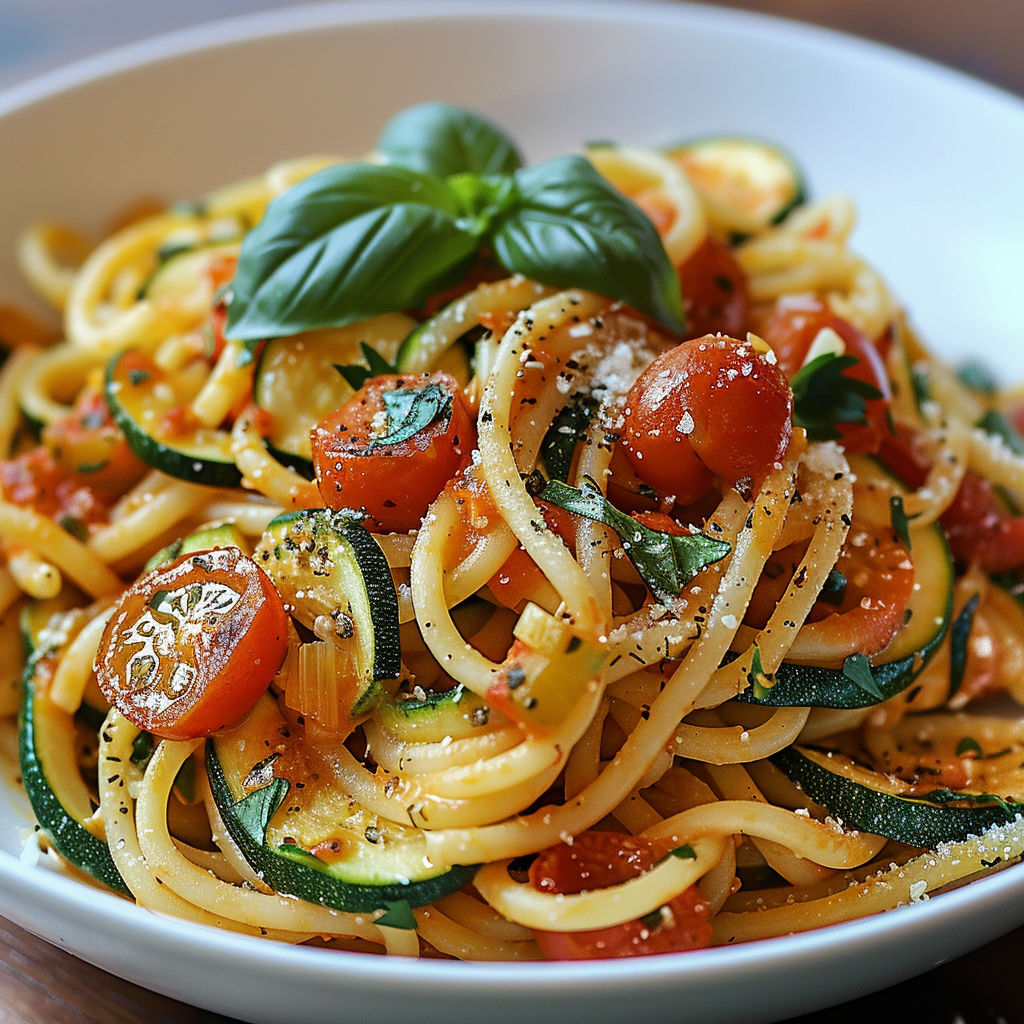
This pasta is best served right away, while the herbs are fresh and the Parmesan sauce is glossy.
FAQs
- Can I use canned tomatoes instead of fresh tomatoes?
Yes, but drain them well and use about 1 1/2 cups. Fresh cherry tomatoes give the pasta a sweeter, lighter sauce, while canned diced tomatoes make it saucier and softer.
- What pasta shape works best for tomato zucchini pasta?
Short shapes like penne, fusilli, and rigatoni catch the zucchini pieces well. Spaghetti or linguine also work, especially if you toss with enough pasta water to coat the strands.
- How do I keep zucchini from getting mushy?
Cook it in a wide hot skillet and avoid crowding the pan. Let the pieces sit for a minute before stirring so they brown at the edges instead of steaming.
- Can I make this pasta vegan?
Yes. Skip the Parmesan or use a plant-based Parmesan-style topping. Add toasted pine nuts or a spoonful of nutritional yeast for a savory finish.
- How long do leftovers keep?
Leftovers keep well for up to 3 days in an airtight container in the fridge. Reheat gently in a skillet with a splash of water or olive oil to loosen the sauce.
- Can I add protein to this pasta?
Grilled chicken, shrimp, white beans, or chickpeas all fit well. Add cooked protein at the end so it warms through without overcooking the vegetables.
