 Pin it
These stuffed rolls are the kind of recipe I turn to when I want dinner to feel homemade without spending the evening in the kitchen. Frozen bread dough does the heavy lifting on the dough side, and the filling is just three ingredients cooked down in one pan.
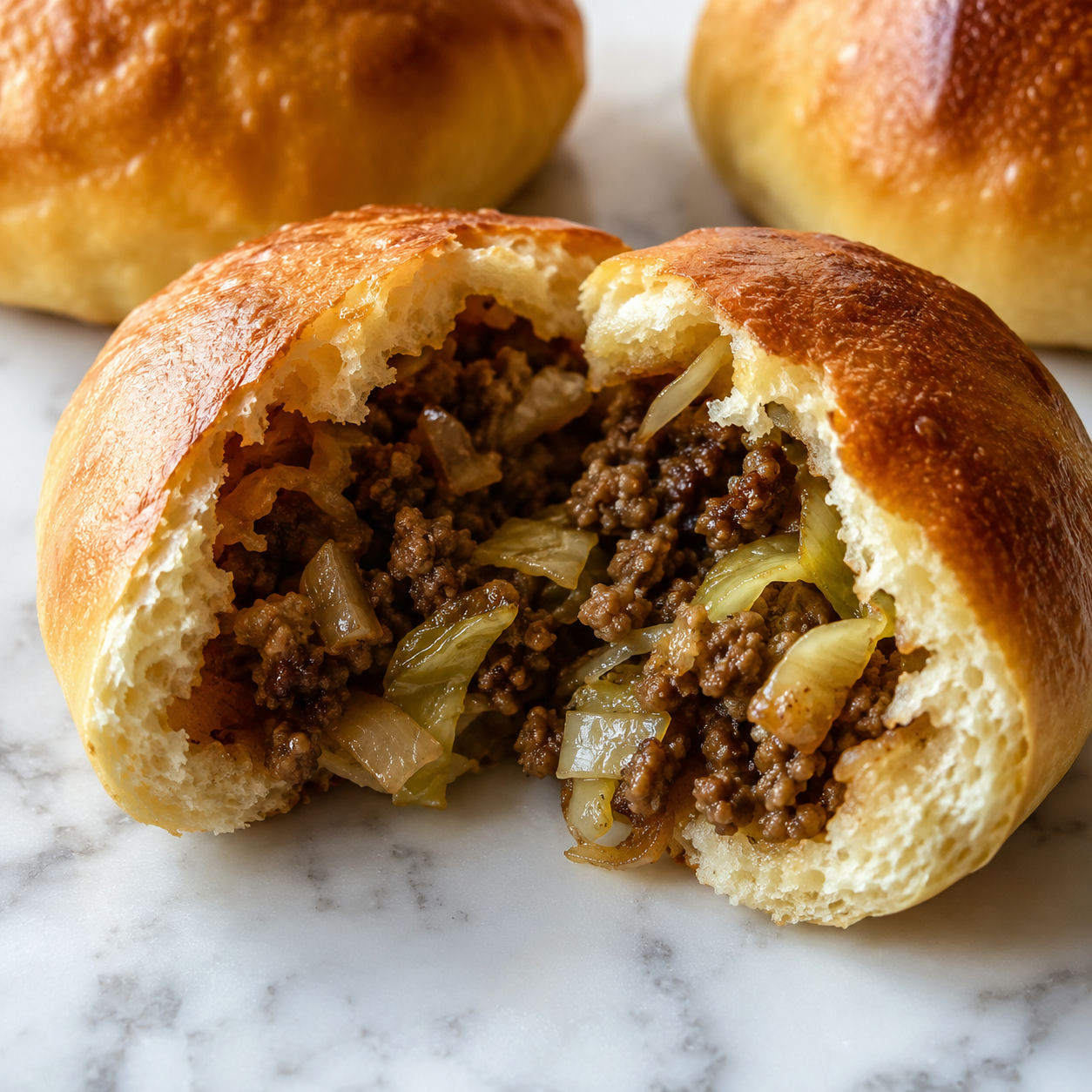
If you grew up in the Midwest you might know them as bierocks or runzas. If not, just think of them as a very satisfying handheld dinner. The dough bakes up pillowy and golden around a filling that stays juicy and savory inside. Salt and pepper are the only seasoning you need because the cabbage and onion do the rest.
What goes into each roll
The ingredient list is short on purpose. You are looking for quality in the beef and freshness in the cabbage. A good 80/20 ground beef keeps the filling from drying out, and a firm, heavy head of green cabbage shreds cleanly and cooks down without releasing too much liquid.
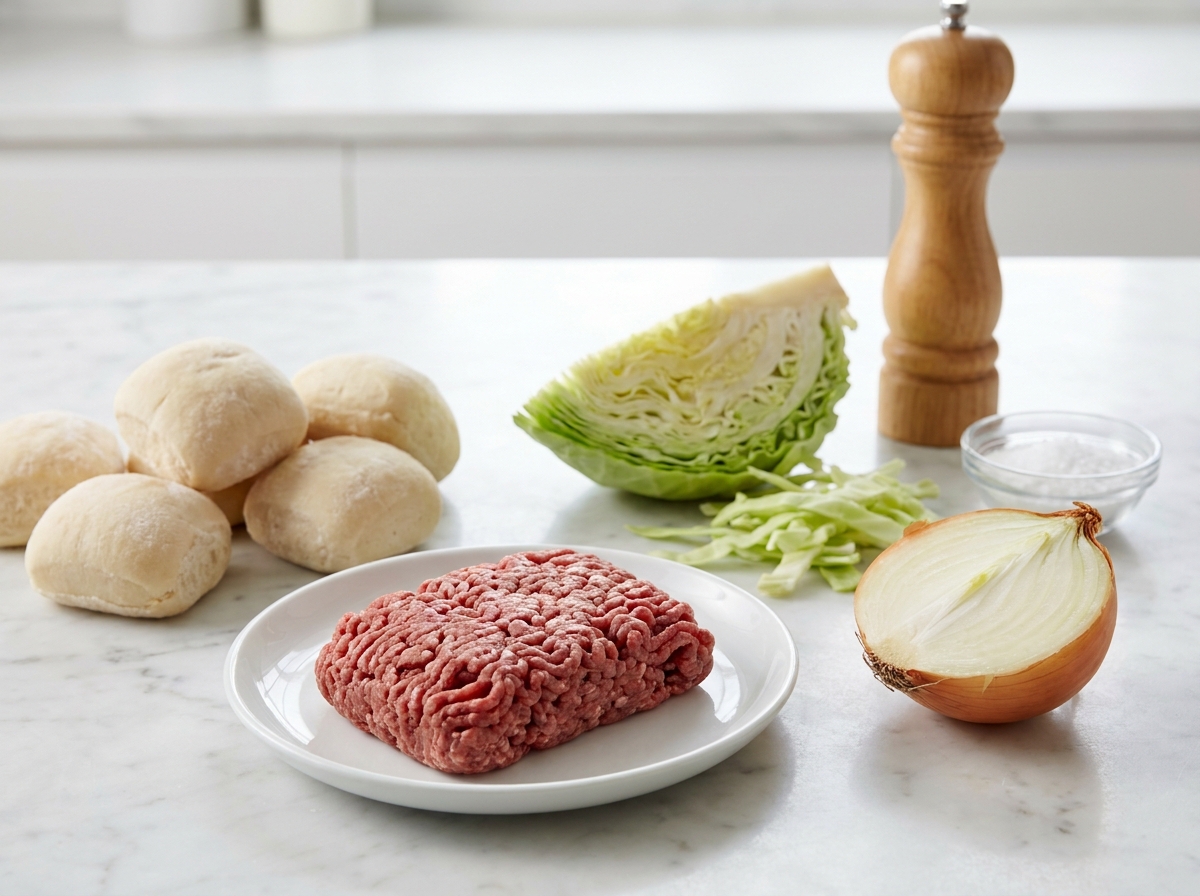
- Frozen bread dough rolls. The shortcut that makes this a weeknight recipe. No mixing, no yeast math, just thaw them and you are ready to go.
- Ground beef (80/20). Enough fat to keep the filling savory and juicy inside the baked dough. Leaner ground beef can work but the filling dries out more easily.
- Yellow onion. Cooked down with the beef, it sweetens and gives the whole filling a rounded flavor without standing out on its own.
- Green cabbage. Shredded fine, it wilts to almost nothing in volume but adds a gentle sweetness and that classic savory note that makes this filling so satisfying.
- Salt and black pepper. All the seasoning this recipe needs. Season more than you think, then taste after the liquid cooks off because the flavor concentrates.
- Egg wash (optional). One beaten egg brushed over the tops gives the finished rolls a deep golden color and a slight sheen.
Filling, sealing, and baking the rolls
- Thaw the dough. Arrange frozen rolls on a lightly greased surface, cover loosely with plastic wrap, and let them thaw at room temperature for 2 to 3 hours until pliable. They should give easily when pressed without being sticky or over-puffy.
- Brown the beef. Heat a large skillet over medium-high heat. Add the ground beef and cook, breaking it up with a spoon, for 6 to 8 minutes until no pink remains. Drain off most of the fat, leaving roughly 1 tablespoon in the pan.
- Cook the onion and cabbage. Add the diced onion to the beef and cook for 3 minutes until softened. Stir in the shredded cabbage, salt, and pepper. Cook over medium heat, stirring occasionally, for 8 to 10 minutes until the cabbage wilts completely and all liquid has cooked off. The filling should hold its shape when pressed with a spoon, not pool liquid.
- Cool the filling. Spread the filling on a plate or sheet pan and let it cool for at least 15 minutes. Hot filling steams the dough from inside and breaks the seal before it even bakes.
- Flatten and fill. Preheat the oven to 350°F (175°C) and line a baking sheet with parchment. On a lightly floured surface, press each thawed roll into a flat circle about 5 inches wide. Spoon about 3 tablespoons of filling into the center. Pull the dough edges up over the filling, pinch firmly all around to seal, and place seam-side down on the baking sheet, spaced about 2 inches apart.
- Rest and bake. Let the filled rolls sit at room temperature for 20 minutes while the oven finishes preheating. Brush with beaten egg if using. Bake for 20 to 25 minutes until the tops are deep golden brown and the dough is cooked through.
Why the filling must be dry before it goes in
Cabbage holds a surprising amount of water and releases it as it cooks. If that liquid is still in the pan when you fill the dough, it turns into steam inside the sealed roll and pushes the seam apart mid-bake. The fix is simple: keep cooking until the pan looks almost dry and the filling holds its shape when you press it.
After draining the fat, taste the filling and season it well. The cabbage concentrates as it cooks down, so what tasted lightly seasoned at 5 minutes will taste right at 10. If you want to see how a similar filling works shaped as pockets instead of buns, the ground beef and cabbage pockets with frozen dough use the same base technique.
Swaps and variations worth trying
The filling adapts easily. Swap the ground beef for ground pork, or use a half-and-half mix of the two for a slightly richer flavor that leans Eastern European. Add a teaspoon of caraway seeds with the cabbage if you want that classic bierock note. A clove of minced garlic with the onion works well here too.
For a cheesier version, stir a handful of shredded cheddar or Swiss into the cooled filling right before you fill the rolls. If you like stuffed dough with beef in different shapes, this cheesy beef pockets recipe is worth a look for a quicker weeknight take.
Safe cooking temperature for the beef
Ground beef should reach an internal temperature of 160°F (71°C) before you eat it, according to the USDA and FDA safe cooking temperature guidelines. In this recipe the beef hits that during the browning step, long before the rolls go into the oven. Once you see no pink remaining and the fat is sizzling clear in the pan, the filling is safe.
What to serve alongside them
These rolls are a full meal in your hand but they sit well next to a simple green salad or something pickled to cut the richness. For a heavier spread, pair them with a bowl of the hearty cabbage and ground beef soup and you have dinner built around the same flavors in two different forms. A simple coleslaw with a light vinegar dressing also works nicely.
At a casual gathering, a double batch goes fast. Set them on a board with a little pot of mustard on the side and most people eat two.
How to freeze and reheat successfully
Bake the rolls fully and let them cool completely before freezing. Freeze in a single layer on a sheet pan first, then transfer to a freezer bag so they don't stick together. They keep well for 2 months. Reheat straight from frozen in a 350°F (175°C) oven for 15 to 18 minutes. The crust comes back better from the oven than from a microwave.
If you have the savory cabbage and beef bake on your regular rotation, you can batch-cook both the filling for that dish and the filling for these rolls at the same time since they share the same core ingredients.
FAQs
- Do I need to thaw frozen bread dough before using it?
Yes. Place the rolls on a lightly greased surface or pan, cover loosely with plastic wrap, and thaw at room temperature for 2 to 3 hours until the dough is pliable and slightly puffy. You can also thaw them overnight in the refrigerator. Never try to flatten stiff, cold dough, it tears and fights back instead of stretching smoothly.
- Can I substitute a different type of cabbage?
Green cabbage is the right call here. It cooks down without too much liquid and adds that gentle, slightly sweet flavor. Savoy cabbage is a fine swap and turns softer faster. Avoid Napa cabbage because it releases a lot of water and makes the filling soggy. Red cabbage works in a pinch but turns the filling purple and adds a slightly sharper taste.
- How do I keep the rolls from leaking while they bake?
Two things matter most. First, make sure the filling is fully drained and cooled before it touches the dough, wet or hot filling creates steam that breaks the seal. Second, pinch the seam firmly, wetting your fingertip slightly if the dough resists sticking, and place each roll seam-side down immediately so the weight holds it closed during baking.
- How should I store and reheat leftovers?
Store cooled rolls in an airtight container in the refrigerator for up to 4 days. Reheat in a 350°F (175°C) oven for 10 minutes to keep the crust from going soft. A microwave works in 60 to 90 seconds but the texture turns more bready. For longer storage, freeze fully baked rolls for up to 2 months and reheat from frozen in a 350°F oven for 15 to 18 minutes.
- Can I add cheese to the filling?
Yes. Stir a small handful of shredded cheddar, Swiss, or Gruyere into the filling after it has cooled to room temperature. Hot filling melts the cheese before the rolls are even sealed. Once baked, the cheese melts into the beef and cabbage and makes each bite richer without overpowering the other flavors.
- What size frozen dough rolls should I use?
Standard 1-oz frozen dinner rolls are the right size for a palm-sized finished bun. If you use larger 2-oz rolls, you get a bigger, almost sandwich-sized result and need to add about 4 to 5 minutes to the bake time and check for a deep golden color. Both sizes are widely available at grocery stores, check the weight on the bag.
- Can I make these rolls ahead of time?
The filling can be made up to 2 days ahead and kept refrigerated. You can also fill and seal the raw rolls up to 8 hours ahead, cover them on the baking sheet, and refrigerate until ready to bake. Pull them out 20 minutes before baking so they lose the chill. The gentle cold proof actually gives the baked rolls a slightly airier crumb.
