 Pin it
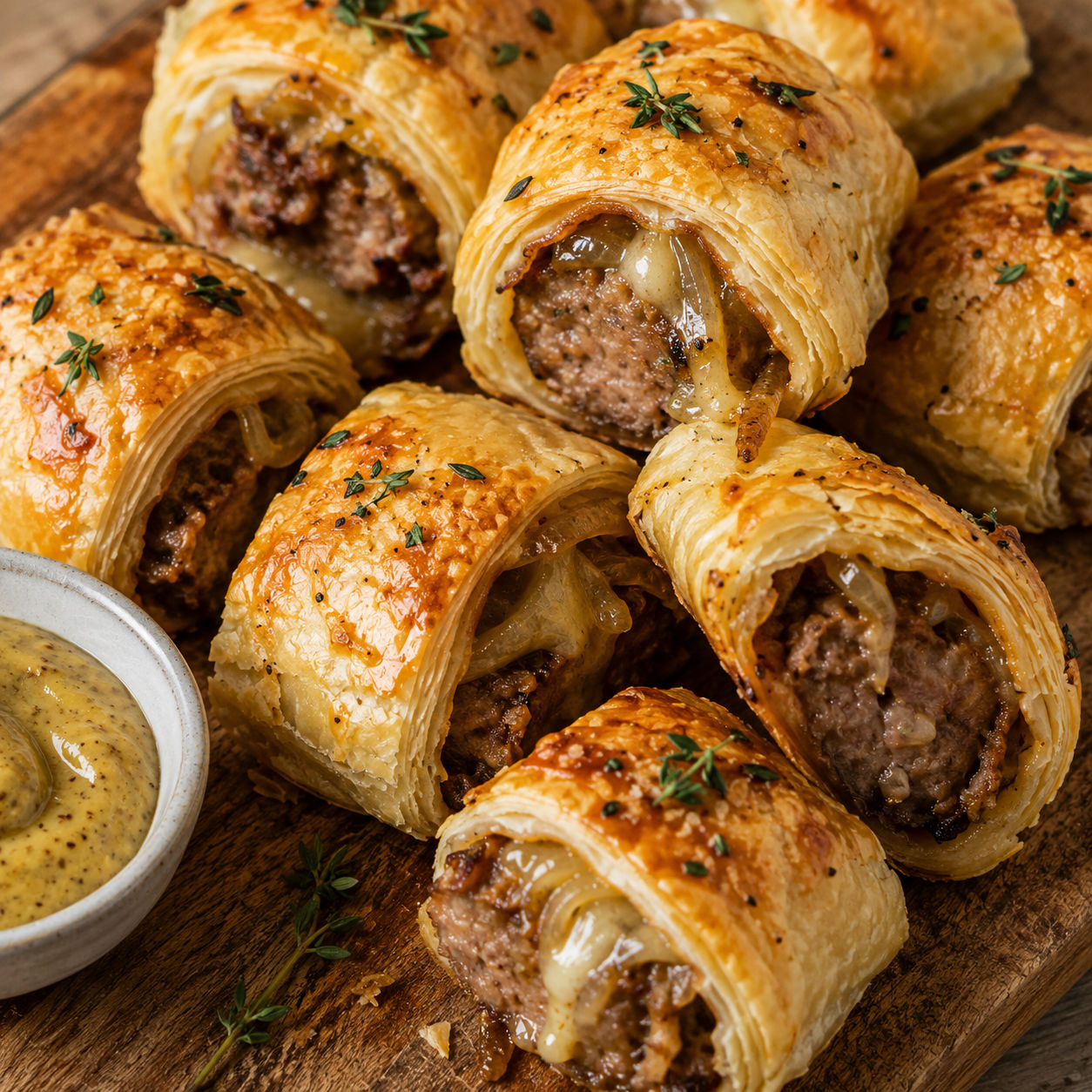
Delicious French Onion Sausage Rolls take the cozy flavor of French onion soup and tuck it inside crisp puff pastry. The filling is rich with slow-cooked onions, savory sausage, a little Dijon, and nutty Gruyere.
I like these best when the onions are cooked a shade darker than you think they need. They turn sweet and jammy, and that keeps the sausage rolls tasting like more than plain pastry wrapped around meat.
French onion filling basics
The best flavor comes from patient onions, not a packet of shortcuts. Use firm yellow onions, good puff pastry, and a sausage that tastes savory rather than sweet.
Gruyere gives the filling that French onion soup feel. A small handful is enough because too much cheese can make the rolls greasy.
- Yellow onions. Cook down into a sweet, savory base that makes the filling taste like French onion soup.
- Butter and olive oil. Help the onions soften without scorching and add richness.
- Fresh thyme. Gives the rolls a woodsy note that belongs with caramelized onions.
- Pork sausage. Brings the juicy center and enough seasoning to carry the pastry.
- Dijon mustard. Cuts through the richness and sharpens the onion flavor.
- Worcestershire sauce. Adds a deep savory note with very little effort.
- Gruyere cheese. Melts into the filling and gives a nutty French onion finish.
- Breadcrumbs. Catch extra juices so the pastry stays crisp underneath.
- Puff pastry. Bakes into flaky layers around the sausage filling.
- Egg wash. Gives the rolls a glossy golden top.
Roll, chill, bake
- Caramelize the onions. Cook sliced onions in butter and oil over medium-low heat until soft, golden, and jammy. Stir often near the end so the edges do not burn.
- Cool the onion mixture. Stir in thyme, Worcestershire, and Dijon, then spread the onions on a plate. Let them cool before they touch the pastry or sausage.
- Mix the filling. Combine sausage, cooled onions, Gruyere, breadcrumbs, pepper, and a little salt. Mix gently until everything is evenly spread through the meat.
- Shape the rolls. Cut each pastry sheet in half lengthwise. Spoon the filling in a long line, brush one edge with egg, and roll tightly to seal.
- Chill and slice. Chill the logs for 15 minutes, then cut each into 8 pieces. Score the tops lightly so steam can escape.
- Bake until crisp. Brush with egg wash and bake at 400 F until deep golden and cooked through, about 22-25 minutes.
Caramelize without rushing
French onion flavor depends on onions that have had time to lose water and brown slowly. If the heat is too high, the edges burn before the centers turn sweet. Keep the pan at medium-low and stir more often once the onions start sticking.
A tiny splash of water can loosen the browned bits on the pan. That dark glaze is flavor, and it should go into the filling. For another cozy onion-heavy bake, try the Cheesy French Onion Potato Bake.
Keep the pastry crisp
Wet filling is the main reason sausage rolls bake up soft on the bottom. Breadcrumbs help, but the bigger fix is cooking moisture out of the onions before they go into the sausage. The filling should feel tacky, not loose.
Chilling the shaped logs also matters. Cold pastry hits the hot oven and puffs into separate layers. If you like a hotter party snack, the same pastry method works well in these Sausage Rolls Hot Honey.
Cheese, mustard, and herbs
Gruyere is the classic choice because it melts smoothly and tastes nutty without getting oily. Swiss is milder. Sharp white cheddar gives a stronger bite and is easier to find.
Dijon does not make the rolls taste mustardy. It wakes up the sausage and onion. Thyme is my first pick, but a little rosemary works if you chop it very fine. For more of that same French onion comfort, the French Onion Meatballs are a good dinner version.
Make ahead for parties
You can assemble these the night before. Keep the long rolls wrapped and chilled, then slice and egg wash when you are ready to bake. The edges cut cleaner when the pastry is cold.
For freezing, slice the unbaked rolls and freeze them flat first. Once firm, move them to a bag or container. Bake from frozen and give them a few extra minutes. The USDA safe temperature chart lists ground pork at 160 F, which is the number to use for the center of these rolls. You can check it here through the USDA safe temperature chart.
What to serve alongside
Serve these warm with a simple mustard dip, onion gravy, or a small bowl of beef broth for dipping. They also sit nicely next to pickles, crisp salad, or roasted potatoes because the filling is rich.
For a cozy spread, pair them with French Onion Soup or make them the appetizer before grilled cheese night with French Onion Grilled Cheese.
Summary
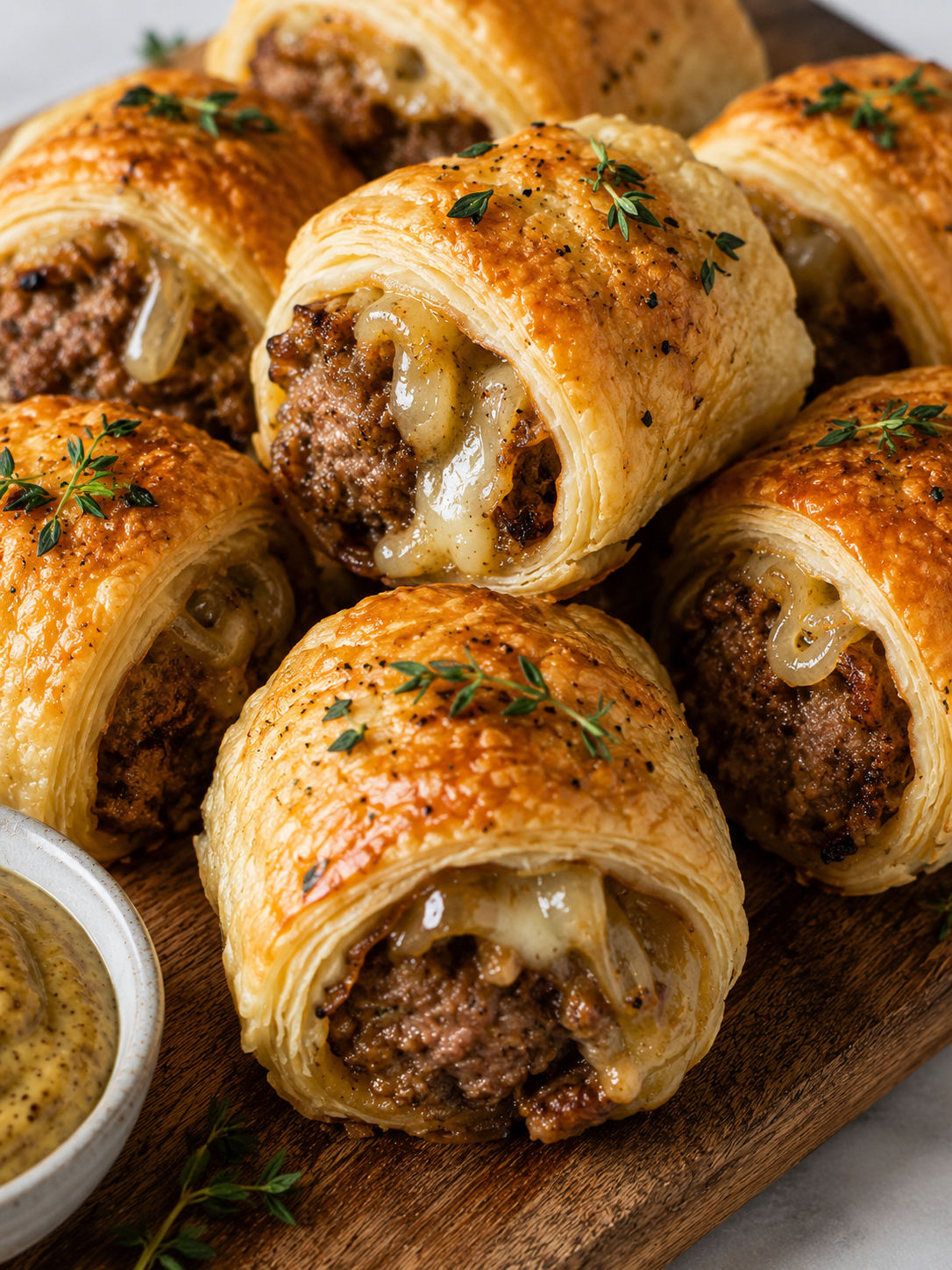
These sausage rolls are best served warm, when the pastry is flaky and the Gruyere is still soft inside.
FAQs
- Can I use store-bought puff pastry?
Yes. Store-bought puff pastry is the right shortcut here. Keep it cold while you work so the butter layers puff instead of melting into the tray.
- What sausage works best for French onion sausage rolls?
Plain pork sausage or mild Italian sausage both work well. Avoid very sweet breakfast sausage because it can fight the savory onion and Gruyere flavor.
- Can I make these ahead?
Yes. Assemble the logs up to one day ahead and keep them covered in the fridge. Slice and egg wash right before baking for the cleanest edges and best rise.
- Can I freeze French onion sausage rolls?
Freeze them unbaked on a tray until firm, then pack into a freezer bag. Bake from frozen at 400 F and add about 5-8 minutes, checking that the centers are fully cooked.
- What can I use instead of Gruyere?
Swiss, sharp white cheddar, or Comte are good substitutes. Choose a cheese that melts well and has enough flavor to stand up to the onions.
- Why did my sausage rolls leak?
The filling may have been too warm or the pastry may not have been chilled before baking. Cool the onions completely, seal the pastry well, and chill the rolls before cutting.
