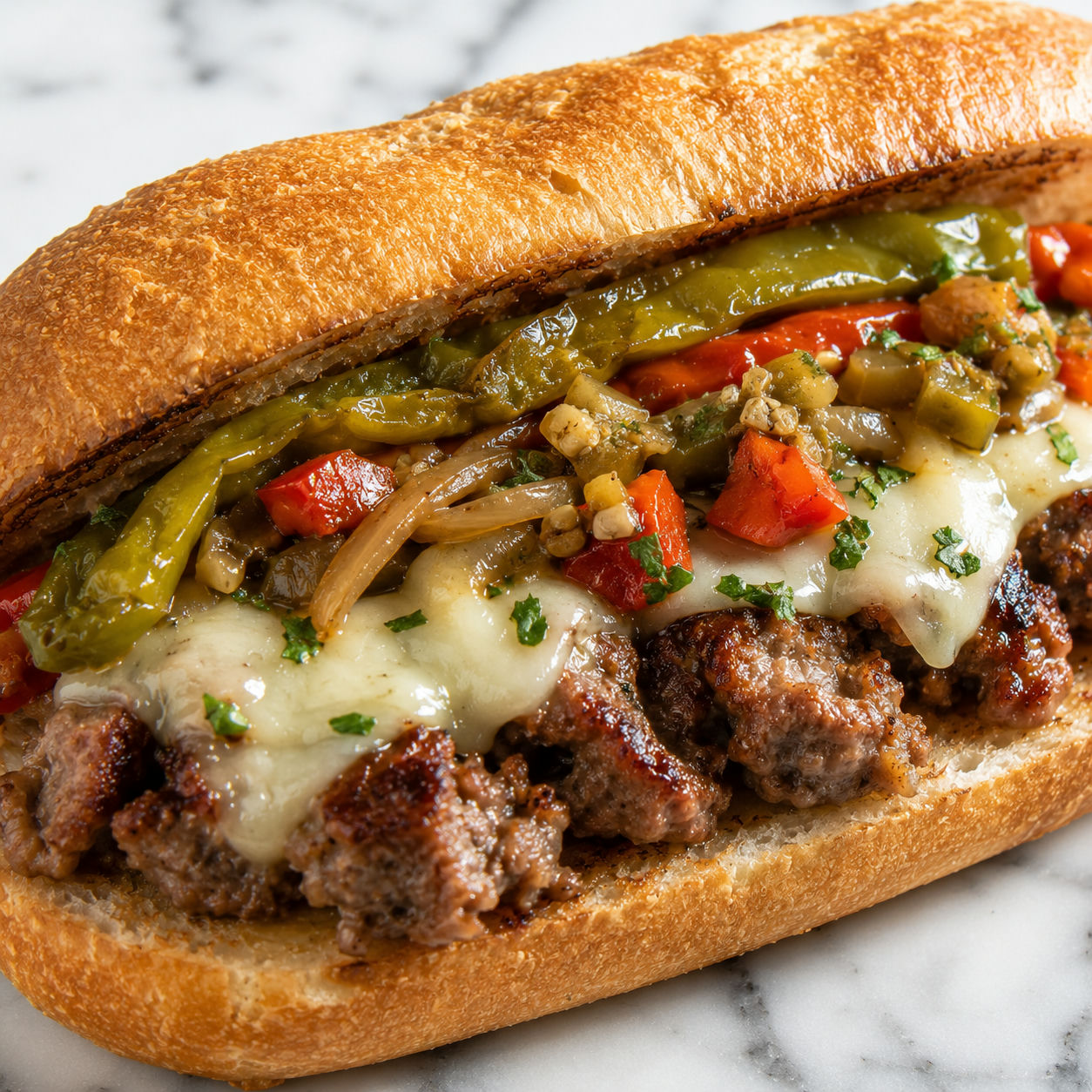
 Pin it
This fire-baked Italian sausage and pepper hoagie is built for the kind of dinner that needs to be loud, messy, and worth the napkins. The sausages roast until browned, the peppers slump and char at the edges, and the giardiniera cuts through all that richness with heat and crunch.
I like this method because it gives you grilled flavor without standing outside. A blazing hot sheet pan does the heavy lifting, then the filled rolls go back under the broiler just long enough to toast and melt.
The bold hoagie lineup
Choose sausages with visible fennel and a little chile if you like heat. For the rolls, go sturdy and fresh because they need to hold juicy peppers, sausage, cheese, and pickled vegetables.
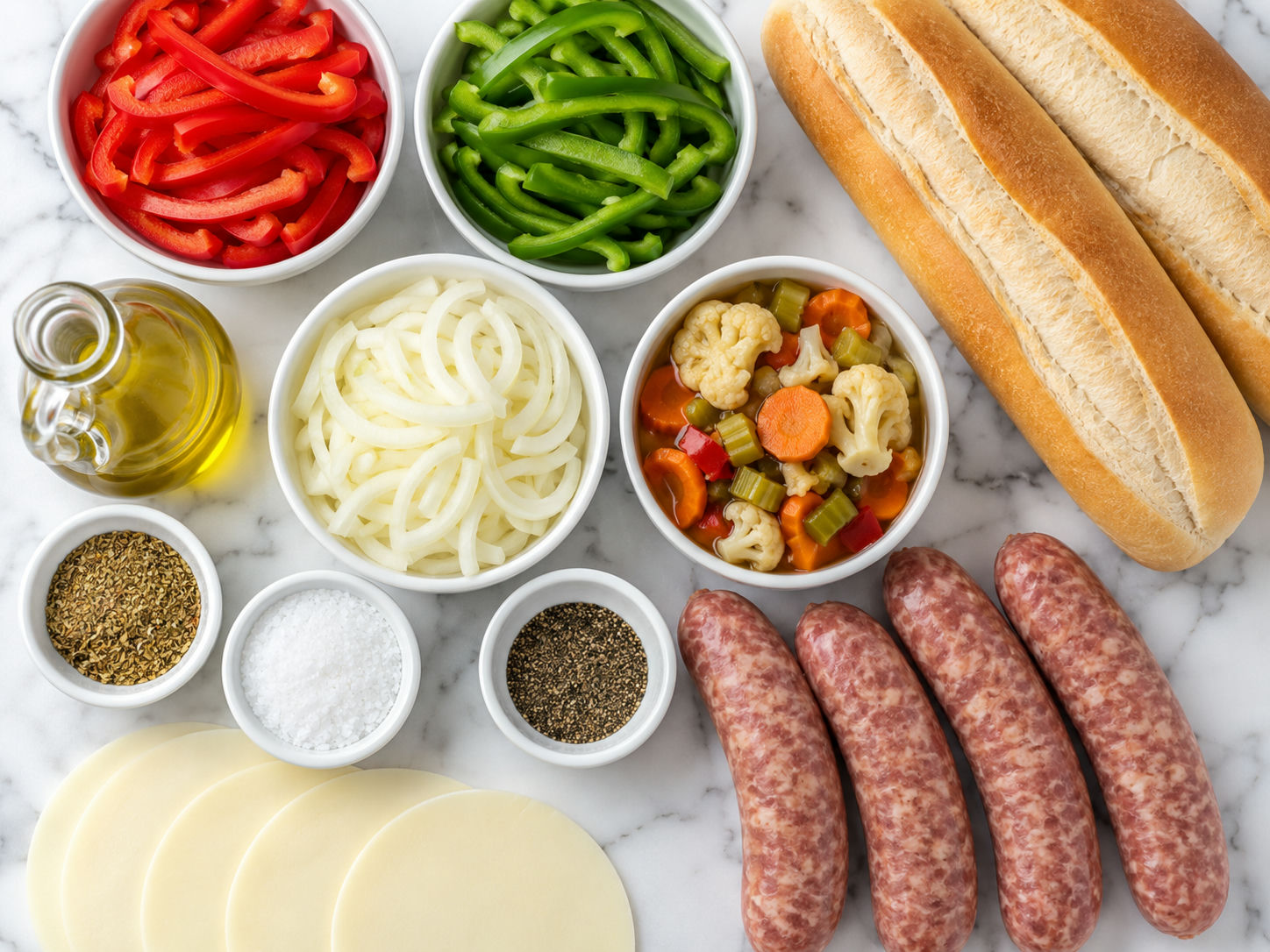
- Italian sausage. The main flavor, rich with fennel, garlic, and chile. Hot or sweet both work.
- Bell peppers. Red and green peppers roast soft and smoky, with enough sweetness to balance the sausage.
- Yellow onion. Onion caramelizes at the edges and gives the hoagie a classic sausage-and-peppers base.
- Olive oil. Helps the vegetables blister instead of dry out in the hot oven.
- Italian seasoning. Adds oregano and herb flavor without turning the recipe fussy.
- Hoagie rolls. A split roll catches the juices and crisps nicely under the broiler.
- Provolone. Melts over the sausage and helps hold the filling together.
- Hot giardiniera. Brings crunchy pickled vegetables, oil, chile heat, and sharpness.
Fire-bake, stuff, and toast
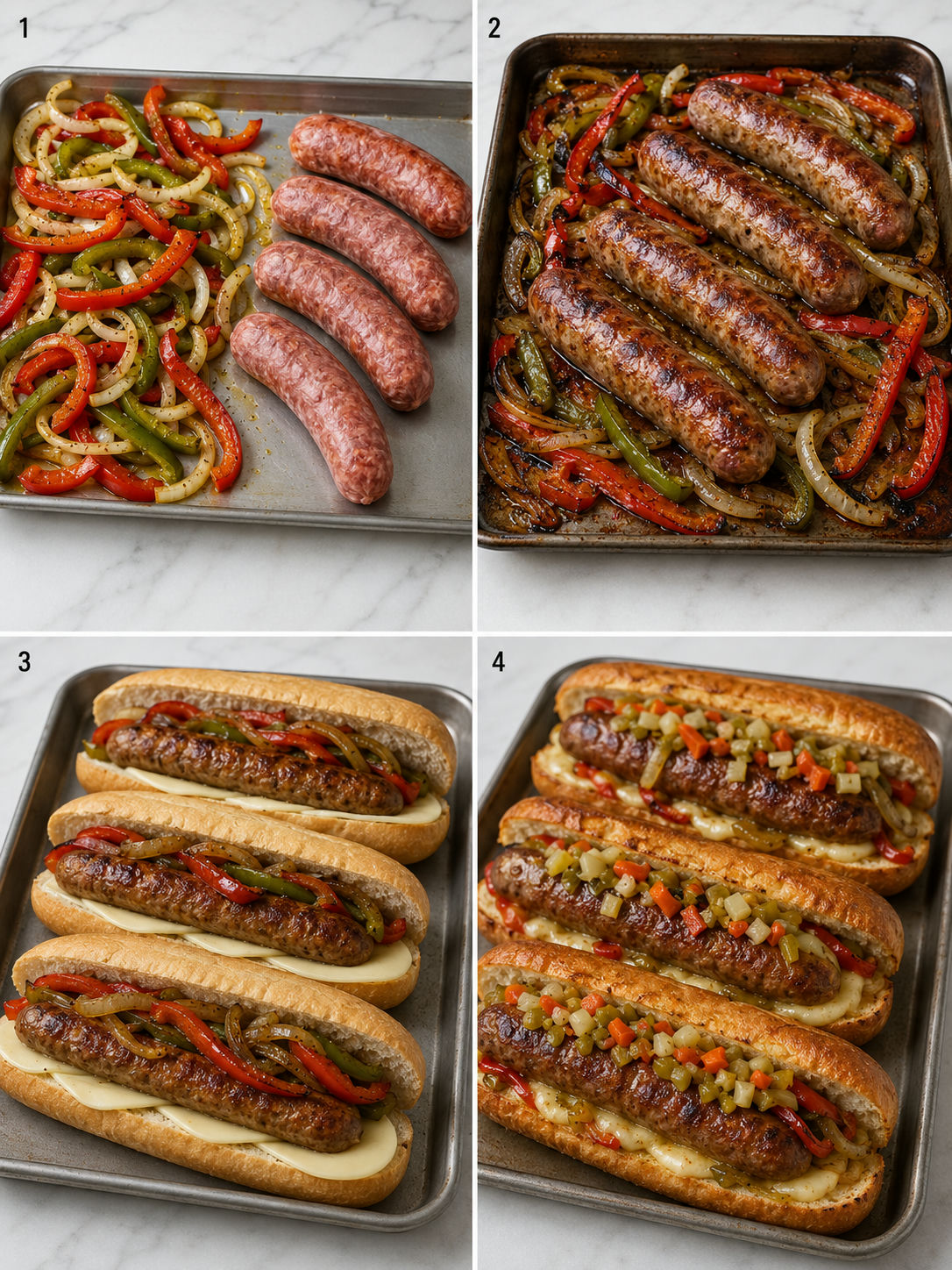
- Heat the pan hard. Put a rimmed sheet pan in a 475°F oven while you slice the peppers and onion. A hot pan gives the vegetables a fast sizzle.
- Roast the filling. Toss peppers and onion with olive oil, seasoning, salt, and pepper. Spread them on the pan with the sausages and roast until the vegetables soften.
- Brown the sausage. Turn the sausages and stir the vegetables. Roast until the sausage is browned and reaches 160°F in the center.
- Build the hoagies. Split the rolls, add provolone, tuck in the sausage, and pile the peppers and onions around it.
- Broil and finish. Broil until the rolls are crisp and the cheese melts. Spoon hot giardiniera over the top right before serving.
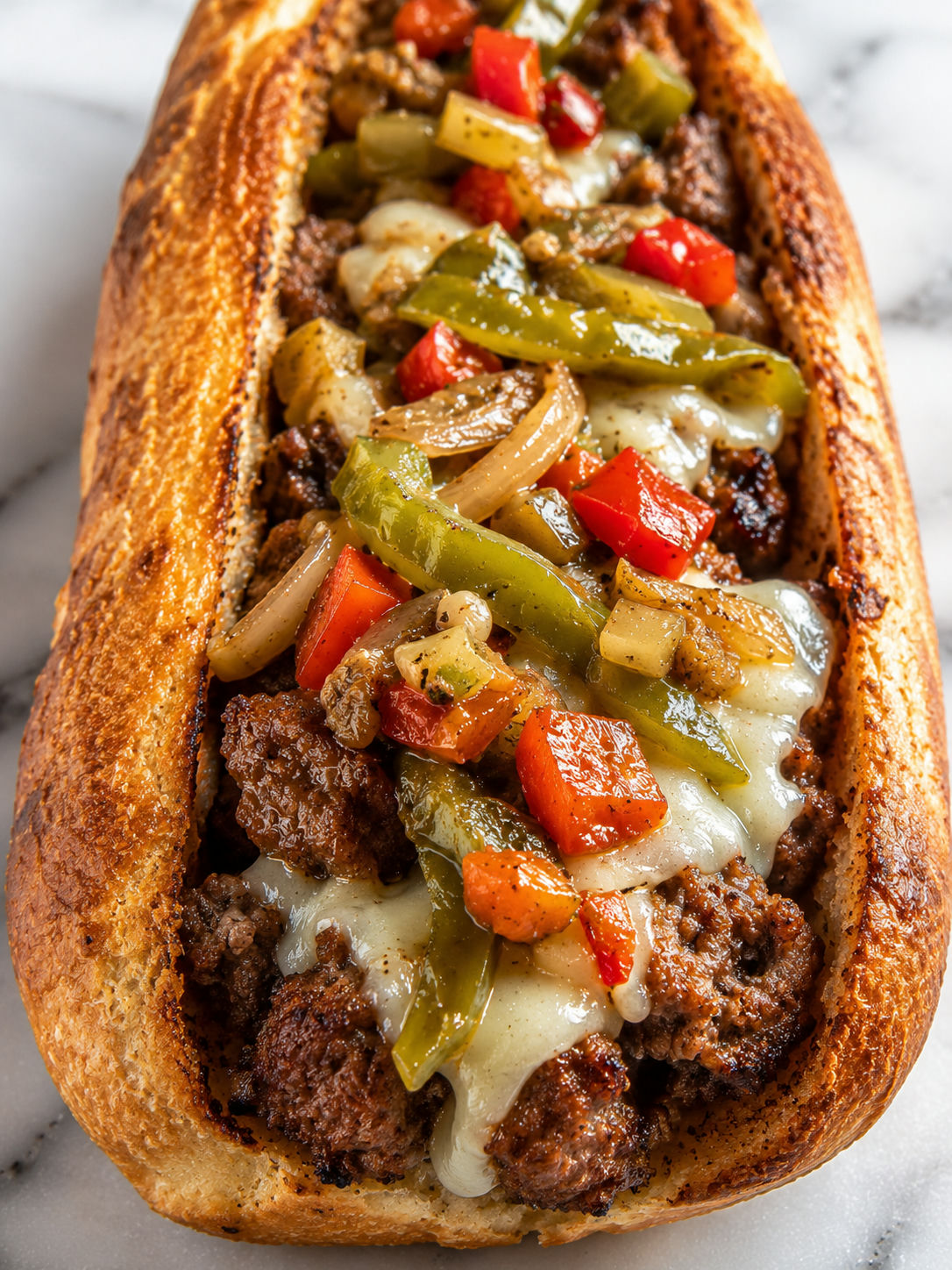
Fire-baked Italian sausage texture
The oven needs to be hot before the food goes in. A room-temperature sheet pan slowly warms the peppers and leaves them steamy. A preheated pan makes the onions hiss on contact, which is the difference between limp vegetables and those browned, almost-grilled edges. Slice the peppers about 1/2-inch thick so they soften but do not disappear.
Give the sausages a little room too. If they sit buried under vegetables, they will cook but they will not brown well. I roast them on top first, then turn them once the underside has color. For safety, check the center with an instant-read thermometer. The USDA sausage safety guide at FSIS is a useful reference for doneness temperatures.
Giardiniera makes the sandwich
Hot giardiniera is not just heat. It adds oil, vinegar, crunch, and tiny pops of pickled vegetables. That matters here because Italian sausage is rich. Without something sharp on top, the hoagie can feel heavy after a few bites.
Chicago-style giardiniera is usually chopped and oil-packed, while Italian-style versions can be larger and more vinegar-forward. Either works, but drain off excess oil if the jar looks very wet. La Cucina Italiana has a helpful background on Chicago-style giardiniera if you want to make a batch at home. If you enjoy this sausage-and-pepper flavor but want pasta, try Tasty Sausage and Pepper Pasta Delight another night.
Cheese, rolls, and smart swaps
Provolone is my first pick because it melts smoothly and tastes good with fennel-heavy sausage. Mozzarella gives you more stretch. Pepper jack is not traditional, but it works if you want a sharper, hotter sandwich. Skip cheese if you want the giardiniera and sausage to be the whole show.
For rolls, avoid anything too airy. A bakery hoagie roll, French roll, or sturdy sub roll is better than a hot dog bun. If your rolls are very thick, pull a little bread from the center so the sausage sits down inside instead of rolling out. For a party tray with the same spirit, Simple Hot Italian Sub Sliders are easier to cut and share.
Serving and make-ahead notes
Serve these hot, with the giardiniera spooned on at the last minute so the bread stays crisp. Fries, chips, a chopped salad, or roasted potatoes all make sense. If you want a fuller sausage dinner later in the week, Savor Italian Sausage & Bow Tie Pasta uses the same pantry direction in a softer, saucier way.
Leftover sausage and peppers keep in the fridge for up to three days. Store them separate from the rolls. Reheat the filling in a skillet until hot, then assemble fresh hoagies and broil them. Already assembled sandwiches can be wrapped and reheated, but the bread will be softer.
FAQs
- Can I use sweet Italian sausage instead of hot?
Yes. Sweet Italian sausage works well if you want less heat. Keep the hot giardiniera on top, or use mild giardiniera if you want the whole sandwich gentler.
- What kind of rolls are best for sausage hoagies?
Use sturdy hoagie rolls or French sandwich rolls with a little chew. Very soft rolls can collapse once the sausage juices and giardiniera oil hit them.
- How do I know the sausage is cooked through?
Pork Italian sausage should reach 160°F in the center. A thermometer is the easiest check because browning on the outside does not always mean the middle is done.
- Can I make the sausage and peppers ahead?
You can roast the sausage, peppers, and onions up to two days ahead. Reheat them in a covered skillet with a splash of water, then assemble and broil the hoagies right before serving.
- What can I use instead of giardiniera?
Chopped banana peppers, pepperoncini, or a spicy pickled vegetable mix all work. The key is acidity, heat, and crunch so the sandwich does not taste heavy.
- Can these be made on a grill?
Yes. Grill the sausages over medium heat and cook sliced peppers and onions in a grill basket. Split the rolls, add cheese, and toast them briefly over indirect heat.
