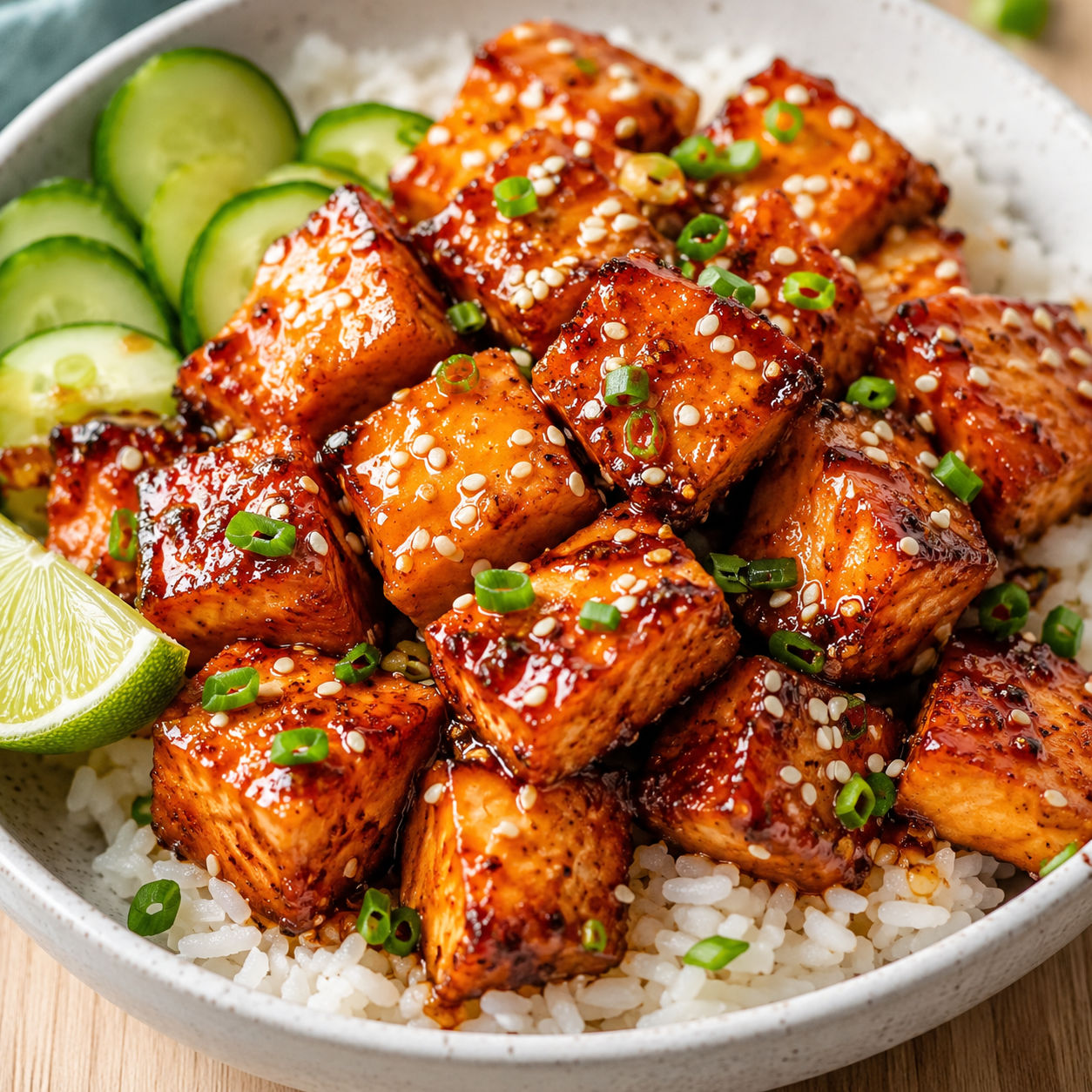
 Pin it
Quick Honey Garlic Salmon Bites are the salmon dinner I reach for when fillets feel too slow and takeout is tempting. Cutting the fish into cubes gives every piece more surface area, so the edges brown fast while the centers stay soft.
The sauce is short and punchy. Honey makes it glossy, soy sauce gives it depth, rice vinegar keeps it from tasting flat, and fresh garlic does the heavy lifting. Keep the pan hot and the pieces spaced out. That is where the good texture comes from.
Quick Honey Garlic Salmon Bites
Choose center-cut salmon if you can. It cubes evenly and cooks at the same pace. Skinless fillets save time, but skin-on salmon works if you trim the skin off with a sharp knife first.
The glaze is pantry-friendly, but fresh garlic is worth it here. Jarred garlic can taste dull once it hits the honey and soy.
- Salmon. The main ingredient, cut into 1-inch pieces so each bite gets browned edges.
- Cornstarch. A light coating helps the salmon crisp without deep frying.
- Paprika and garlic powder. Season the surface quickly and help the cubes brown.
- Avocado oil. Handles the hot skillet better than delicate oils.
- Honey. Turns the sauce glossy and sticky as it simmers.
- Low-sodium soy sauce. Balances the honey with salt and savory depth.
- Rice vinegar. Adds a clean tang so the glaze does not taste heavy.
- Fresh garlic and ginger. Give the sauce its sharp, warm backbone.
- Sesame seeds and green onions. Add crunch, color, and a fresh finish.
Sear, Glaze, Toss
- Dry and cube the salmon. Pat the fillets dry, cut them into even 1-inch pieces, then season with cornstarch, paprika, garlic powder, salt, and pepper.
- Sear in batches. Heat oil in a wide skillet over medium-high heat. Add the salmon in a single layer and cook for 1-2 minutes per side until golden. Move it to a plate.
- Start the aromatics. Lower the heat to medium. Add garlic and ginger to the same pan and stir for about 30 seconds until fragrant.
- Simmer the glaze. Pour in honey, soy sauce, rice vinegar, and chili flakes. Let it bubble for 2-3 minutes until slightly thickened.
- Coat and finish. Return the salmon to the skillet and gently turn the bites in the sauce until glossy. Sprinkle with sesame seeds and green onions.
Keep The Edges Crisp
The fastest way to lose the crisp edges is crowding the pan. Salmon releases steam as it cooks. If the cubes are packed together, that steam gets trapped and softens the coating before it can brown. Use a wide skillet and cook in two batches if needed.
Do not move the pieces the second they hit the pan. Give them a full minute to form a crust, then turn with tongs or a thin spatula. This is the same skillet logic that makes garlic butter steak bites work so well. Hot pan, dry surface, enough space.
The Glaze Should Bubble
Honey garlic sauce needs a short simmer before the salmon goes back in. The bubbles tell you the water is cooking off and the honey is tightening into a glaze. If you add the salmon too soon, the sauce slides off instead of coating the cubes.
Keep the heat at medium once the honey is in the pan. Too hot and the garlic can scorch before the sauce thickens. If the glaze gets too thick, add a teaspoon or two of water and swirl the pan. For a fillet version with the same sweet-savory profile, try honey garlic salmon fillets.
Swaps For Your Pan
Tamari is the easiest gluten-free swap for soy sauce. Coconut aminos also work, but they are sweeter and lighter, so start with a little less honey. Maple syrup can replace honey in a pinch. The flavor is softer, and the glaze will be a bit less sticky.
Add sriracha or chili crisp if you want heat. Add a squeeze of lemon at the end if your honey is very sweet. The FDA has a useful seafood safety guide for buying, storing, and serving fish safely. If you prefer a spicy air fryer version, the hot honey salmon bites are a good next step.
Make It A Meal
Rice is the obvious landing place because it catches every drop of sauce. I like plain jasmine rice with cucumber slices and a little extra green onion. For vegetables, go with quick options that do not fight the glaze. Broccoli, snap peas, roasted carrots, and asparagus all fit.
Leftovers keep well for lunch, but reheat them gently. The FoodSafety.gov cold storage chart is a helpful reference for timing. For another salmon dinner with a richer garlic finish, save garlic butter salmon with spinach and mushrooms.
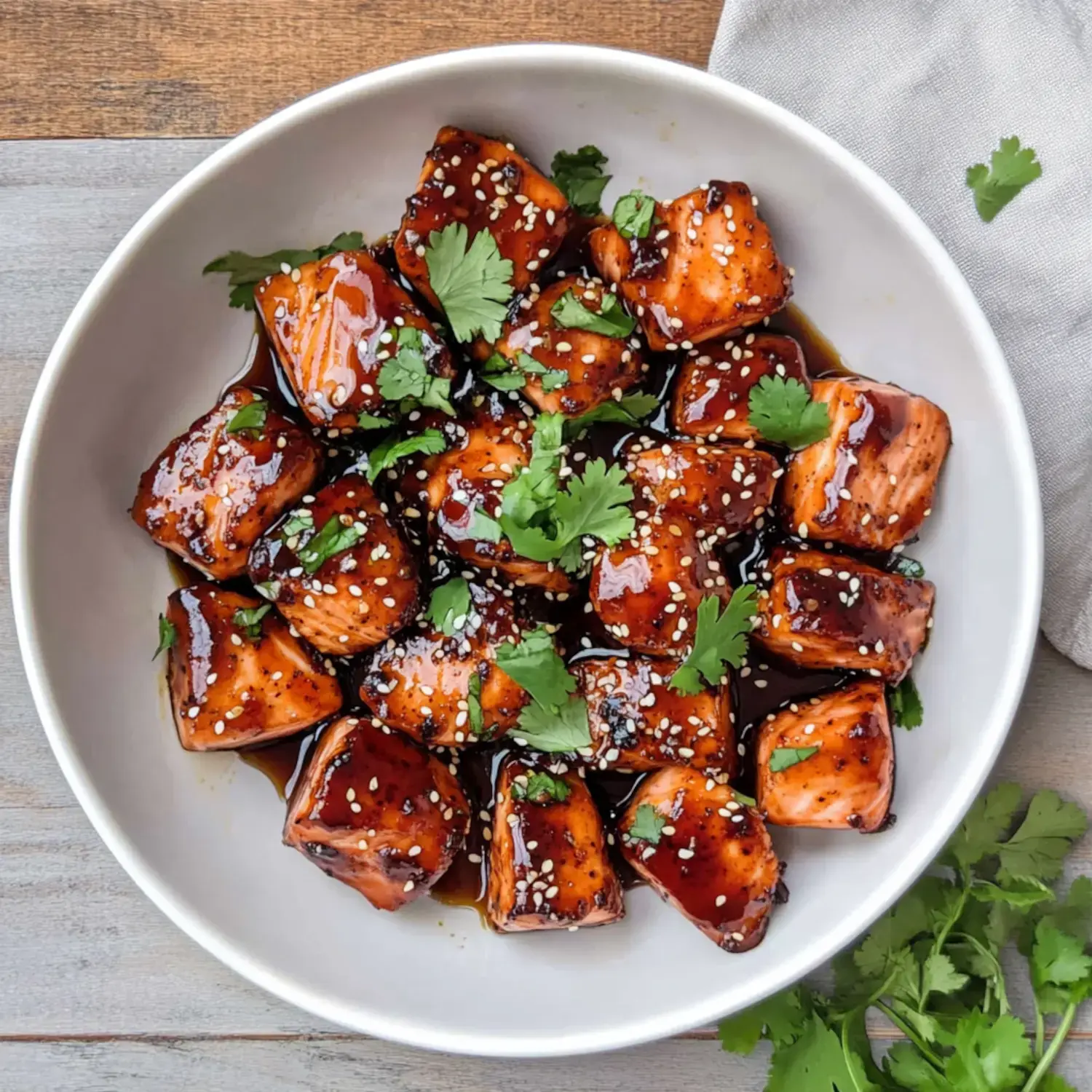

FAQs
- Can I use frozen salmon for salmon bites?
Yes. Thaw the salmon overnight in the refrigerator, then pat it very dry before cutting it. Extra surface moisture makes the cubes steam in the skillet instead of browning.
- What can I use instead of soy sauce?
Use tamari for a gluten-free option or coconut aminos for a slightly sweeter sauce. If using coconut aminos, taste before adding all the honey because the glaze may need less sweetness.
- How do I know when salmon bites are done?
The cubes should be opaque on the outside and just tender in the middle. The FDA recommends cooking fish to 145°F, but small salmon cubes can climb quickly, so pull them as soon as they flake and feel springy.
- Can I make Quick Honey Garlic Salmon Bites in the air fryer?
Yes. Air fry the seasoned salmon at 390°F for about 7-9 minutes, shaking once. Warm the sauce in a small pan and toss the cooked bites in the glaze right before serving.
- How should I store leftovers?
Refrigerate leftovers in an airtight container for up to 3 days. Reheat gently in a skillet over low heat with a spoonful of water so the glaze loosens without drying out the salmon.
- What should I serve with honey garlic salmon bites?
Steamed jasmine rice, coconut rice, roasted broccoli, cucumber salad, or garlicky green beans all work well. For a lighter plate, spoon the bites over cauliflower rice and add extra scallions.
