 Pin it
Creamy Chicken Rotini with Velveeta and Rotel is the kind of dinner that smells like someone had a real plan, even when it starts with pantry cans and a block of cheese. The rotini catches the sauce in every curl, and the Rotel gives the rich cheese enough tomato and chile bite to keep it from feeling flat.
I like this as a skillet meal because the pasta absorbs the chicken broth while it cooks. You get more flavor than you would from boiling the noodles separately, and the sauce comes together without a fussy roux.
The cheesy skillet lineup
This recipe leans on simple ingredients, so each one should help the sauce or the texture. Cut the chicken small enough to cook quickly, and keep the Velveeta in cubes so it melts evenly instead of sitting in one heavy lump.
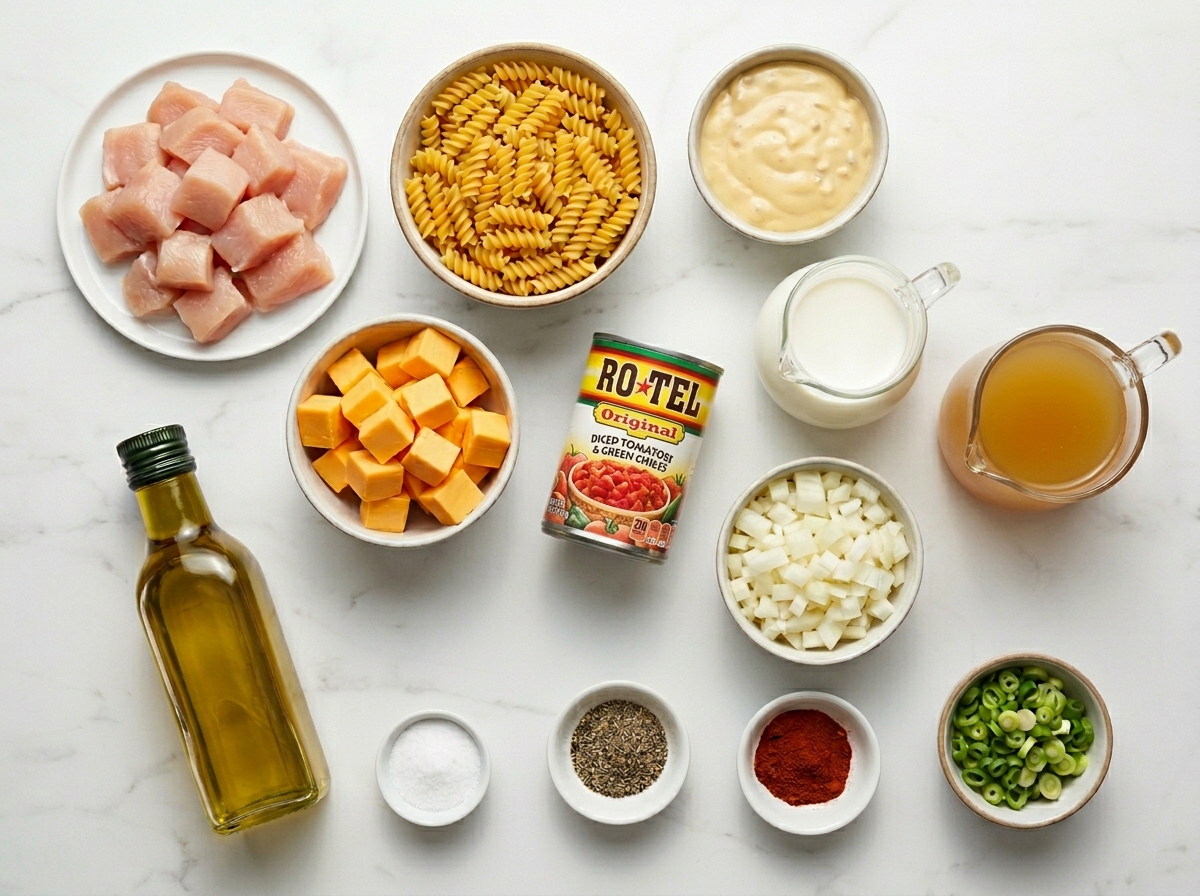
- Chicken breast. Bite-size pieces cook fast and add lean protein to the pasta.
- Rotini. The spiral shape traps the creamy cheese sauce in its ridges.
- Rotel tomatoes and green chiles. Adds tomato flavor, gentle heat, and enough acidity to balance the cheese.
- Velveeta. Melts into a smooth sauce without turning grainy.
- Cream of chicken soup. Gives the sauce body and a savory chicken base.
- Milk. Loosens the cheese and keeps the skillet creamy.
- Chicken broth. Cooks the pasta and seasons it from the inside.
- Onion and garlic. Add a cooked, savory backbone before the sauce goes in.
Build the creamy rotini
- Brown the chicken. Season the chicken and cook it in a large skillet until the outside is lightly golden and the pieces are cooked through.
- Soften the aromatics. Add onion and garlic to the same pan, scraping up the browned bits so the sauce tastes deeper.
- Simmer the pasta. Stir in broth, Rotel, and rotini. Cover and cook until the pasta is just tender, stirring often so it does not stick.
- Add the creamy base. Stir in cream of chicken soup and milk until the sauce looks even and warm.
- Melt the cheese. Add Velveeta cubes over low heat and stir until the sauce is glossy and coats every curl of pasta.
- Rest before serving. Let the skillet sit for 3 minutes. The sauce thickens slightly and clings better to the rotini.
Creamy Chicken Rotini timing
The key is to stop cooking the rotini when it is just tender. Spiral pasta can go from firm to swollen fast in a covered skillet, especially once the sauce starts thickening. Check it at 9 minutes, then every minute after that. If the pan looks dry before the pasta is done, add broth or hot water by the splash.
Keep the heat at a gentle simmer. A hard boil can make the dairy separate later and can glue pasta to the bottom of the pan. If you enjoy this style of easy creamy dinner, One Pot Creamy Chicken Pasta uses the same skillet logic with a milder sauce.
Why Velveeta works here
Velveeta is built for smooth melting, which is why it behaves so well in this recipe. It turns the condensed soup, milk, and tomato juices into a sauce that coats the pasta instead of breaking into oily puddles. Shredded cheese can taste sharper, but it needs more care. Add it off the heat and use freshly shredded cheese if you go that route.
The Rotel matters too. Its tomatoes and green chiles cut through the richness and give the sauce a warmer, slightly tangy finish. For a similar cheese-and-chicken comfort dinner with a different shape, try Creamy Crack Chicken Macaroni and Cheese.
Chicken safety and doneness
Small chicken pieces cook quickly, but do not guess by color alone. The safest cue is an internal temperature of 165°F in the thickest piece, which matches the USDA safe temperature chart. Once the chicken is done, the rest of the recipe is about melting and simmering.
If you are using leftover rotisserie chicken, skip the browning step and warm it gently near the end. That keeps the chicken from drying out while the Velveeta melts. The official Velveeta cheesy chicken rotini recipe also uses the same basic idea of pasta, chicken, Rotel, and cheese in one pan.
Swaps that fit the skillet
You can make this pasta heavier or lighter without changing the method. Use chicken thighs for a juicier bite, or use cooked turkey if that is what you have. Mild Rotel is best for kids, while hot Rotel gives the sauce a stronger chile kick. A handful of frozen broccoli or corn makes the skillet feel more complete.
For a creamier pasta with garlic instead of tomatoes and chiles, Creamy Garlic Chicken Penne is a good next dinner. If you want to stay close to the Rotel flavor, Rotel Chicken Pasta Cheese keeps the same cheesy, tomato-chile mood.
Store it without drying out
This pasta is at its best right after cooking, while the sauce is loose and glossy. Leftovers still reheat well if you treat them gently. Store them in a shallow airtight container for up to 3 days. Add a splash of milk before reheating, then warm in short bursts in the microwave or over low heat in a skillet.
I do not love freezing this one. The cheese sauce can turn grainy after thawing, and the rotini softens. If you want to prep ahead, cube the Velveeta, chop the onion, and cut the chicken earlier in the day. Dinner will move fast once the pan hits the stove.

Summary
This cheesy chicken rotini is best served hot from the skillet, with extra milk nearby if you want to loosen the sauce before serving.

FAQs
- Can I use cooked chicken instead of raw chicken?
Yes. Stir in 2 1/2 to 3 cups of cooked chopped or shredded chicken after the pasta is tender. Let it heat through for a few minutes before adding the Velveeta.
- What can I use instead of Velveeta?
American cheese melts closest to Velveeta. A mix of cheddar and Monterey Jack works too, but shred it yourself and keep the heat low so the sauce stays smooth.
- Is Rotel very spicy in this pasta?
Original Rotel gives the dish a mild to medium kick. Use mild Rotel for less heat, or hot Rotel with a pinch of cayenne if you want it spicier.
- How do I keep the sauce from getting too thick?
Velveeta firms up as it cools, so keep a little milk or broth nearby. Stir in a splash at a time over low heat until the sauce loosens and coats the pasta again.
- How long do leftovers keep?
Store leftovers in an airtight container in the refrigerator for up to 3 days. Reheat gently on the stove or in the microwave with a splash of milk to bring back the creamy texture.
- Can I add vegetables?
Yes. Frozen broccoli, peas, corn, or a pepper and onion blend all work well. Add quick-cooking frozen vegetables during the last 5 minutes of simmering so they stay tender, not mushy.
