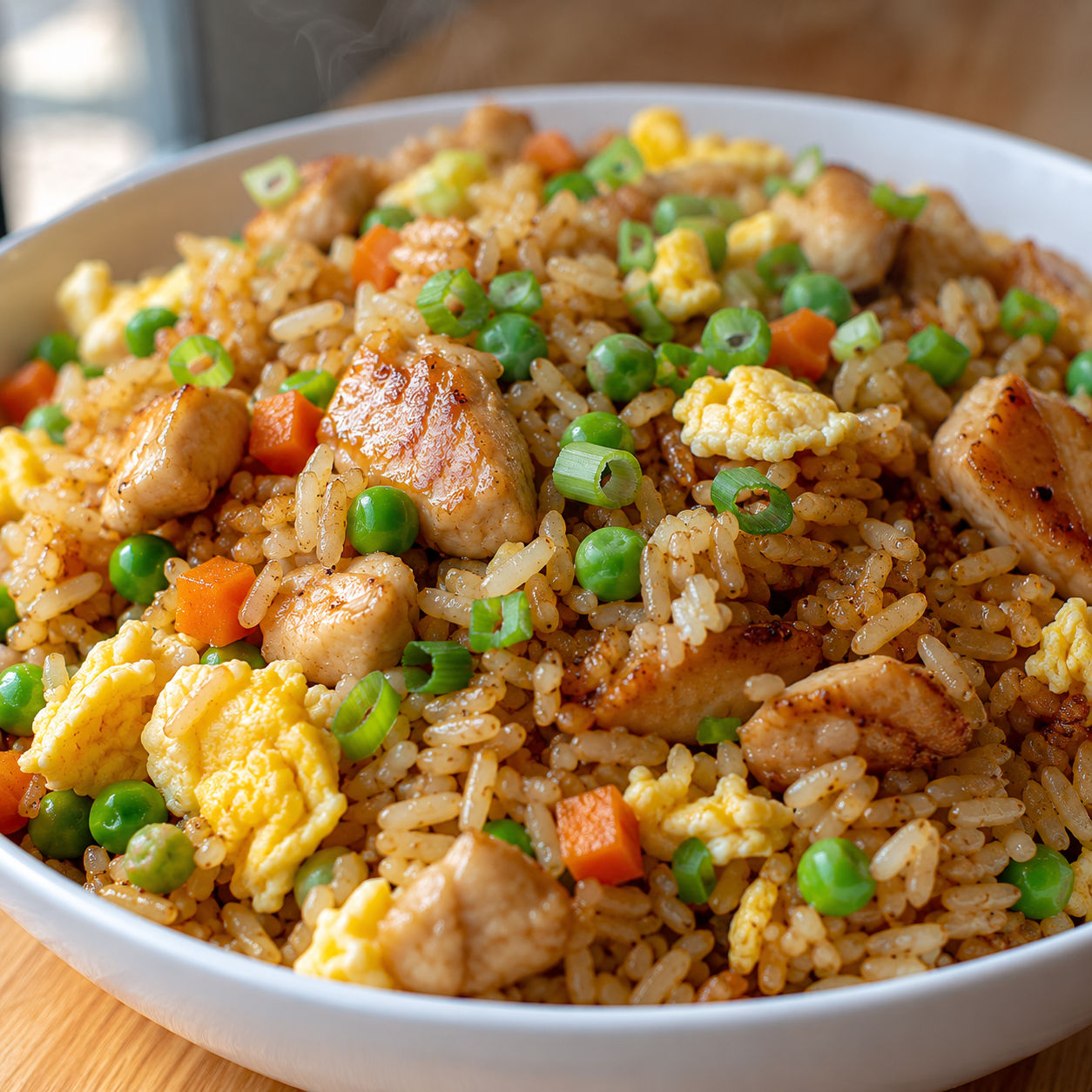
 Pin it
This is the dinner I make when I have leftover rice and zero patience for a long kitchen session. It comes together in one pan, uses whatever vegetables are in the freezer, and tastes better than most takeout versions because the chicken actually browns.
The real secret is patience. Cook each component separately, keep the heat high, and add the soy sauce at the very end so it caramelizes rather than steams.
What goes into the wok
The ingredient list is short, but every item has a job. Day-old rice is non-negotiable for texture, while chicken thighs bring more flavor and moisture than breast. Fresh ginger and garlic are worth the extra minute of prep.
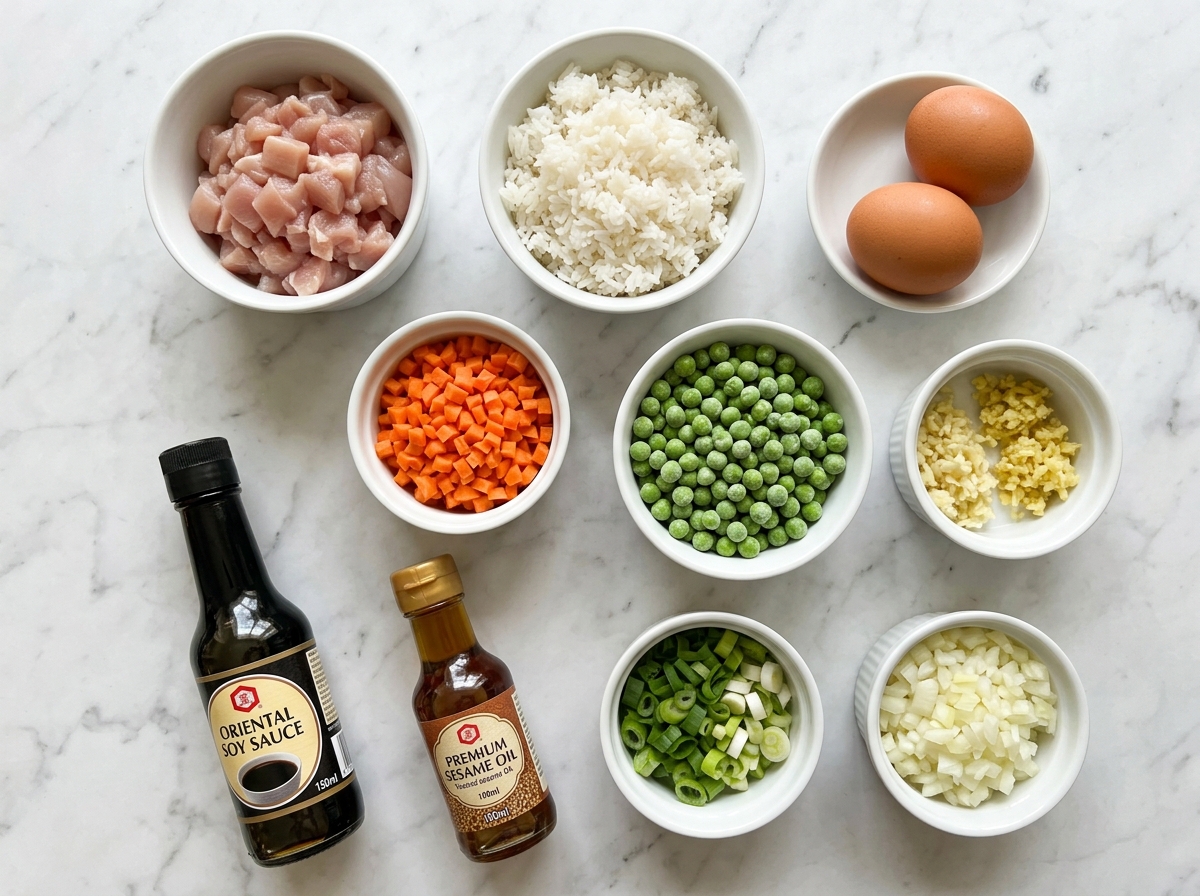
- Chicken thighs. Cut into small cubes, they brown quickly and stay tender even after a second pass in the hot pan.
- Day-old jasmine rice. The drier grains separate easily and fry up with chewy, crisp edges instead of turning mushy.
- Eggs. Scrambled first and removed, they create golden ribbons that stay distinct rather than disappearing into the rice.
- Onion, carrot, and peas. The classic trio for sweetness and color. Frozen peas work perfectly.
- Garlic and ginger. Minced fine and cooked briefly, they add aroma without bitterness.
- Soy sauce and sesame oil. The soy seasons and colors the rice, while a small drizzle of sesame oil at the end adds nutty depth.
- Scallions. Added in two stages for layered flavor. The whites go in early, the greens at the very end.
- Chinese five-spice powder. Optional, but a pinch adds warm complexity that makes the rice taste like it came from a restaurant wok.
How to build the layers
- Prep everything first. Fried rice moves fast, so dice the chicken and vegetables, whisk the eggs, and measure the sauces before you turn on the heat. This mise en place step is what separates calm cooking from chaos.
- Scramble the eggs. Heat 1 tablespoon of oil in a wok or large skillet over medium-high heat. Pour in the whisked eggs and scramble quickly, breaking them into small curds. Transfer to a plate.
- Sear the chicken. Add another tablespoon of oil. Add the chicken cubes in a single layer and cook for 4 to 5 minutes, stirring occasionally, until browned and cooked through. Transfer to a plate. Wipe out any stuck bits so they do not burn.
- Cook the vegetables. Swirl in the remaining tablespoon of oil over medium-high heat. Add the diced onion and cook for 1 minute until it starts to soften. Add the minced garlic, ginger, and carrots. Cook for 2 minutes, stirring often. Add the peas and the remaining salt.
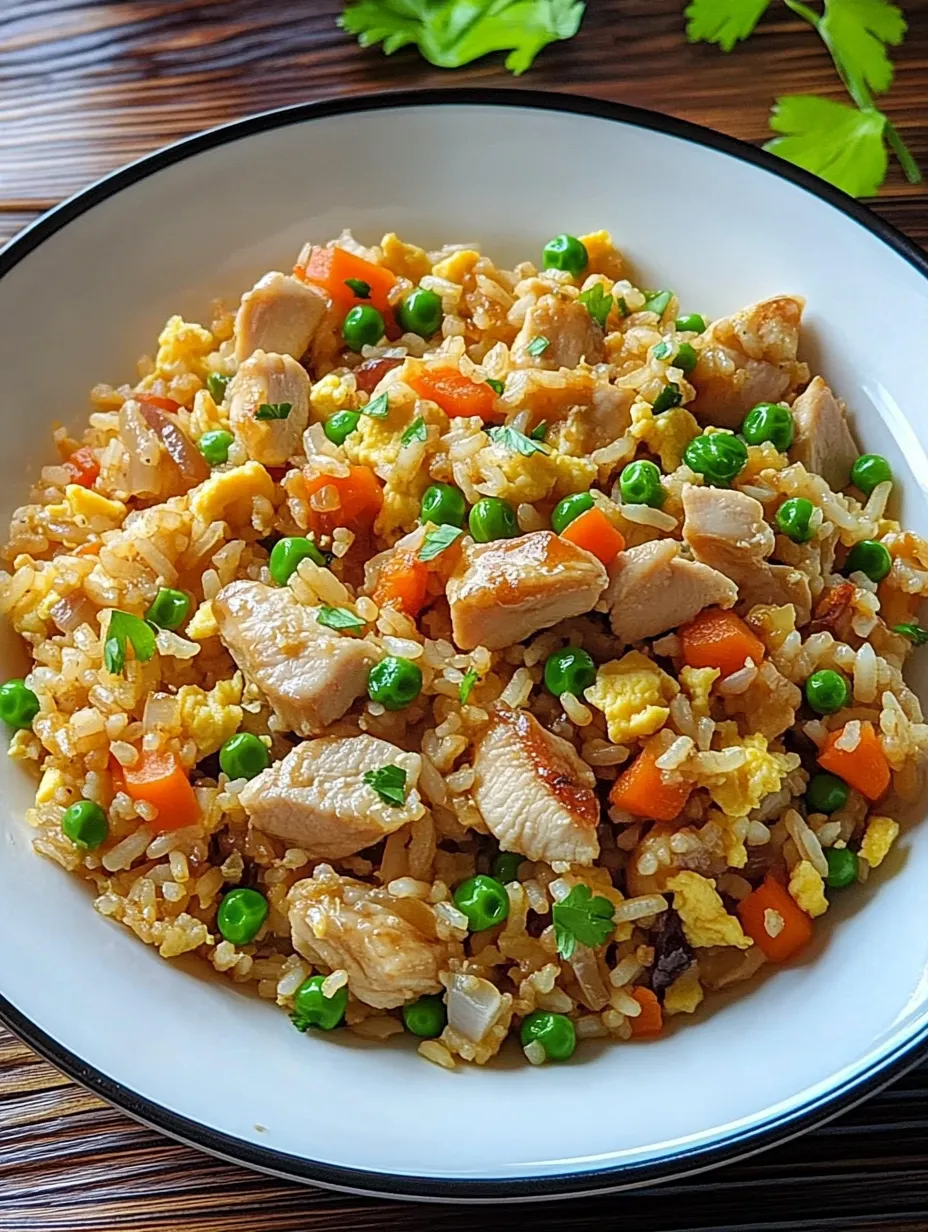
- Fry the rice and finish. Add the cold rice and break up clumps with your spatula. Add the white and light green scallion parts and the five-spice powder. Drizzle in the soy sauce and sesame oil, tossing constantly. Return the chicken and eggs to the pan, add the dark green scallions, and toss for 1 to 2 minutes until everything is hot and evenly coated. Taste and add more soy sauce if needed.
Why day-old rice matters
Freshly cooked rice contains too much moisture. When it hits a hot pan, it steams and clumps instead of frying. Day-old rice has had time to dry out, so the grains stay separate and develop those little crisp edges that make fried rice addictive.
If you forgot to save leftovers, cook a fresh batch, spread it on a sheet pan, and let it cool uncovered for at least an hour. You can also refrigerate it for 30 minutes. The goal is surface dryness.
This same principle applies to other fried rice recipes on the site. If you want a smoky spin, try our BBQ chicken fried rice. For something with a kick, the Bang Bang chicken fried rice delivers heat and creaminess in the same bowl.
Swaps that keep it easy
No jasmine rice? Long-grain white or even brown rice works. Just avoid short-grain or sushi rice, which is too sticky. No chicken thighs? Use breast, pork tenderloin, or tofu. Cut everything into similar-sized pieces so they cook evenly.
You can also swap the frozen peas for edamame, corn, or diced bell peppers. If you want a hibachi-style experience at home, our classic hibachi chicken with fried rice and vegetables uses the same technique with a few extra aromatics.
The U.S. Department of Agriculture recommends cooking chicken to an internal temperature of 165°F. You can review their USDA chicken safety guidelines for full details.
Storing and reheating leftovers
Keep leftovers in an airtight container in the refrigerator for up to 3 days. Fried rice is best reheated in a hot skillet with a splash of water to revive the grains. The microwave works in a pinch, but the texture will be softer.
FAQs
- Can I use freshly cooked rice?
You can, but the texture will suffer. Fresh rice is too moist and will clump together in the pan. If you do not have day-old rice, spread freshly cooked rice on a baking sheet and let it dry at room temperature for 1 to 2 hours, or pop it in the fridge uncovered for 30 minutes.
- What cut of chicken works best?
Chicken thighs are ideal because they stay juicy even if you cook them a minute too long. Breast works too, but cut it slightly smaller and pull it from the pan as soon as it is opaque through the center to keep it tender.
- Can I make this gluten-free?
Yes. Swap the soy sauce for tamari or a certified gluten-free soy sauce. Double-check that your oyster sauce or sesame oil is gluten-free if you add them.
- How do I keep fried rice from getting soggy?
Use cold, dry rice and a very hot pan. Do not overcrowd the wok. If the rice sticks or steams instead of frying, your pan is not hot enough or you have too much in it at once. Cook in two batches if needed.
- What pan should I use?
A carbon steel wok is the classic choice, but a large cast-iron skillet or nonstick sauté pan works well too. The key is size. You need enough surface area for ingredients to sear rather than steam.
- Can I freeze leftovers?
Fried rice freezes better than you might expect. Cool it completely, then pack into airtight containers or freezer bags for up to 2 months. Reheat straight from frozen in a hot skillet with a splash of water.
- What other proteins can I use?
Shrimp, pork, tofu, or even diced ham all work with the same method. If you want a seafood version, try our easy shrimp fried rice instead.
- How do I add more vegetables?
Diced bell peppers, zucchini, snap peas, or cabbage all work. Add harder vegetables like carrots with the onion, and quick-cooking ones like spinach or bean sprouts in the last minute of frying.
