 Pin it
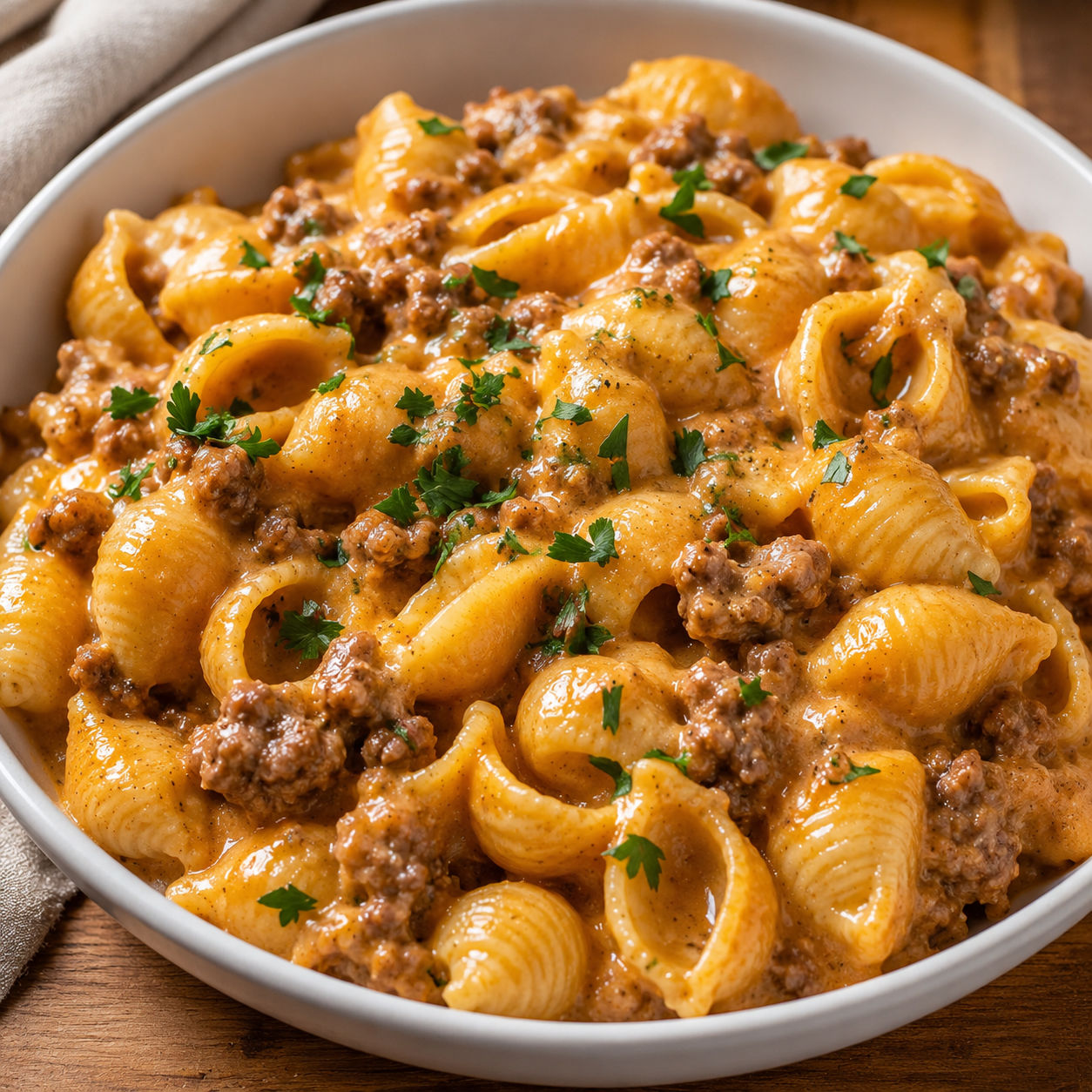
Velveeta Beef and Shells with Creamy Sauce is the kind of skillet dinner that lands right between homemade comfort food and the boxed pasta meals many of us grew up with. The shells cook in the same pan as the beef and tomato broth, so they soak up flavor before the cheese even goes in.
The trick is simple. Let the pasta get tender first, then take the pan off the heat before adding the cream and cheese. That keeps the sauce smooth instead of grainy.
What Makes The Sauce Work
This dish needs a few sturdy ingredients more than a long list. Use medium shells so the sauce catches inside each curve, and cut the Velveeta into small cubes so it melts fast without extra heat.
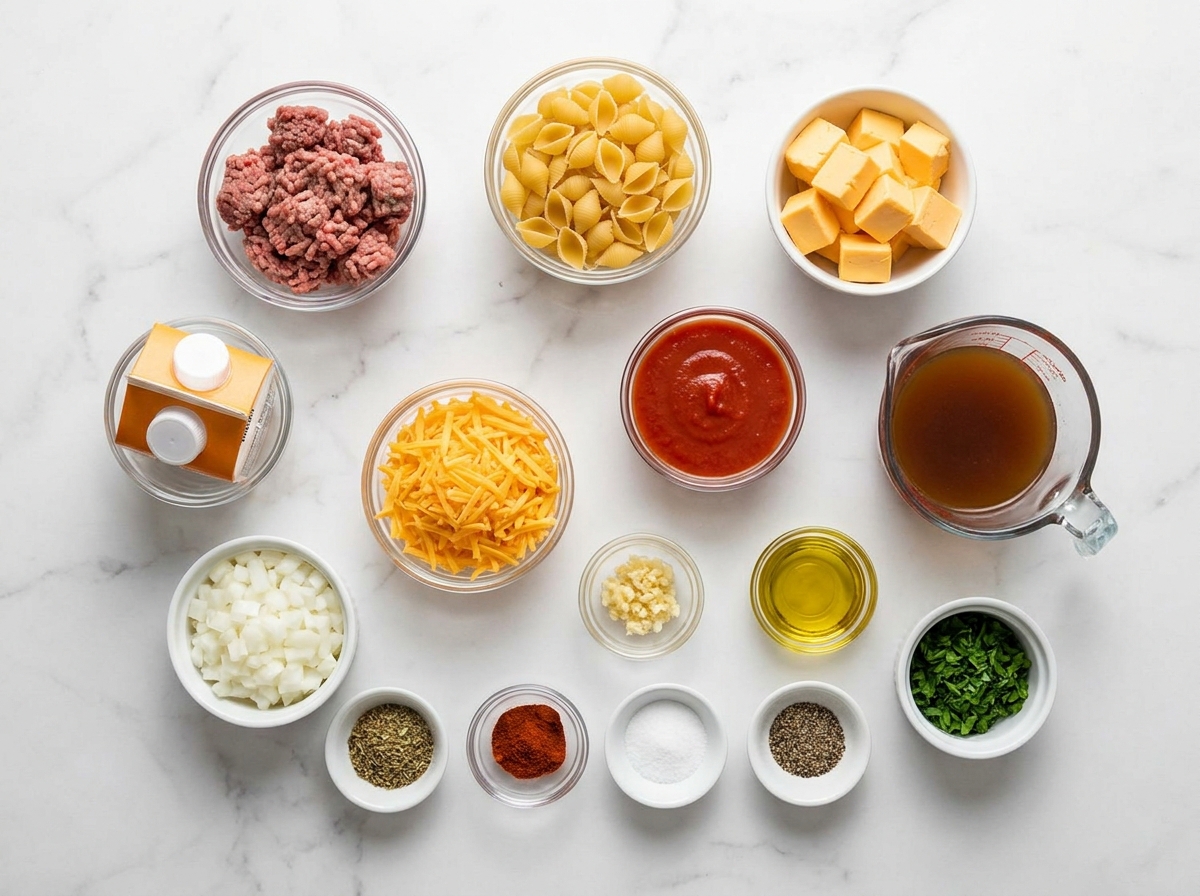
- Ground beef. Gives the skillet its savory base and makes the pasta filling enough for dinner.
- Medium pasta shells. Hold the creamy sauce in their pockets and cook well in the same pan.
- Velveeta. Melts into a smooth sauce with that familiar mild cheddar flavor.
- Sharp cheddar. Adds a stronger cheese note so the sauce does not taste flat.
- Tomato sauce. Balances the richness and gives the sauce body.
- Beef broth. Cooks the shells while adding deeper flavor than water.
- Heavy cream. Softens the tomato edge and makes the finish silky.
- Onion and garlic. Build a savory base that makes the skillet taste homemade.
Build The Skillet In Layers
- Brown the beef. Cook the beef and onion until the meat is no longer pink and the onion softens. Drain extra grease so the sauce stays creamy, not oily.
- Bloom the seasonings. Stir in garlic, Italian seasoning, paprika, salt, and pepper for about 1 minute. This wakes up the spices before the liquid goes in.
- Simmer the shells. Add broth, tomato sauce, and dry shells. Cover and simmer gently, stirring every few minutes so the pasta cooks evenly and does not stick.
- Melt the cheese gently. Take the pan off the heat. Stir in cream, Velveeta, and cheddar until the sauce turns glossy and coats every shell.
- Rest and serve. Let the skillet sit for 3 minutes. The sauce thickens as it stands, then you can finish with parsley or green onion.
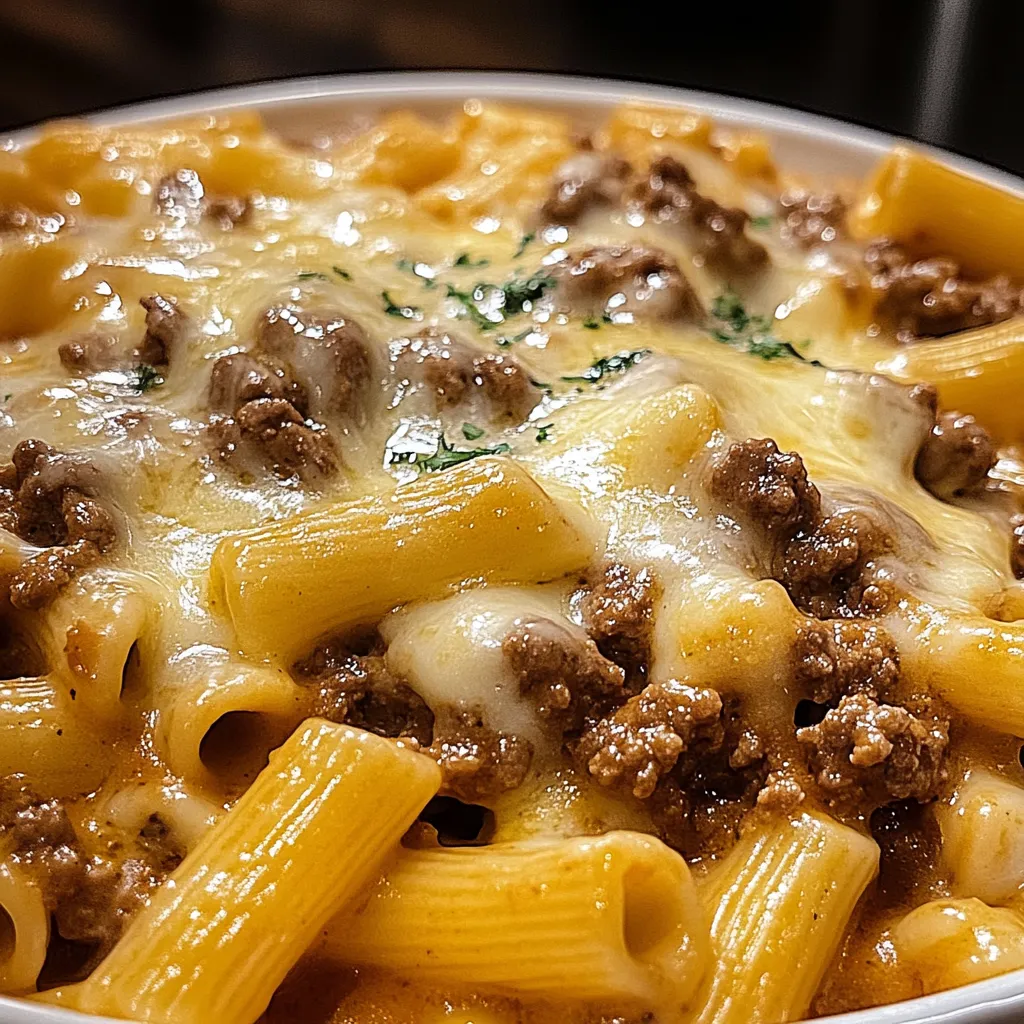
Velveeta Beef and Shells with Creamy Sauce
The biggest difference between a good skillet and a gluey one is timing. The pasta should be tender before the dairy goes in. If you add cheese while the shells are still hard, you will keep cooking the sauce too long and the texture can tighten.
A gentle simmer matters too. You want small bubbles around the edges, not a hard boil. Hard boiling makes the shells bump around and can leave some pieces overcooked while others stay firm. This is the same one-pot comfort food idea behind One Pot Cheesy Beef Shells, but Velveeta gives this version a softer, creamier finish.
Keep The Cheese Sauce Smooth
Velveeta melts easily, but cheddar needs a little care. Grate cheddar from a block if you can. Bagged shredded cheese often has anti-caking starches that can make a sauce feel dusty instead of smooth.
Once the shells are tender, turn off the heat and wait about 30 seconds before adding the cream and cheese. Stir with a steady hand until the cubes disappear. If the sauce is thicker than you like, loosen it with a splash of warm broth or milk. For ground beef safety, the USDA recommends cooking ground beef to 160°F, and you can read more in its ground beef safety guide.
Swaps For Real Weeknights
Ground turkey works if you add a little extra olive oil. Italian sausage makes the skillet richer and spicier, but taste before adding all the salt. For a tomato-forward version, stir in a spoonful of tomato paste with the garlic and let it darken for 30 seconds.
You can also change the cheese balance. Use more cheddar for sharper flavor, or add a little Monterey Jack for a mild melt. If you like creamy beef pasta dinners, Creamy Garlic Beef Pasta and Creamy Parmesan Bowtie Pasta with Garlic and Beef are good next recipes to try.
Serve It While Glossy
This skillet is rich, so simple sides work best. A crisp green salad, steamed broccoli, roasted green beans, or garlic bread all fit. If you want more pasta-night comfort, serve smaller bowls next to a vegetable side and let the sauce do the heavy lifting.
The texture is best right after the short rest. The shells will still be plump and the sauce will sit in every curve. A sprinkle of parsley or sliced green onion helps cut the richness without changing the flavor of the dish.
Leftovers Need A Splash
Leftovers thicken because the shells keep drinking the sauce. Store them in the fridge for up to 3 days. Reheat slowly with a splash of milk, cream, or broth, then stir until the sauce loosens again.
I do not love freezing this one. Creamy cheese sauces can separate after thawing, and pasta gets soft. If you need to stretch dinner into another meal, turn leftovers into a small baked pasta with extra cheddar on top. For another cozy beef dinner with a different texture, try Ground Beef and Potato Casserole with Cheddar.
Summary
This creamy beef and shells recipe is best served hot from the skillet with a green salad or garlic bread. Leftovers reheat well with a splash of milk or broth.
FAQs
- Can I make Velveeta Beef and Shells with Creamy Sauce without heavy cream?
Yes, but the sauce will be a little less rich. Evaporated milk is the best swap because it handles heat better than regular milk. If you use whole milk, add it off the heat and do not let the sauce boil after it goes in.
- Can I use a different pasta shape?
Short pasta works best because it cooks evenly in the sauce. Elbows, rotini, small penne, or cavatappi are good choices. Avoid very large shells unless you add more liquid and extend the simmer time.
- How do I keep the cheese sauce from turning grainy?
Remove the pan from the heat before adding the cream, Velveeta, and cheddar. High heat can make cheese separate. Stir slowly until the cubes melt into the sauce, then return the pan to very low heat only if needed.
- Can I make this ahead?
It tastes best right after cooking because the shells keep absorbing sauce as they sit. You can brown the beef and chop the onion ahead of time. Finish the pasta and cheese sauce just before serving.
- How long do leftovers last?
Store leftovers in an airtight container in the fridge for up to 3 days. Reheat gently on the stove or in the microwave with a splash of milk, cream, or broth. Stir often so the sauce loosens evenly.
- Can I add vegetables?
Yes. Stir in finely diced bell pepper with the onion, or add frozen peas during the last 2 minutes of simmering. Grated zucchini also works, but cook it with the beef so extra moisture can evaporate.
