 Pin it
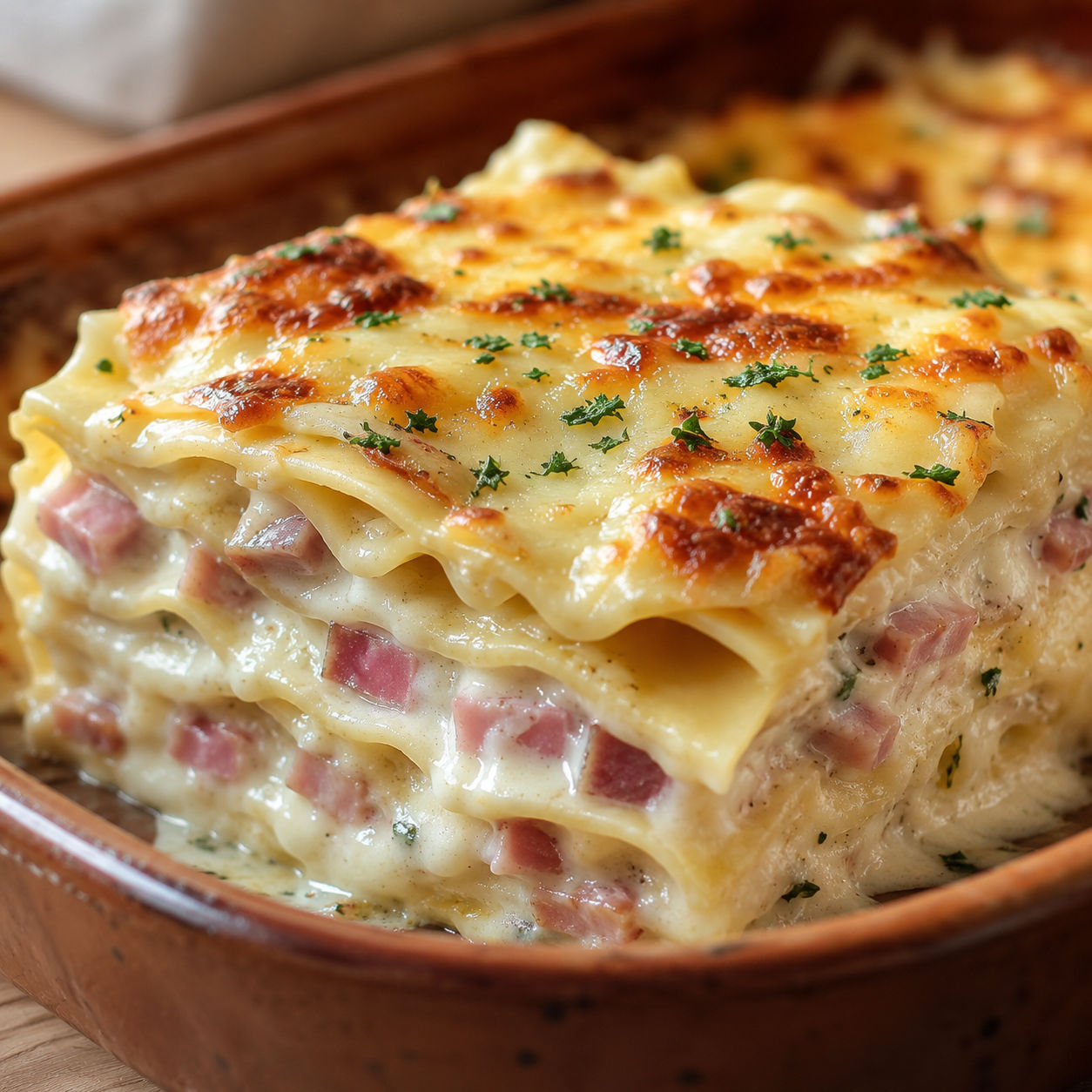
Effortless Ham Cheese Lasagna is the kind of baked dinner that feels generous without asking much from you. The sauce is creamy, the ham is salty and savory, and the top bakes into a golden cheese crust that smells like a Sunday kitchen.
I like this version because it skips the long meat sauce and leans into a simple Mornay. Fresh lasagna sheets make the layering fast, but parboiled dry noodles work too.
The real trick is balance. Keep the sauce loose enough to coat the pasta, use cheese that melts smoothly, and let the pan sit before cutting.
The creamy layered lineup
Choose ham with good flavor, not watery slices that disappear into the sauce. For the cheese, grate the Emmental yourself and use a melty sliced cheese like raclette, Gouda, or fontina for the middle layers.
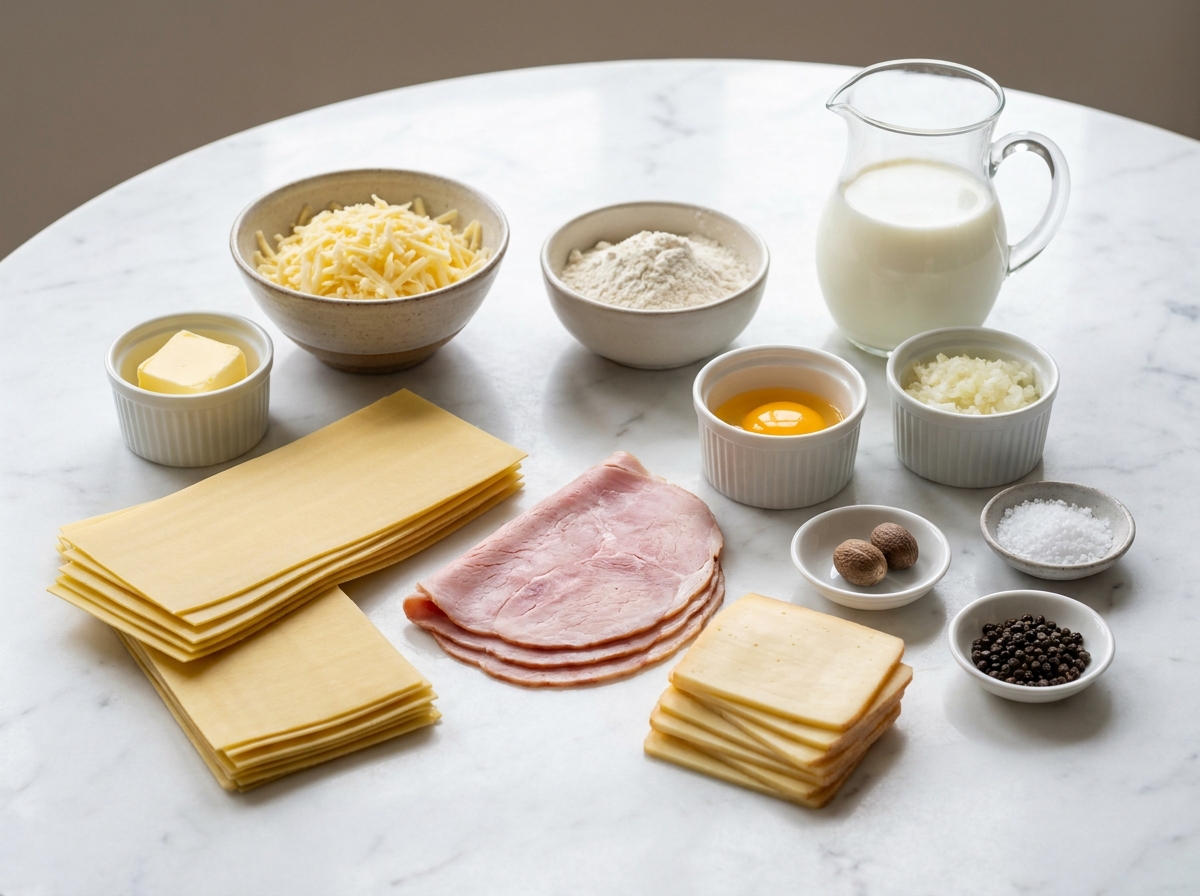
- Fresh lasagna sheets. They keep the recipe quick and turn tender in the creamy sauce.
- Sliced ham. Adds savory depth and makes the lasagna hearty without browning any meat.
- Raclette cheese. Melts into stretchy pockets between the pasta layers.
- Emmental cheese. Gives the Mornay sauce a nutty flavor and helps the top brown.
- Butter and flour. Form the roux that thickens the sauce.
- Milk. Turns the roux into a smooth, spoonable base.
- Onion. Adds gentle sweetness without taking over the dish.
- Egg yolk. Makes the sauce richer and silkier.
- Nutmeg. A small pinch makes the dairy taste warmer and rounder.
Layer and bake it
- Start the sauce. Cook onion in butter until soft, stir in flour, then whisk in milk until smooth and thick enough to coat a spoon.
- Finish the Mornay. Take the pan off the heat and stir in most of the Emmental, the egg yolk, nutmeg, salt, and pepper.
- Prepare the dish. Butter a baking dish and spread a thin layer of sauce across the bottom so the pasta does not stick.
- Build the layers. Add pasta sheets, sauce, ham, and raclette. Repeat until the filling is used, keeping enough sauce for the top.
- Top and bake. Cover the final pasta layer with sauce and the remaining Emmental, then bake until bubbling and golden.
- Rest before cutting. Let the lasagna sit for 10 minutes so the creamy layers hold together.
Why Mornay works here
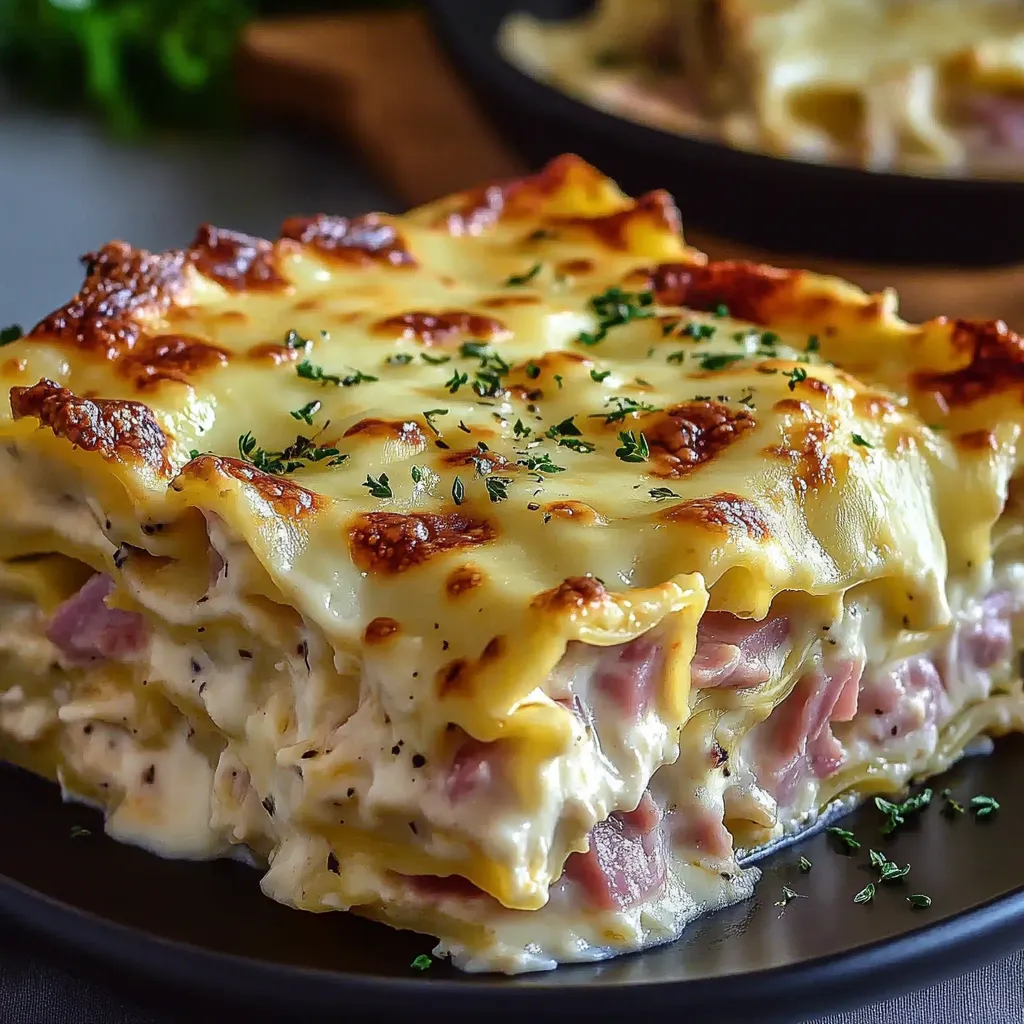
Mornay is a cheese sauce built from a basic white sauce, and it is what makes this lasagna feel creamy all the way through. The flour thickens the milk enough to cling to the pasta. The cheese melts into that base instead of separating into oil. Keep the heat gentle once the cheese goes in. Boiling cheese sauce can make it grainy.
Ham brings plenty of salt, so taste the sauce before adding more. If it tastes flat, a pinch of nutmeg and black pepper usually does more good than extra salt. For another creamy layered dinner, try Ultimate Chicken Alfredo Lasagna.
Cheese swaps that melt
Raclette is wonderful because it melts into long, soft ribbons. If you cannot find it, use Gouda, fontina, young Gruyere, or Monterey Jack. Avoid very aged cheddar as the main melting cheese because it can turn oily. A little sharp cheddar is fine for flavor, but pair it with a smoother cheese.
Emmental gives the sauce a mild nutty finish. Swiss cheese works in a pinch. If your family loves big, cozy cheese bakes, Delicious Five-Cheese Mac and Cheese has the same comfort-food energy.
Make the layers behave
Spread sauce all the way to the corners. Dry corners are the first place pasta turns chewy. Keep the ham in even layers rather than folded into thick clumps, so every slice gets a little of everything. If your pasta sheets are larger than the dish, trim or overlap them slightly. A neat layer bakes better than a buckled one.
Resting matters more than it seems. Straight from the oven, the sauce is still moving. Ten minutes on the counter gives the cheese time to settle. The lasagna will still be hot, but the slices will look like slices.
Storage and reheating
Cool leftovers, then store them in an airtight container in the fridge for up to 3 days. FoodSafety.gov gives helpful cold storage guidance in its cold food storage chart. Reheat covered in a 325°F oven with a spoonful of milk around the edges. The microwave works for a single square, but use medium power so the cheese warms instead of splitting.
You can freeze baked portions for up to 2 months. Thaw overnight in the fridge before reheating. For a different ham dinner that also reheats nicely, try Cheesy Ham and Potato Casserole.
What to serve beside it
This lasagna is creamy and rich, so it likes a clean side. A green salad with lemon dressing is my first choice. Roasted cherry tomatoes, garlicky green beans, or steamed broccoli also work. If you are feeding a crowd, set out small squares of Ham And Cheese Sliders as a casual starter and keep the lasagna as the main event.
Summary
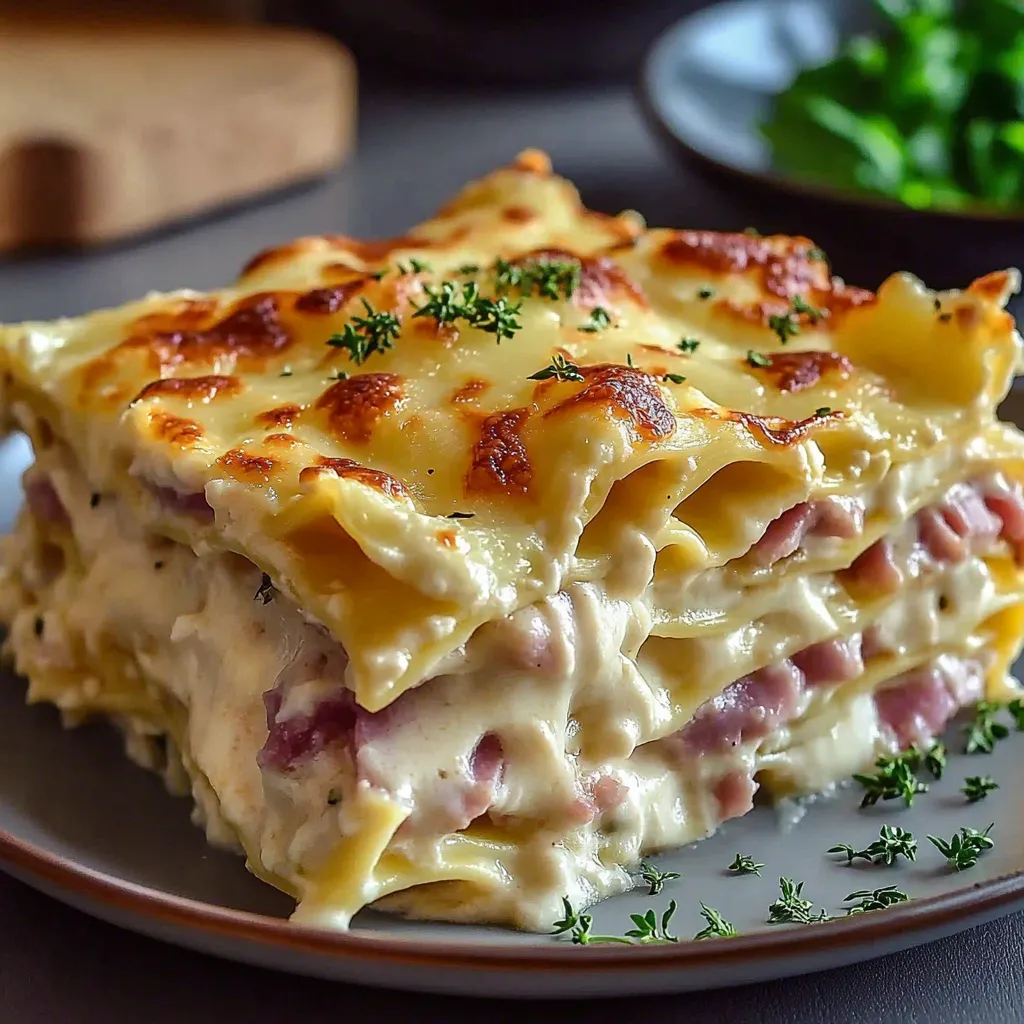
This ham and cheese lasagna is best served warm from the oven after a short rest, with a crisp salad or roasted vegetables on the side.
FAQs
- Can I use dry lasagna noodles instead of fresh sheets?
Yes. Boil dry lasagna noodles until just flexible, then drain and lay them flat before layering. If you use oven-ready noodles, make the sauce a little looser and cover the dish for the first part of baking.
- What cheese can replace raclette?
Gouda, fontina, young Gruyere, or mild cheddar all melt well here. Raclette gives a rich, stretchy texture, so choose a cheese that melts smoothly rather than a crumbly aged one.
- Can I assemble ham cheese lasagna ahead of time?
Yes. Assemble it up to 24 hours ahead, cover tightly, and refrigerate. Add 5-10 minutes to the bake time if it goes into the oven cold.
- How do I keep the sauce from turning lumpy?
Cook the butter and flour together first, then whisk in the milk slowly. If a few lumps remain, keep whisking over gentle heat or strain the sauce before adding cheese.
- How long should lasagna rest before slicing?
Let it rest for 10 minutes after baking. The cheese and sauce settle during that time, which gives you neater pieces instead of a creamy slide across the plate.
- What should I serve with ham cheese lasagna?
A sharp green salad, steamed broccoli, roasted tomatoes, or lemony green beans all work well. The lasagna is rich, so a crisp or bright side keeps the meal from feeling heavy.
