 Pin it
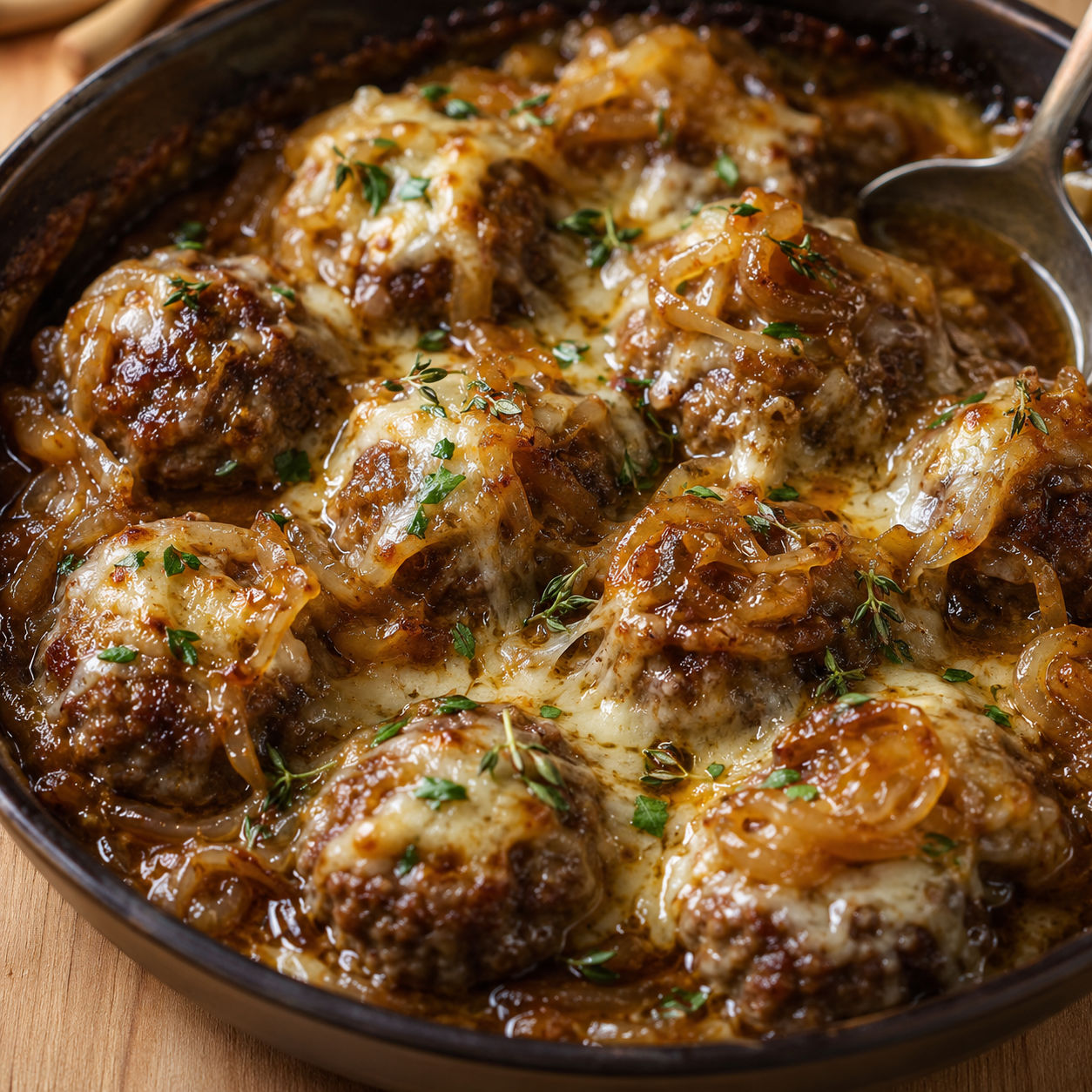
Baked French Onion Meatballs with Caramelized Onions give you the best parts of French onion soup without asking you to stand over a pot all afternoon. The meatballs bake while the onions soften and turn jammy, then both meet in a savory beef gravy under a blanket of Gruyere.
I like this for a Sunday dinner that still feels doable. The onions need patience, but the rest is simple, and the pan comes out bubbling around the edges with browned cheese on top.
The Onion-Gravy Lineup
The ingredient list is short, so use onions with real sweetness and a cheese that melts cleanly. Yellow onions, good beef broth, and Gruyere carry most of the flavor.
- Ground beef. Gives the meatballs a sturdy, savory base that holds up in the gravy.
- Breadcrumbs and milk. Make a quick panade that keeps the meatballs tender instead of dense.
- Egg. Helps bind the mixture so the meatballs stay intact while baking.
- Parmesan. Adds saltiness and depth inside the meatballs.
- Worcestershire sauce. Brings a meaty, slow-cooked taste without much effort.
- Yellow onions. Cook down into the sweet, golden base of the sauce.
- Beef broth. Turns the onions into a spoonable gravy.
- Gruyere cheese. Melts into a nutty top layer that tastes like French onion soup.
- Fresh thyme. Keeps the rich sauce from tasting flat.
Bake, Simmer, Melt
- Mix gently. Soak the breadcrumbs with milk first, then add the beef, egg, Parmesan, Worcestershire, garlic, parsley, thyme, salt, and pepper. Mix just until combined so the meatballs stay tender.
- Shape and bake. Roll the mixture into 18 meatballs and bake them at 400°F until browned and cooked through, about 16-18 minutes.
- Caramelize the onions. Cook sliced onions in butter and olive oil over medium heat until soft and golden. Stir often near the end so the sweet edges do not scorch.
- Build the gravy. Stir flour into the onions, then slowly add beef broth, Dijon, and Worcestershire. Simmer until glossy and thick enough to coat a spoon.
- Finish in the oven. Nestle the baked meatballs into the gravy, scatter Gruyere over the top, and bake until the cheese melts and the sauce bubbles.
Let Onions Take Their Time
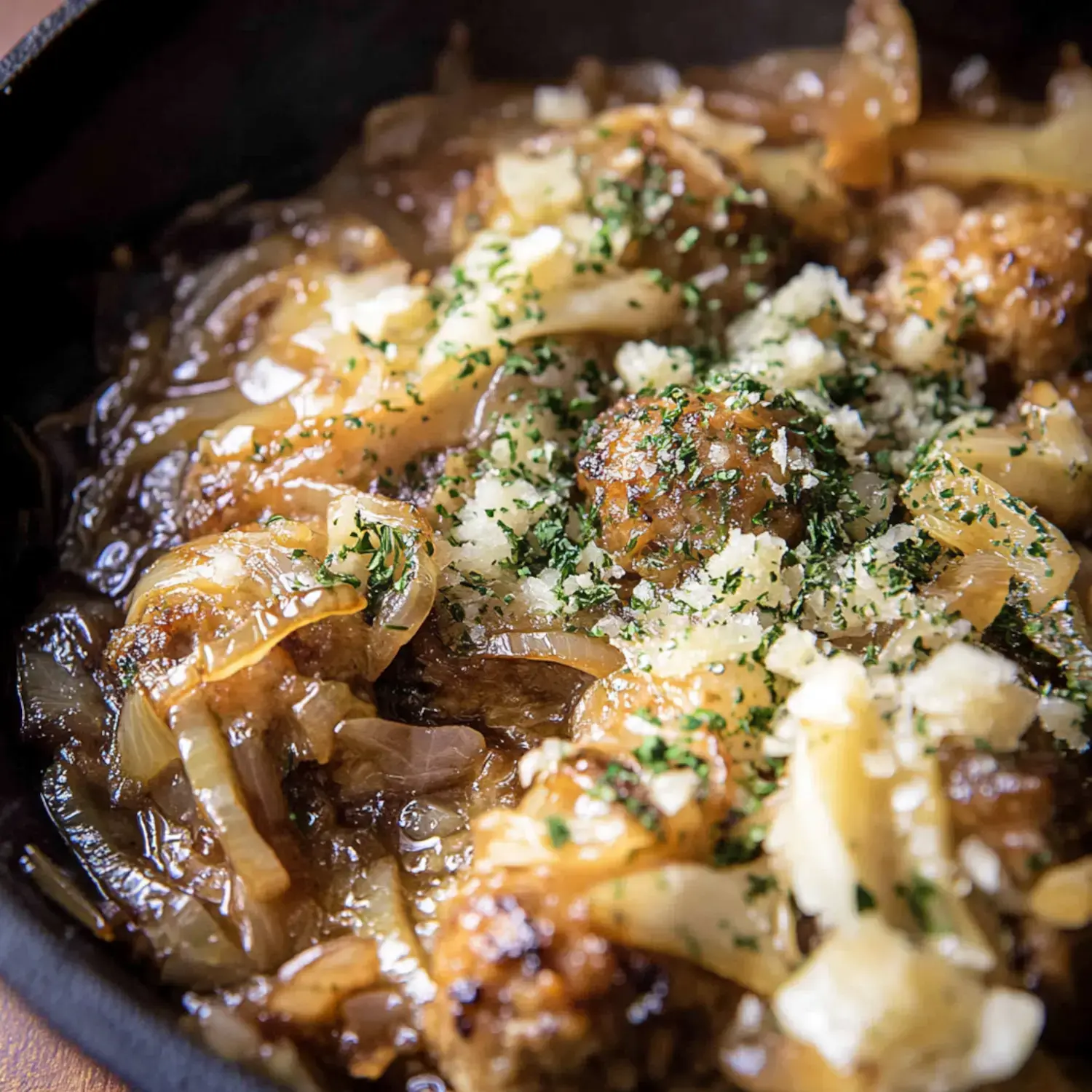
French onion flavor depends on real browning, not rushing. Keep the heat at medium or medium-low and let the onions collapse slowly. They should go from sharp and white to soft, golden, and almost jammy. If they stick hard to the pan, add a tablespoon of broth and scrape up the browned bits.
For a similar cozy onion base, the French onion meatloaf uses the same sweet onion and melted cheese idea in a sliceable dinner.
Keep Meatballs Tender
The meat mixture should be handled lightly. Once the breadcrumbs, milk, and egg are mixed in, stop as soon as there are no dry patches. Overmixing packs the beef too tightly and gives you firm meatballs.
Bake them on their own before adding the gravy. That short bake sets the shape and lets the outside brown. The USDA safe temperature chart lists 160°F for ground beef, which is a useful check if your meatballs are larger than mine.
Sauce Thickness Matters
The gravy should look a little loose before the final bake. It thickens in the oven and again as it rests. If it gets too tight on the stovetop, whisk in more broth a splash at a time. If it seems thin, simmer it for a few extra minutes before adding the meatballs.
A classic version from Diamond Crystal is a helpful reference for the basic bake, onion gravy, and cheese timing. This recipe leans into Dijon, thyme, and a longer onion cook for deeper flavor.
Easy Swaps That Work
Swiss cheese can replace Gruyere if that is what you have. For a lighter version, use ground turkey, but add one extra tablespoon of milk because turkey is leaner. Gluten-free breadcrumbs and a cornstarch slurry make the recipe easier for gluten-free guests.
If you want more French onion comfort dinners, try one pot French onion pasta or French onion ground beef. Both keep the same savory onion flavor with a different weeknight shape.
Serving And Leftovers
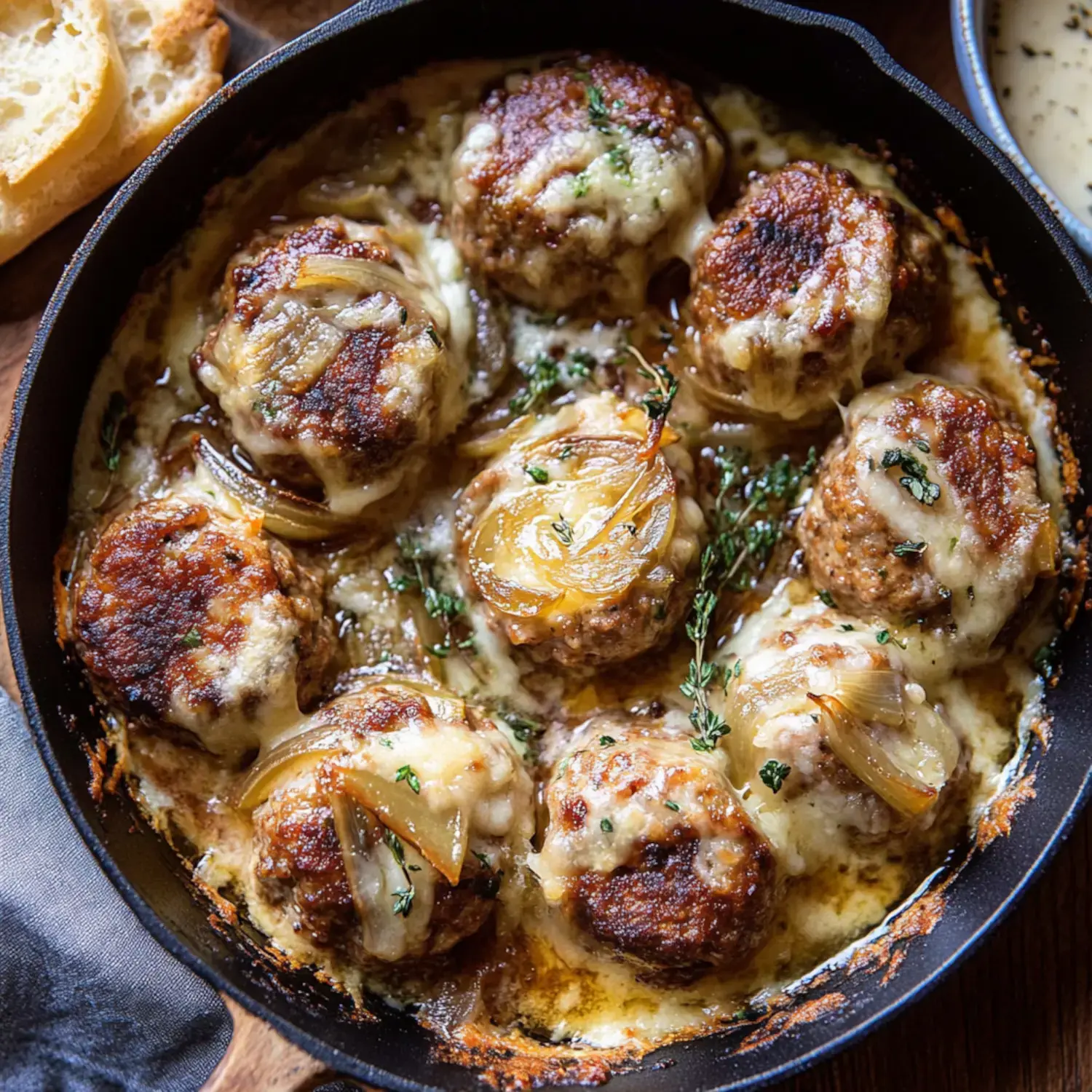
These meatballs are best over something that can catch gravy. Mashed potatoes are rich and classic. Egg noodles make it feel like a skillet supper. Toasted bread is the move if you want the French onion soup feeling.
Store leftovers in an airtight container for up to 3 days. Reheat gently in a covered skillet with a splash of broth. The microwave works, but use short bursts so the cheese and beef do not overcook.
Summary
These meatballs are rich, cozy, and built for soaking up sauce. Keep the onion heat moderate and bake the meatballs just until cooked through for the best texture.
FAQs
- Can I use frozen meatballs for this recipe?
Yes, but homemade meatballs taste better here because they absorb the onion gravy. If using frozen cooked meatballs, warm them in the sauce until hot, then add the cheese and bake until bubbling.
- What cheese works instead of Gruyere?
Swiss cheese is the closest swap and melts well. Provolone gives a milder finish, while mozzarella melts nicely but will not have the same nutty flavor.
- How long do caramelized onions really take?
Plan on 25-30 minutes for tender, golden onions in this dish. If the pan looks dry before the onions soften, add a splash of broth and keep cooking over moderate heat.
- Can I make baked French onion meatballs ahead?
Yes. Bake the meatballs and caramelize the onions up to two days ahead. Reheat them together with the gravy, then add the cheese right before the final bake.
- What should I serve with these meatballs?
Mashed potatoes are my first pick because they catch every bit of gravy. Buttered egg noodles, toasted bread, roasted potatoes, or a crisp green salad also work well.
- Can I make this gluten-free?
Yes, with a few swaps. Use gluten-free breadcrumbs in the meatballs and replace the flour in the gravy with a cornstarch slurry added near the end of simmering.
