 Pin it
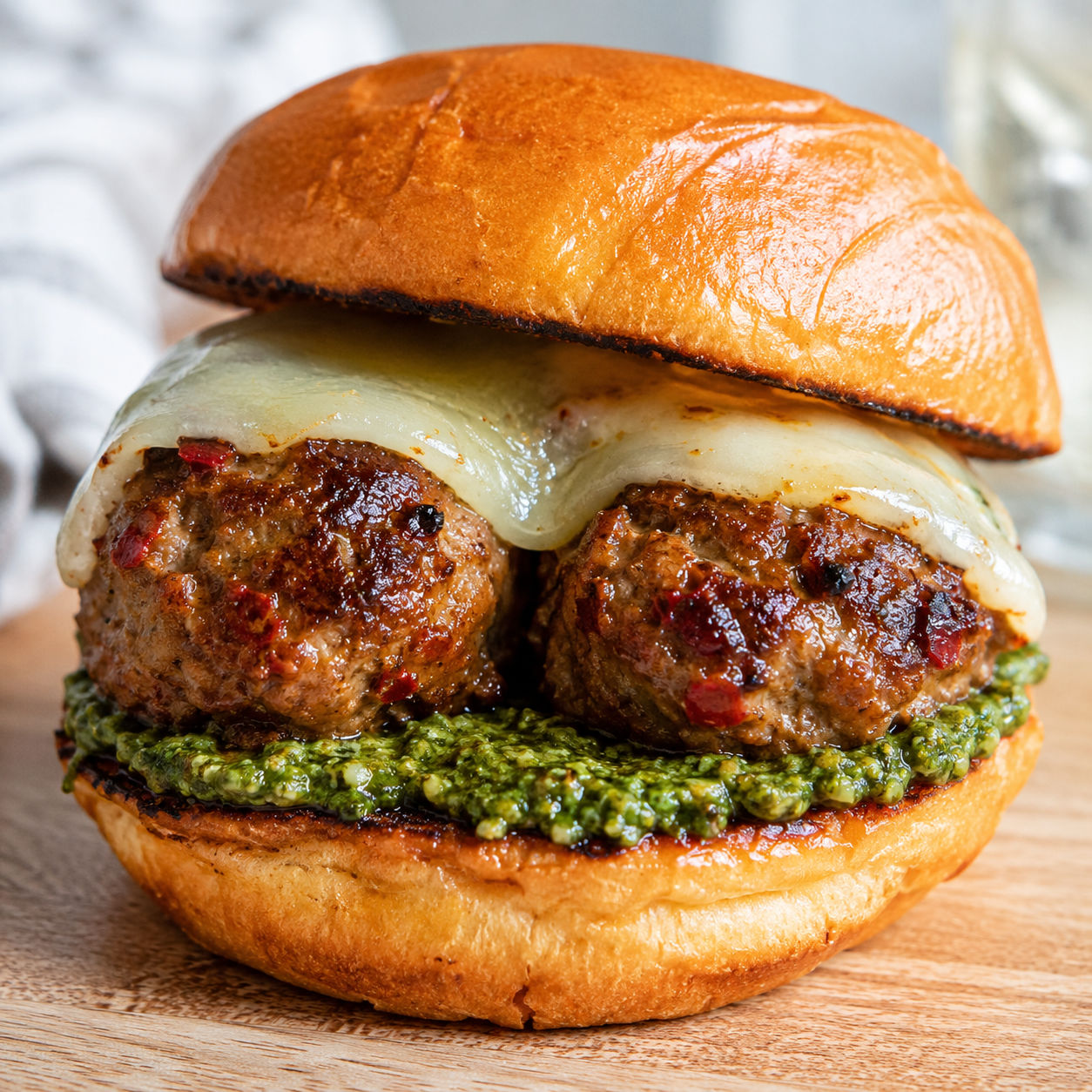
These sliders land somewhere between a party trick and a serious dinner. The meatballs get their heat and richness from nduja, the spreadable Calabrian salami that melts into the pork as it cooks. A bright arugula pesto cuts through the fat and turns each bite into something you actually want to chase with another.
I make them when I want to feed a small crowd without standing over a stove all night. Most of the work happens in the oven and a food processor, and the assembly is fast once the components are ready.
The lineup for the sliders
Nduja does most of the heavy lifting here, so buy the best you can find. A jarred version works, but a proper cured link from an Italian deli will give you better texture and heat.
- Ground pork. The base of the meatballs. An 80/20 blend keeps them juicy without turning greasy.
- Nduja. The spreadable Calabrian salami that adds spice, fat, and a deep fermented savor.
- Breadcrumbs and egg. They bind the mix and keep the crumb tender. Soak the breadcrumbs in milk for a softer bite.
- Arugula. Peppery and fresh, it forms the backbone of the pesto instead of basil.
- Pine nuts. Toasted for depth, they give the pesto a buttery body.
- Provolone. A mild slice melts over the meatball and holds the slider together.
- Slider buns. Soft brioche or Hawaiian rolls stand up to the juices without overpowering.
How they come together
- Blend the pesto. Pulse arugula, toasted pine nuts, parmesan, garlic, and lemon juice in a food processor until finely chopped. With the motor running, stream in olive oil until the mix is thick but spoonable. Season with salt and set aside.
- Mix the meatball base. Soak breadcrumbs in milk for five minutes, then squeeze out the excess. Combine the soaked breadcrumbs with ground pork, nduja, egg, minced garlic, chopped parsley, and crushed fennel seeds. Mix with your hands just until uniform. Overworking makes the meatballs dense.
- Shape and chill. Roll the mixture into twenty-four one-inch balls. Arrange them on a parchment-lined baking sheet and refrigerate for fifteen minutes. Cold meatballs hold their shape better in the pan.
- Sear and bake. Heat olive oil in a large oven-safe skillet over medium-high heat. Brown the meatballs in batches, turning often, for about four minutes. Transfer the skillet to a 400°F oven and bake until the centers reach 160°F, roughly ten to twelve minutes. An instant-read thermometer is the safest way to check. The USDA recommends 160°F for ground pork.
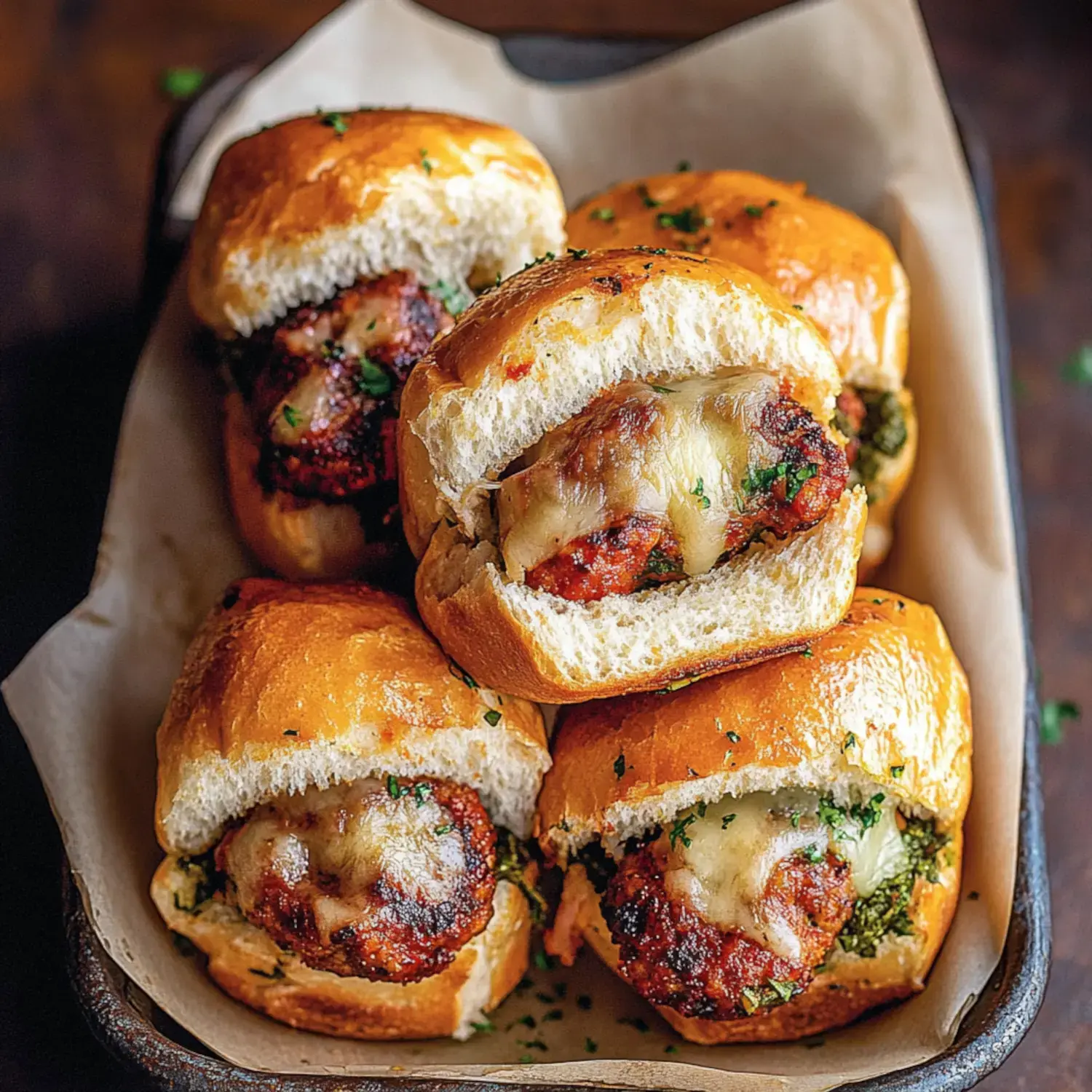
- Toast and build. Split the slider buns and brush the cut sides with olive oil. Toast under the broiler until golden. Spread a generous layer of arugula pesto on the bottom halves, add two meatballs per bun, top with provolone, and cap with the tops. Serve warm while the cheese is soft.
Why the fat ratio matters
Nduja is roughly three parts fat to one part lean meat. That means a full pound of nduja would make greasy, collapsing meatballs. I use about four ounces of nduja to one pound of ground pork. The nduja melts into the pork as it cooks, basting the interior and carrying the Calabrian chili heat through every bite.
If you can only find very lean pork, add a tablespoon of olive oil to the mix so the meatballs do not dry out. The mix should feel slightly tacky but not wet. If it sticks excessively to your palms, add a tablespoon of breadcrumbs at a time until you can roll clean balls.
Toast the buns hard
Soft buns turn to mush under hot meatballs and oily pesto. I split them and brush the cut faces with olive oil, then toast under the broiler until the edges are actually crisp. The toasted surface creates a barrier that holds up to the juices without tasting like dried bread.
If you are feeding a crowd, toast the buns on a sheet pan all at once and keep them warm in a low oven while the meatballs finish. The crunch is worth the extra two minutes.
Stacking and serving
I build these with pesto on the bottom, then two meatballs, then a thin slice of provolone that drapes over the meat and tacks itself to the bun. The residual heat from the meatballs softens the cheese without needing another trip under the broiler, though you can flash them if you want a more dramatic melt.
For a larger spread, set them out next to Ham And Cheese Sliders and Classic Italian Spicy Meatballs so guests can pick their heat level. A simple green salad with lemon dressing balances the richness. If you want another pesto-forward main, Pesto Parmesan Baked Cod uses the same sauce style on fish.
Make ahead and reheat
You can mix and shape the meatballs up to a day ahead and keep them covered in the refrigerator. The arugula pesto also keeps well for two days, though it will darken slightly as the cut leaves oxidize. Stir it well before spreading.
To reheat cooked meatballs, arrange them in a baking dish with a splash of water, cover with foil, and warm in a 350°F oven for fifteen minutes. The steam revives the interior without turning them rubbery. I do not recommend microwaving them if you can avoid it.
Taming or turning up the heat
Not everyone wants a fiery slider. If you need to dial it back, replace half the nduja with sweet Italian sausage or plain ground pork. You still get the savor without the full punch. On the other hand, if you want more heat, fold a teaspoon of Calabrian chili flakes into the meatball mix or dot extra nduja onto the bun before stacking.
The arugula pesto also helps balance the spice. Its peppery bite and lemon brightness cool the palate between mouthfuls. If you prefer a milder green, swap half the arugula for baby spinach, though you will lose some of the edge that makes these sliders distinctive.

FAQs
- What is nduja and where can I buy it?
Nduja is a spreadable, fermented pork salami from Calabria, Italy. It is heavily spiced with Calabrian chilies and has a soft, almost paste-like texture that melts when heated. You can find it at Italian delis, specialty grocers, or online. Allrecipes has a helpful guide if you want to learn more.
- Can I use a different ground meat?
Yes. Ground beef or a mix of beef and pork works well. Just keep the total fat content around twenty percent so the meatballs stay juicy. Very lean turkey or chicken will dry out next to the intense nduja flavor.
- How do I keep the meatballs from falling apart?
The soaked breadcrumbs and egg bind the mix. Chill the shaped balls for fifteen minutes before searing, and do not move them too early in the pan. Let a crust form naturally before turning.
- Can I make these less spicy?
Absolutely. Replace up to half the nduja with sweet Italian sausage or plain ground pork. You still get the savory depth without the full Calabrian heat.
- What buns work best?
Soft brioche or Hawaiian slider buns are ideal. They are tender but sturdy enough to hold the meatballs. Toast the cut sides well so they do not get soggy.
- How should I store leftovers?
Keep the meatballs and pesto separate in airtight containers in the refrigerator for up to three days. Reheat the meatballs covered in a 350°F oven with a splash of water. Assemble the sliders just before serving.
- Can I freeze the meatballs?
Yes. Freeze raw meatballs on a parchment-lined sheet until solid, then transfer to a freezer bag. Cook from frozen, adding five to seven minutes to the bake time.
