 Pin it
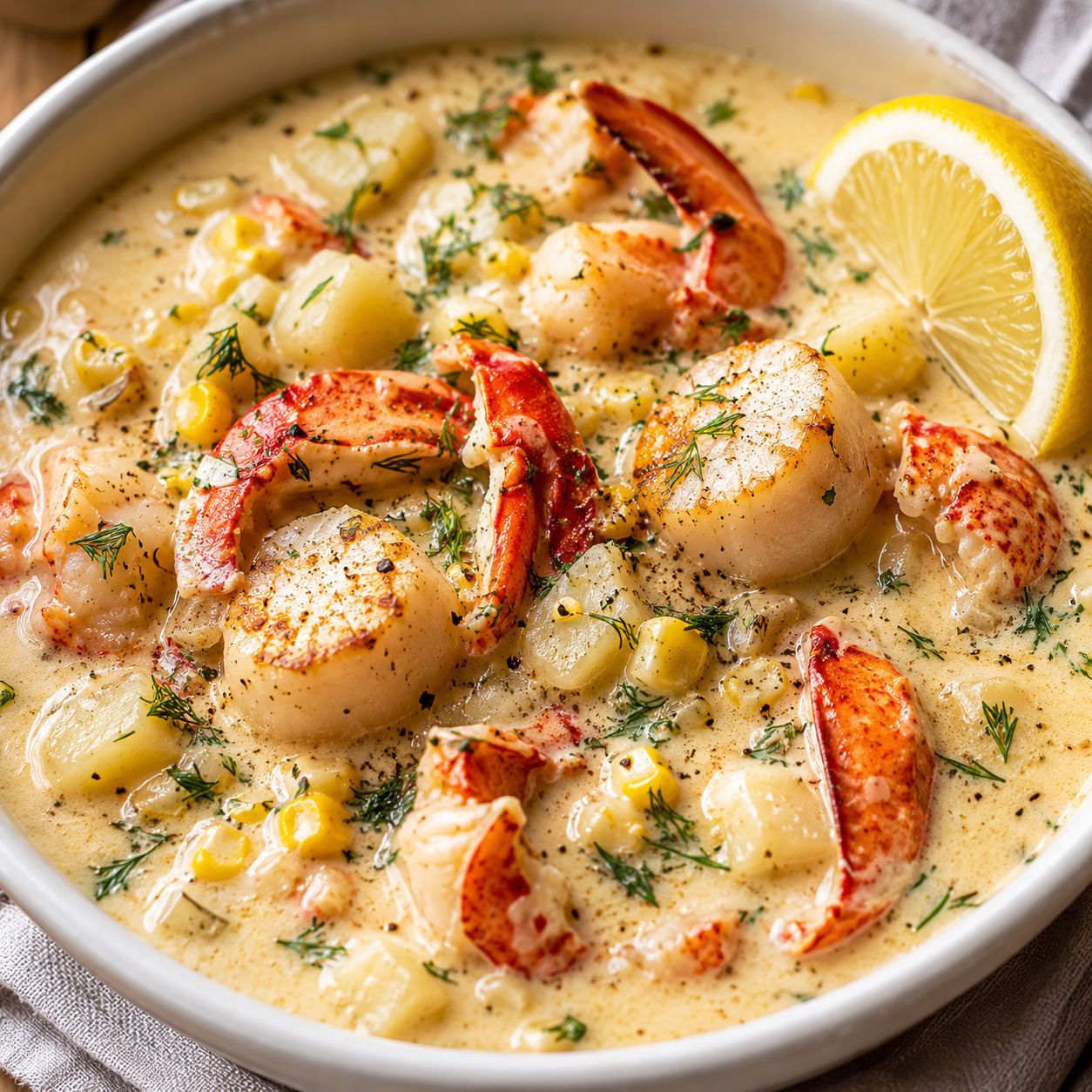
This luxurious lobster and scallop chowder with cream and dill is the kind of soup that makes a quiet dinner feel like a little occasion. The broth is creamy without being heavy, with tender potatoes, sweet corn, and big pieces of seafood in every spoonful.
The key is gentle heat. Lobster only needs warming, and scallops turn sweet and silky when they are cooked just until opaque. Add the dill off the heat and the whole pot smells fresh instead of flat.
Seafood Worth Simmering
Use sweet cooked lobster meat and firm sea scallops with a clean ocean smell. The cream, potatoes, corn, and dill are simple, so the seafood should taste fresh and mild.
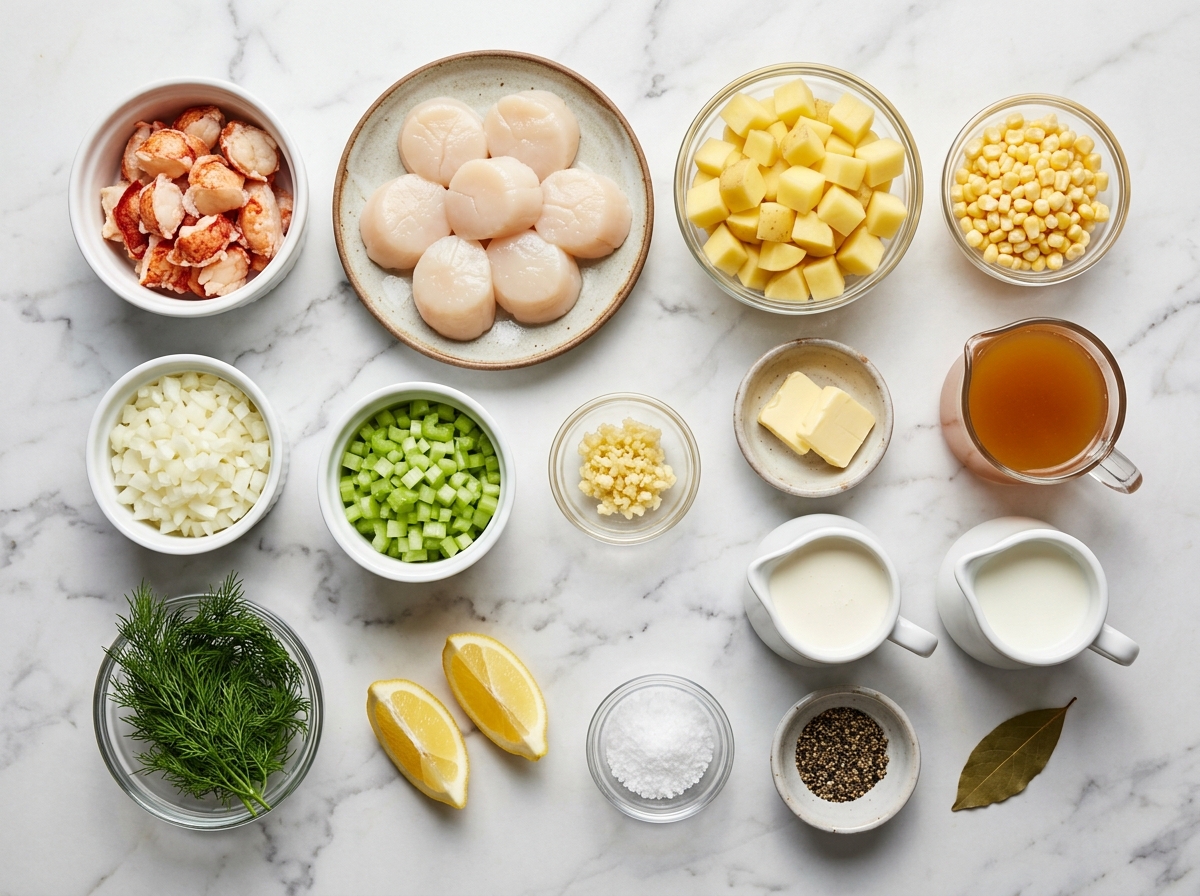
- Cooked lobster meat. Adds sweet, briny richness and makes the chowder feel special without long cooking.
- Sea scallops. Bring a silky texture and delicate seafood flavor when cooked gently.
- Butter and olive oil. Soften the aromatics and give the base a round, savory start.
- Onion, celery, and garlic. Build the quiet backbone of the soup without covering the shellfish.
- Yukon Gold potatoes. Hold their shape and add natural body to the broth.
- Seafood stock. Gives the chowder a deeper coastal flavor than plain water.
- Heavy cream and milk. Make the broth velvety while keeping it spoonable.
- Corn kernels. Add little sweet pops that work beautifully with lobster.
- Fresh dill and lemon. Brighten the cream and keep the finish clean.
Gentle Heat Wins
- Soften the aromatics. Cook onion and celery in butter and olive oil until glossy and tender, then stir in garlic for the final minute so it does not scorch.
- Start the potatoes. Add diced potatoes and bay leaf, then stir for a couple of minutes so the edges pick up flavor from the pot.
- Simmer the base. Pour in seafood stock and cook until the potatoes are tender but not falling apart, about 12-15 minutes.
- Add cream and corn. Lower the heat and stir in milk, cream, and corn. Warm the mixture slowly so the dairy stays smooth.
- Finish the seafood. Add lobster and scallops, then simmer gently until the scallops turn opaque and the lobster is hot.
- Season at the end. Remove the bay leaf, stir in dill and lemon juice, then taste for salt and pepper before serving.
Why The Cream Stays Smooth
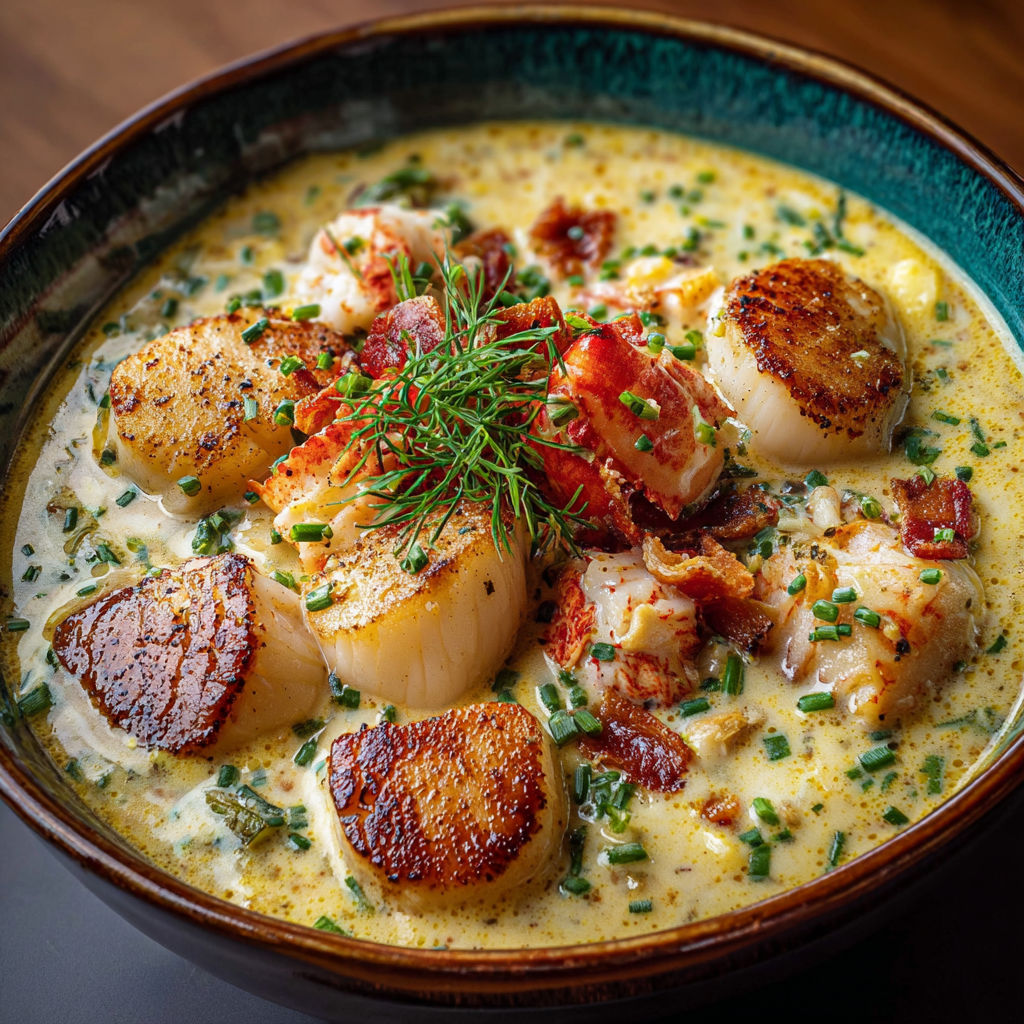
Chowder can split when dairy meets hard boiling. Keep the pot below a rolling boil once the cream goes in. You want steam and small bubbles around the edge, nothing more. Whole milk lightens the heavy cream and helps the broth stay drinkable instead of pasty.
If the chowder looks too thin, mash a few potato cubes against the side of the pot and stir them back in. That gives body without flour, which keeps this version gluten-free. For a heartier bowl with a different seafood profile, the site's lobster scallop chowder is a good companion recipe to compare.
Choosing Lobster And Scallops
Cooked lobster tail, claw, or knuckle meat all work. Tail meat gives neat chunks, while claw meat is softer and sweeter. If you cook your own lobster, save a little of the steaming liquid and use it in place of some stock.
For scallops, choose dry sea scallops when you can. They should look ivory or pale pink and smell clean, not sharp. The FDA seafood safety guide has useful advice for buying and handling seafood. If you want a lobster main dish with a similar rich feel, try butter-seared lobster tails with garlic cream sauce.
Swaps That Still Taste Rich
No lobster on hand? Use shrimp, crab, or firm white fish, but add fish in larger chunks so it does not disappear into the broth. Half-and-half can replace the cream for a lighter chowder, though the texture will be thinner. A spoonful of creme fraiche at the end is lovely if you like extra tang.
Fresh dill is worth using here. Dried dill can taste dusty in cream, so use it lightly if that is all you have. Start with 1 teaspoon dried dill, then add more only after tasting. For another creamy dinner with dill, lemon dill salmon with creamy pasta carries the same fresh herb note.
Storage Without Tough Seafood
Leftovers keep in an airtight container in the refrigerator for up to 2 days. Reheat the chowder in a small pot over low heat and stir often. Add a splash of milk or stock if it thickens overnight.
I do not love freezing finished cream chowder because the dairy can separate and the scallops lose their tender bite. If you want to prep ahead for a dinner, make the base through the potato step and freeze that. Thaw, reheat, then add the dairy and seafood fresh. For safe serving, foodsafety.gov lists 145°F as the minimum temperature for seafood, and gentle reheating helps you reach that without boiling the pot.
What To Serve Beside It
This chowder is rich, so keep the sides crisp or simple. Oyster crackers, toasted sourdough, or a fennel salad all make sense. A little extra dill on top looks pretty and gives the first spoonful a fresh smell.
For a cozy soup night, pair small bowls with creamy ham and corn chowder so guests can taste two very different chowders. For a dinner party, serve this as the first course in warm bowls and keep the portions modest. It is luxurious, and a smaller bowl lets the seafood stay the focus.
Summary
Serve this chowder hot with lemon wedges, oyster crackers, or crusty bread. It is rich enough for guests and still practical for a weekend dinner at home.
FAQs
- Can I use frozen lobster and scallops?
Yes. Thaw them in the refrigerator overnight or under cold running water if you are short on time. Pat the scallops very dry before adding them so they keep a clean, tender texture in the chowder.
- How do I keep scallops from getting rubbery?
Add scallops near the end and keep the chowder at a gentle simmer, not a boil. They are done when they turn opaque and feel just firm, usually 3-4 minutes depending on size.
- Can I make this chowder ahead?
You can make the potato and stock base one day ahead. Reheat it gently, then add the cream, lobster, scallops, dill, and lemon right before serving for the best seafood texture.
- What can I use instead of seafood stock?
Fish stock gives the deepest flavor, but bottled clam juice with a little water works well. Chicken broth can work in a pinch, though the chowder will taste less coastal.
- Is this lobster and scallop chowder gluten-free?
Yes, this version is thickened by potatoes and cream instead of flour. Check your seafood stock label to make sure it is gluten-free if you are cooking for someone with celiac disease.
- What should I serve with it?
Crusty bread, oyster crackers, or a simple green salad all work. For a richer seafood dinner, serve small bowls as a starter before grilled fish or lobster tails.
