 Pin it
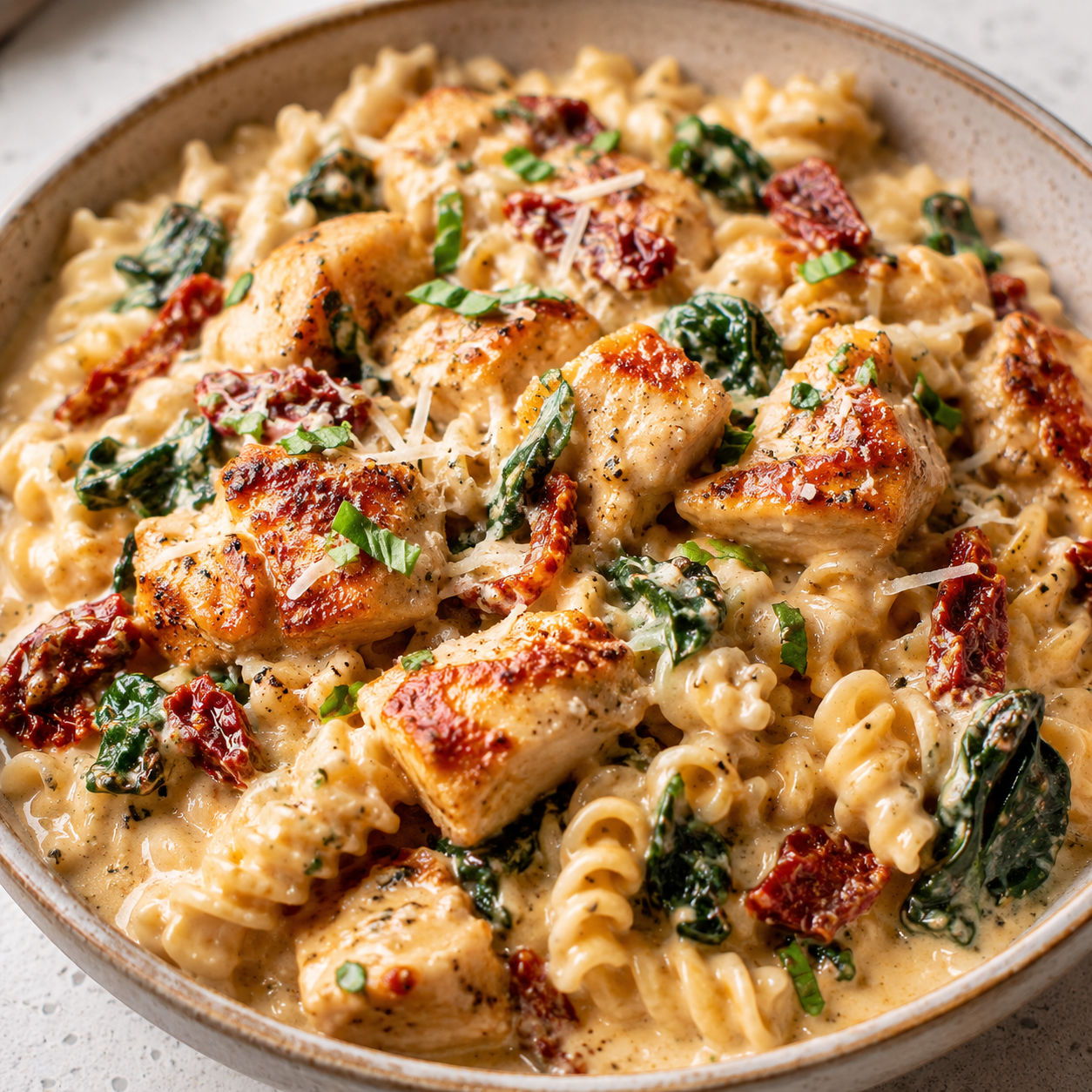
Cheesy Tuscan Chicken with Sun-Dried Tomato Rotini and Spinach is the kind of skillet pasta that tastes bigger than the work it takes. The chicken gets browned until the edges pick up color, then rotini grabs a creamy garlic sauce with sun-dried tomatoes tucked into every twist.
I like this with fresh spinach because it wilts fast and keeps the sauce from feeling flat. The cheese melts into the cream at the end, so you get a smooth sauce instead of a clumpy one.
Cheesy Tuscan chicken rotini basics
This dish leans on pantry-friendly ingredients, so small quality choices matter. Use oil-packed sun-dried tomatoes for the deepest flavor, and grate the Parmesan yourself so it melts cleanly.
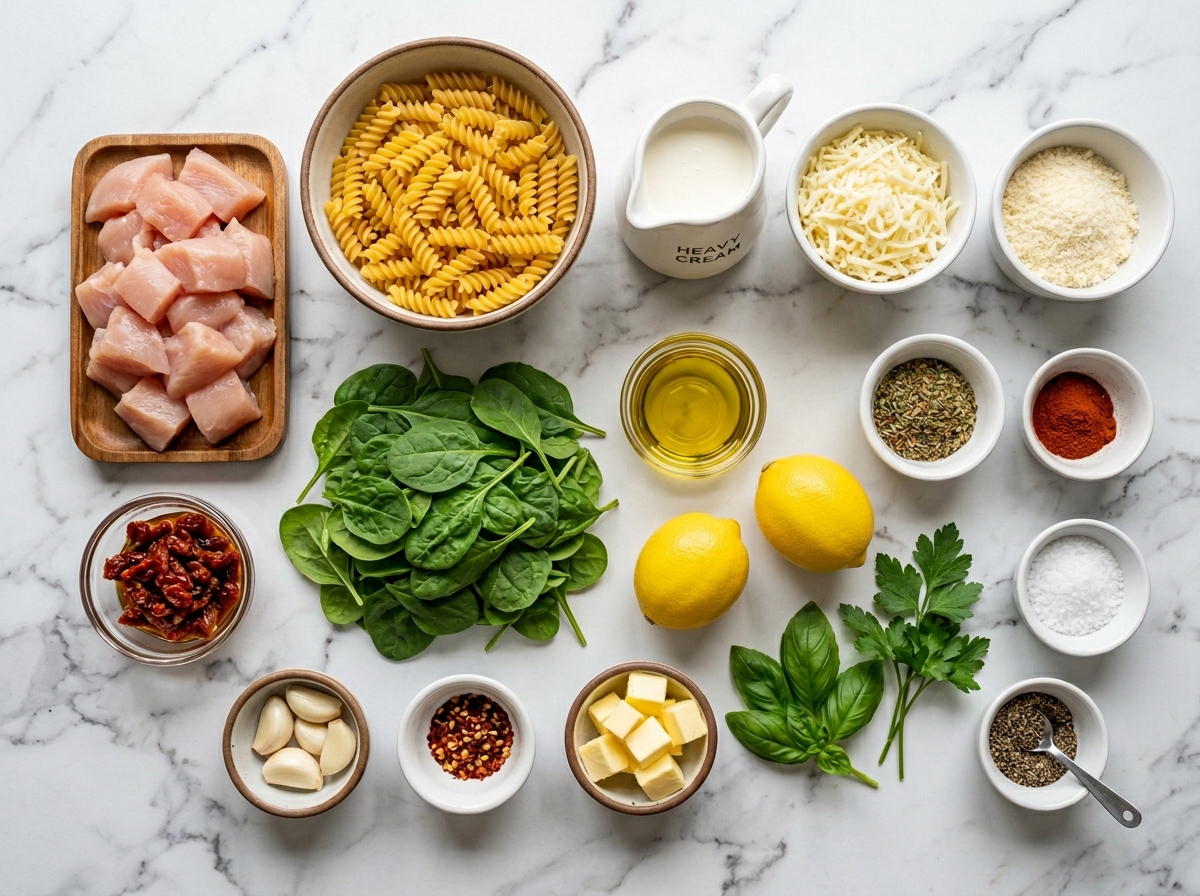
- Chicken breast. Cooks quickly as bite-size pieces and gives the sauce a lean, savory base.
- Rotini. The spirals catch cream, cheese, and tiny bits of sun-dried tomato.
- Sun-dried tomatoes. Add a sweet, tangy tomato flavor that makes the sauce taste slow-cooked.
- Baby spinach. Wilts fast and adds color without needing a separate pan.
- Garlic. Gives the sauce its warm, savory backbone.
- Heavy cream. Builds a smooth sauce that can hold the cheese without breaking.
- Parmesan. Adds salty depth and helps thicken the sauce.
- Mozzarella. Makes the pasta stretchy, creamy, and properly cheesy.
- Italian seasoning. Brings dried herbs into the chicken and sauce.
Build it in layers
- Boil the rotini. Cook it in well-salted water until just al dente. Save 1 cup of the pasta water before draining.
- Season the chicken. Toss the chicken pieces with Italian seasoning, paprika, salt, and pepper so every bite is seasoned before it hits the skillet.
- Brown the chicken. Sear the pieces in a hot skillet until golden and cooked through. Move them to a plate so they stay juicy.
- Start the sauce. Cook garlic and sun-dried tomatoes in the same pan until fragrant. Stir in cream and a little pasta water, scraping up the browned bits.
- Melt the cheese. Lower the heat and stir in Parmesan and mozzarella until smooth. Add more pasta water if the sauce gets too thick.
- Fold in pasta and spinach. Add rotini, spinach, and chicken back to the pan. Toss until the spinach wilts and the sauce coats the pasta.
Why rotini works here
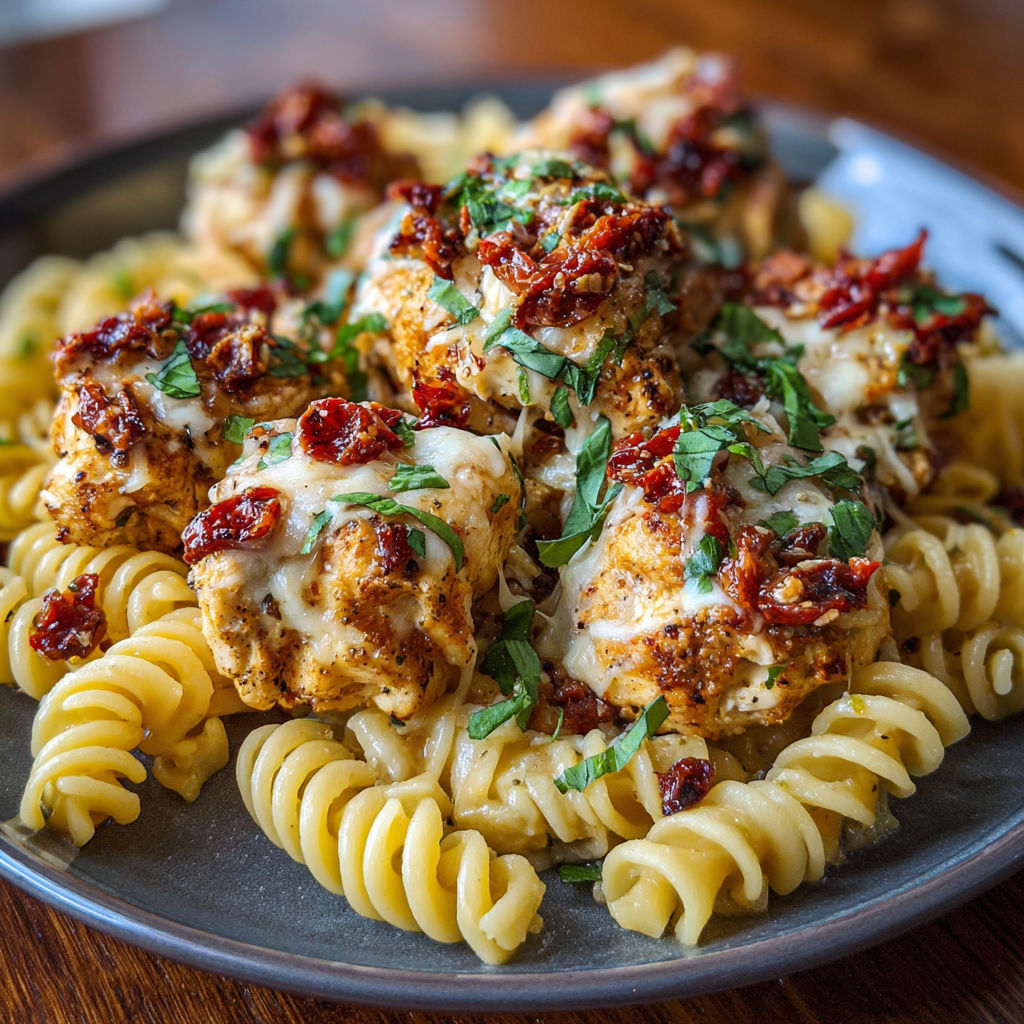
Rotini is not just a shape choice. It gives this creamy sauce places to cling. The ridges catch bits of garlic and sun-dried tomato, so the last bite has as much flavor as the first. If you have tried creamy chicken rotini, you already know how well spirals handle a thick sauce.
Cook the pasta just to al dente because it keeps softening once it lands in the skillet. If the sauce tightens while you toss, add pasta water one splash at a time. It should look glossy and loose enough to slide around the pan, not stiff like a casserole filling.
Browning without drying chicken
Small chicken pieces can go from tender to dry quickly. Use medium-high heat and let the first side brown before stirring. If you move the chicken too soon, it releases moisture and steams. Give it space in the pan, or brown it in two batches.
Chicken should reach 165°F for safety. The federal chart at FoodSafety.gov is a useful reference if you cook chicken often. An instant-read thermometer keeps you from guessing, especially when the pieces are uneven.
Sun-dried tomato balance
Oil-packed sun-dried tomatoes bring the best texture here. Drain them, then chop them small so they spread through the sauce instead of landing in a few sharp bites. If yours are very salty, season the sauce lightly at first and adjust after the cheese melts.
This same tomato cream profile shows up in creamy sun-dried tomato chicken and creamy chicken pasta with sun-dried tomatoes. For another version of the idea, McCormick has a creamy Tuscan chicken pasta recipe at McCormick.
Cheese that melts cleanly
Pre-shredded cheese can work in a pinch, but it often has starches that make the sauce feel grainy. Freshly grated Parmesan and low-moisture mozzarella melt more smoothly. Add them over low heat and stir patiently. The sauce should thicken in a minute or two.
If you want the dish extra cheesy, add another handful of mozzarella at the very end and cover the skillet for a minute. For a richer spinach chicken sauce without pasta, try chicken with spinach and mushrooms in creamy Parmesan sauce.
Storage and quick reheats
This pasta is best right after cooking, but leftovers still hold up. Cool them quickly and refrigerate in a sealed container for up to 3 days. Reheat in a skillet over low heat with a splash of milk, cream, or water. Stir gently until the sauce relaxes.
I do not recommend freezing it. Cream sauces can split after thawing, and rotini gets softer than you want. If you need to prep ahead, cut the chicken, chop the tomatoes, grate the cheese, and wash the spinach. The cooking goes fast once those pieces are ready.
FAQs
- Can I use chicken thighs instead of chicken breast?
Yes. Boneless skinless chicken thighs work well and stay juicy. Cut them into small pieces and cook until browned and fully cooked through.
- Can I make this with a different pasta shape?
Rotini is great because the spirals hold the sauce. Penne, fusilli, cavatappi, or shells also work. Avoid very tiny pasta because it can make the dish feel too thick.
- How do I keep the cheese sauce smooth?
Lower the heat before adding the cheese. Stir in Parmesan and mozzarella gradually, then loosen the sauce with reserved pasta water. Boiling the sauce after the cheese goes in can make it separate.
- Can I use frozen spinach?
Yes, but thaw it and squeeze it very dry first. Frozen spinach holds a lot of water. If you add it straight to the pan, the sauce can turn thin and dull.
- How long do leftovers keep?
Store leftovers in an airtight container in the fridge for up to 3 days. Reheat gently in a skillet with a splash of milk or water. The sauce will loosen as it warms.
- What should I serve with this pasta?
A crisp green salad or roasted broccoli keeps the meal balanced. Garlic bread is good if you want something cozy. A squeeze of lemon over each bowl also helps cut the richness.
