 Pin it
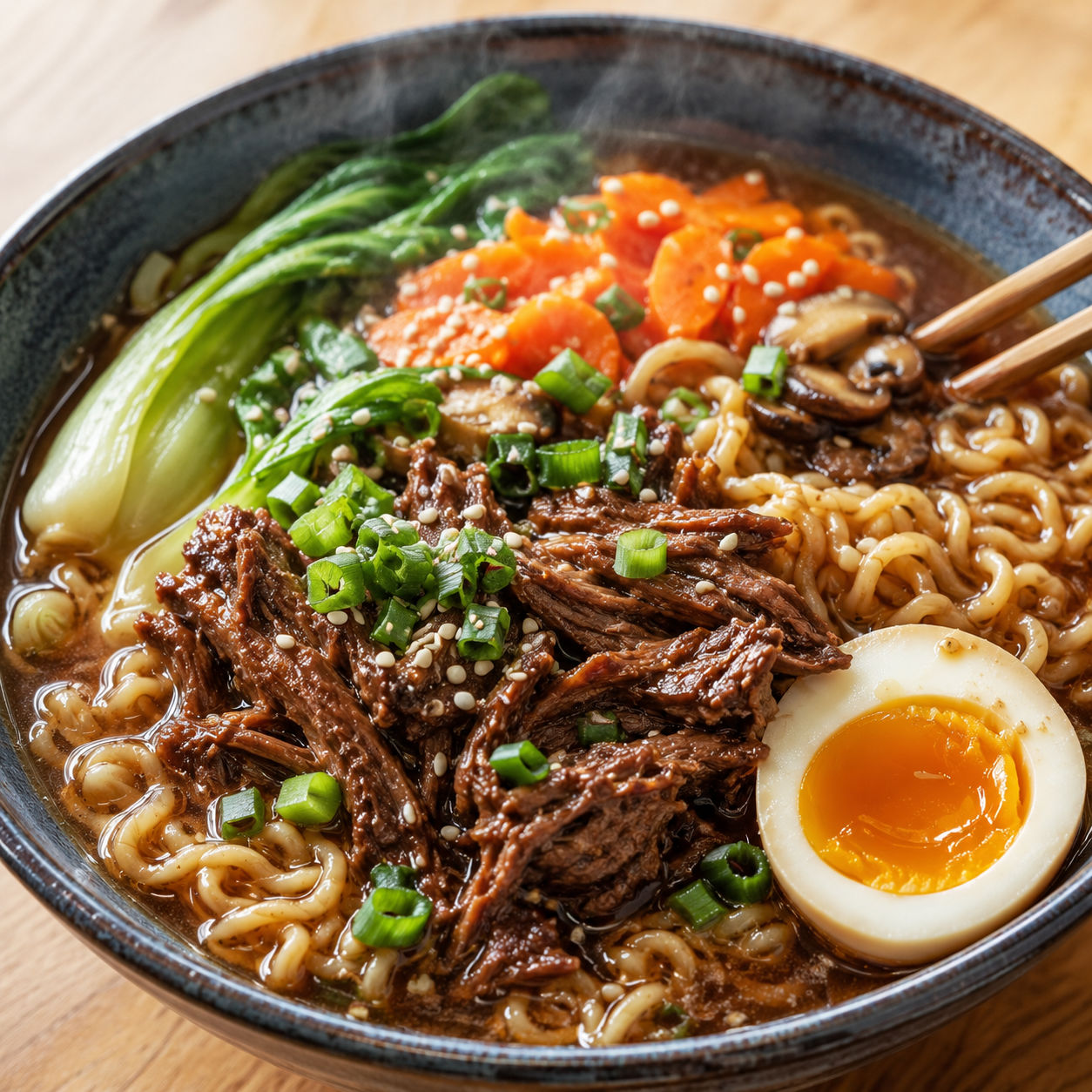
Slow Cooker Beef Ramen Noodles is what I make when I want a big bowl of comfort without standing over the stove all afternoon. The beef turns soft enough to pull apart with a fork, and the broth picks up all the garlic, ginger, soy, and sesame while it cooks.
The one thing I do not leave to chance is the noodles. Ramen only needs a few minutes, so it goes in at the end instead of soaking for hours. That small timing choice keeps the bowl rich and cozy instead of mushy.
What Builds The Broth
Use beef with enough marbling to handle a long cook, then keep the broth salty, aromatic, and slightly sweet. Low-sodium broth and soy sauce help you control the final seasoning once the noodles go in.
- Chuck roast. Slow cooking turns this cut tender and juicy, and the beef flavor seasons the broth as it cooks.
- Beef broth. Gives the ramen a deeper base than water alone.
- Soy sauce. Adds salt and savory depth, so low-sodium is easier to adjust.
- Hoisin sauce. Brings a gentle sweetness and glossy body to the broth.
- Garlic and ginger. Keep the slow-cooked beef from tasting flat.
- Sesame oil. Adds a toasted finish. A little goes a long way.
- Carrots, mushrooms, and bok choy. Add color, texture, and freshness near the end.
- Ramen noodles. Discard the seasoning packets and use the noodles only.
- Green onions and sesame seeds. Finish the bowl with crunch and a fresh bite.
Slow Cooker Beef Ramen Method
- Brown the beef. Season the chuck pieces, then sear them in a hot skillet until browned on the outside. This adds deeper flavor to the broth.
- Mix the broth. Whisk beef broth, soy sauce, hoisin, rice vinegar, brown sugar, sesame oil, garlic, ginger, and pepper in the slow cooker.
- Cook until tender. Add the beef and onion, cover, and cook on low for 7-8 hours or high for 4-5 hours until the meat pulls apart easily.
- Shred the beef. Lift the beef out, shred it with two forks, then return it to the slow cooker.
- Add the vegetables. Stir in carrots and mushrooms for 20 minutes, then add bok choy for the last few minutes so it stays green.
- Finish the noodles. Add ramen noodles and cook 8-10 minutes, stirring once to separate them. Serve with green onions, sesame seeds, and soft-boiled eggs if you like.
Keep The Noodles Springy
The noodles are the easiest part to overcook. Instant ramen is built to soften quickly, so it should never sit in the slow cooker all day. I add the bricks after the beef is shredded and the vegetables are almost done. Push them under the broth, wait a few minutes, then gently loosen them with tongs.
If you know dinner will sit on warm for a while, cook the noodles in a separate pot instead. Divide them into bowls and spoon the hot beef and broth over the top. This is also the best move for leftovers. For a faster noodle night with a similar garlic-sesame feel, try Quick & Tasty Sesame Garlic Ramen Noodles.
Why Chuck Works Best
Chuck roast is not the leanest cut, and that is exactly why it works here. The slow cooker gives the collagen time to melt, which makes the beef soft and gives the broth a rounded, rich taste. Cut the roast into large chunks rather than tiny pieces. Bigger pieces stay juicier and are easier to shred.
Searing is worth the extra pan if you have five minutes. The browned edges bring a roasted flavor that the slow cooker cannot create on its own. If you like this style of tender beef in a sweeter sauce, Slow Cooker Mongolian Beef is a good next dinner to try.
Vegetables That Hold Up
Carrots and mushrooms can handle a little time in the slow cooker. Bok choy cannot. Add the firm vegetables first and the greens at the very end, just until the stems soften and the leaves slump. That keeps the bowl from looking dull and gives each bite a little freshness.
Broccoli florets also work, but add them late so they do not turn gray. Snow peas, spinach, napa cabbage, or thin bell pepper strips can go in during the last 5-10 minutes. If you want a beef and vegetable dinner without ramen, Delicious Slow Cooker Broccoli Beef follows the same slow-cooked comfort idea.
Broth Balance And Heat
The broth should taste savory first, then lightly sweet, with ginger and garlic coming through at the end. Rice vinegar keeps it from feeling heavy. Hoisin adds body, but too much can make the bowl taste sticky. Start with the amount in the recipe and add more only after tasting.
For heat, chili garlic sauce, sriracha, or chili crisp all work. Add mild heat to the slow cooker, then let people add more at the table. The USDA notes that slow cookers work safely when food starts properly thawed and the cooker is used as directed, which is helpful for long-cooked beef dishes. See their slow cooker food safety guidance if you are cooking from chilled prep.
Storage Without Soggy Ramen
Leftovers are best when the noodles and broth are stored apart. If everything is already mixed, it is still edible, but the noodles will keep drinking broth in the fridge. Reheat the beef and broth gently on the stove or in the microwave until steaming hot, then add fresh noodles if you want the best texture.
The beef and broth freeze well for up to 2 months. Leave out the noodles, bok choy, green onions, and eggs before freezing. Thaw overnight in the fridge, warm the broth, then add fresh ramen. For another cozy slow cooker beef dinner built for leftovers, try Delicious Crockpot Beef Tips & Noodles.
Summary
This slow cooker beef ramen is all about tender chuck roast, a balanced ginger-garlic broth, and noodles added at the end. Keep the ramen separate for leftovers and the bowl stays much better the next day.
FAQs
- Can I put ramen noodles in the slow cooker at the beginning?
No. Ramen noodles soften fast and will turn bloated if they cook for hours. Add them during the last 8-10 minutes, or cook them separately and ladle the hot beef broth over them.
- What cut of beef is best for slow cooker ramen?
Chuck roast is the best choice because it has enough marbling and connective tissue to become tender during long cooking. Stew meat also works, but check it early because leaner pieces can dry out.
- Can I use ground beef instead of chuck roast?
Yes, but the texture will be more like a quick noodle skillet than shredded beef ramen. Brown and drain the ground beef first, then slow cook the broth for 2-3 hours before adding vegetables and noodles.
- How do I store leftover beef ramen noodles?
Store the beef and broth separately from the noodles when possible. The broth keeps for 3-4 days in the fridge, while cooked ramen is best within a day because it keeps absorbing liquid.
- Can this be made gluten-free?
Yes, with changes. Use gluten-free ramen or rice noodles, swap soy sauce for tamari, and check that your hoisin sauce and broth are labeled gluten-free.
- What can I serve with beef ramen?
This bowl is filling on its own, but crisp sides work well. Try cucumber salad, steamed edamame, kimchi, or quick pickled carrots to balance the rich broth.
