 Pin it
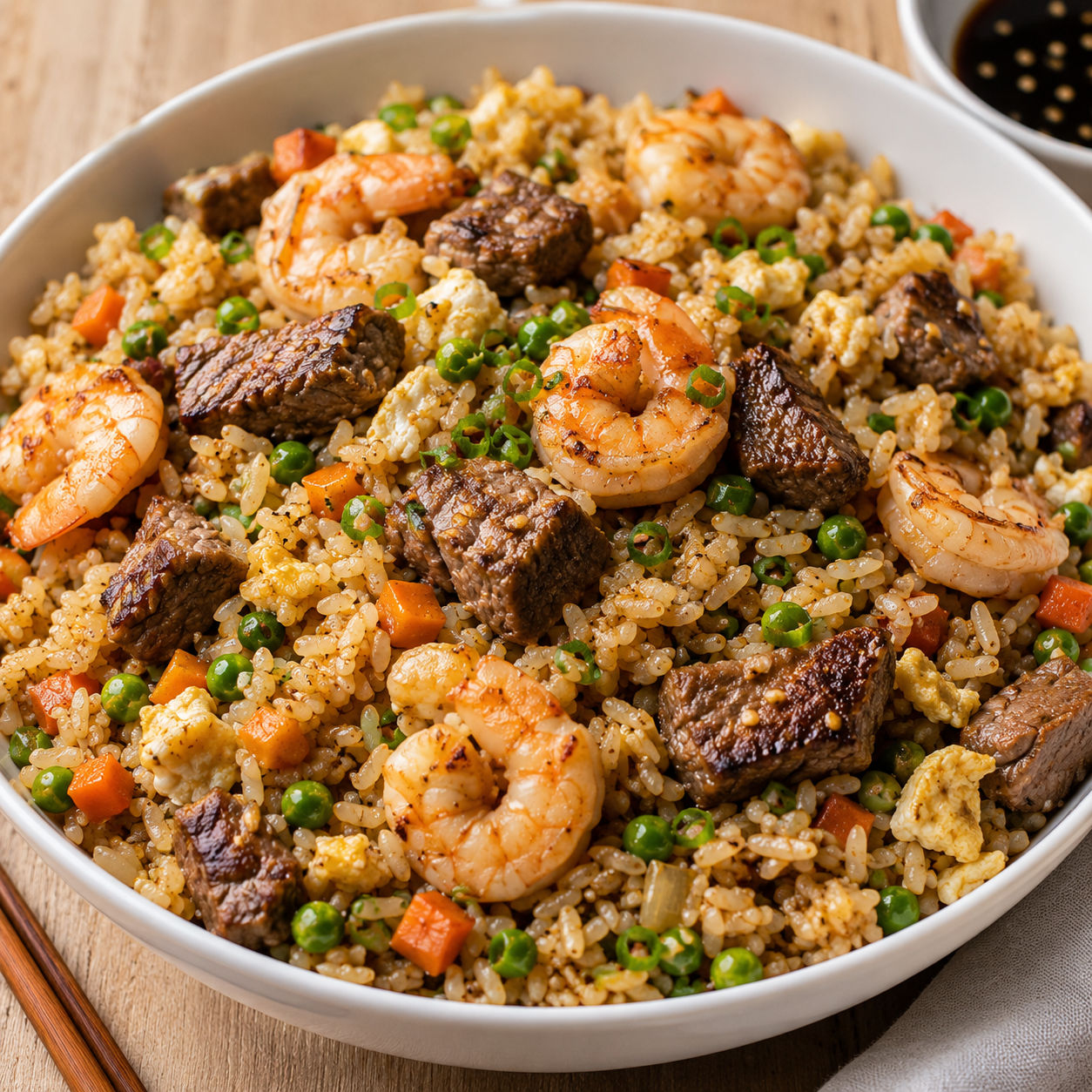
Delicious Shrimp and Steak Fried Rice is the kind of skillet dinner that feels generous without taking over the whole evening. You get browned steak, sweet shrimp, soft scrambled egg, and rice that tastes toasted instead of steamed.
The rice matters most. Cold cooked rice separates in the pan, so each grain can pick up soy sauce, garlic, ginger, and the browned bits left from the steak.
I like this when I have leftover rice and want something more filling than plain shrimp fried rice. It cooks fast, but the order of the steps keeps the steak tender and the shrimp from turning rubbery.
Surf And Turf Rice Staples
Start with cooked rice that has had time to chill and dry out. For the proteins, choose steak that can sear fast and shrimp that are peeled, deveined, and patted very dry.
- Day-old jasmine rice. Cold rice fries cleanly and gives you separate grains instead of a soft clump.
- Sirloin or ribeye steak. Bite-size pieces brown quickly and add rich, beefy flavor to the pan.
- Large shrimp. They cook in minutes and bring a sweet seafood bite to the rice.
- Eggs. Soft curds make the rice feel fuller and help carry the sauce.
- Peas and carrots. They add color, sweetness, and a little crunch without extra prep.
- Garlic and ginger. Fresh aromatics make the rice smell like a hot wok instead of plain soy sauce.
- Soy sauce and oyster sauce. Soy seasons the rice while oyster sauce adds a rounded savory finish.
- Sesame oil and scallions. These go in at the end for nutty aroma and a fresh bite.
Delicious Shrimp And Steak Fried Rice
- Break up the rice. Crumble the cold rice with your fingers before cooking so it hits the pan in loose grains.
- Season the proteins. Toss steak with soy sauce, black pepper, and cornstarch. Pat the shrimp dry and season lightly with salt and pepper.
- Sear the steak. Heat oil in a large wok or skillet. Cook the steak in a single layer until browned, then move it to a plate.
- Cook the shrimp. Add the shrimp and cook until pink and opaque, about 1-2 minutes per side. Remove them with the steak.
- Scramble the eggs. Add a little oil, pour in the beaten eggs, and stir until soft curds form. Slide them to the plate.
- Fry the vegetables and rice. Cook onion, peas, carrots, garlic, and ginger, then add the rice and press it into the hot pan so it toasts.
- Sauce and finish. Add soy sauce, oyster sauce, and sesame oil. Return steak, shrimp, and eggs, then toss with scallions until everything is hot.
Cold Rice Wins
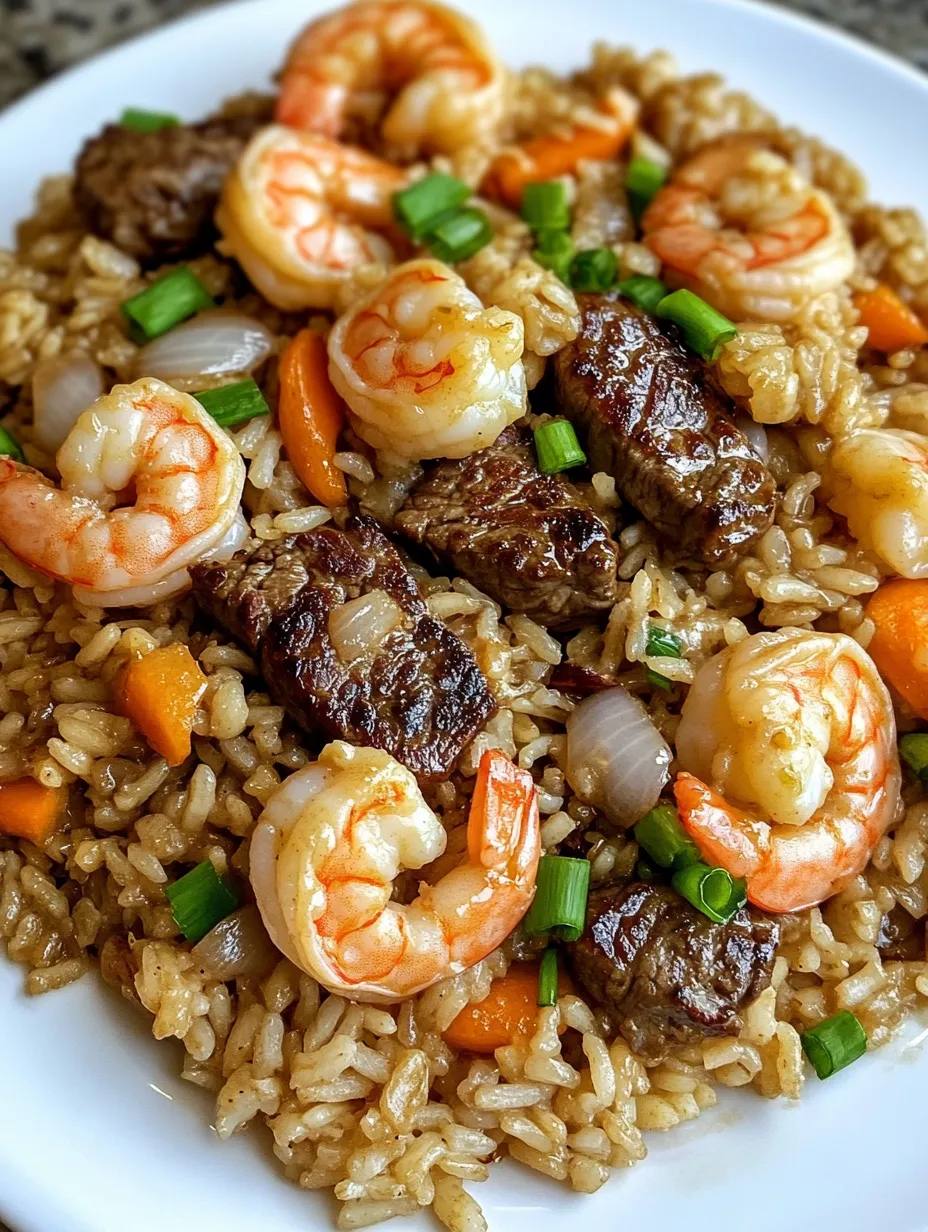
Fresh rice is still steamy inside. When it goes straight into a hot skillet, it sticks to itself and turns heavy. Cold rice has drier edges, so the grains separate when you press and toss them. That is the difference between fried rice that tastes pan-toasted and fried rice that feels like a reheated bowl.
If you forgot to cook rice ahead, use a quick fix. Spread freshly cooked rice on a sheet pan in a thin layer and refrigerate it uncovered for 30-45 minutes. It will not be quite as dry as overnight rice, but it will behave much better than a hot scoop from the pot. This same habit makes Quick and Healthy Fried Rice and Quick 6-Ingredient Egg Fried Rice taste cleaner too.
Cook Proteins Separately
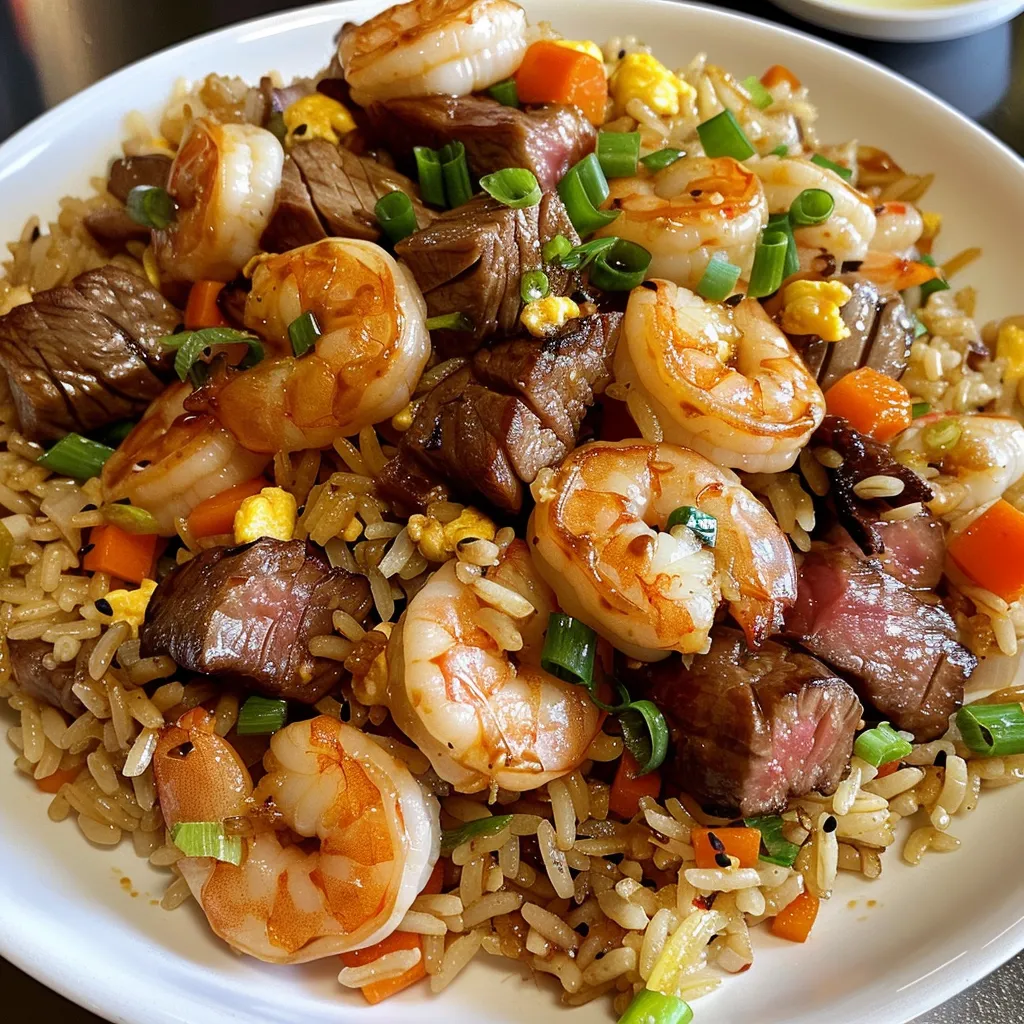
Steak and shrimp do not cook at the same speed. Steak needs a hot surface and a little time to brown. Shrimp need a quick pass through the pan and not much more. Cooking them separately gives each one the texture it deserves.
Use a wide skillet or wok and let the oil shimmer before the steak goes in. Crowding the pan drops the heat, which makes the steak steam instead of brown. The shrimp should curl into a loose C shape and turn opaque. For seafood safety, the FDA seafood-safety guide recommends cooking shrimp to 145°F.
Sauce Without Soggy Rice
Add the sauce around the edge of the pan, not in one wet puddle on top of the rice. The hot metal wakes up the soy sauce and helps it coat the grains faster. Oyster sauce is thicker, so stir it with the soy sauce before it goes in if your pan runs hot.
Taste before adding more salt. Soy sauce, oyster sauce, and the steak seasoning can stack up quickly. If you want more heat, add chili crisp or sriracha at the table. For a sweeter hibachi-style plate, look at the flavor direction in Hibachi Steak Shrimp Rice and keep the sauce a little glossier.
Easy Swaps And Add-Ins
Frozen peas and carrots are useful because they cook quickly and keep their shape. Bell peppers, broccoli florets, snap peas, or mushrooms also work, but cut them small so they soften before the rice dries out. If you use watery vegetables like zucchini, cook them first and let extra moisture evaporate.
For the steak, sirloin keeps the recipe affordable. Ribeye tastes richer. Flank steak works if you slice it thin across the grain. If shrimp is not on hand, use diced chicken thighs or extra steak. For another beef-and-rice route, Beef Stir-fry With Fried Rice keeps the same quick skillet energy.
Store It The Smart Way
Fried rice cools faster when it is spread into a shallow container instead of packed deep in a bowl. Refrigerate it within 2 hours, then eat it within 3 days. The USDA leftovers guide gives the same 3-4 day refrigerator window for cooked leftovers.
Reheat in a skillet over medium heat with a spoonful of water. Stir until the rice is steaming hot and the grains loosen again. The microwave works for lunch, but cover the bowl and pause to stir so the shrimp do not overcook at the edges.
FAQs
- Can I use freshly cooked rice for shrimp and steak fried rice?
You can, but it needs help. Spread the hot rice on a sheet pan and chill it until the surface feels dry. Cold day-old rice gives the best texture because the grains separate instead of clumping.
- What cut of steak works best?
Sirloin, ribeye, New York strip, or flank steak all work. Slice it small and across the grain so it cooks quickly and stays tender. Avoid stew meat because it needs a much longer cook time.
- Can I swap the shrimp for chicken?
Yes. Cut boneless chicken thighs or breasts into bite-size pieces and cook them fully before removing them from the pan. Chicken will take longer than shrimp, usually 5-7 minutes depending on size.
- How do I keep the shrimp from overcooking?
Cook shrimp only until pink, curled, and opaque. Pull them from the pan before they look fully firm because they warm again at the end. The FDA seafood guide lists 145°F as the safe cooking temperature for shrimp.
- How long do leftovers keep?
Store leftovers in a shallow airtight container in the refrigerator for up to 3 days. Reheat in a skillet with a splash of water or broth until steaming hot. Do not leave cooked rice at room temperature for long periods.
- Can I make this gluten-free?
Yes. Use certified gluten-free tamari instead of soy sauce and check that your oyster sauce is gluten-free. You can also use coconut aminos, though the flavor will be a little sweeter and less salty.
