 Pin it
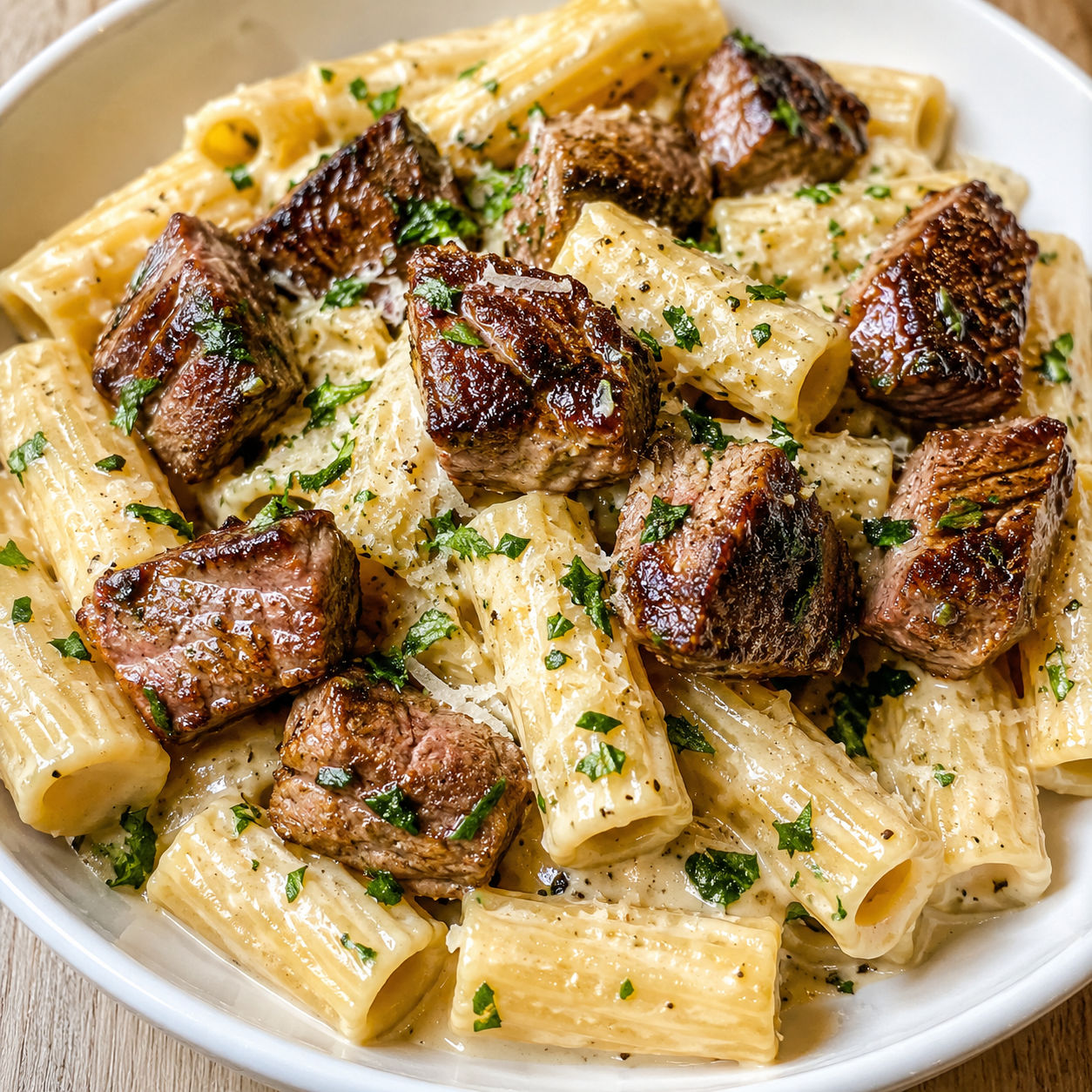
Garlic Butter Steak With Creamy Pasta is the kind of dinner that feels like a steakhouse plate but cooks in a weeknight window. The steak gets a hard sear first, then butter and garlic coat the browned edges before the pasta goes into a creamy parmesan sauce.
I like sirloin here because it stays tender without being too rich. Ribeye works too if you want more marbling. The real trick is keeping the sauce loose enough to coat every piece of pasta without drowning the steak.
The Creamy Steak Lineup
Choose a steak with enough marbling to stay juicy after a fast sear. Freshly grated parmesan matters here because it melts smoother than the bagged kind and gives the sauce a clean salty finish.
- Sirloin steak. Gives you tender, beefy pieces that brown well without turning greasy.
- Short pasta. Rigatoni or penne catches the creamy sauce and bits of garlic in every bite.
- Unsalted butter. Carries the garlic flavor and coats the steak after searing.
- Fresh garlic. Adds the sharp, savory backbone of the dish. Cook it gently so it smells sweet, not burnt.
- Heavy cream. Makes the sauce smooth and rich without a long simmer.
- Parmesan cheese. Thickens the sauce and adds salty depth.
- Pasta water. Loosens the cream sauce and helps it cling instead of separating.
- Parsley. Brings a fresh finish that keeps the bowl from tasting flat.
Cook It In Layers
- Boil the pasta. Cook the pasta in well-salted water until al dente. Save one cup of the water before draining.
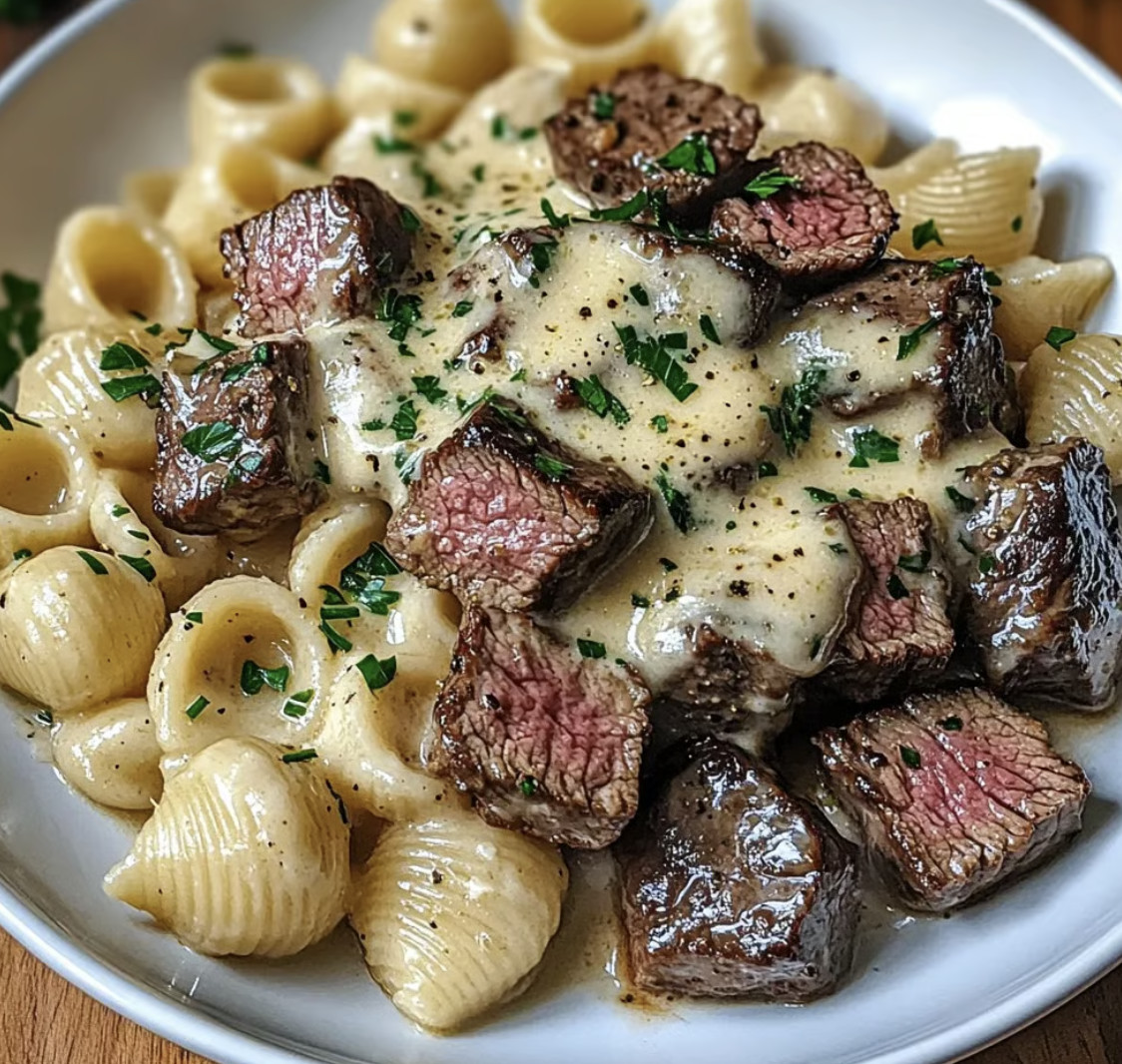
- Sear the steak. Pat the steak dry, season it well, and cook in a hot skillet until deeply browned on the outside. Work in batches if needed.
- Add garlic butter. Lower the heat, add butter and garlic, and toss the steak for about one minute until glossy and fragrant. Move the steak to a plate.
- Make the cream sauce. In the same pan, add cream and scrape up the browned bits. Stir in parmesan until smooth.
- Toss the pasta. Add the drained pasta and a splash of pasta water. Toss until the sauce looks silky and coats the pasta.
- Finish with steak. Return the steak and any juices to the pan. Add parsley and black pepper, then serve right away.
Get A Real Steak Sear
The pan needs to be hot before the steak goes in. A dry surface and a little space between pieces are what create browned edges. If the steak is piled into the skillet, it will steam and leak juices. Cook in two batches if your pan is smaller.
For another beefy garlic butter dinner, the site's garlic butter steak bites with parmesan cream sauce uses the same sear-first approach. The USDA temperature chart is helpful if you like cooking steak by temperature. You can check it at the USDA safe temperature chart.
Keep The Sauce Silky
Creamy pasta can turn thick fast once parmesan hits the pan. Keep the heat moderate and add the cheese after the cream is warm, not boiling hard. A splash of reserved pasta water makes the sauce glossy and helps it coat the pasta evenly.
If the pan looks tight, add more pasta water one tablespoon at a time. This is the same idea behind simple cheese sauces like garlic parmesan pasta. It should look creamy, not stiff.
Swaps That Taste Right
Ribeye, strip steak, or filet tips can stand in for sirloin. For pasta, rigatoni gives a hearty bite while fettuccine feels more like Alfredo. Half-and-half works in place of cream, but simmer it gently and expect a lighter sauce.
Add a pinch of red pepper flakes with the garlic if you want heat. For a spicier cousin, try garlic butter steak Cajun pasta. Mushrooms, spinach, or sun-dried tomatoes also fit well, but keep the add-ins modest so the steak stays the focus.
Serving Without A Heavy Plate
This pasta is rich, so serve it with something crisp or bright. A green salad with lemony dressing works better than another creamy side. Roasted asparagus, broccoli, or blistered green beans are good choices too.
If you are feeding a hungry table, garlic bread will not be refused. I keep the portion of pasta moderate and let the steak carry the meal. For a similar family-style bowl with ground beef, creamy parmesan bowtie pasta with garlic and beef is an easy option.
Leftovers Need Gentle Heat
Store leftovers in an airtight container for up to three days. The sauce firms up in the fridge, so do not reheat it dry. Add a splash of milk, cream, or broth to a skillet and warm the pasta over low heat.
If you can, reheat the steak separately and add it at the end. That keeps the pieces from going gray and tough. Freezing is not my first choice because cream sauces can split after thawing.
Summary
Serve this pasta right away while the sauce is glossy and the steak is still juicy.
FAQs
- What steak is best for garlic butter steak pasta?
Sirloin is the easiest choice because it is beefy, reasonably tender, and slices or cubes cleanly. Ribeye is richer and softer, while New York strip gives a firmer steakhouse bite. Avoid very lean round steak unless you marinate it first.
- Can I use a different pasta shape?
Yes. Fettuccine, penne, rigatoni, and bowties all work. Use a shape with ridges or broad surfaces so the creamy garlic sauce has something to cling to.
- How do I keep the steak tender?
Pat it dry, use a hot pan, and do not crowd the skillet. Pull the steak as soon as it is browned and close to your preferred doneness. Rest it for five minutes before adding it back to the pasta.
- Can I make this ahead?
The pasta is best fresh, but you can cut the steak, grate the parmesan, and mince the garlic earlier in the day. If making ahead for meal prep, keep the steak and pasta separate until reheating so the meat does not overcook.
- How should I reheat creamy steak pasta?
Warm it gently in a skillet over low heat with a splash of milk or broth. Stir often until the sauce loosens. Add the steak near the end just long enough to warm through.
- Can I make it lighter?
Use half-and-half instead of heavy cream and reduce the butter by one tablespoon. The sauce will be a little less plush, but fresh parmesan and pasta water still give it body. Add spinach for extra volume without making the dish heavy.
