 Pin it
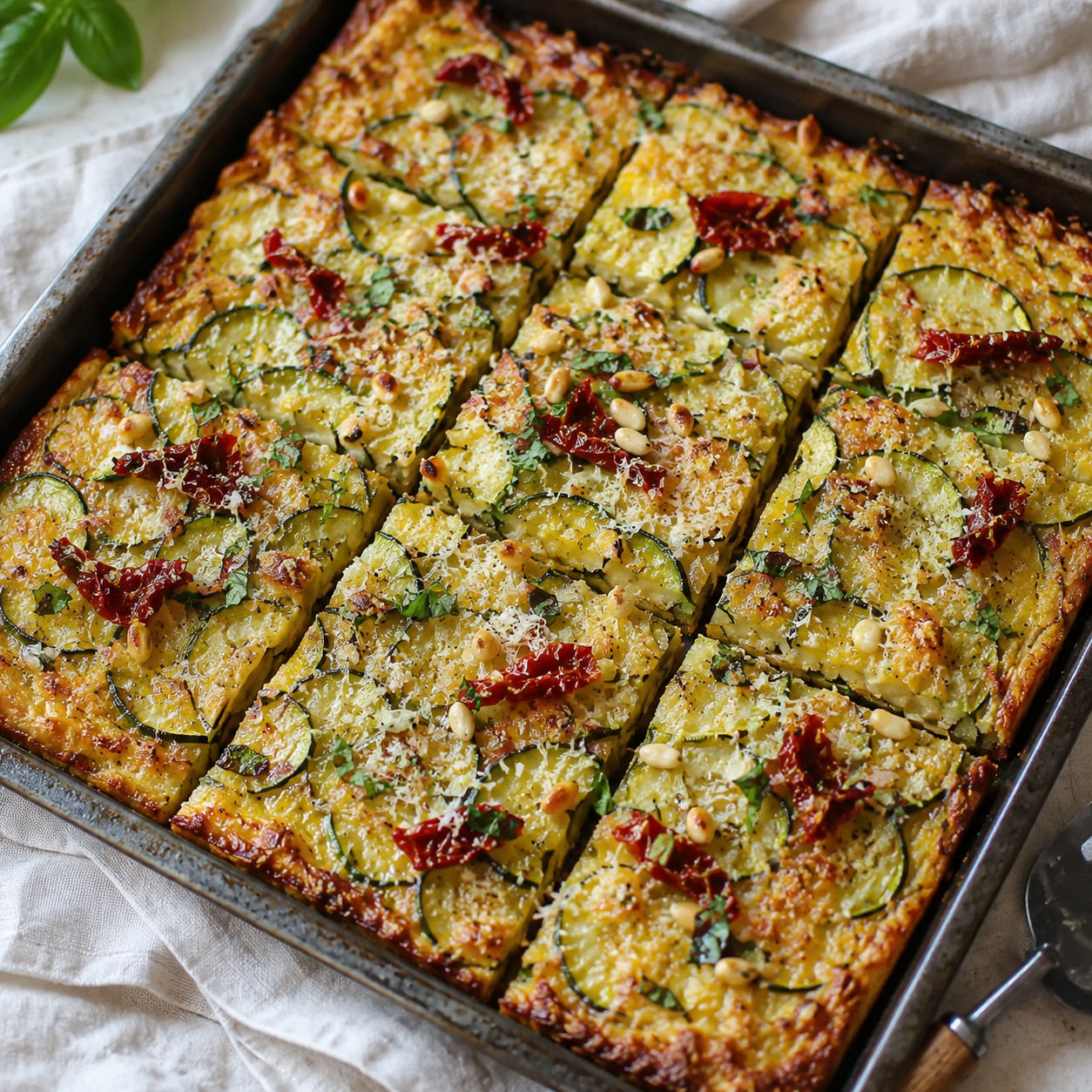
Scarpaccia: Traditional Italian Zucchini Tart with Sundried Tomatoes is the kind of savory bake that makes a pile of summer zucchini feel intentional. It is thin, golden, and a little rustic, with sweet onion and chewy tomatoes tucked through the slices.
The trick is not a fancy pastry crust. You use the zucchini itself, a little flour and cornmeal, and enough olive oil to make the edges crisp. Serve it warm for dinner, or let it cool and cut it into squares for snacks.
The Zucchini And Tomato Lineup
Choose firm, small to medium zucchini because they have fewer seeds and less water. Oil-packed sundried tomatoes are best here because their seasoned oil can go right into the batter.
- Zucchini. Thin slices become the body of the tart and give it a tender, layered center.
- Red onion. Bakes sweet and soft, which balances the savory cornmeal crust.
- Sundried tomatoes. Add chewy texture and concentrated tomato flavor without making the batter watery.
- Baby spinach. Brings color and a mild earthy note that folds easily into the zucchini.
- Pine nuts. Toast in the oven and give each square a gentle crunch.
- Basil and thyme. Keep the tart fresh and clearly Italian.
- Flour and cornmeal. Hold the vegetables together while giving the edges a crisp, sandy bite.
- Eggs. Help the tart set cleanly so it slices instead of crumbling.
- Olive oil and tomato oil. Carry flavor through the batter and help the bottom brown.
- Parmesan. Adds a salty finish after baking while the tart is still hot.
Bake It Thin And Golden
- Salt the vegetables. Toss sliced zucchini and onion with salt and rest them for 15 minutes. Squeeze gently to remove extra moisture.
- Prepare the pan. Heat the oven to 400°F and coat a 12x16 inch sheet pan with olive oil. The thin pan matters because scarpaccia should not bake like a thick casserole.
- Mix the vegetables. Add spinach, chopped sundried tomatoes, basil, thyme, pine nuts, pepper, and a little sugar to the zucchini bowl.
- Make the batter. Whisk flour, cornmeal, and baking powder, then stir in beaten eggs, the reserved tomato oil, olive oil, and just enough water to make a thick, spoonable mixture.
- Spread it shallow. Scrape everything into the pan and press it into an even thin layer, making sure the vegetables reach the corners.
- Bake until set. Bake for 45-50 minutes, until the surface is golden and the edges are deeper brown.
- Finish and rest. Sprinkle Parmesan and thyme over the hot tart, then rest 10 minutes before cutting into squares.
Scarpaccia With Sundried Tomatoes
Traditional savory scarpaccia can be very spare, often just zucchini, onion, flour, and olive oil. Sundried tomatoes push it in a bolder direction without fighting the original idea. They bring a sweet, savory chew that works well with zucchini because they do not release much water.
I like to chop them into small pieces instead of leaving long strips. That way every square gets a little tomato, and no bite pulls apart awkwardly. Use the oil from the jar too. It is already carrying tomato and herb flavor, so it makes the batter taste seasoned from the inside. For a plainer version of the dish, the site's Scarpaccia Zucchini Tart is a good place to compare the more classic profile.
Why Thin Slices Matter
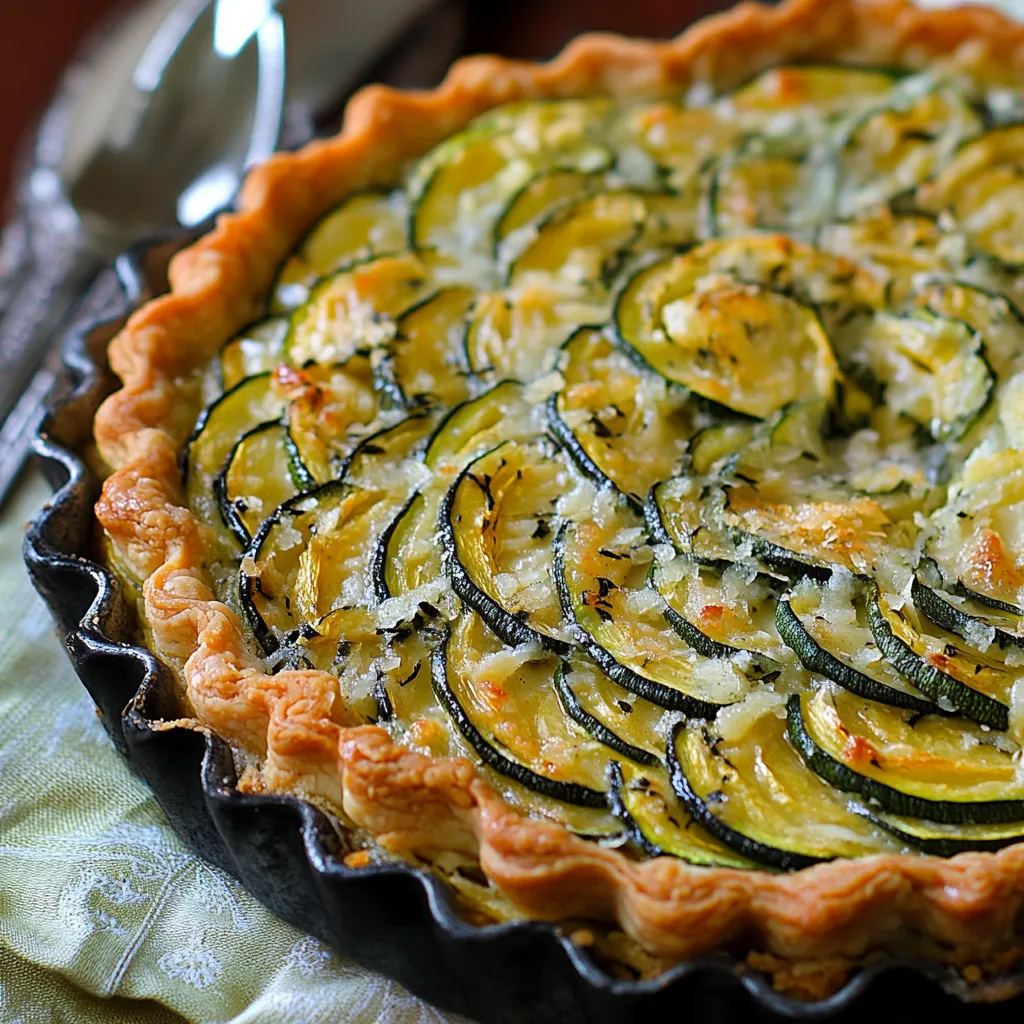
Scarpaccia only works when the vegetables and batter bake as one thin layer. Thick zucchini slices stay wet inside and push the tart toward casserole territory. Thin slices soften quickly, tangle into the batter, and help the top brown before the center overcooks.
A mandoline is useful here, but use the guard and go slowly. The King Arthur Baking scarpaccia guide also points to salting and pressing zucchini as a key step for texture. If your zucchini are large and seedy, cut them in half lengthwise first and scoop out the spongy center. You will get a cleaner slice and less water in the pan.
Getting Crisp Edges
The pan does more work than it seems. A wide sheet pan gives the batter room to spread, and that shallow layer lets the oven drive off moisture. If you pour the same mixture into a small baking dish, the middle steams and the edges never catch up.
Oil the pan well and preheat the oven fully before baking. The first contact with the hot metal sets the bottom. I also avoid parchment for this tart because it can trap a little steam underneath. If you worry about sticking, use a sturdy nonstick sheet pan and loosen the squares with a thin spatula after resting.
Swaps That Still Slice Cleanly
No pine nuts? Use chopped walnuts, sliced almonds, or pumpkin seeds. For a nut-free version, skip them and add a few tablespoons of toasted breadcrumbs on top after baking. Pecorino can stand in for Parmesan if you want a sharper finish.
Spinach is optional, but it adds color without much work. Thin ribbons of basil are lovely, and chopped rosemary can be good in a colder-weather version. If zucchini is the vegetable you keep coming back to, try Air Fryer Zucchini with Parmesan Panko Crust for a quicker side, or Tomato Zucchini Pasta Basil when you want the same summer flavors in a bowl.
Serving It The Tuscan Way
Let the tart cool for at least 10 minutes before cutting. Hot from the oven, it smells incredible but the squares are fragile. Slightly warm is the sweet spot, when the edges still crackle and the center has settled.
Serve it as a meatless main with a sharp salad, or cut it smaller for an appetizer board with olives and marinated beans. It also belongs beside an Italian pasta salad, especially for a picnic or summer lunch. For a bigger spread, the Italian Tortellini Pasta Salad keeps the same easy, serve-at-room-temperature mood.
Storage Without Sogginess
Cool the scarpaccia completely before storing it. Stack the squares with parchment between layers, then refrigerate for up to 3 days. The flavor gets deeper overnight, but the crust softens if it sits in a sealed container while still warm.
For the best reheat, use a 375°F oven or toaster oven until the surface feels dry and the edges are hot. The microwave is fast, but it brings back moisture and softens the bottom. Since this recipe uses fresh produce, wash zucchini and herbs well before slicing. The FDA produce safety page has clear guidance for rinsing and handling vegetables at home.
Summary
This scarpaccia is best served slightly warm or at room temperature with a green salad, grilled fish, or a simple bowl of pasta.
FAQs
- What is scarpaccia?
Scarpaccia is a thin Italian zucchini tart associated with Tuscany, especially the coastal area around Lucca and Viareggio. The savory version is usually made with zucchini, onion, flour, cornmeal or similar grain, and olive oil, then baked until the edges brown.
- Can I make scarpaccia without sundried tomatoes?
Yes. Leave them out and add a little more onion, basil, or grated Parmesan for flavor. Chopped olives also work well if you want a salty Mediterranean bite.
- How thin should the zucchini be?
Aim for slices about 1/8 inch thick or a little thinner. A mandoline gives the most even results, but a sharp knife works if you take your time. Thin slices cook through before the top gets too dark.
- Why did my zucchini tart turn soggy?
The usual cause is too much vegetable moisture or a pan that is too small. Salt the zucchini briefly, squeeze off the excess liquid, and spread the batter in a thin layer. A hot oven and a generous slick of oil on the pan also help the bottom crisp.
- Can I make this gluten-free?
You can replace the all-purpose flour with a good 1-to-1 gluten-free flour blend. Keep the cornmeal in the recipe for texture. Check the baking powder and sundried tomatoes if you cook for someone who needs strict gluten-free food.
- How do I store and reheat leftovers?
Refrigerate cooled squares in an airtight container for up to 3 days. Reheat them on a sheet pan at 375°F for 8-10 minutes. The oven brings back the edges better than the microwave.
