 Pin it
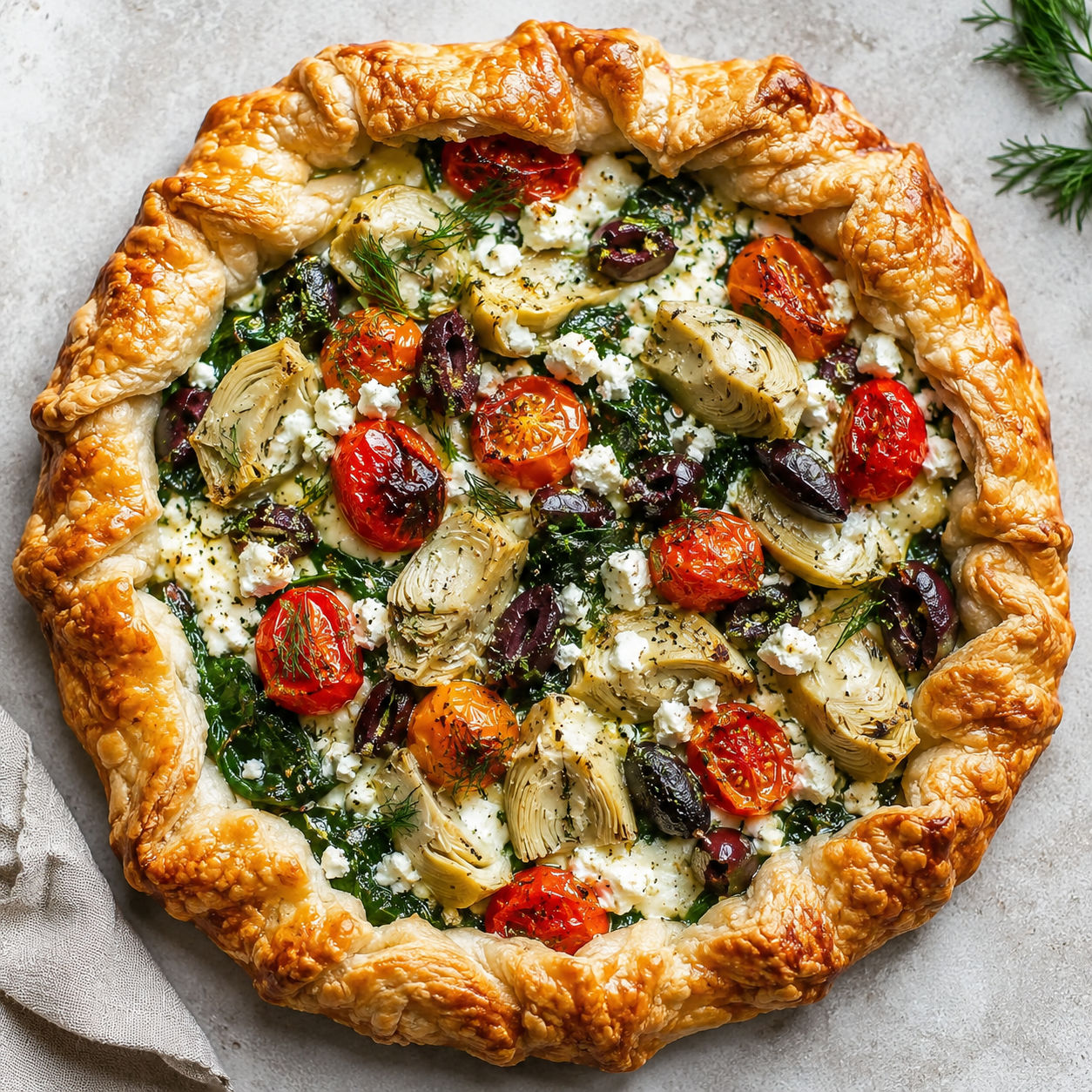
This Mediterranean Vegetable Galette with Artichokes and Three Cheeses is the kind of meatless dinner that feels relaxed but still looks special. The crust folds around a creamy ricotta and goat cheese layer, then the artichokes and tomatoes roast right into it.
I like it when I want the flavor of a vegetable tart without fussing over a tart pan. The edges can be uneven. That is part of the charm. What matters is keeping the filling dry enough so the bottom turns crisp.
The three cheeses each do a job. Ricotta softens the center, goat cheese gives tang, and feta brings a salty finish that wakes up the vegetables.
The bright galette lineup
Use vegetables with bold flavor and not too much loose moisture. Marinated artichokes are welcome here, but drain and pat them first so they roast instead of soaking the pastry.
The cheese blend should taste seasoned before it goes onto the crust. Feta is salty, so add salt carefully and let lemon zest and dill do some of the lifting.
- Pie crust. A thawed store-bought crust makes this weeknight-friendly and bakes into a crisp, buttery shell.
- Ricotta cheese. Gives the filling a soft, creamy base that spreads easily.
- Goat cheese. Adds tang and melts into the ricotta without turning runny.
- Feta cheese. Brings salty bite and a crumbly finish on top.
- Artichoke hearts. Add meaty texture and a gently briny Mediterranean flavor.
- Cherry tomatoes. Roast sweet and juicy when placed cut side up.
- Kalamata olives. Give the galette a savory edge that balances the cheese.
- Baby spinach. Adds color and freshness after the pastry bakes.
- Dill and lemon zest. Brighten the rich filling so it does not taste heavy.
- Olive oil. Helps the crust brown and gives the finished tart a glossy, fragrant finish.
Build the rustic tart
- Heat the oven. Set the oven to 425°F and line a sheet pan with parchment. If you have time, place the pan in the oven while it heats.
- Mix the cheeses. Stir ricotta, goat cheese, half the feta, dill, lemon zest, garlic, pepper, and a small pinch of salt until creamy.
- Shape the crust. Roll the pie crust into a rough 12-inch circle on parchment. Patch cracks with your fingers and keep the dough cool.
- Spread the filling. Spoon the cheese mixture into the center, leaving a 2-inch border all around for folding.
- Add the vegetables. Arrange artichokes and tomatoes over the cheese. Scatter a few olives between them and keep the pile fairly even.
- Fold and brush. Fold the dough border over the filling in loose pleats. Brush the exposed crust with olive oil.
- Bake and finish. Bake until the crust is deep golden and the tomatoes look roasted, 22-25 minutes. Top with spinach, remaining feta, olives, and a light drizzle of olive oil.
- Rest before slicing. Let the galette sit for 8-10 minutes so the cheese settles and the wedges cut neatly.
Mediterranean galette without a soggy crust
The biggest risk with this galette is water. Artichokes, tomatoes, spinach, and soft cheese all bring moisture, so the small prep steps matter. Drain the artichokes in a sieve, then press them with a towel. Halve the tomatoes and place them cut side up so their juices concentrate instead of running into the dough.
The cheese layer also acts like a cushion between crust and vegetables. Keep it about 1/4 inch thick and leave the edges bare. If you love savory pastry dishes, the folding technique is similar to the free-form feel of Greek spinach feta pie, just with a single crust and a softer center.
Three cheeses, three roles
Ricotta, goat cheese, and feta may sound rich together, but they behave differently. Ricotta stays gentle and creamy. Goat cheese melts into it and gives the filling a clean tang. Feta keeps its shape in little salty pockets, especially when some of it is saved for the top.
This is why the galette tastes balanced rather than heavy. If you are drawn to layered cheese dishes, the same idea shows up in Tini mac and cheese, where each cheese brings a different texture. Here, the vegetables keep the whole thing brighter and lighter.
Smart swaps for the vegetables
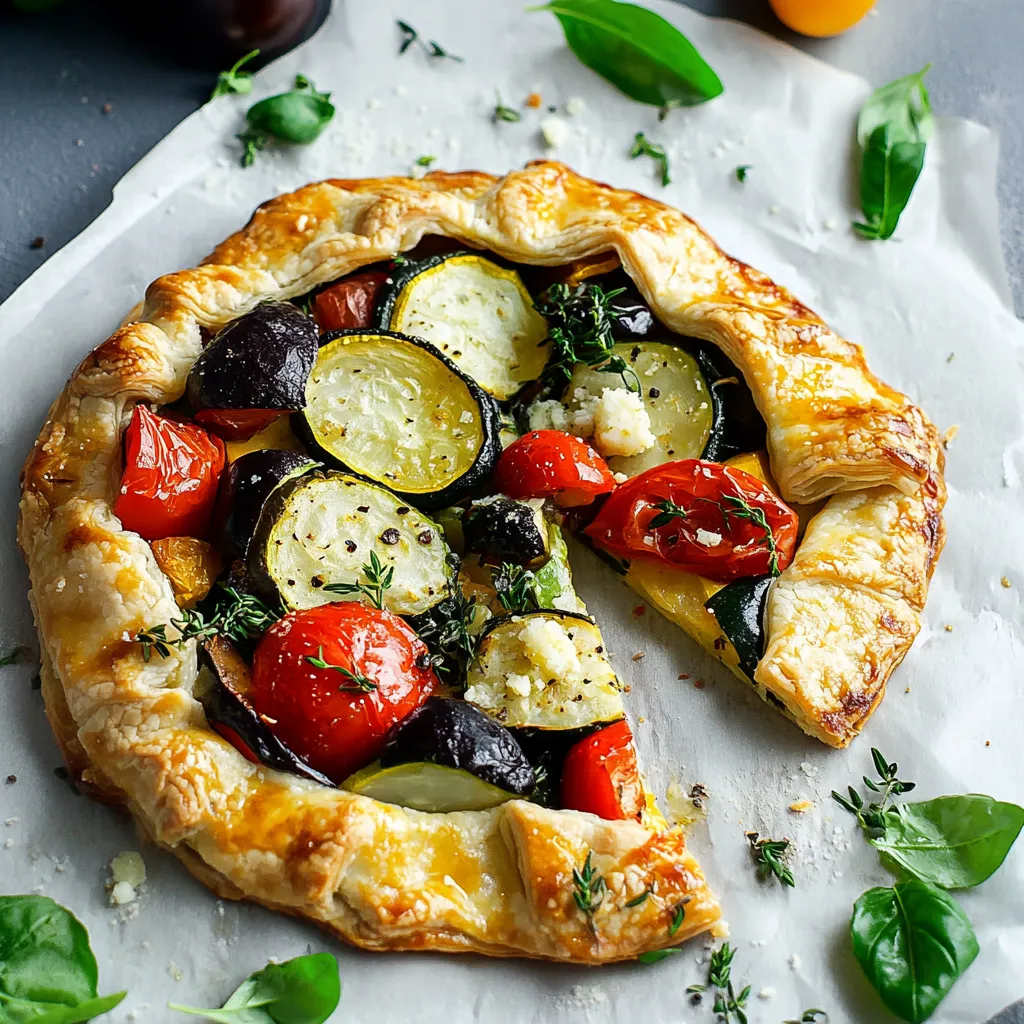
Keep the artichokes if you can, since they make this galette feel different from a basic tomato tart. Around them, you have room to adjust. Thin roasted zucchini, roasted red peppers, caramelized onions, or a few spoonfuls of chopped sun-dried tomatoes all fit the Mediterranean profile.
Avoid piling on raw watery vegetables. If you add zucchini or eggplant, cook or salt it first. If you want a heartier meal with the same sunny flavors, pair small wedges with Mediterranean roasted chickpea veggie bowls or a simple cucumber salad.
Serving it warm or room temperature
This galette slices best after a short rest. Straight from the oven, the filling is soft and the tomatoes are bubbling. After 8-10 minutes, the cheese firms just enough for tidy wedges while the crust stays crisp.
For dinner, serve it with greens dressed in lemon juice and olive oil. For a party, cut it into thin wedges and set it beside dips, olives, and something fresh. It also sits nicely with seafood, especially Mediterranean baked fish with tomatoes and capers.
Leftovers that stay crisp
Store leftover wedges in an airtight container in the fridge for up to 3 days. The USDA has clear guidance on safe cooling and reheating in its leftovers and food safety guide.
Skip the microwave when you can. Reheat wedges on a sheet pan at 325°F for 10-12 minutes. The crust perks back up and the cheese warms without turning greasy.
Summary
Serve this galette warm for dinner with a salad, or cut it into smaller wedges for an appetizer spread.
FAQs
- Can I use puff pastry instead of pie crust?
Yes. Puff pastry will make the galette lighter and flakier, but it browns faster. Keep it cold, score a light border before folding, and start checking around 18 minutes.
- What can I substitute for artichoke hearts?
Roasted red peppers, sauteed zucchini, grilled eggplant, or marinated mushrooms all work. Choose something with a little chew so the galette still feels hearty.
- How do I keep the bottom from getting soggy?
Drain the artichokes well, pat the tomatoes if they are very juicy, and bake on parchment over a preheated sheet pan if you can. A hot surface helps the bottom crust set before the vegetables release too much moisture.
- Can I make this galette ahead?
You can mix the cheese filling and drain the vegetables up to a day ahead. Assemble right before baking for the crispest crust. Leftover baked galette reheats well in a 325°F oven.
- Is this galette vegetarian?
Yes, this version is vegetarian as written. Check your pie crust label if that matters to you, since some store-bought crusts use lard or other animal fats.
- What should I serve with it?
A lemony green salad is enough for lunch or a light dinner. For a bigger Mediterranean meal, serve it with roasted chickpea bowls, baked fish, or a simple bowl of soup.
- Can I use frozen spinach?
Yes. Thaw it fully, squeeze out as much liquid as possible, then scatter it on after baking or tuck a small amount into the cheese layer. Too much wet spinach will soften the crust.
