 Pin it
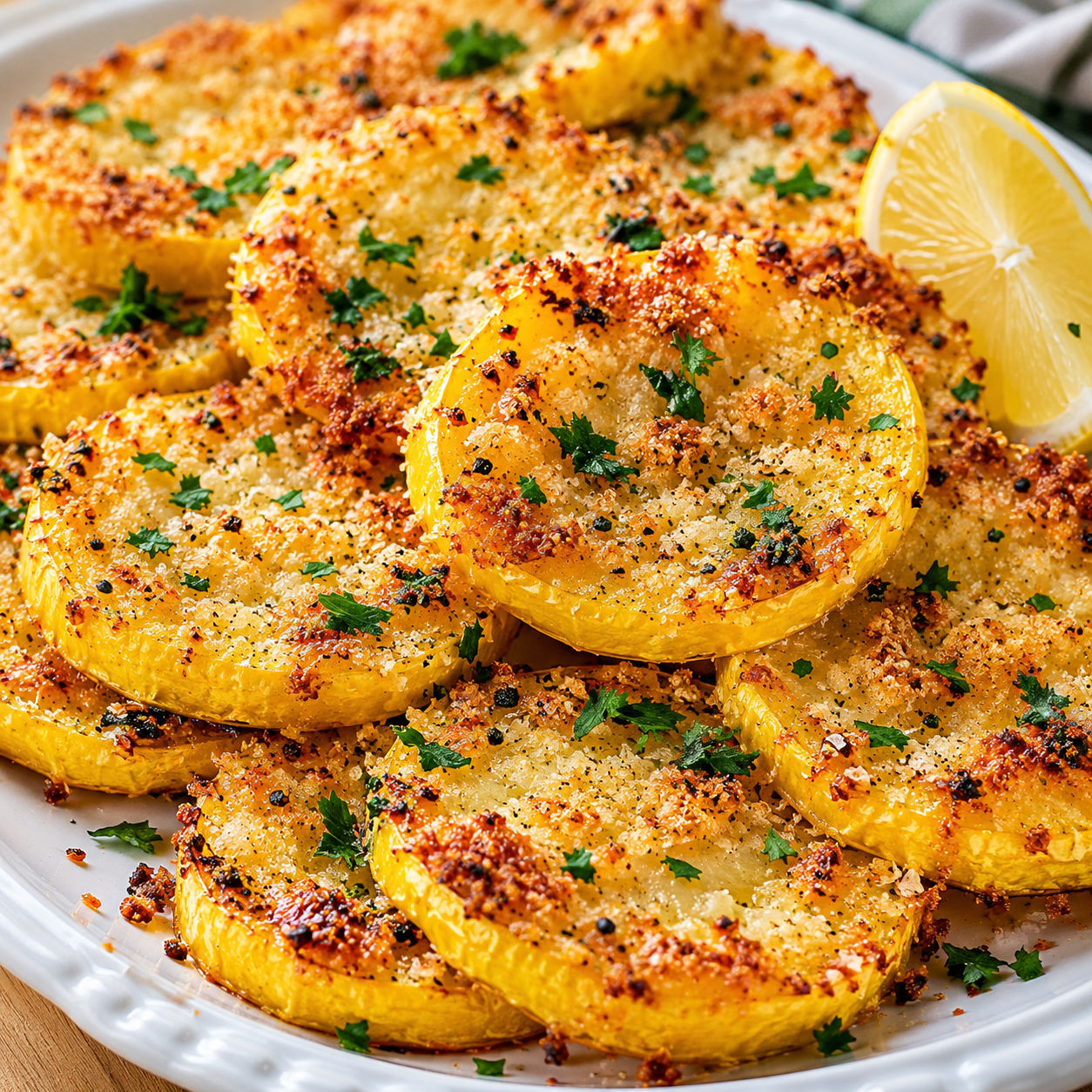
Oven-Baked Parmesan Squash with Crispy Finish is the kind of side dish that disappears before the main course is served. The squash turns soft and sweet in the center while the Parmesan and panko form little browned edges that taste salty, nutty, and toasty.
The key is not more cheese. It is thin slices, a dry surface, and enough space on the pan so the squash roasts instead of steaming. I like it with yellow squash, but zucchini works the same way.
The Squash Lineup
Small and medium summer squash give the best texture because their centers are firm and not too watery. Freshly grated Parmesan melts into a better crust than powdery shelf-stable cheese.
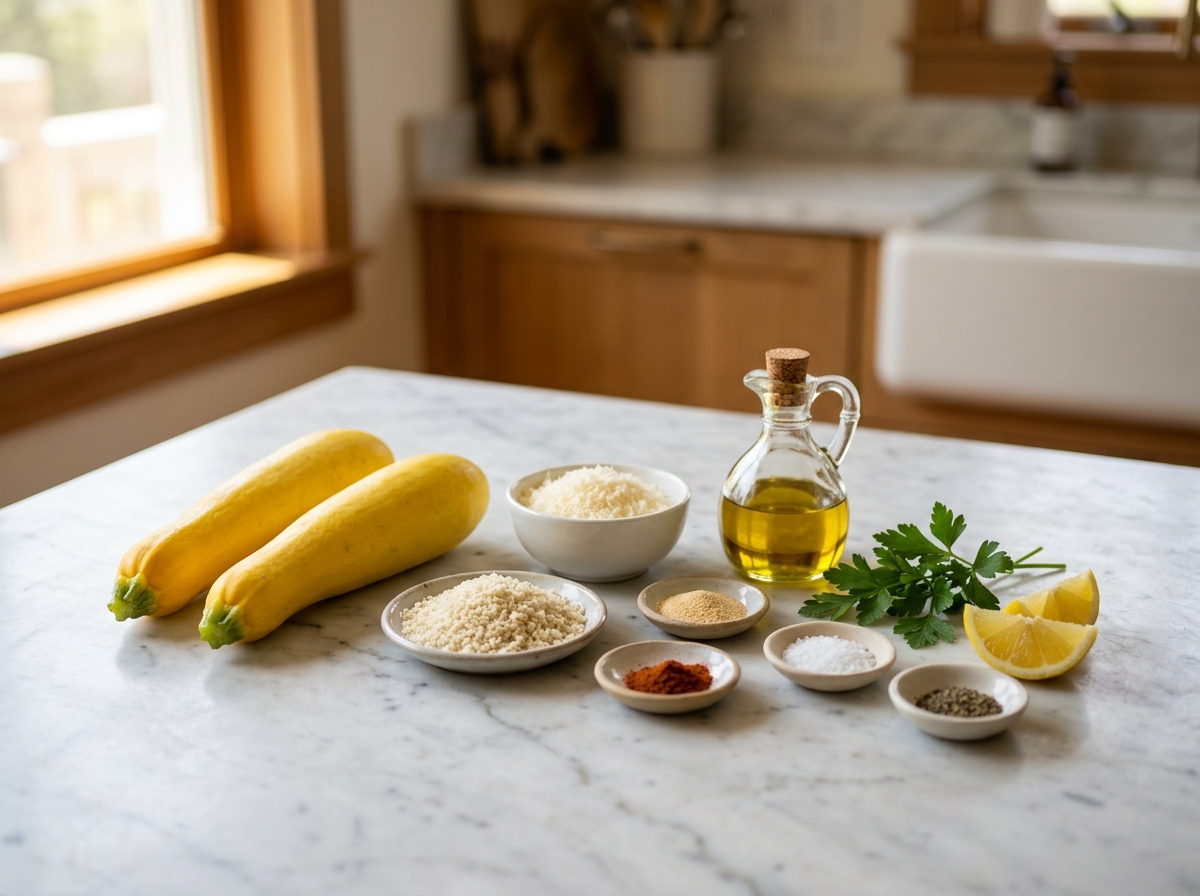
- Yellow squash. The mild, sweet base that softens quickly in the oven and takes on the salty cheese crust.
- Parmesan cheese. Adds nutty flavor and browns into crisp little edges around the slices.
- Panko breadcrumbs. Gives the topping a lighter crunch than regular breadcrumbs.
- Olive oil. Helps the coating stick and encourages browning without making the squash greasy.
- Garlic powder. Brings steady savory flavor without the risk of burnt minced garlic.
- Smoked paprika. Adds color and a gentle roasted note.
- Parsley. Freshens the finished tray and keeps the rich cheese from tasting heavy.
- Lemon wedges. A squeeze at the table wakes up the sweet squash and salty Parmesan.
Bake It Hot
- Heat the oven. Set the oven to 425°F and line a large baking sheet with parchment. A hot pan gives the squash a better head start on browning.
- Slice and dry. Cut the squash into 1/4-inch rounds and pat them dry with a clean towel. Even slices cook at the same pace.
- Mix the coating. Stir Parmesan, panko, garlic powder, paprika, salt, and pepper in a shallow bowl. The shallow bowl makes pressing each slice easier.
- Coat the rounds. Toss the squash lightly with olive oil, then press both sides into the Parmesan mixture. Place the rounds on the sheet in one layer.
- Bake and flip. Bake for 10 minutes, flip carefully, and bake 8-10 minutes more until tender and golden.
- Broil briefly. Broil for 1-2 minutes if you want a deeper crisp finish. Watch closely because Parmesan can go from browned to bitter fast.
Why The Finish Gets Crisp
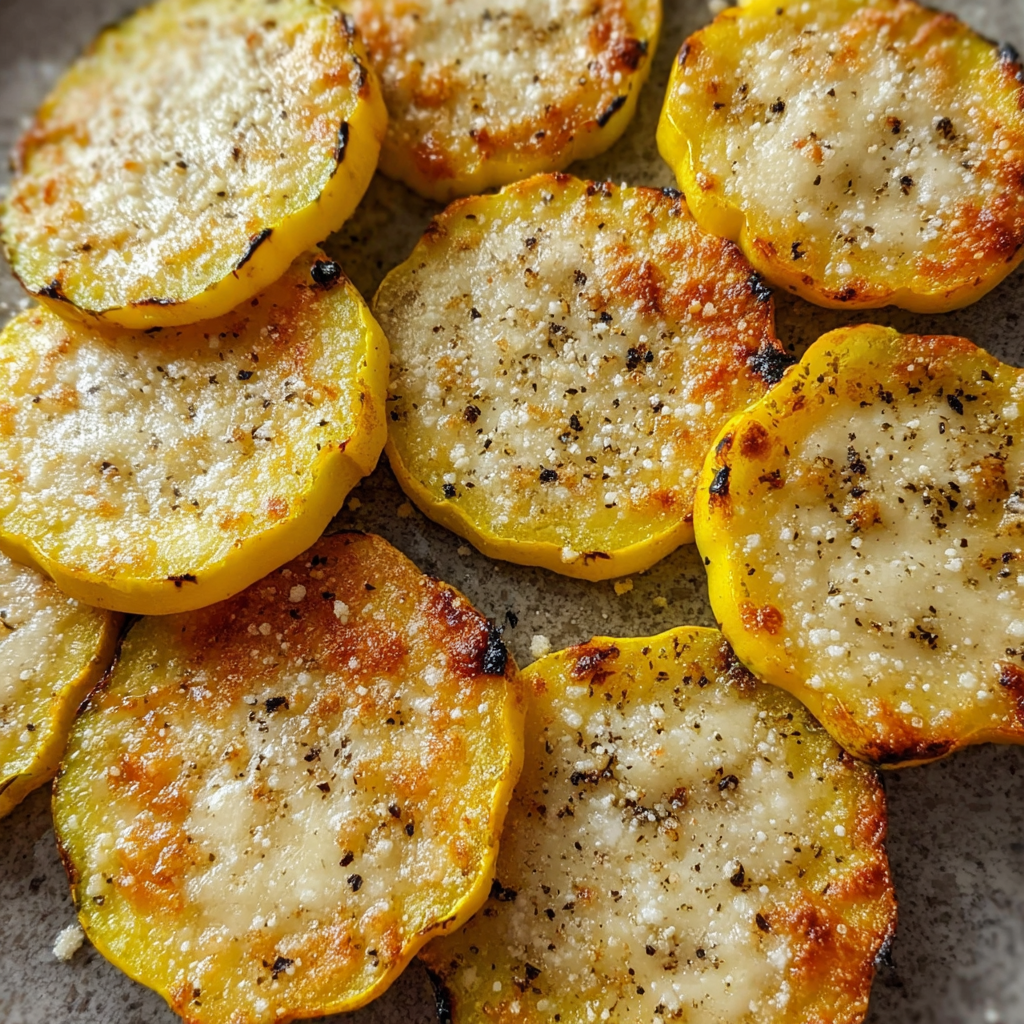
Squash carries a lot of water, so crispness starts before the pan goes into the oven. Dry slices brown better. A single layer matters too. If the rounds overlap, the lower pieces steam and the topping turns damp.
Panko helps because the crumbs stay light and jagged. Parmesan does the rest. As it heats, it melts, then browns into a thin savory crust. This is the same reason baked cheese edges taste so good on Crispy Parmesan Carrots with Garlic and Herbs and Crispy Parmesan Garlic Zucchini Fries.
Smart Swaps That Work
Zucchini can stand in for yellow squash without changing the method. Pecorino Romano gives a sharper, saltier bite, so reduce the added salt if you use it. Italian seasoning, thyme, or a pinch of cayenne also fit nicely.
For a gluten-free version, use gluten-free panko or skip the breadcrumbs. For a lower-carb style, use extra finely grated Parmesan and a tablespoon of almond flour. The texture will be different, but the edges still brown. You can find general vegetable serving guidance through MyPlate vegetables.
Avoid The Watery Middle
The most common mistake is slicing the squash too thick. Thick rounds become soft before the top has time to brown. Aim for 1/4 inch. If you use a mandoline, keep your hand guard on and work slowly.
Do not salt the sliced squash and let it sit unless you plan to blot it well. Salt pulls moisture to the surface. That can help in some recipes, but here it makes the coating slide around if you skip the drying step.
Serving It Fresh
This side is best right after baking, when the cheese is still crisp and the squash is hot. Serve it beside grilled chicken, salmon, pork chops, or a simple pasta. For a vegetable-heavy plate, pair it with Crispy Cauliflower with Golden Edges.
It also makes a good snack tray with marinara or a lemony yogurt dip. If you want a simpler squash option without the panko crust, try Roasted Parmesan Squash Slices.
Storing And Reheating
Let leftovers cool, then refrigerate them in a shallow airtight container for up to 3 days. FoodSafety.gov has a helpful cold storage chart for general leftover timing.
Reheat squash on a baking sheet at 400°F for 6-8 minutes, or use a toaster oven. The microwave is fast, but it softens the coating. If the leftovers look wet, blot them gently before reheating.
Summary
This recipe works best served hot from the oven while the topping is crisp and the squash is tender.

FAQs
- How do I make baked squash crispy instead of soggy?
Slice the squash evenly, pat it dry, and bake it in a single layer with space between the rounds. Crowding traps steam and softens the coating. A short broil at the end helps brown the Parmesan and panko.
- Can I use zucchini instead of yellow squash?
Yes. Zucchini works well in this recipe and cooks in about the same time. Choose small or medium zucchini because they have fewer seeds and less moisture than oversized ones.
- Can I make this gluten-free?
Yes. Use gluten-free panko or skip the crumbs and add a little extra Parmesan. The crumb-free version will be more cheesy than crunchy, but it still browns nicely.
- Can I prep Parmesan squash ahead?
You can slice the squash and mix the coating a few hours ahead. Keep them separate until baking. Once coated, the squash starts releasing moisture and the topping will not crisp as well.
- How long do leftovers keep?
Store leftovers in an airtight container in the fridge for up to 3 days. For best texture, reheat them in a hot oven or toaster oven. The microwave makes the squash soft.
- What should I serve with Parmesan squash?
Serve it with roast chicken, baked fish, pasta, burgers, or eggs. It also works as an appetizer with warm marinara, ranch, or lemony Greek yogurt for dipping.
