 Pin it
Safe-to-Eat Red Velvet Cookie Dough is for the spoonful people. It has the soft, sweet chew of cookie dough, the light cocoa flavor of red velvet, and little pops of white chocolate in every bite.
The safety piece matters here. Raw flour is not ready-to-eat, and raw eggs do not belong in a dough meant for snacking. This version uses treated flour and no eggs, with milk and cream cheese giving the dough its soft, creamy texture.
I like it slightly chilled, not rock hard. Ten minutes on the counter brings back that scoopable, bakery-bowl feel.
The red velvet dough bowl
Use treated flour, real butter, and a small amount of cocoa for that red velvet flavor without making the dough taste like straight chocolate. Gel food color works best because it gives a deep red shade without watering down the dough.
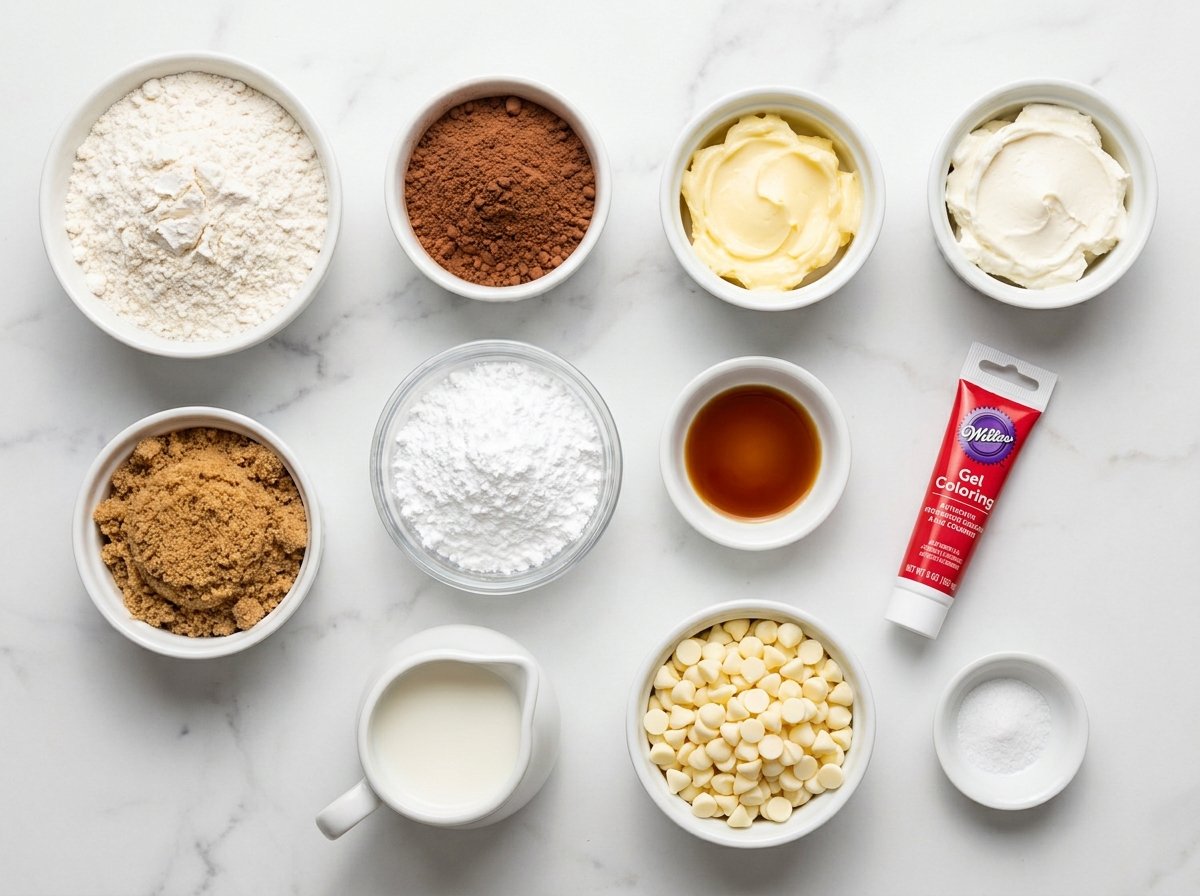
- Treated all-purpose flour. Gives the dough structure without the raw flour risk of ordinary unbaked dough.
- Unsalted butter. Makes the dough rich and soft, and lets you control the salt.
- Cream cheese. Adds the slight tang people expect from red velvet desserts.
- Brown sugar. Brings a deeper cookie dough flavor and a little chew.
- Powdered sugar. Smooths the texture so the dough feels creamy rather than sandy.
- Cocoa powder. Adds the gentle chocolate note that makes red velvet taste like red velvet.
- Red gel food coloring. Gives the dough its strong red color with very little extra liquid.
- Vanilla and salt. Round out the sweetness and make the cocoa taste fuller.
- Milk. Loosens the dough until it is scoopable.
- White chocolate chips. Add sweet, creamy bits that stand out against the cocoa dough.
Mix it soft and scoopable
- Treat and cool the flour. Use commercially heat-treated flour, or spread all-purpose flour on a baking sheet and heat it until it reaches 165°F throughout. Cool it completely before mixing.
- Sift the dry ingredients. Sift the cooled flour with cocoa powder and salt so the finished dough stays smooth.
- Cream the base. Beat softened butter, cream cheese, brown sugar, and powdered sugar until lighter and creamy. This takes about 1 minute with a hand mixer or 2 minutes by hand.
- Add color and vanilla. Mix in vanilla and red gel color until the shade looks even. Start small because gel color is strong.
- Finish the dough. Fold in the flour mixture, then add milk 1 tablespoon at a time until the dough is soft. Stir in white chocolate chips and chill for 20 minutes if you want clean scoops.
Safe-to-Eat Red Velvet Cookie Dough Rules
The two safety rules are simple. Skip the eggs and do not use raw flour. The CDC raw dough guidance explains that flour is a raw ingredient, and the FDA flour safety page gives the same warning for batters and doughs.
Commercially heat-treated flour is the best choice when you can find it. For a home kitchen treat, many cooks heat flour in a thin layer and check the temperature with an instant-read thermometer. Let it cool before adding it to butter or it will melt the dough and make the texture greasy.
Texture comes from mixing
Red velvet cookie dough should be thick enough to scoop but soft enough to press with a spoon. If it crumbles, it needs a little more milk. Add milk slowly because a tablespoon can change the texture fast.
Take your time with the butter, cream cheese, and sugars. That first mixing step softens the sugar and traps a little air. It keeps the dough from tasting dense. If you like classic dough flavors, try this same texture idea in Cookie Dough Cheesecake or the site's Edible Cookie Dough.
Color, cocoa, and swaps
Red velvet is not meant to be a heavy chocolate dough. Two tablespoons of cocoa gives enough flavor without turning the color muddy. Dutch-process cocoa tastes deeper, while natural cocoa keeps the flavor a bit lighter.
For color, gel is easier than liquid food coloring. Liquid color can thin the dough before it gets red enough. You can swap white chocolate chips for mini chocolate chips, chopped sandwich cookies, or red velvet crumbs from Red Velvet Blossom Cookies. For a bite-size party tray, roll the dough into small balls and serve them beside No Bake Red Velvet Cheesecake Bites.
Chill, store, and serve
This dough firms up in the refrigerator because of the butter and cream cheese. That is good for neat scoops, but it can feel too stiff straight from the fridge. Let the container sit out for about 10 minutes before serving.
Keep the dough covered and cold for up to 5 days. For longer storage, scoop it onto parchment and freeze the portions. Once solid, move them to a freezer bag. The small scoops thaw faster and make it easier to serve only what you need.
Ways to use the dough
Spoon it into dessert cups with whipped cream, crumble it over ice cream, or roll small balls and dip them halfway in melted chocolate. It also works as a filling for sandwich cookies if you chill it first so it holds its shape.
Do not bake this dough as cookies. It is built for eating raw, so it has no egg and no leavening. If you want baked red velvet cookies, use a real cookie recipe like Red Velvet Cookies with Cream Cheese Frosting.


FAQs
- Is red velvet cookie dough safe to eat raw?
Regular red velvet cookie dough is not safe to eat raw because it usually contains raw flour and sometimes raw egg. This recipe is made without eggs and with treated flour, which is the key difference.
- Can I use regular flour for edible cookie dough?
For the safest result, use commercially heat-treated flour. If you use a home oven method, spread the flour thinly, heat it through, check it with a thermometer, and let it cool fully before mixing.
- Can I make this without cream cheese?
Yes. Replace the cream cheese with 2 extra tablespoons of softened butter and add milk slowly until the dough feels creamy. The flavor will be more like classic cookie dough and less like red velvet cake.
- How long does edible red velvet cookie dough last?
Store it in an airtight container in the refrigerator for up to 5 days. Let it sit at room temperature for 10 minutes before serving so it softens enough to scoop.
- Can I freeze Safe-to-Eat Red Velvet Cookie Dough?
Yes. Scoop it into small mounds on parchment, freeze until firm, then move the portions to a freezer bag. Thaw in the fridge or let a portion sit at room temperature for 15-20 minutes.
- Why is my cookie dough gritty?
Grittiness usually comes from sugar that has not dissolved into the butter. Mix the butter, cream cheese, and sugars until they look lighter and smoother before adding the flour mixture.
- What can I serve with it?
Scoop it into small bowls, roll it into bites, or tuck it into dessert jars with whipped cream. It is also good with vanilla ice cream, chocolate sauce, or crushed sandwich cookies.
