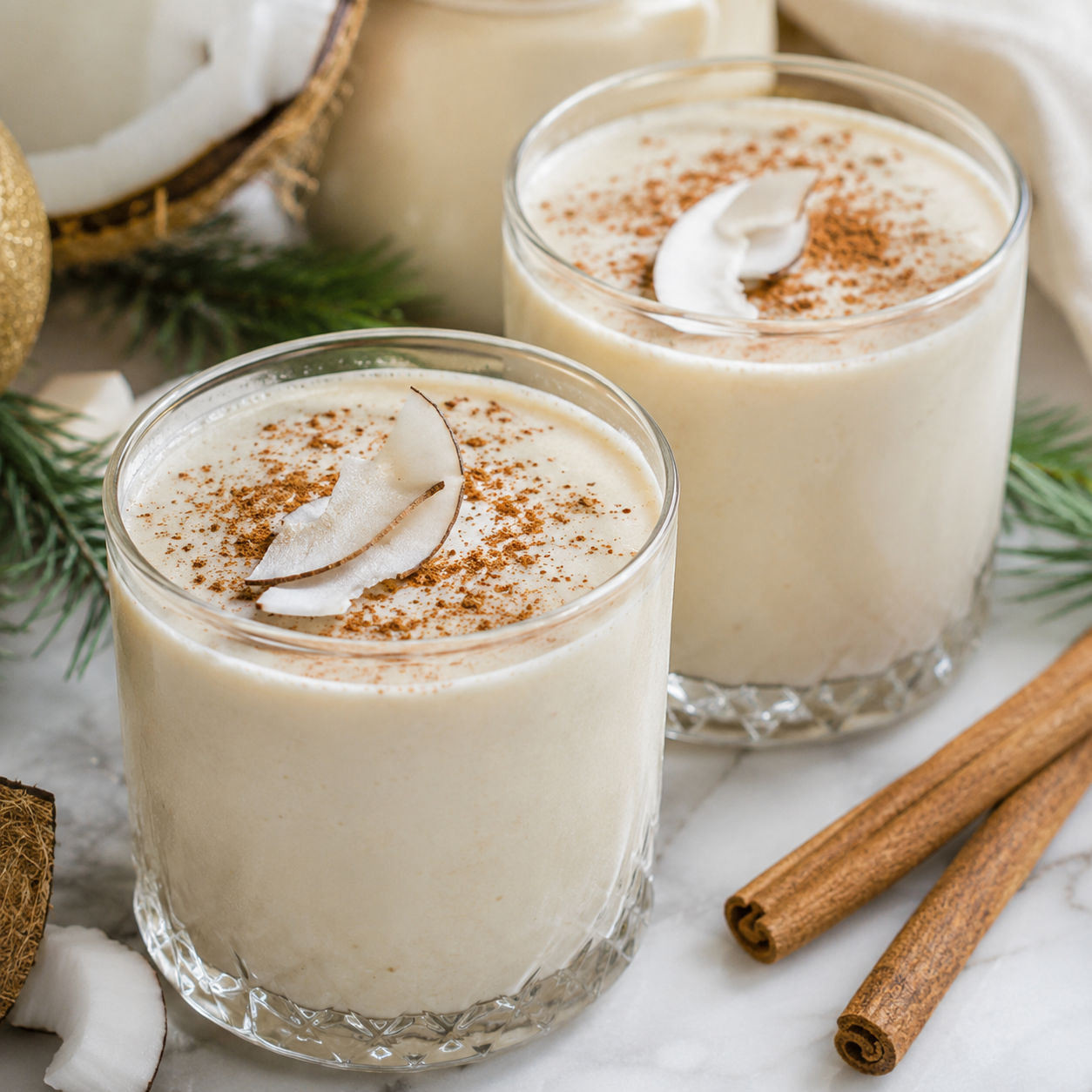
 Pin it
Traditional Coquito is the bottle I want in the fridge before any holiday gathering starts. It is rich, cold, coconut-heavy, and spiced just enough to smell like cinnamon when you pour it.
This version stays egg-free, which is how many Puerto Rican families make it now. The blender does the work, but the real improvement comes from chilling it long enough for the coconut, rum, and spice to soften into one creamy drink.
The Coconut Bottle Lineup
The best Traditional Coquito starts with full-fat coconut milk and real cream of coconut. Shake the cans before opening, and do not worry if the coconut cream has a thick plug on top because the blender will smooth it out.
- Evaporated milk. Gives the drink a clean dairy body without making it taste heavy.
- Sweetened condensed milk. Adds sweetness and that silky holiday-drink texture.
- Coconut milk. Brings the deep coconut flavor that makes coquito different from eggnog.
- Cream of coconut. Thickens the drink and adds a glossy coconut sweetness.
- White rum. Keeps the flavor crisp and lets the coconut and cinnamon stay forward.
- Vanilla extract. Rounds out the sharp edge of the rum.
- Cinnamon and nutmeg. Add warm spice without covering the coconut.
- Cinnamon sticks and coconut. Simple garnishes that make each small glass feel finished.
Blend, Chill, Shake, Pour
- Blend the milks. Add evaporated milk, sweetened condensed milk, coconut milk, and cream of coconut to a blender. Blend until the coconut solids disappear and the mixture looks smooth.
- Add spice and rum. Blend in white rum, vanilla, cinnamon, nutmeg, and a tiny pinch of salt. Taste it before adding more rum because the flavor gets stronger after chilling.
- Bottle the coquito. Pour the mixture into clean bottles or jars using a funnel. Leave a little room at the top so you can shake it later.
- Chill it well. Refrigerate for at least 4 hours, or overnight if you can. The texture thickens and the spice settles into the coconut.
- Shake and serve. Shake the bottle hard before pouring into small chilled glasses. Finish with cinnamon and a few coconut curls if you like.
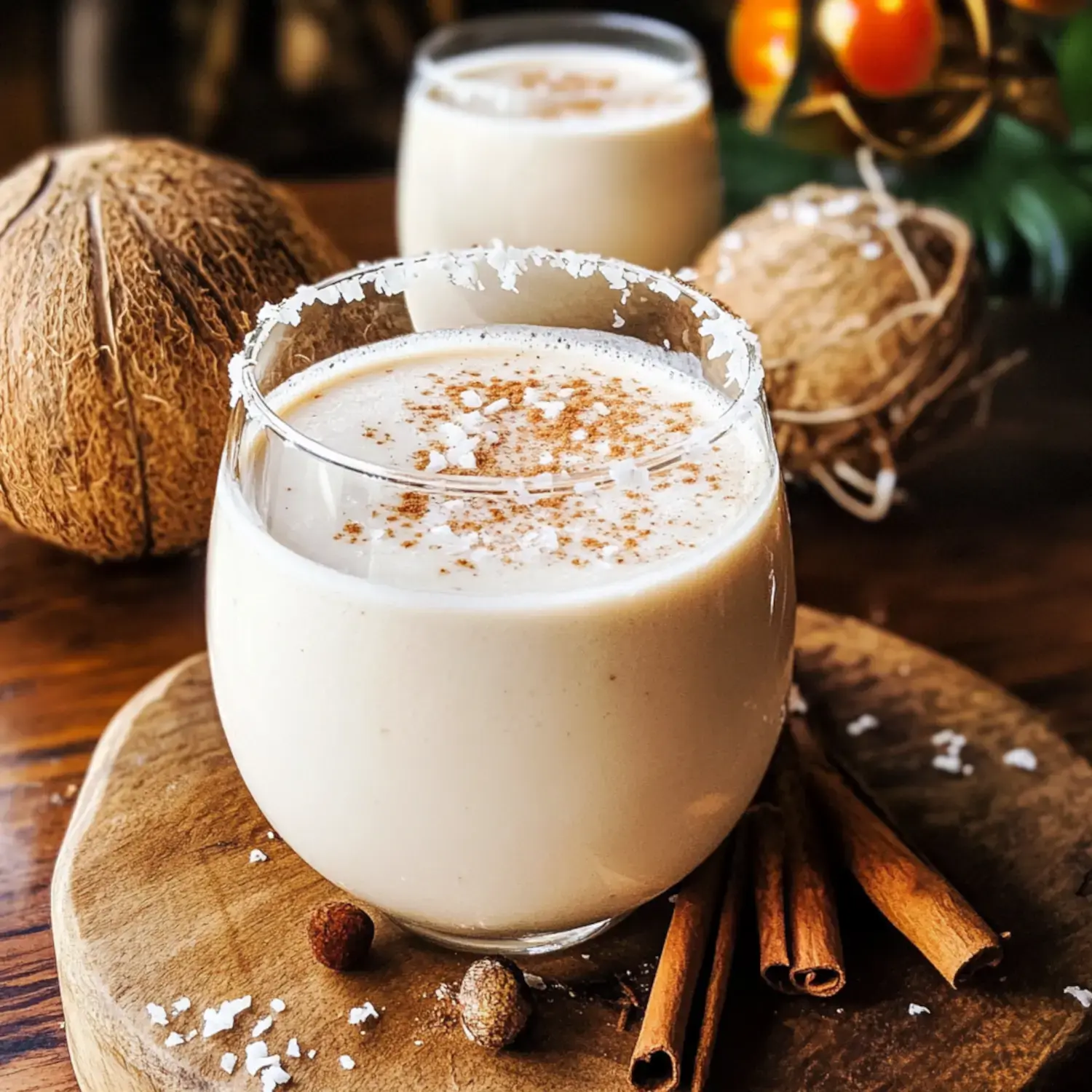
Why Chilling Changes Everything
Freshly blended coquito tastes good, but it can taste a little loud. The rum sits on top of the coconut flavor, and the cinnamon has not had time to soften. After a few hours in the fridge, the drink thickens and the spices become warmer.
That is why I make it the day before I plan to serve it. The bottle is easier to shake, the pour looks creamier, and the first sip tastes rounded instead of sugary. If you are building a holiday drink tray, this sits nicely beside Puerto Rican Coquito and Traditional Mexican Tepache for a sweet coconut and bright pineapple contrast.
Choosing The Right Rum
White rum is the usual choice because it is clean and lets the coconut stay in charge. Start with 1 cup for a gentle bottle. Use 1 1/2 cups if your crowd likes a stronger holiday sip.
Dark rum works, but it brings molasses notes and makes the drink taste heavier. Spiced rum can be fun, but it can also fight the cinnamon already in the recipe. If you are serving guests, label the bottle clearly and offer a nonalcoholic version too. The NIAAA alcohol and health information is a useful reference when planning drinks for a mixed crowd.
Texture Problems And Fixes
If your coquito turns too thick, blend in coconut milk a few tablespoons at a time until it pours easily. If it tastes too sweet, add more evaporated milk and a pinch more cinnamon. If it tastes flat, a small pinch of salt helps the coconut and vanilla wake up.
Graininess usually comes from cold coconut solids. Warm the sealed bottle in a bowl of lukewarm water for a few minutes, shake it, then blend briefly if needed. Do not heat the coquito on the stove. It is meant to be cold, creamy, and almost dessert-like.
Serving It Puerto Rican Style
Serve coquito in small glasses, not full tumblers. It is rich enough that a few ounces feel generous. I like the glasses cold from the freezer with a dusting of cinnamon on top.
For a dessert table, pair it with coconut flan, butter cookies, or Traditional German Rum Balls. It also works after a festive dinner with classic potato latkes when you want a sweet finish that does not need plates or forks.
Bottling, Storage, And Gifting
Use clean glass bottles or mason jars with tight lids. A funnel keeps the sides neat, and a little headspace makes shaking easier. Keep the bottles refrigerated and pour within 4-5 days for the best flavor.
Because this recipe contains dairy, treat it like a perishable drink. Keep it cold and do not let it sit out for a long party. The USDA explains the basic temperature safety range in its food safety danger zone guide.

FAQs
- What is Traditional Coquito made of?
Traditional Coquito is usually made with evaporated milk, sweetened condensed milk, coconut milk, cream of coconut, cinnamon, vanilla, and white rum. Some family recipes add egg yolks, but this version is egg-free and still thick.
- Can I make coquito without rum?
Yes. Leave out the rum and add a little extra coconut milk if you want the same pourable texture. A tiny splash of rum extract can add aroma, but it is optional.
- How long should coquito chill before serving?
Give it at least 4 hours in the refrigerator. Overnight is even better because the cinnamon has time to bloom and the drink tastes less sharp.
- Why did my coquito separate in the bottle?
Separation is normal because coconut fat thickens when cold. Shake the bottle hard for 20-30 seconds before pouring. If it still looks grainy, blend it again for a few seconds.
- How long does homemade coquito last?
Keep coquito refrigerated in clean sealed bottles and use it within 4-5 days for best flavor. Since it contains dairy, do not leave it sitting out on the counter during a party.
- What should I serve with coquito?
Serve small chilled pours with cinnamon cookies, rum balls, flan, or other holiday desserts. It is rich, so a 3-4 ounce glass feels right after a meal.
