 Pin it
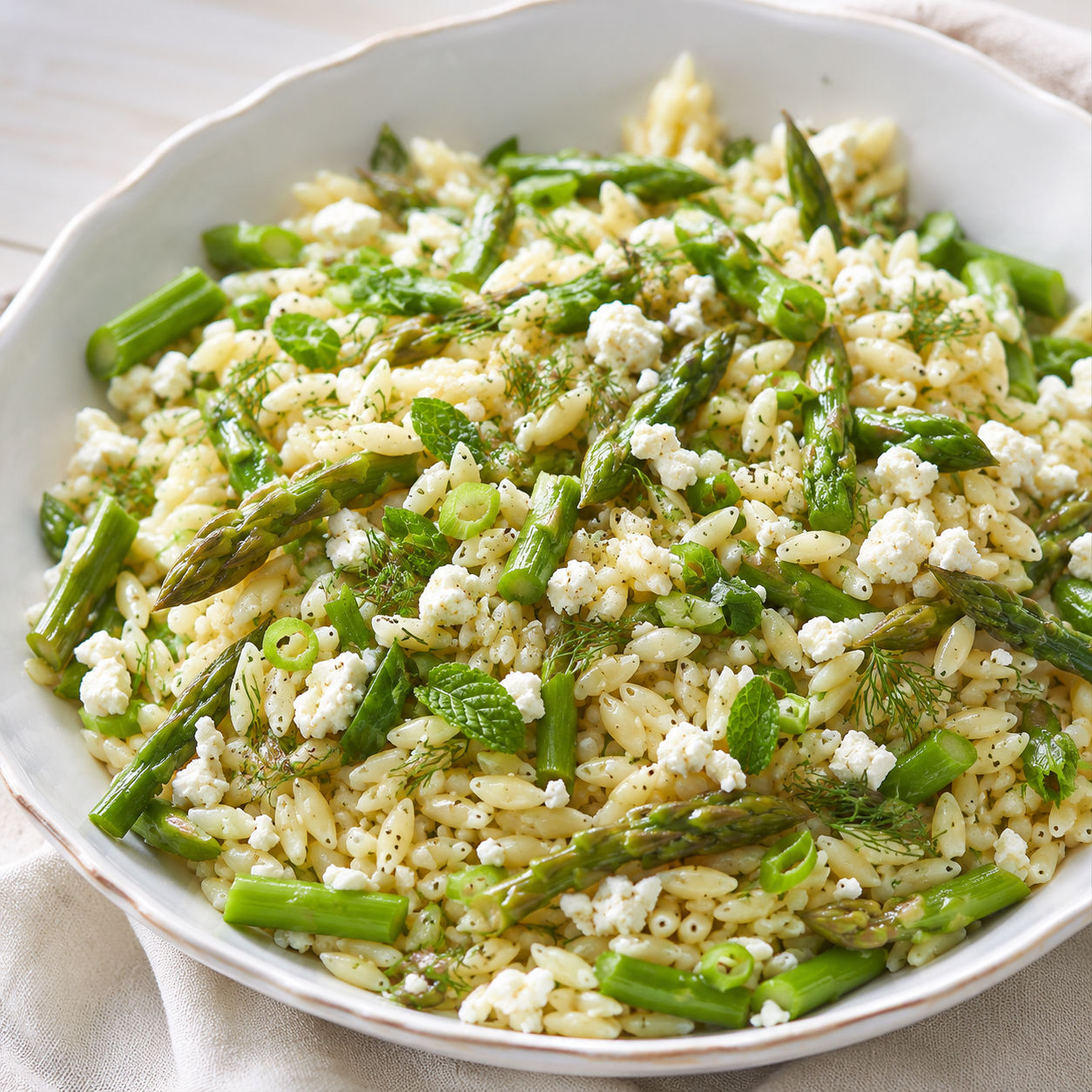
Fresh Orzo with Asparagus and Feta is the kind of side I make when dinner needs something green, lemony, and a little more satisfying than a plain salad. The orzo is small enough to soak up the dressing, and the asparagus stays crisp if you add it at the right moment.
I like this warm right after tossing, but it is just as useful chilled for lunch the next day. The feta softens into the warm pasta without turning the whole bowl creamy, which keeps the dish light.
Spring orzo bowl staples
You only need a short list, so the freshness matters. Choose asparagus with tight tips, a lemon that feels heavy for its size, and feta sold in a block if you can find it.
- Orzo. This tiny pasta cooks fast and catches the lemon dressing in every spoonful.
- Asparagus. It brings the green, snappy bite that makes the bowl feel fresh.
- Extra-virgin olive oil. It forms the body of the dressing and keeps the pasta glossy.
- Lemon juice and zest. The juice adds sharpness, while the zest gives a softer citrus scent.
- Garlic. A small amount wakes up the dressing without taking over.
- Feta. Salty, tangy cheese balances the sweet asparagus and mild pasta.
- Dill and mint. Fresh herbs make the orzo taste lighter and more Mediterranean.
- Scallions. They add a gentle onion note without the harshness of raw red onion.
Cook it bright and tender
- Mix the dressing. Whisk olive oil, lemon juice, lemon zest, garlic, salt, and pepper in a large bowl so the warm pasta can go straight in.
- Boil the orzo. Cook it in well-salted water until just al dente, usually 7-8 minutes depending on the brand.
- Add the asparagus. Stir the asparagus into the pot during the last 1-2 minutes so it turns bright green but stays firm.
- Drain and toss. Drain well, then add the hot orzo and asparagus to the dressing. Toss until every piece looks glossy.
- Finish gently. Let it cool for a few minutes, then fold in feta, herbs, and scallions so the cheese stays in soft pieces.
Keep asparagus snappy
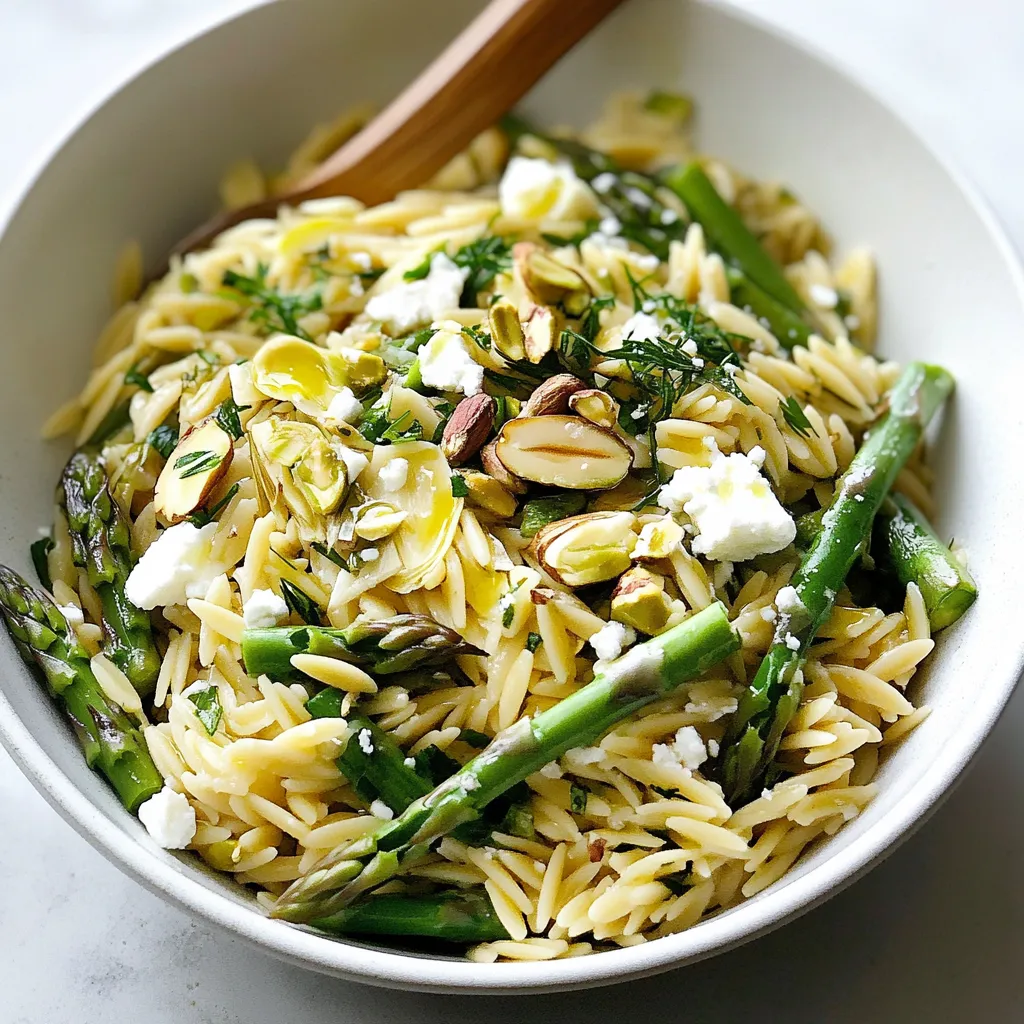
The main mistake with this dish is cooking the asparagus as long as the pasta. It only needs a quick blanch. Cut the stalks into bite-size pieces so they cook evenly, and keep the tips a little larger because they are more delicate.
If your asparagus is very thin, add it for just the final minute. Thick stalks may need closer to two minutes. Drain as soon as the pasta is done. Lingering in hot water dulls the color and softens the texture. For another asparagus side with a warmer garlic-butter feel, try Garlic Butter Asparagus Orzo.
Why warm pasta helps
Warm orzo is better at taking in flavor than cold pasta. Toss it with the lemon dressing right after draining, while steam is still rising from the bowl. The garlic softens, the lemon smells brighter, and the olive oil coats the pasta instead of sitting at the bottom.
Give the mixture a few minutes before adding feta. If the pasta is piping hot, the cheese can smear into the dressing and lose those salty little pockets. This same warm-toss method works in bigger pasta bowls like Fresh Ravioli with Tomatoes, Asparagus, Garlic, and Herbs.
Easy swaps for this bowl
This recipe is flexible. Swap mint for parsley if mint is not your thing. Add chopped artichoke hearts, cucumber, or a handful of baby spinach if you want more vegetables. For a fuller lunch, fold in chickpeas, grilled chicken, or flakes of salmon.
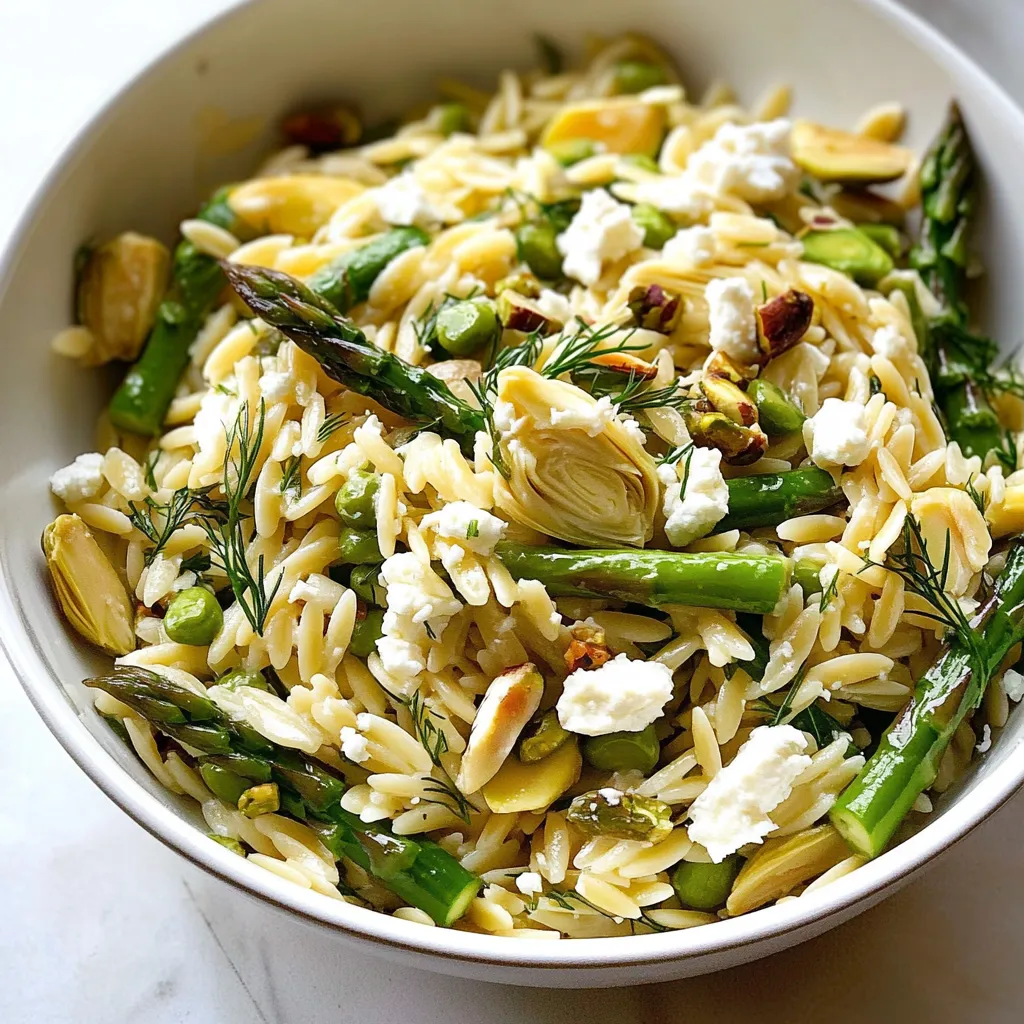
If you want a version with extra briny flavor and crunch, the site already has Orzo with Asparagus and Feta with artichokes and pistachios. For a nut-free bowl, keep this simpler version as written. For dairy-free, skip feta and add olives or capers so the salad still has a salty edge.
Make-ahead and leftovers
This orzo holds well because there is no heavy sauce to split. Store it in an airtight container in the fridge for up to 3 days. The USDA leftover guidance recommends chilling cooked food promptly and using refrigerated leftovers within a few days. You can read more in the USDA leftover safety guide.
Before serving, loosen the pasta with a small splash of olive oil and lemon juice. Cold orzo tightens up. A quick refresh brings back the gloss without making it oily.
What to serve beside it
Fresh Orzo with Asparagus and Feta fits beside grilled chicken, salmon, lamb burgers, or simple roasted vegetables. It also works as part of a picnic spread because it tastes good at room temperature and does not need reheating.
For a full meatless table, serve it with hummus, warm pita, sliced cucumbers, and a lemony potato side like Crispy Lemon-Feta Roasted Potatoes. If you want a lighter salad pairing, cucumber, tomato, or melon all play nicely with the salty feta and herbs.
Summary
This fresh asparagus orzo is bright, quick, and flexible enough for weeknights, potlucks, and meal prep.
FAQs
- Can I use frozen asparagus?
Fresh asparagus gives the best snap, but frozen asparagus can work in a pinch. Add it straight from frozen during the last minute of cooking and drain well so the orzo does not get watery.
- Should this orzo be served warm or cold?
It works both ways. Warm orzo absorbs the lemon dressing quickly, while chilled orzo tastes cleaner and more salad-like. If serving cold, let it sit at room temperature for 10 minutes before eating.
- Can I make Fresh Orzo with Asparagus and Feta ahead?
Yes. Make it up to one day ahead and keep it covered in the fridge. Save a little extra lemon juice and olive oil to loosen it before serving because orzo firms up as it chills.
- What can I use instead of feta?
Goat cheese gives a softer, tangier finish. Parmesan works if you want something saltier and less creamy. For a dairy-free version, skip the cheese and add olives or capers for briny flavor.
- How do I keep the asparagus from getting mushy?
Add asparagus only during the last 1-2 minutes of cooking the orzo. Drain it right away. The pieces should be bright green and still have a little bite.
- Can I make this gluten-free?
Yes, use a gluten-free orzo or another small gluten-free pasta. Watch the cooking time closely because gluten-free pasta can soften fast and break apart if overcooked.
