 Pin it
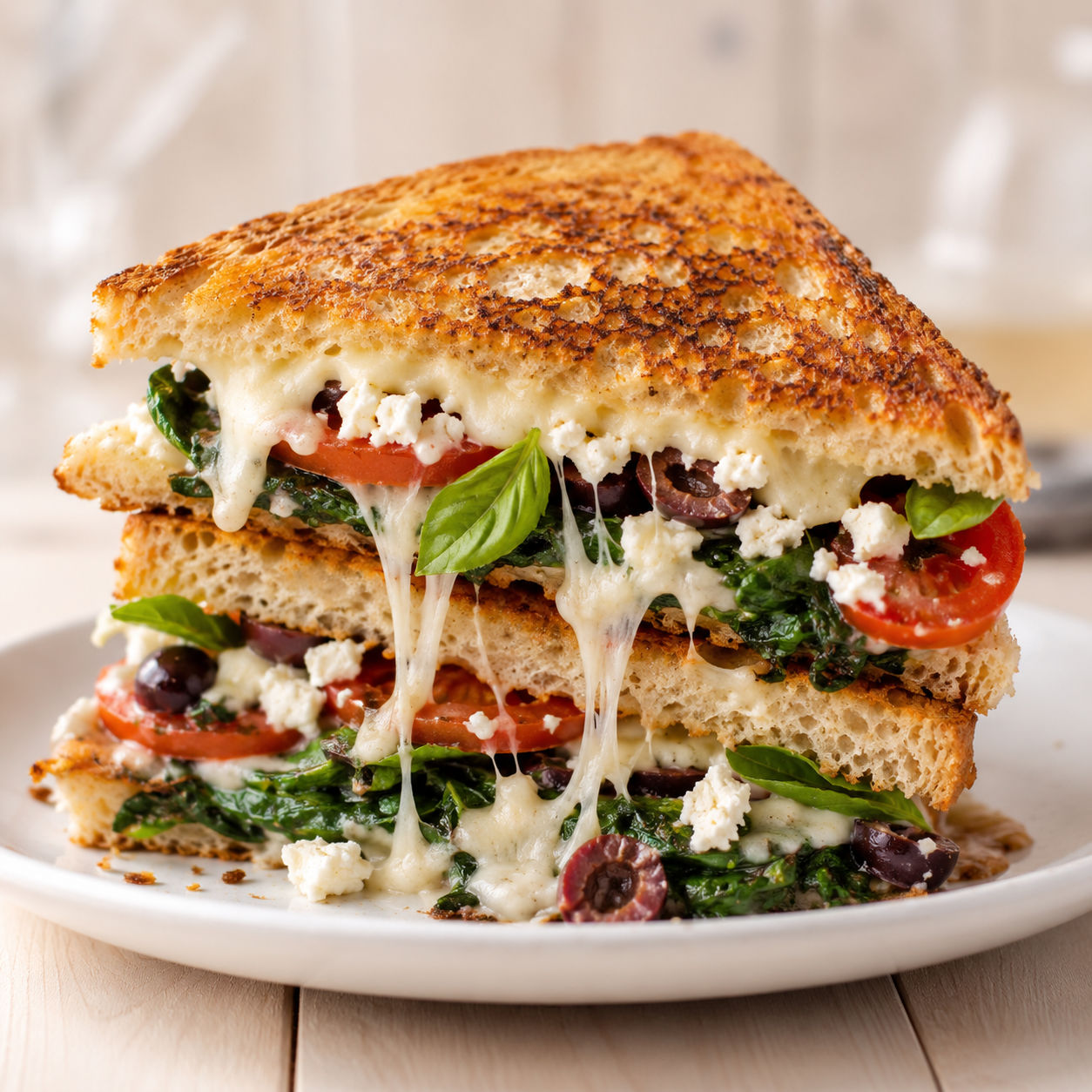
Mediterranean Grilled Cheese with Feta, Mozzarella, and Basil is the sandwich I make when I want lunch to feel fresh but still cheesy and warm. The mozzarella gives you the pull, the feta brings salt and tang, and the basil wakes everything up.
The trick is not overfilling it. A thin layer of vegetables and a moderate heat let the bread crisp while the cheese softens all the way through.
Feta, Mozzarella, and Basil
Choose ingredients with real flavor because this sandwich cooks fast. Use low-moisture mozzarella for a reliable melt, and blot juicy tomatoes before they touch the bread.
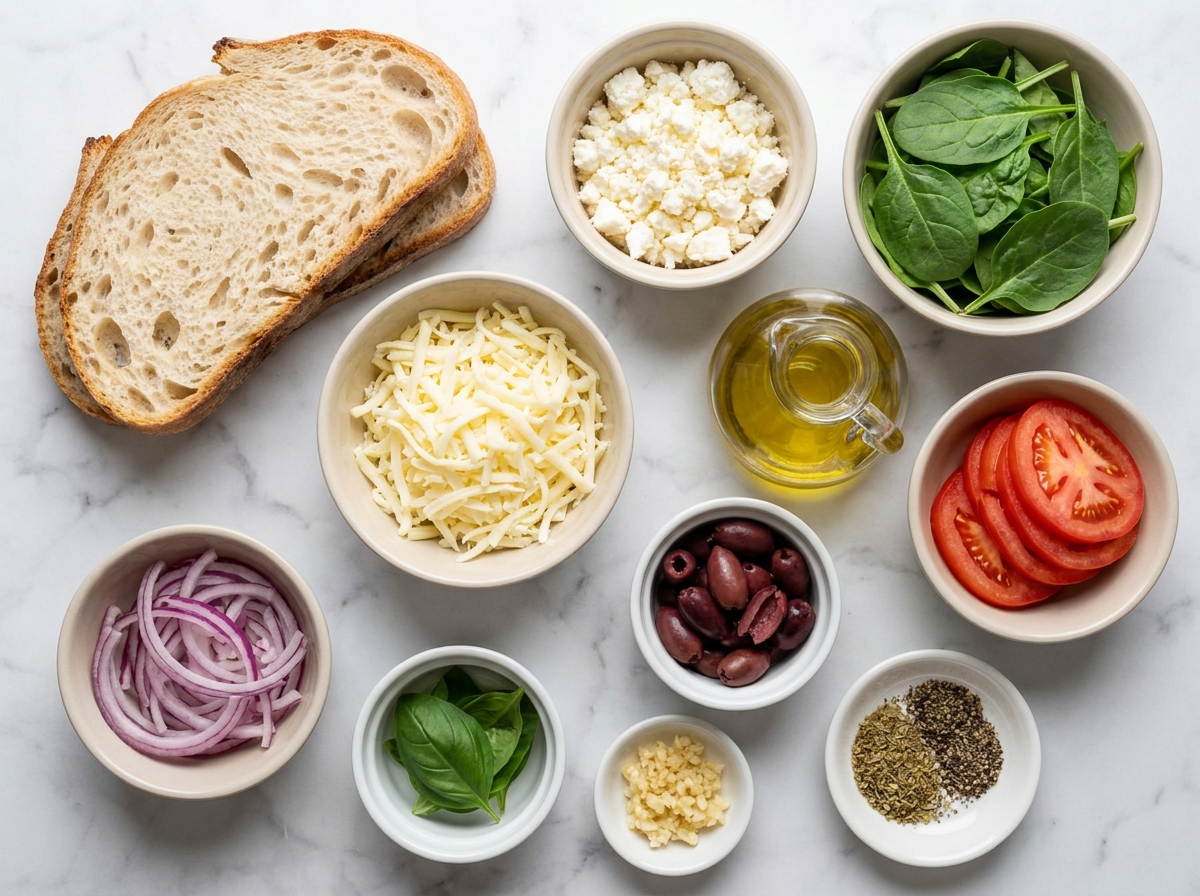
- Sourdough bread. Holds the filling and crisps well in olive oil.
- Mozzarella. Melts into the stretchy layer that keeps the sandwich together.
- Feta. Adds salty tang and a creamy bite.
- Fresh basil. Gives the sandwich its bright herbal finish.
- Baby spinach. Adds color and softens quickly without making the bread heavy.
- Roma tomato. Brings freshness when sliced thin and patted dry.
- Kalamata olives. Add briny depth that makes the sandwich taste Mediterranean.
- Red onion and garlic. Add a small sharp edge without overpowering the cheese.
- Olive oil. Helps the bread brown with a crisp, lightly fruity crust.
Grill It Low and Steady
- Soften the greens. Warm a little olive oil in a skillet, add garlic and spinach, and cook just until the spinach relaxes. Stir in basil off the heat so it stays fresh.
- Build the cheese layer. Place mozzarella on the bread first, then scatter feta over it. This puts the best melting cheese closest to the heat.
- Add the vegetables. Layer on the tomato, olives, red onion, and spinach mixture. Keep everything even so the sandwich closes flat.
- Toast the first side. Cook the sandwich in olive oil over medium-low heat for 3-4 minutes, pressing gently with a spatula.
- Flip and finish. Add a touch more oil, turn the sandwich, and cook another 3-4 minutes until golden and melted. Rest for one minute before slicing.
Why the Cheese Mix Works
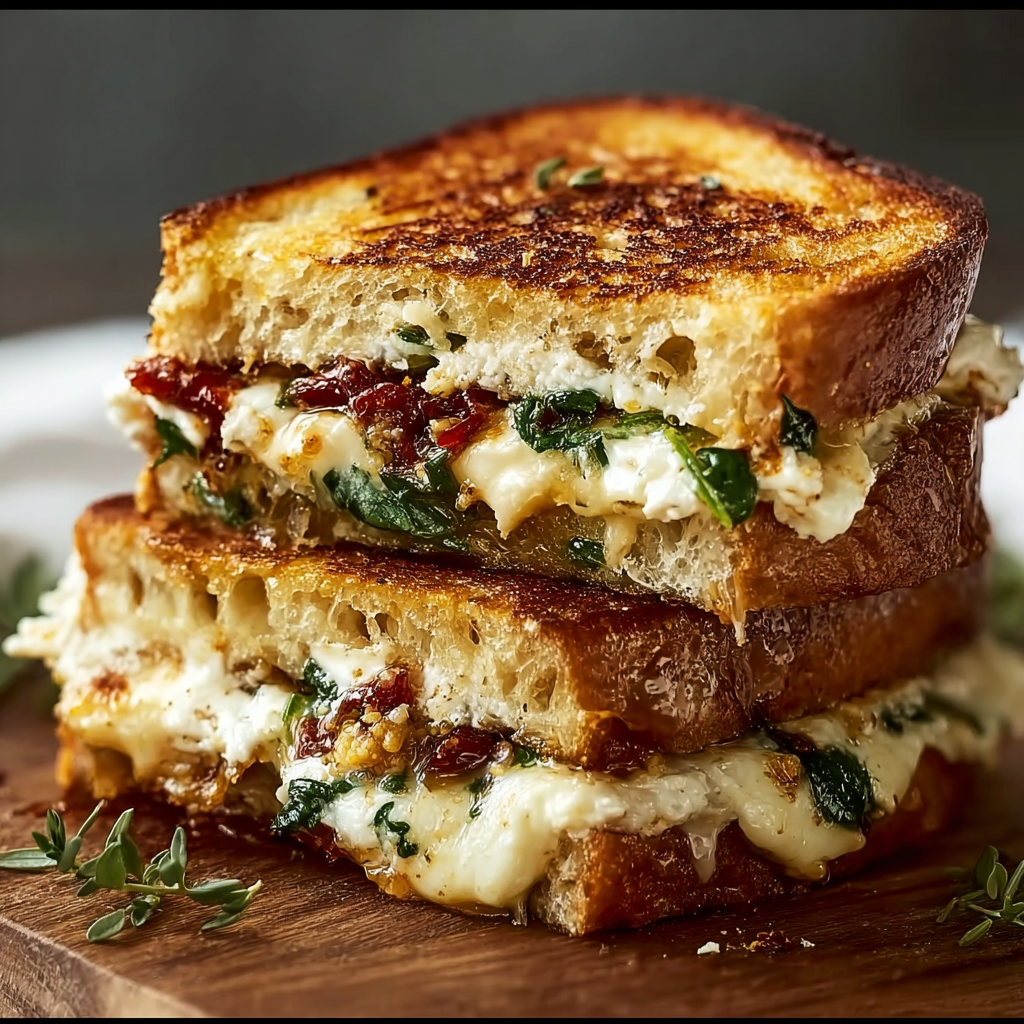
Feta tastes bold, but it does not melt like mozzarella. That is why this Mediterranean grilled cheese needs both. Mozzarella turns soft and stretchy, while feta keeps little creamy pockets that taste salty and bright. If you use all mozzarella, the sandwich feels mild. If you use all feta, the filling can crumble out when you slice it.
Shredded low-moisture mozzarella melts faster than thick fresh mozzarella slices. If fresh mozzarella is all you have, slice it thin and pat it dry with a towel first. Too much moisture is the quickest way to lose the crisp crust. For another sandwich built around this same cheese balance, try the Mediterranean spinach grilled cheese.
The Crisp Bread Move
Olive oil gives the bread a lighter crunch than butter and fits the Mediterranean flavors. Brush or drizzle it on the pan, not straight onto a soaked piece of bread. You want the surface coated, not greasy.
Medium-low heat is worth the extra minute. The outside browns slowly while the mozzarella melts. If the bread is already golden and the cheese needs more time, cover the skillet for 30-60 seconds. Steam trapped under the lid finishes the melt without turning the crust soggy. This same steady pan method is helpful for avocado, mozzarella, and tomato grilled cheese.
Smart Swaps and Add-Ins
You can change the filling without losing the character of the sandwich. Roasted red peppers work well in place of tomato, especially if you pat them dry. Chopped sun-dried tomatoes add a deeper flavor and less moisture. A thin smear of pesto can stand in for fresh basil, but keep it light so the bread does not slide around.
For a sharper sandwich, add a pinch of oregano or a few capers. For a softer one, use baby arugula after cooking instead of spinach before cooking. If you like tomato and basil combinations, burrata bruschetta with tomato and basil makes a good appetizer alongside this meal.
Serving It Without Fuss
This sandwich is rich enough for lunch on its own, but a crisp side makes it better. I like it with cucumbers, lemony greens, or a bowl of tomato soup. A cold salad cuts through the cheese and keeps the plate from feeling heavy.
The flavors line up with the broad Mediterranean pattern of vegetables, herbs, olive oil, and moderate dairy. For a deeper look at that eating style, the Harvard Mediterranean diet overview is a useful reference. On this site, fresh cucumber feta salad is the easiest side to serve with it.
Leftovers and Reheating
Grilled cheese is at its best right away, but leftovers are not a lost cause. Let the sandwich cool before storing it, then wrap it loosely and refrigerate for up to two days. Avoid sealing it while hot because trapped steam softens the bread.
Reheat it in a skillet over medium-low heat for a few minutes per side. A toaster oven also works well. The microwave warms the cheese, but it makes the crust limp and can turn the tomato watery.
FAQs
- What kind of bread works best for Mediterranean grilled cheese?
Use sturdy sourdough, rustic white bread, or ciabatta slices. Soft sandwich bread can work, but it gets soggy faster once tomato and spinach are inside.
- Can I use only feta instead of mozzarella?
You can, but the sandwich will not melt the same way. Feta softens and tastes salty, while mozzarella melts and holds the filling together. A mix of both gives the best texture.
- How do I keep the bread from burning before the cheese melts?
Cook over medium-low heat and cover the pan for the last minute if needed. High heat browns the outside fast, but the mozzarella stays firm in the center.
- Can I make this grilled cheese ahead?
It is best right after cooking, while the crust is crisp. You can chop the olives, crumble the feta, and wash the basil ahead so assembly takes only a few minutes.
- How should I store leftovers?
Let the sandwich cool, then refrigerate it in an airtight container for up to two days. Reheat in a dry skillet or toaster oven so the bread crisps again.
- What can I serve with it?
Serve it with cucumber salad, tomato soup, or a simple green salad. The sandwich is rich, so something cool and sharp on the side balances it nicely.
