 Pin it
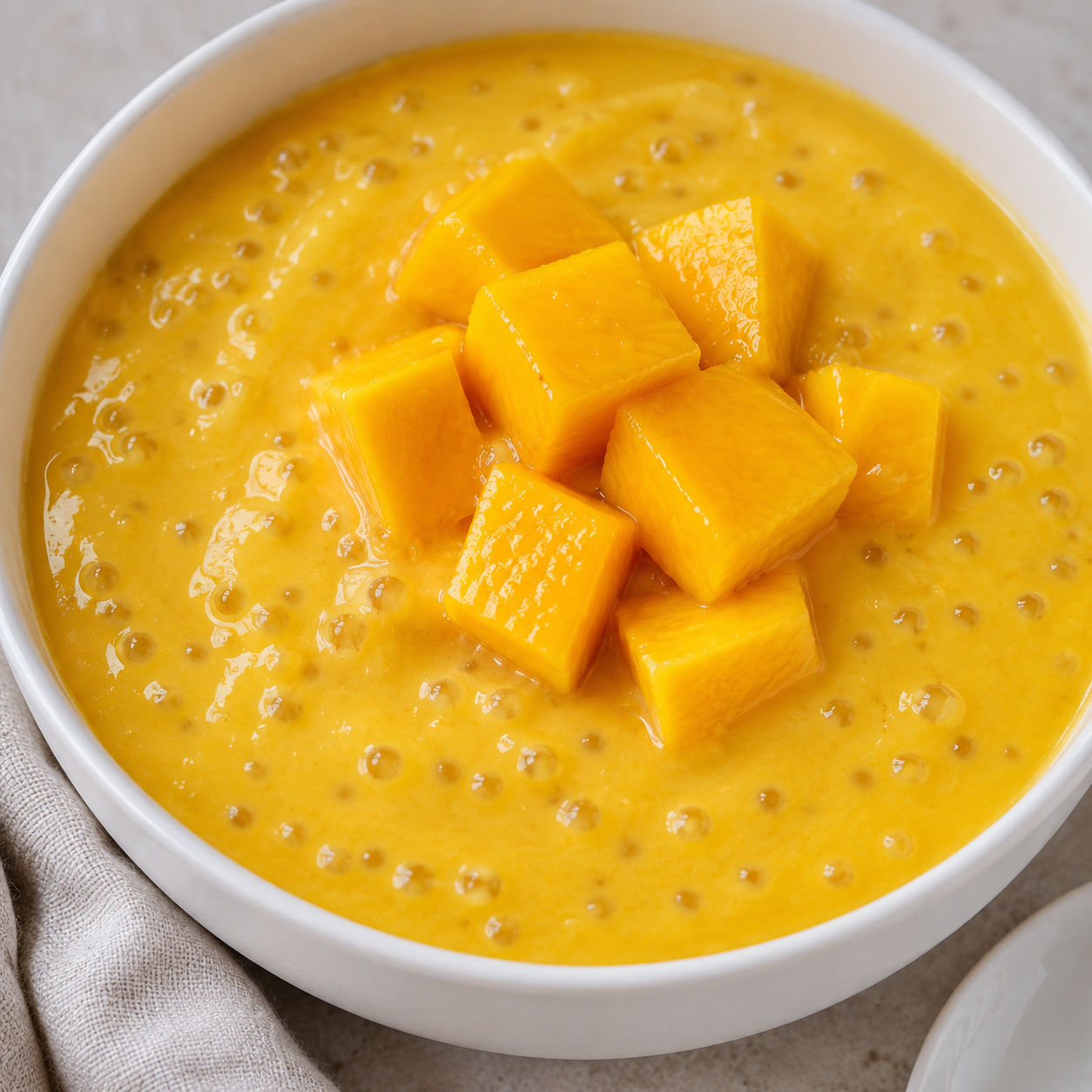
Mango Sago is what I make when I want dessert to feel cold, bright, and barely fussy. The spoonful should be creamy first, then chewy from the tiny pearls, with fresh mango cubes landing at the end.
The key is not extra sugar. It is ripe mangoes, properly cooked sago, and enough chilling time for the coconut milk to mellow into the fruit. If your mangoes smell floral at the stem, you are already halfway there.
Mango Sago Basics
Use mangoes that are deeply fragrant and soft enough to give slightly under your thumb. The dessert is simple, so the fruit decides most of the flavor.
- Ripe mangoes. They form the puree and the fresh topping, so choose sweet, low-fiber fruit if you can.
- Small tapioca pearls. These give Mango Sago its signature chewy dots and creamy contrast.
- Coconut milk. Full-fat coconut milk makes the base round and silky.
- Evaporated milk. It softens the coconut flavor and gives the dessert a lightly milky finish.
- Sugar. A small amount helps if the mangoes are tart, but taste before adding it all.
- Fine salt. Just a pinch makes the mango taste brighter.
- Lime juice. Optional, but useful when the fruit is very sweet and needs lift.
Cook, Blend, Chill
- Cook the pearls. Bring plenty of water to a boil, stir in the tapioca pearls, and simmer until mostly translucent. Cover off the heat until the centers turn clear.
- Rinse them cold. Drain the pearls through a fine sieve and rinse under cold water. This washes off surface starch and keeps the dessert loose.
- Blend the mango base. Blend most of the mango with coconut milk, evaporated milk, sugar, salt, and lime juice until smooth.
- Fold and chill. Stir in the cooked pearls and some diced mango. Chill for at least 2 hours so the flavor settles and the texture thickens.
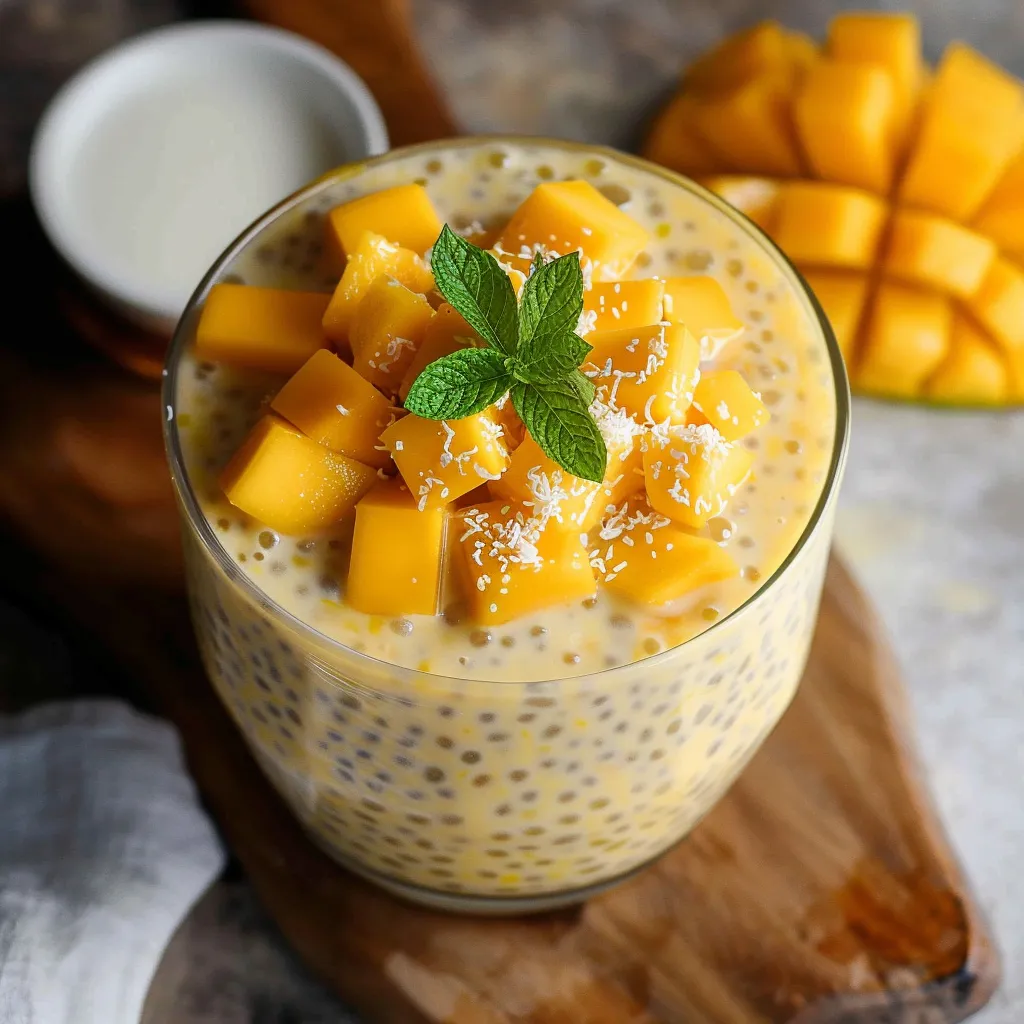
- Serve cold. Spoon into bowls and top with the remaining mango cubes. Add a thin drizzle of coconut milk if you like a glossy top.
Pearls Need Space
Sago pearls turn sticky when they cook in too little water. Use a larger pot than you think you need and stir during the first minute so the pearls do not clump at the bottom. Once they float and start turning clear, let heat and time finish the job. A short covered rest is gentler than hard boiling, and it keeps the pearls pleasantly chewy instead of mushy.
After draining, rinse until the water runs mostly clear. This step matters. It removes the cloudy starch that can make the mango base thick in a pasty way. For another chilled mango dessert with a creamy set, try Easy Mango Panna Cotta.
Pick Mangoes By Scent
Color is not always reliable with mangoes. Smell the stem end instead. A ripe mango should smell sweet and floral, and the flesh should give a little without feeling bruised. Ataulfo and Manila mangoes blend especially smooth. If you only have larger red-green mangoes, they can still work. Peel, dice, blend, then pass the puree through a sieve if it looks stringy.
This recipe leans creamy and spoonable, while Mango Sorbet is cleaner and icier. For a richer baked-style mango dessert, Mango Curd Tart uses the fruit in a very different way.
Chilling Changes The Texture
Warm Mango Sago tastes flat. Cold Mango Sago tastes fuller, cleaner, and more refreshing. Two hours in the fridge lets the coconut milk hydrate the pearls and lets the mango flavor spread through the base. If it thickens more than you like, stir in a splash of milk or coconut milk right before serving.
The Hong Kong version often includes pomelo, which adds little juicy pops and a faint bitterness. You can read more about that style through Mango pomelo sago. I leave pomelo optional here because good mangoes and properly cooked pearls are enough for a dependable home version.
Make It Your Own
For a dairy-free bowl, use all coconut milk and skip the evaporated milk. For a richer dessert, replace the sugar with a few spoonfuls of sweetened condensed milk and taste as you go. Nata de coco, diced young coconut, pomelo, or toasted coconut flakes all work well, but keep add-ins modest so the mango stays in charge.
If your table is already leaning tropical, serve small cups of Mango Sago beside Tropical Coconut Mango Ice Cream Delight. It makes a nice contrast because one is spoonable and creamy while the other is frozen and dense.
Store It Cold
Keep Mango Sago covered in the fridge and serve it within 2 days. The flavor stays good a little longer, but the pearls keep absorbing liquid and lose their bounce. If you are making it ahead for guests, cook the pearls and blend the mango base earlier in the day, then combine them a few hours before serving.
A recipe like this is low effort, but it still benefits from clean handling. Wash mangoes before cutting so the knife does not drag anything from the peel into the fruit. The FDA safe food handling guide is a useful reference for basic produce and chilled-food habits.
Summary
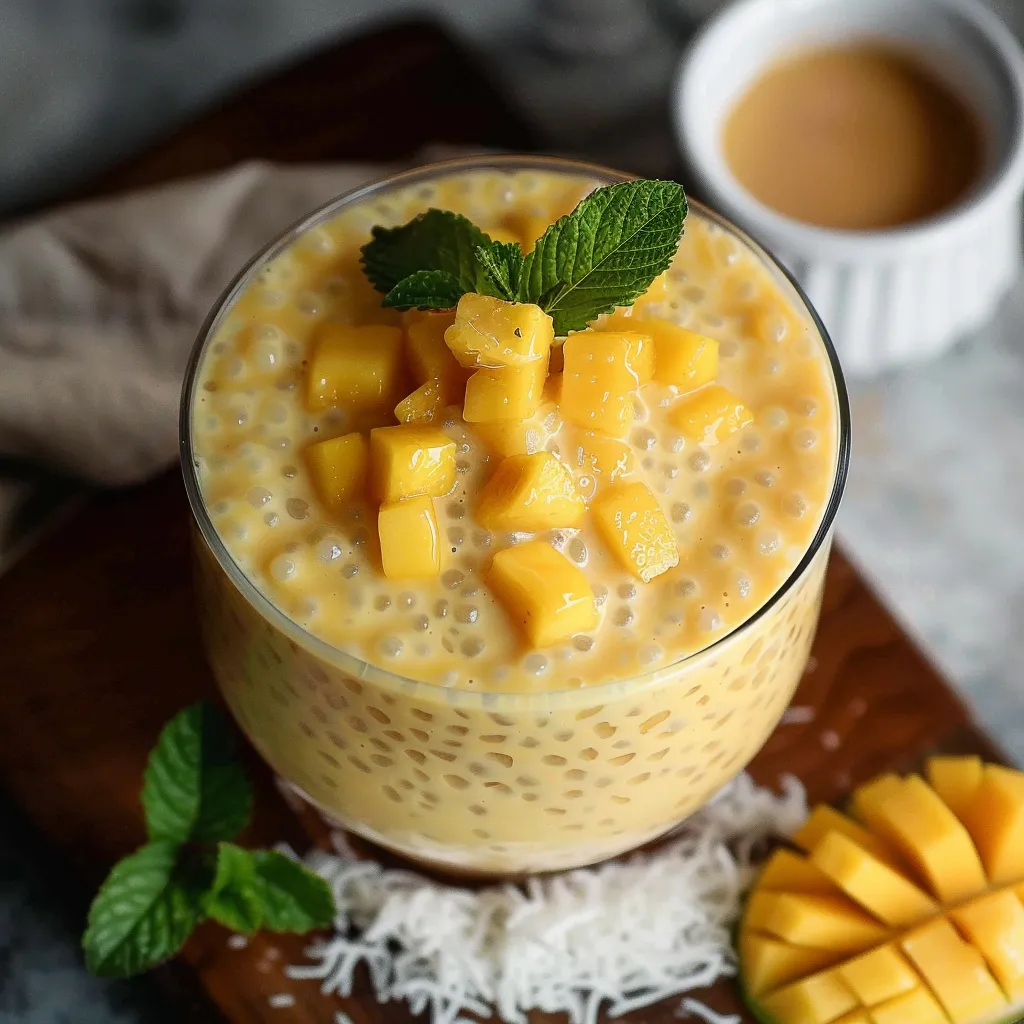
Serve Mango Sago very cold in small bowls or glasses, topped with extra mango cubes and a thin spoonful of coconut cream if you want a richer finish.
FAQs
- What is Mango Sago made of?
Mango Sago is usually made with ripe mangoes, cooked small tapioca pearls, coconut milk, and a dairy milk such as evaporated milk or condensed milk. Some versions add pomelo, nata de coco, or extra coconut cream.
- Can I use tapioca pearls instead of real sago?
Yes. Most home cooks use small tapioca pearls because they are easier to find and cook the same way in this dessert. Look for small pearls, not the large boba pearls used for bubble tea.
- Why are my sago pearls still white in the center?
They need more resting time in hot water. Simmer them until partly translucent, then cover the pot off the heat and let them sit until the centers turn clear. Rinse well after cooking so the dessert does not turn gluey.
- Can Mango Sago be made dairy-free?
Yes. Replace the evaporated milk with more full-fat coconut milk or a plain unsweetened oat milk. If you use sweetened condensed coconut milk, reduce the sugar so the dessert stays balanced.
- How long does Mango Sago last in the fridge?
It keeps well for about 2 days in an airtight container. The pearls soften as they sit, so the texture is best on the day you make it or the next day.
- What mangoes work best?
Ataulfo, Champagne, Alphonso, or Manila mangoes are excellent because they blend smooth and taste honeyed. Fibrous mangoes still work, but strain the puree before mixing it with the pearls.
- What can I serve with Mango Sago?
Serve it in small chilled cups after a spicy meal or as part of a mango dessert spread. It pairs nicely with coconut desserts, mango sorbet, or a simple plate of fresh fruit.
