 Pin it
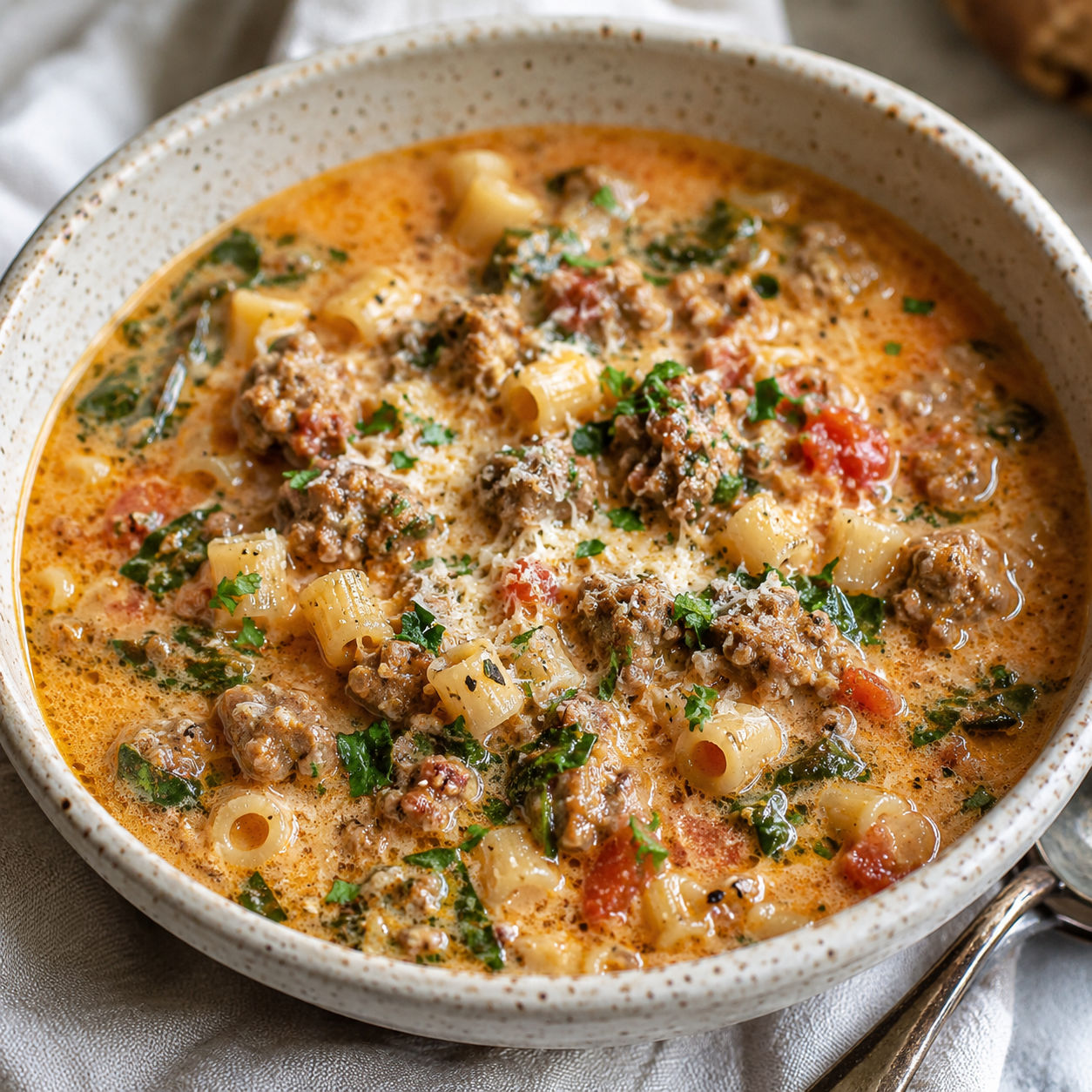
Creamy Parmesan Italian Sausage Soup is the kind of pot I make when I want dinner to feel generous without dirtying every pan in the kitchen. The sausage seasons the broth as it browns, the pasta makes it filling, and the parmesan melts in with a salty, nutty finish.
The key is timing. Add the dairy after the pasta is tender and keep the heat gentle so the soup stays smooth instead of grainy. A handful of spinach at the end gives it color and keeps the bowl from feeling too heavy.
What Builds The Broth
This soup needs bold, simple ingredients because the broth cooks fast. Use sausage with good fennel flavor, low-sodium broth, and a block of parmesan you can grate yourself.
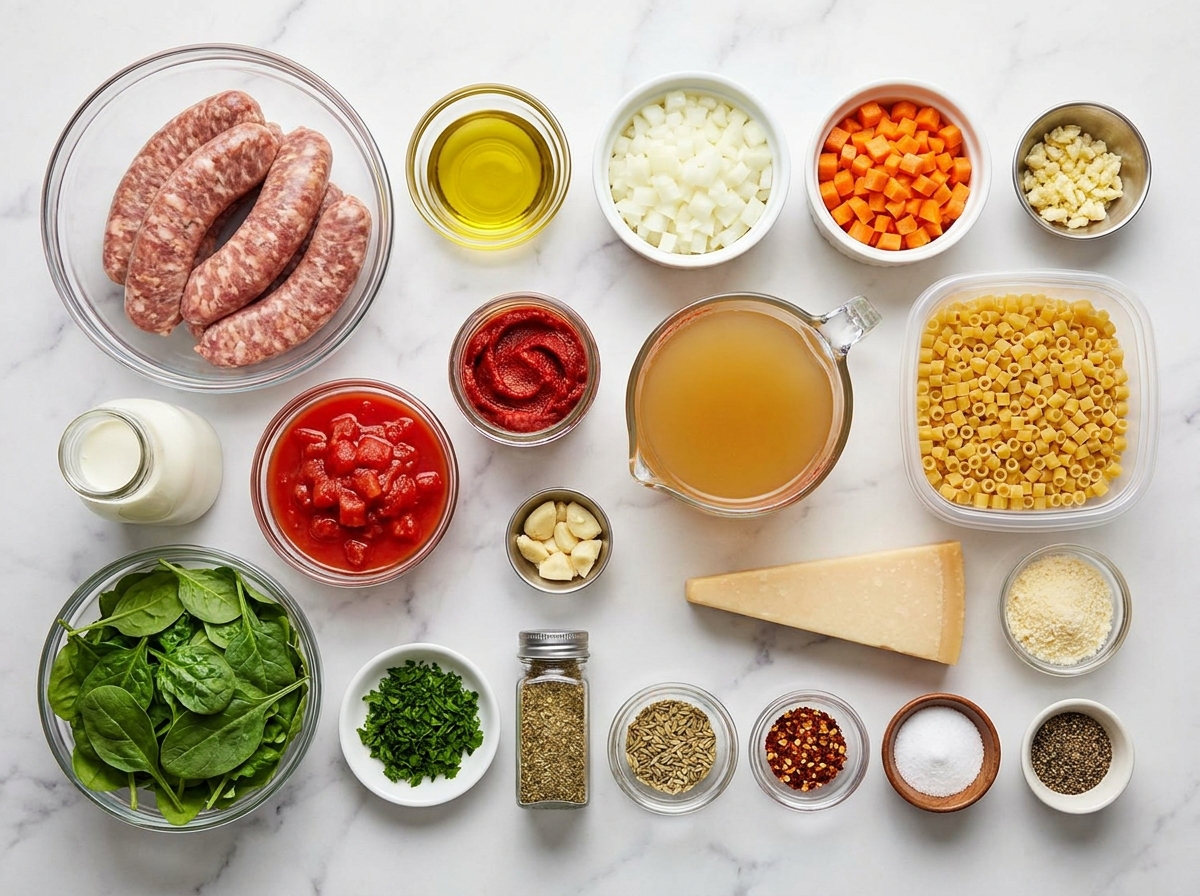
- Italian sausage. Browning it first gives the whole pot a savory base and little crisp edges in every spoonful.
- Onion and carrot. They soften into the broth and add quiet sweetness behind the sausage.
- Garlic. A short cook in the sausage drippings makes it fragrant without turning sharp.
- Tomato paste and diced tomatoes. They add body, color, and enough acidity to balance the cream.
- Chicken broth. It keeps the soup savory without making it too heavy.
- Ditalini pasta. The small tubes cook right in the pot and make the soup feel like a full meal.
- Heavy cream. It rounds out the broth and softens the tomatoes.
- Fresh parmesan. It melts into the finish and brings the salty, nutty flavor that makes the soup taste complete.
- Baby spinach and parsley. They add freshness at the end, when the soup is rich and hot.
Creamy Parmesan Italian Sausage Soup Steps
- Brown the sausage. Heat the oil in a Dutch oven and cook the sausage until no pink remains and the edges are browned. Break it into bite-size pieces, but leave some texture.
- Soften the vegetables. Add the onion and carrot and cook until the onion looks glossy and the carrot starts to soften. Stir in the garlic, tomato paste, Italian seasoning, fennel, and red pepper flakes for one minute.
- Simmer the base. Pour in the chicken broth and diced tomatoes, scraping the bottom of the pot. Bring it to a steady simmer.
- Cook the pasta. Stir in the ditalini and cook until just al dente, usually 8-10 minutes. Stir often so the pasta does not settle and stick.
- Make it creamy. Lower the heat and stir in the cream. Add parmesan by the handful, stirring gently after each addition until smooth.
- Finish the greens. Fold in the spinach and parsley until the spinach wilts. Taste before adding more salt because sausage and parmesan are already salty.
Creamy Parmesan Italian Sausage Soup Texture
The best version is thick enough to coat a spoon but still clearly a soup. Pasta releases starch as it cooks, parmesan adds body, and cream softens the acidity from the tomatoes. If the pot looks too thick after the pasta cooks, add broth a little at a time before the cheese goes in.
Keep the soup at a low simmer once the dairy is added. Boiling cream and parmesan can make the finish look broken. Freshly grated cheese helps most. Stir it in slowly and let each handful melt before adding the next.
Browning Makes The Difference
Do not rush the sausage. Let it sit in the hot pot for a minute before stirring so it gets browned spots instead of just steaming. Those browned bits dissolve into the broth and give the soup a slow-cooked taste even though it cooks quickly.
Ground pork sausage should be cooked to 160°F for safety, according to the USDA safe temperature chart. Once it is cooked through, the rest of the recipe is about building flavor and not overcooking the pasta.
Easy Swaps That Work
Use turkey Italian sausage if you want something lighter, but add an extra teaspoon of olive oil since it is leaner. Kale can stand in for spinach if you add it a few minutes earlier. Half-and-half works in place of cream, though the broth will be thinner.
If tiny pasta is what you love most, try Creamy Italian Sausage Orzo Soup next. For a heartier bean version with more tomato depth, Spicy Italian Sausage Bean Soup is a good direction.
Serving The Soup
This bowl wants something crisp or chewy beside it. Toasted bread, garlic knots, or a green salad all work. I like a little extra parmesan on top, fresh parsley, and black pepper right before serving.
For another sausage and parmesan dinner that leans pasta instead of soup, use the same flavors in Garlic Butter Sausage Parmesan Pasta. If you want a softer tomato soup night, Creamy Tomato Tortellini Soup keeps the same cozy feel.
Storing Without Mushy Pasta
Leftovers keep in an airtight container in the fridge for up to three days. The pasta will absorb broth, so add a splash of water or stock when reheating. Warm it gently and stir often.
If you are cooking for later, stop before adding the pasta, cream, cheese, and spinach. Chill the sausage broth base, then finish those last steps when you are ready to eat. The USDA leftovers guide has clear timing for cooling and storing cooked food.

FAQs
- Can I use hot Italian sausage instead of mild?
Yes. Hot Italian sausage works well and gives the soup a deeper warmth. If you use it, start with less red pepper flake and add more at the end only if you want extra heat.
- What pasta shape is best for this soup?
Ditalini, small shells, elbows, or mini farfalle all work. Choose a small shape that fits on a spoon and cook it just to al dente because it keeps softening in the hot broth.
- Can I make it gluten-free?
Yes, use a sturdy gluten-free small pasta and check that your sausage and broth are gluten-free. Add the pasta near the end and watch it closely because gluten-free pasta can go from firm to soft quickly.
- How do I keep parmesan from clumping?
Use freshly grated parmesan and stir it in gradually over low heat. Pre-grated cheese often has anti-caking starches that can make the soup feel sandy or stringy.
- Can I make this soup ahead?
You can make the soup through the broth and sausage step, then chill it. Reheat gently and add the pasta, cream, parmesan, and spinach shortly before serving for the best texture.
- How should I reheat leftovers?
Warm leftovers slowly on the stove with a splash of broth or water. The pasta absorbs liquid as it sits, so loosening the soup keeps it creamy instead of thick and pasty.
