 Pin it
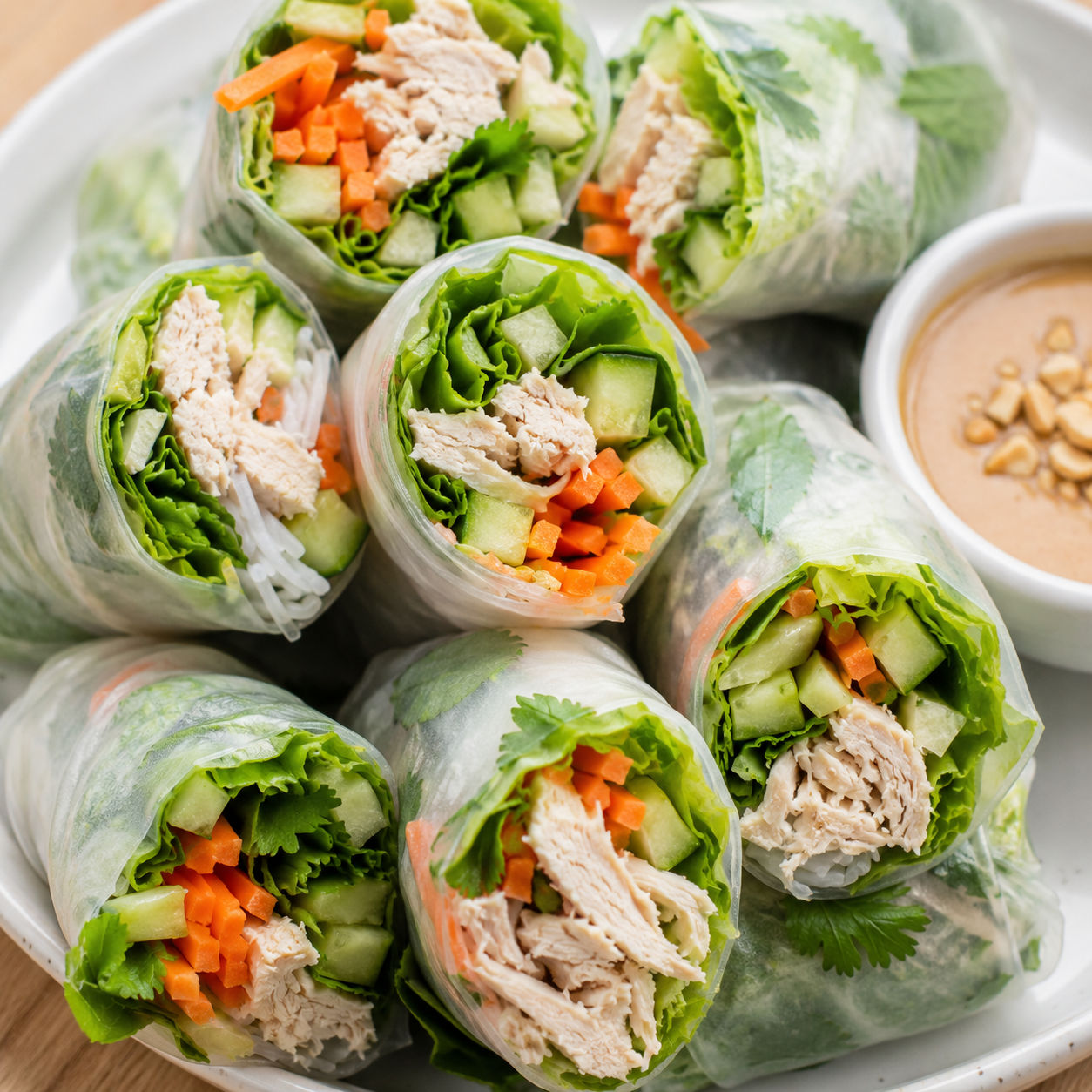
Easy Homemade Chicken Spring Rolls are the kind of meal that feels bright without being fussy. You get tender chicken, cool cucumber, sweet carrot, soft rice noodles, and fresh herbs in every bite.
The rolling looks harder than it is. The trick is to work with one wrapper at a time and stop soaking it before it feels fully soft. It keeps relaxing while you add the filling.
Fresh Roll Ingredients
Use cooked chicken that is moist enough to shred cleanly. For the vegetables, choose crisp cucumber, firm carrots, tender lettuce, and herbs that smell fresh when you pinch them.
- Chicken breast. Gives the rolls lean protein and a tender bite when poached gently.
- Rice paper wrappers. Turn soft and chewy after a quick dip in warm water.
- Rice vermicelli noodles. Add body without making the rolls heavy.
- Butter lettuce. Creates a soft layer that helps protect the wrapper from sharp vegetables.
- Carrot and cucumber. Bring crunch, color, and a clean fresh snap.
- Mint and cilantro. Make the rolls taste bright instead of plain.
- Peanut butter. Forms the creamy base for the dipping sauce.
- Tamari, lime, and sesame oil. Add salt, tang, and a toasted finish to the sauce.
Easy Homemade Chicken Spring Rolls
- Poach the chicken. Simmer the chicken gently with ginger and salt until it reaches 165°F, then let it rest before shredding so it stays juicy.
- Cook the noodles. Soak or boil the rice vermicelli according to the package, rinse under cool water, and drain well.
- Mix the sauce. Whisk peanut butter, tamari, lime juice, honey, sesame oil, garlic, ginger, and warm water until smooth and spoonable.
- Set up the fillings. Arrange the shredded chicken, noodles, lettuce, carrot, cucumber, mint, and cilantro within reach before you wet the first wrapper.
- Soften one wrapper. Dip one rice paper round in warm water for 8-10 seconds, then lay it on a damp board.
- Fill and roll. Layer lettuce, noodles, chicken, vegetables, and herbs on the lower third. Fold the bottom over, tuck in the sides, and roll firmly.
- Serve right away. Place finished rolls seam-side down and cover with a damp towel while you roll the rest.
Keep Rice Paper Flexible
Rice paper keeps softening after it leaves the water. If you wait until it feels floppy in the bowl, it will stretch, wrinkle, and tear on the board. Dip it briefly, lay it down, and start filling while it still has a little structure.
A damp cutting board helps too. Dry wood grabs the wrapper and makes the first fold frustrating. If you like the same fresh rice paper style, try these Vietnamese rice paper rolls next.
Filling That Rolls Cleanly
Thin, even pieces matter more than fancy knife work. Shred the chicken into narrow strips. Cut the cucumber and carrot into matchsticks so they bend with the roll instead of poking through the wrapper.
Keep the herbs whole or roughly torn. Minced herbs get wet and disappear into the noodles. A lettuce leaf on the bottom acts like a cushion and keeps sharper vegetables from cutting the rice paper. For another chicken appetizer with a crisp bite, these chicken jalapeno popper egg rolls are a good contrast.
Peanut Sauce Balance
The sauce should be creamy, salty, tangy, and loose enough for dipping. Warm water is the easiest way to thin peanut butter without making the sauce taste weak. Add it slowly and whisk until the sauce turns glossy.
Tamari keeps this version gluten-free, but regular soy sauce works if gluten is not a concern. Lime juice cuts the richness. A little honey rounds out the garlic and ginger. If you want more heat, add chili crisp or sriracha a small spoonful at a time.
Make Ahead Without Tearing
Fresh rolls are happiest the day they are made. For a short head start, prep the chicken, noodles, vegetables, and sauce up to one day ahead. Keep each part covered in the fridge, then roll closer to serving time.
If the rolls need to wait, wrap each one loosely in a damp paper towel and place them in a covered container. Keep them cold, especially because they contain cooked chicken. FoodSafety.gov lists 165°F as the safe minimum internal temperature for poultry in its safe temperature chart.
Serve Them Like Dinner
Two rolls make a good appetizer. Three or four can become a light meal, especially with extra sauce and a simple side. For a fuller spread, pair them with quick sesame chicken or set them beside homemade pizza rolls for a casual appetizer night.
Cut each roll in half on a slight angle with a sharp knife. Wipe the blade between cuts so the wrapper does not drag. Serve the cut sides up so the herbs and vegetables show.
Summary
These fresh chicken spring rolls are best served the day they are made, with peanut sauce on the side and a damp towel nearby while you roll.
FAQs
- Are chicken spring rolls served hot or cold?
These are fresh rice paper spring rolls, so they are served chilled or at room temperature. The chicken is cooked first, but the assembled rolls are not fried or baked.
- Can I use rotisserie chicken instead?
Yes. Rotisserie chicken is a good shortcut if you remove the skin and shred the meat into thin pieces. If it is salty, use a little less tamari in the peanut sauce.
- Why does my rice paper tear?
It is usually soaked too long or packed with too much filling. Dip the wrapper until it is just pliable, then place it on the board while it still feels a little firm. Use less filling than you think you need.
- Can I make chicken spring rolls ahead?
You can make them 2-4 hours ahead. Wrap each roll in lightly damp paper towel, keep them in a covered container, and chill. Rice paper gets tougher overnight, so same-day is best.
- What can I use instead of peanut sauce?
Try sweet chili sauce, hoisin-lime sauce, or a sesame tamari dip. For a nut-free version, use sunflower seed butter in the same amount as peanut butter.
- What should I serve with chicken spring rolls?
Serve them with a crunchy salad, steamed edamame, or a light soup. They also work nicely beside other appetizers like pizza rolls or crispy chicken egg rolls for a party tray.
