 Pin it
Homemade Chicago Style Deep Dish Pizza is the kind of dinner that asks you to slow down a little. The dough needs time to rise, the tomatoes need draining, and the finished pie needs a short rest before slicing.
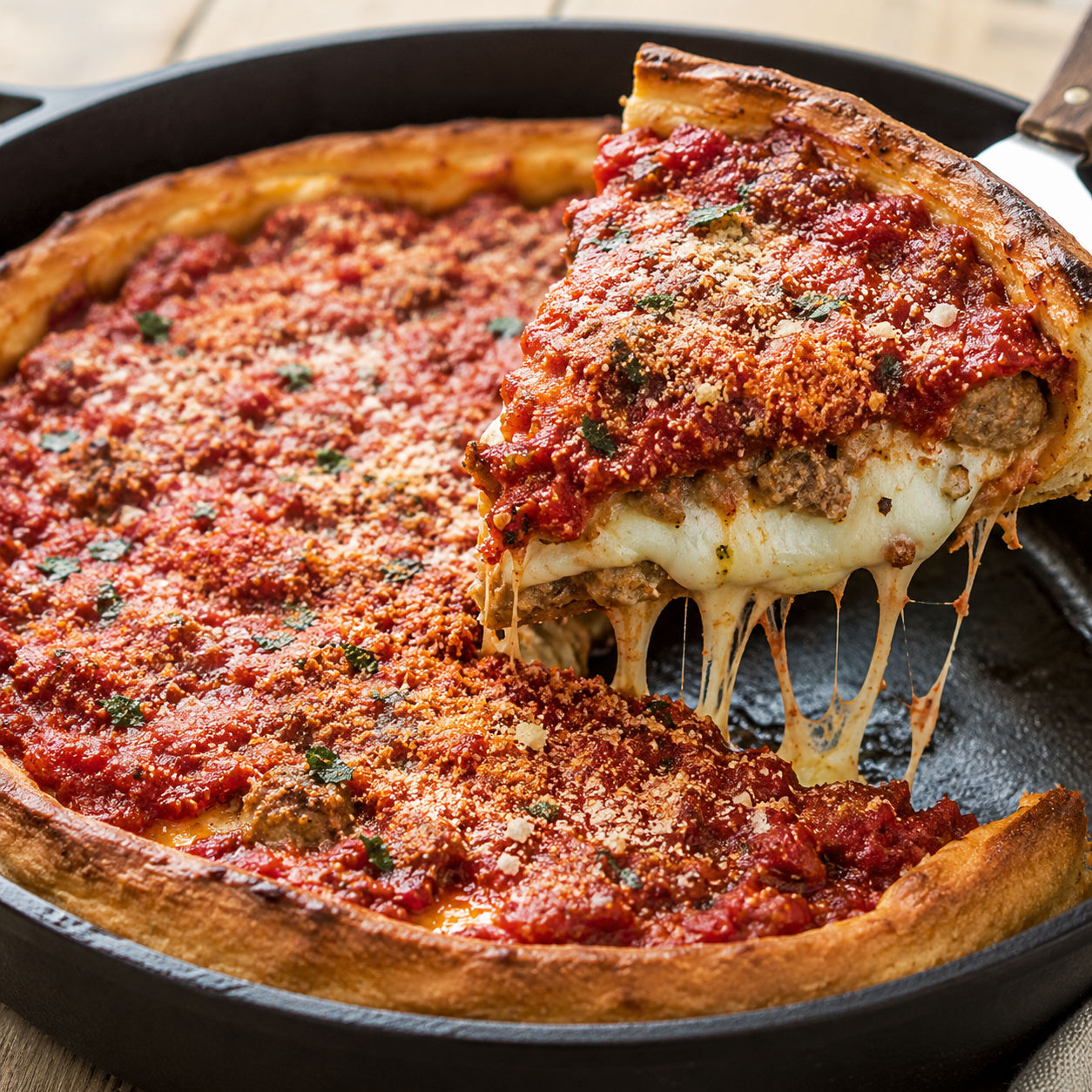
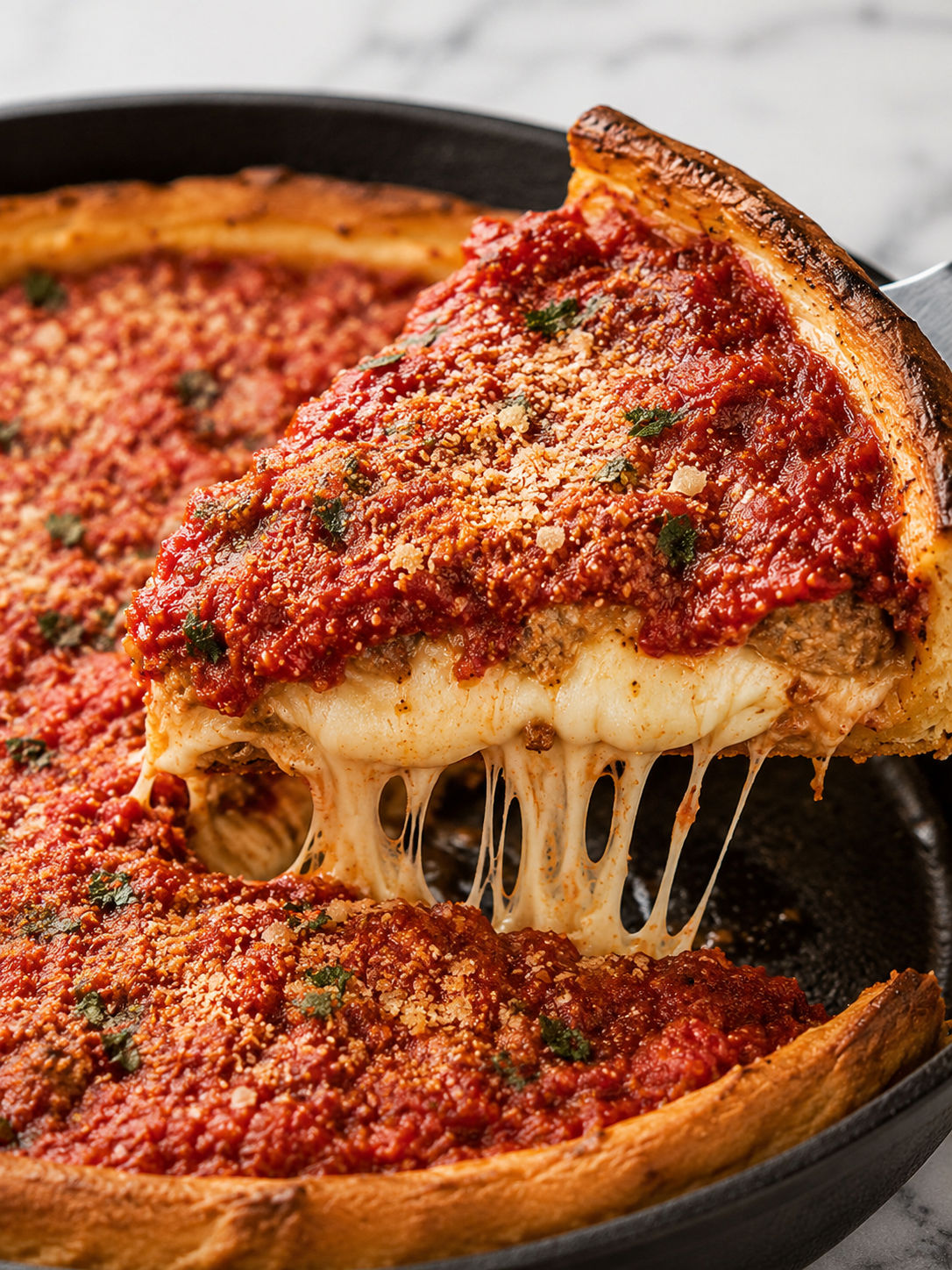
The payoff is a tall, golden crust that eats more like a savory pie than a thin pizza. Cheese goes down first, sausage goes over that, and the tomato sauce sits on top so the crust does not turn soggy.
The Deep Dish Lineup
This recipe depends on a few sturdy ingredients rather than a long topping list. Use low-moisture whole milk mozzarella, a good canned tomato, and Italian sausage with enough seasoning to flavor the middle layer.
- All-purpose flour. Builds a crust with enough strength to climb the pan and hold the heavy filling.
- Yellow cornmeal. Adds a faint grit and gentle sweetness that feels right in deep dish crust.
- Instant yeast. Gives the dough lift without a complicated starter or long mixing time.
- Corn oil. Makes the crust tender and helps it fry lightly against the hot pan.
- Softened butter. Greases the pan and adds a browned, rich edge to the crust.
- Whole peeled tomatoes. Crush into a chunky sauce that tastes brighter than jarred pizza sauce.
- Low-moisture mozzarella. Melts into a thick base layer without flooding the crust.
- Italian sausage. Bakes into the cheese and gives the pizza its savory, meaty center.
- Parmesan. Finishes the tomato layer with salt and a nutty browned top.
Homemade Chicago Style Deep Dish Pizza Method
- Mix the dough. Stir flour, cornmeal, yeast, sugar, and salt together, then add warm water and oil until a shaggy dough forms. Knead just until it holds together.
- Let it rise. Cover the dough and let it rise until puffy, about 90 minutes in a warm kitchen. It will feel soft and oily, which is normal.
- Cook the sauce. Drain the tomatoes, crush them by hand, and simmer with garlic, oregano, salt, and a pinch of sugar until thick and spoonable.
- Press the crust. Butter a deep pan, press the dough across the base, and push it about 1 1/2 inches up the sides. Keep the side walls thinner than the bottom.
- Layer it correctly. Add mozzarella first, then pinched sausage, then tomato sauce, then Parmesan. This order protects the crust.
- Bake and rest. Bake on the lowest oven rack until the crust is deeply golden and the sauce bubbles. Rest the pizza before lifting and slicing.
Why The Crust Works
Deep dish crust should not chew like a regular pizza crust. It should be crisp at the bottom, tender through the center, and sturdy enough to hold a thick layer of cheese and sauce. The extra oil is what gets you there. It shortens the dough a bit and helps the outside fry where it touches the pan. A little cornmeal adds texture without making the crust crumbly.
Do not knead this dough like bread. Once it comes together, stop. Overworking it builds too much gluten and makes the crust tough. I like the high-oil approach used in many tested deep dish recipes, including this Chicago-style deep dish reference, but I keep the method simple enough for a home kitchen.
The Sauce Must Be Thick
Watery tomatoes are the fastest way to lose the crust. Drain whole peeled tomatoes in a colander first, then crush them by hand so the seed gel and thin juice can run off. After that, simmer them briefly with garlic and oregano. You want a loose spoonable sauce, not a smooth marinara.
If the sauce looks thin after 10 minutes, keep cooking for a few more minutes. It should mound lightly on a spoon. This same chunky sauce is good for smaller snacks too, especially deep dish pizza cupcakes or a batch of homemade pizza rolls.
Smart Filling Swaps
Sausage is classic, but you can change the center layer without fighting the structure. Pepperoni works if you use a modest amount and keep it under the sauce. Cooked mushrooms need to be browned first so they release their water before they hit the pizza. Bell peppers and onions should get a quick saute for the same reason.
For a meatless version, use extra mozzarella, cooked mushrooms, and a few olives. For a saucier table, serve wedges with homemade garlic sauce for pizza on the side. Just do not pile on wet toppings. Deep dish can handle weight, but it still hates excess moisture.
How To Slice Cleanly
The hardest part is waiting. When the pan comes out of the oven, the cheese is molten and the sauce is still moving. Give it 10 to 15 minutes. The crust firms, the cheese settles, and the slices come out with clean edges instead of sliding apart.
Run a thin spatula around the wall of the pan before lifting. A serrated knife handles the tall crust better than a pizza wheel. If you want a different pizza night with faster timing, homemade BBQ chicken pizza is easier to pull together on a busy night.
Storage And Safe Reheating
Leftover deep dish keeps well because the crust is sturdy. Cool slices completely, then refrigerate them in an airtight container for up to 3 days. Reheat on a sheet pan at 375 F until the crust crisps and the center is hot, about 12 to 15 minutes.
If you use raw sausage in the filling, make sure the pizza bakes long enough for the meat to cook through. USDA guidance lists 160 F as the safe internal temperature for ground pork and beef, which you can check on their safe temperature chart. Letting the pizza rest also makes it easier to confirm the center is fully cooked.

FAQs
- Can I make Chicago style deep dish pizza without a deep dish pan?
Yes. A 12-inch cast iron skillet works well because it holds heat and browns the crust. A 9-inch cake pan also works if you divide the dough into two smaller pizzas.
- Why does the cheese go under the sauce?
The cheese creates a barrier between the crust and the wet tomato layer. That order helps the bottom stay crisp while the sauce thickens on top.
- Can I use store-bought pizza dough?
You can, but the texture will be different. Deep dish dough has more fat than regular pizza dough, so it bakes tender, flaky, and crisp along the pan.
- How do I keep deep dish pizza from getting soggy?
Drain the tomatoes well and bake the pizza on the lowest oven rack. Let it rest for at least 10 minutes before slicing so the cheese and sauce settle.
- Can I make the dough ahead?
Yes. Let it rise in the refrigerator overnight, then bring it to room temperature for about 45 minutes before pressing it into the pan. Cold dough tears more easily.
- What should I serve with deep dish pizza?
Keep the sides fresh and sharp. A crisp green salad, roasted vegetables, or a small bowl of giardiniera balance the rich cheese and sausage.
