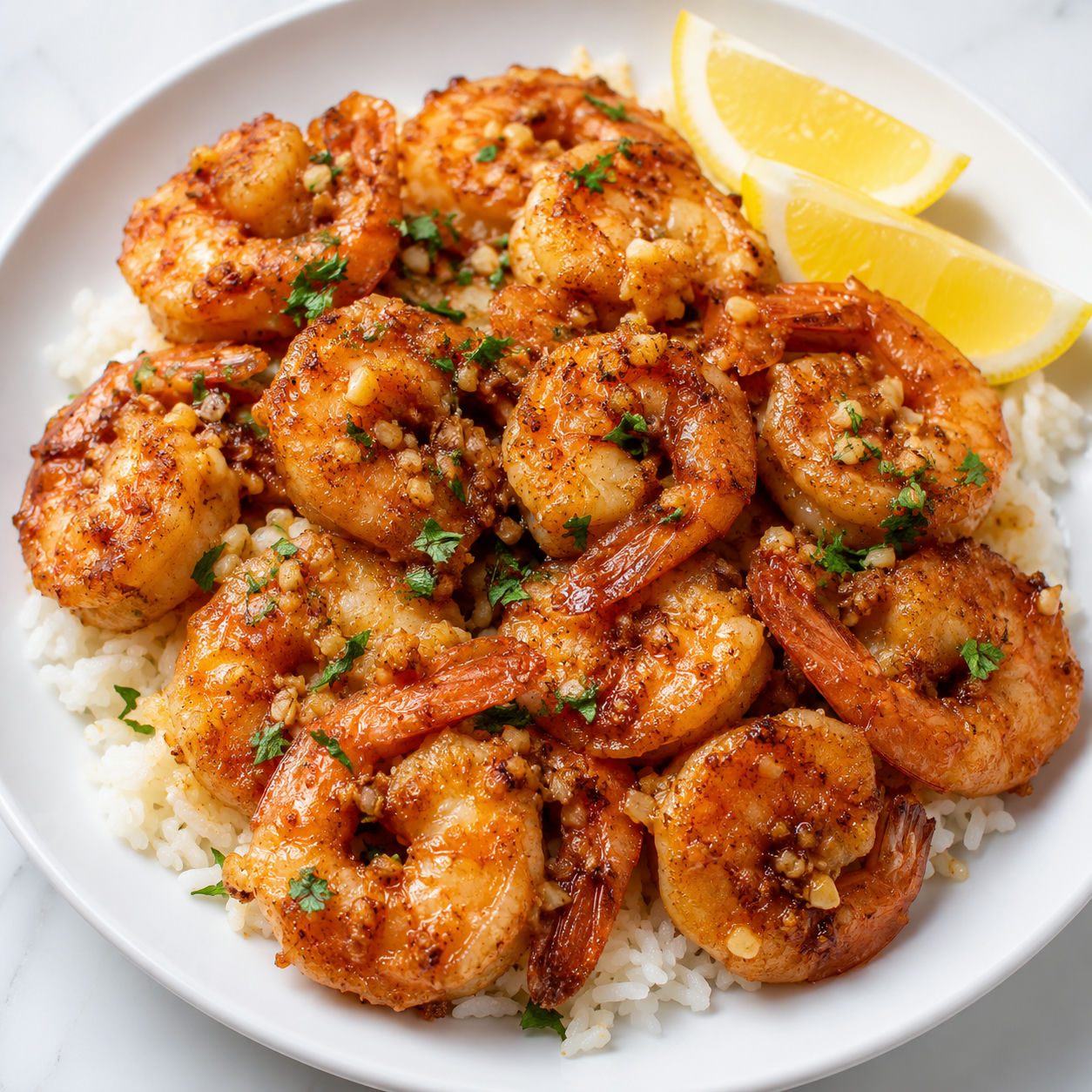
 Pin it
Hawaiian Garlic Shrimp is the kind of dinner that smells loud in the best way. Garlic hits the butter first, then the shrimp go into the skillet with a thin paprika-rice flour coating that turns lightly crisp at the edges.
This version keeps the North Shore spirit but makes it doable in a home kitchen. You get buttery shells, sweet shrimp, warm rice, and lemon to cut through all that richness.
Hawaiian Garlic Shrimp Lineup
Choose large shrimp, ideally 21-25 count, because they stay juicy long enough to brown. Shell-on easy-peel shrimp bring the most flavor, but peeled shrimp keep dinner less messy.
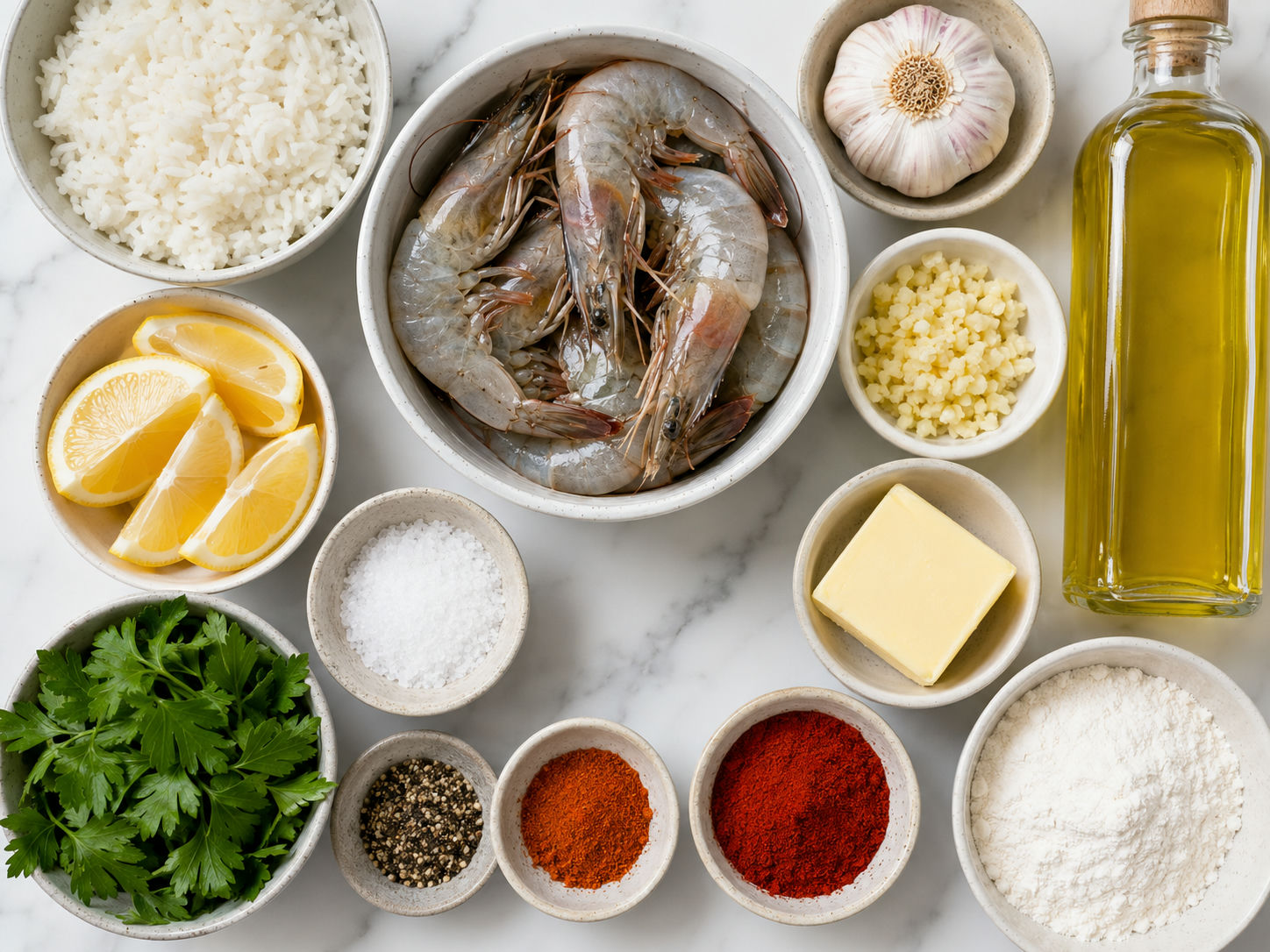
- Large shrimp. The main ingredient, sweet and firm when cooked fast in a hot skillet.
- Garlic. A full head gives the butter its deep, nutty flavor.
- Unsalted butter. Carries the garlic and coats every shrimp with a glossy finish.
- Rice flour. Creates a light crust that browns without getting heavy.
- Paprika. Adds warm color and a gentle savory note.
- Cayenne pepper. Gives a small kick that balances the butter.
- Olive oil. Helps the shrimp sear without scorching the butter.
- Lemon wedges. Brighten the rich garlic sauce right before eating.
- Steamed rice. Turns the shrimp into a proper plate lunch-style meal.
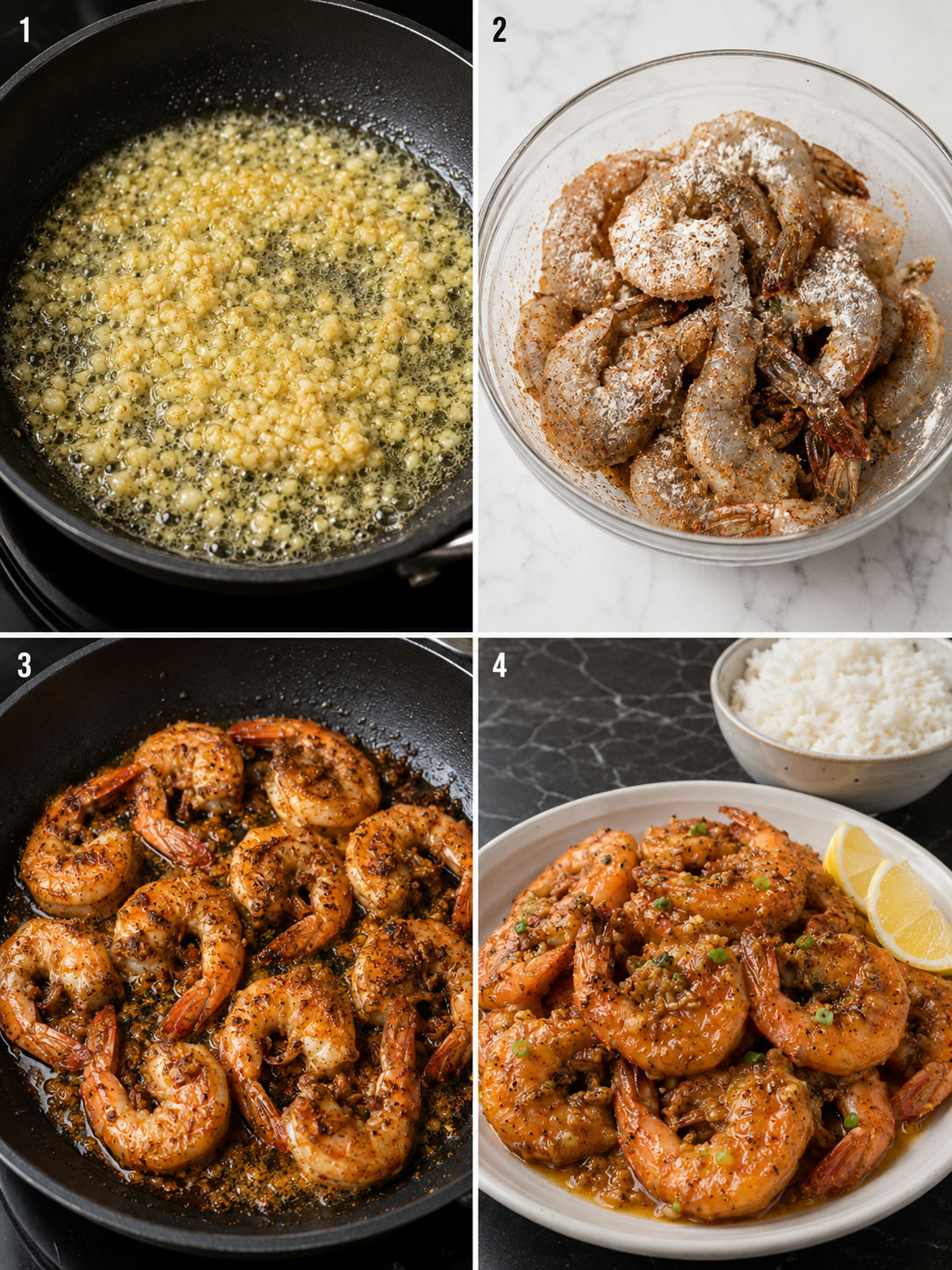
Cook It Shrimp-Truck Style
- Make the garlic butter. Melt the butter over medium heat, add the minced garlic, and cook until pale golden and fragrant. Scrape it into a bowl before it gets dark.
- Dry the shrimp. Pat thawed shrimp well with paper towels. This is the difference between a good sear and a watery pan.
- Season the coating. Stir rice flour, paprika, cayenne, salt, and pepper together. Toss the shrimp until each piece has a thin, even dusting.
- Sear in batches. Heat olive oil in a wide skillet and cook the shrimp in one layer for 2-3 minutes per side. Do not crowd the pan.
- Finish with butter. Return the garlic butter to the skillet and toss for about 30 seconds, just until the shrimp are shiny and coated.
- Serve right away. Spoon the shrimp over hot rice with lemon wedges and parsley if you like a fresh finish.
Why The Coating Matters
The thin rice flour coating is what makes this Hawaiian Garlic Shrimp feel different from plain sauteed shrimp. It does not become a thick batter. It forms a light crust that grabs the garlic butter and gives each shrimp a little crispness around the edges. That texture matters because the dish is rich and simple.
The key is a dry surface. After thawing, spread the shrimp on paper towels and press the tops dry too. Then toss with the seasoned flour right before cooking. If the shrimp sit too long after coating, the flour absorbs moisture and turns pasty. For another buttery shrimp dinner with rice, try this garlic butter shrimp and rice stack.
Watch The Garlic Closely
Garlic goes from sweet to bitter fast. Start it in butter over medium heat, stir often, and stop when it smells toasted and looks pale gold. The garlic will continue cooking from its own heat after you move it to a bowl. If you leave it in the skillet while the shrimp sear, the little pieces can burn before the shrimp finish.
This style is tied to Oahu's North Shore shrimp trucks, where garlic butter and rice are part of the plate lunch rhythm. If you want a slightly saucier version, the site's savory Hawaiian garlic butter shrimp leans even harder into the butter sauce.
Heat, Lemon, And Rice
Cayenne is not here to make the shrimp fiery. It gives the butter a little lift. Start with half a teaspoon if you cook for kids or spice-sensitive eaters. Add more at the table with chili flakes or hot sauce if you want that sharper bite.
Lemon is not optional for me. The shrimp taste best when the first squeeze hits the hot garlic butter on the plate. Rice is just as important because it soaks up the sauce. A scoop of macaroni salad or sliced cucumber makes the plate feel complete. For a sweeter garlic seafood route, this honey garlic shrimp stirfry is a good next dinner.
Storage And Food Safety
Shrimp cook quickly, so pull them as soon as they are opaque and curled. The FDA's seafood safety guidance lists 145°F as the safe cooking temperature for seafood. In practice, that means the shrimp should look pearly and firm, not gray or translucent.
Leftovers are best within 3 days. Chill them promptly and reheat gently in a skillet. USDA guidance on leftovers and food safety recommends using refrigerated leftovers within 3-4 days. If you are planning a Hawaiian-style dinner spread, pair this with Hawaiian teriyaki chicken for a fuller table.
FAQs
- Can I make Hawaiian Garlic Shrimp with peeled shrimp?
Yes. Peeled shrimp are easier to eat and still taste good. Shell-on shrimp give the sauce a deeper seafood flavor and a more classic shrimp-truck feel, so use easy-peel shrimp if you want the best of both.
- What does rice flour do for garlic shrimp?
Rice flour gives the shrimp a thin, delicate coating that browns quickly and helps the garlic butter cling. All-purpose flour works in a pinch, but rice flour keeps the coating lighter and keeps this recipe gluten-free.
- How do I keep the garlic from burning?
Cook the garlic in butter over medium heat and pull it off when it turns pale gold. If it gets dark brown before the shrimp cook, it will taste bitter. Set the garlic butter aside, then add it back at the end.
- Can I use frozen shrimp?
Frozen shrimp work well here. Thaw them in the refrigerator overnight or under cold running water, then pat them very dry. Wet shrimp steam in the pan instead of browning.
- How long do leftovers keep?
Store leftovers in an airtight container in the refrigerator for up to 3 days. Reheat gently in a skillet with a small pat of butter or a splash of water. The microwave works, but use short bursts so the shrimp do not turn rubbery.
- What should I serve with Hawaiian Garlic Shrimp?
Steamed white rice is the classic choice because it catches the garlic butter. Macaroni salad, cucumber slices, grilled pineapple, or a crisp cabbage slaw also work well beside the rich shrimp.
