 Pin it
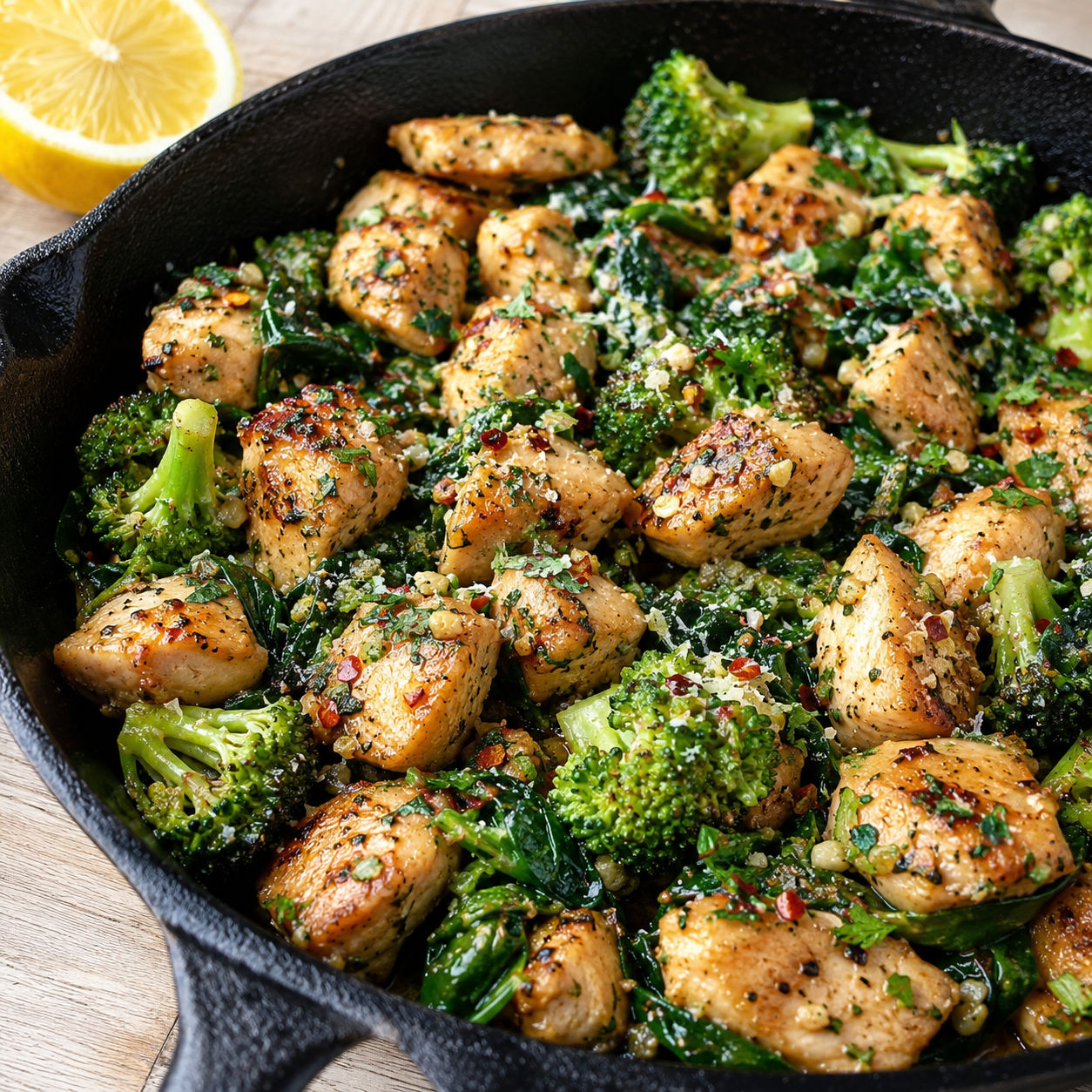
This is the kind of dinner I pull together when I want something that feels clean but still satisfies. Chicken bites seared until golden, broccoli that keeps a little bite, and spinach that wilts into silky ribbons at the last second. Everything happens in one skillet, and the garlic does most of the heavy lifting.
The whole thing takes about half an hour from cutting board to plate. It is lean, high in protein, and the sort of meal that leaves you full without feeling weighed down. You can serve it as-is, or spoon it over rice if you want extra heft.
What goes into the skillet
Quality matters when the ingredient list is short. Use fresh broccoli with tight florets and baby spinach that looks lively, not slimy. Fresh garlic is non-negotiable here. The jarred kind will not give you the same punch.
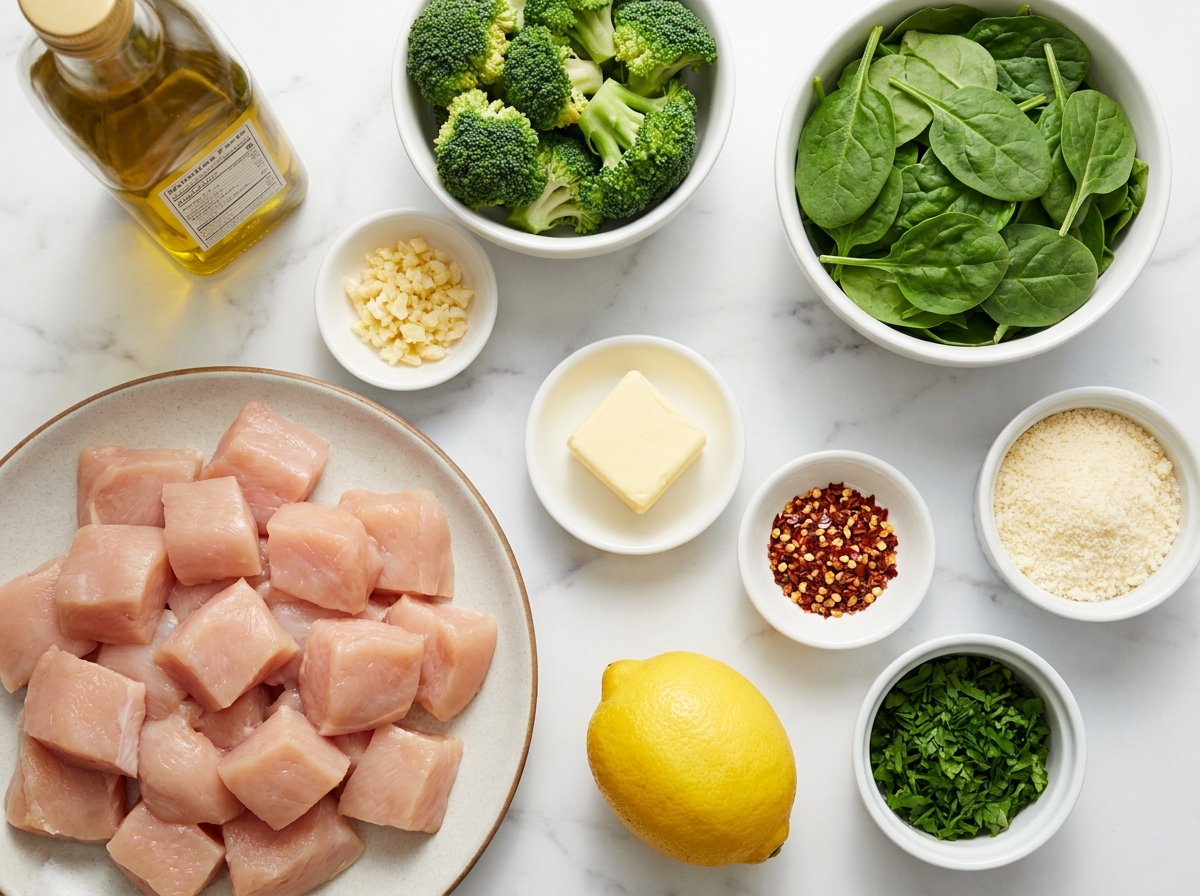
- Boneless chicken breast. Cut into one-inch cubes so they cook fast and evenly. Thighs work too if you prefer more richness.
- Broccoli florets. Cut small so they cook through in the same time as the chicken. The stems are edible if peeled and sliced thin.
- Baby spinach. It wilts in seconds and adds color and iron. Pack it in. It shrinks dramatically.
- Garlic. Five cloves, minced fine. It perfumes the whole dish and forms the backbone of the flavor.
- Butter and olive oil. The oil raises the smoke point, and the butter adds richness. Together they carry the garlic without burning it.
- Chicken broth. A small splash creates steam to soften the broccoli and picks up the browned bits from the pan.
- Lemon and red pepper flakes. Bright acidity and a gentle heat that wakes everything up.
- Parmesan. Optional but recommended for a salty, savory finish.
How to build it step by step
- Sear the chicken. Pat the cubes dry and season well. Cook in a hot skillet in a single layer until golden on at least two sides, about four to five minutes total. Do not crowd the pan or they will steam. Remove to a plate.
- Steam the broccoli. Add the florets to the same skillet with a splash of chicken broth. Cover and cook for three to four minutes until bright green and tender-crisp.
- Bloom the garlic. Push the broccoli to the side. Melt butter with the remaining oil, add the garlic and red pepper flakes, and stir for thirty seconds until fragrant. Do not let it brown.
- Wilt the spinach. Pile the spinach on top and toss gently. It will collapse into the pan within a minute or two.
- Bring it all back. Return the chicken and any pooled juices to the skillet. Toss everything together, then hit it with lemon zest, lemon juice, and parmesan if using. Taste for salt and serve hot.
Why dry chicken matters
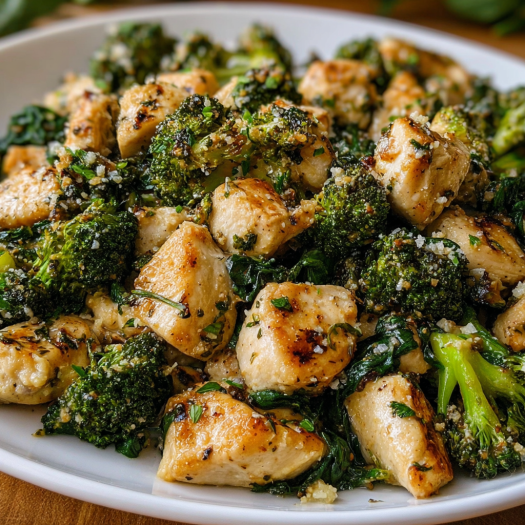
Moisture is the enemy of a good sear. If your chicken cubes sit in their own juices, they will boil instead of brown. Pat them thoroughly with paper towels, even if they look dry already. A hot pan and dry meat give you that caramelized crust that makes the whole dish taste deeper.
If you enjoy creamy skillet meals, the same technique works in chicken with spinach and mushrooms in creamy parmesan sauce.
Swaps that still work
No chicken breast? Thighs are more forgiving and add a richer flavor. You can also use turkey tenderloin cut into chunks. For a vegetarian version, swap the chicken for a can of drained chickpeas added with the broccoli.
If you want carbs in the same pan, stir in a cup of cooked rice or small pasta at the end. Or try pairing this with garlic butter asparagus orzo on the side for a double hit of green.
Storing and reheating
Leftovers keep in an airtight container in the fridge for up to three days. The spinach will darken and soften, but the flavor stays good. Reheat gently in a skillet with a teaspoon of water or extra broth to loosen any dried bits.
The microwave works in a pinch, but the broccoli can go from tender to mushy in seconds. A covered skillet over medium-low heat is gentler and keeps the chicken juicier.
Shortcuts for busy nights
If you are really pressed for time, you can use frozen broccoli florets. Do not thaw them first. Add them straight to the skillet and increase the steaming time by two minutes. They will not char as nicely, but they will still taste good.
Another shortcut is to use pre-washed baby spinach from a clamshell. It saves rinsing and drying time, and the leaves are usually more tender than mature bunches.
Check the temperature
Chicken must reach 165 degrees Fahrenheit at the thickest part to be safe to eat. A digital instant-read thermometer is the best tool for this. If you do not have one, slice the largest piece open and check that the meat is opaque white throughout with no pink remaining. See the FDA safe food handling guidelines for current recommendations.
FAQs
- Can I use frozen broccoli?
Yes. Add frozen florets directly to the skillet without thawing and increase the covered cooking time by two to three minutes. The texture will be softer than fresh, but it still works.
- Can I substitute chicken thighs?
Absolutely. Boneless, skinless thighs are more forgiving and stay juicy even if you overcook them slightly. Cut them into similar-sized pieces and sear a minute longer.
- How do I keep the spinach from getting slimy?
Add it at the very end and toss just until it wilts. It will continue to cook from residual heat after you pull the pan off the burner. Do not cover the pan after adding the spinach.
- Is this recipe low-carb or keto?
Yes. Without rice or pasta, this dish is naturally low in carbohydrates and high in protein. The main carbs come from the broccoli and spinach.
- What should I serve with this?
It is a complete meal on its own, but it is excellent over cauliflower rice, white rice, or with a slice of crusty bread. For another quick option, try quick air fryer chicken and broccoli.
- How do I know the chicken is fully cooked?
The pieces should reach 165 degrees Fahrenheit internally. Cut one open and check that the meat is opaque white throughout with no pink. A digital thermometer is the most reliable tool.
