 Pin it
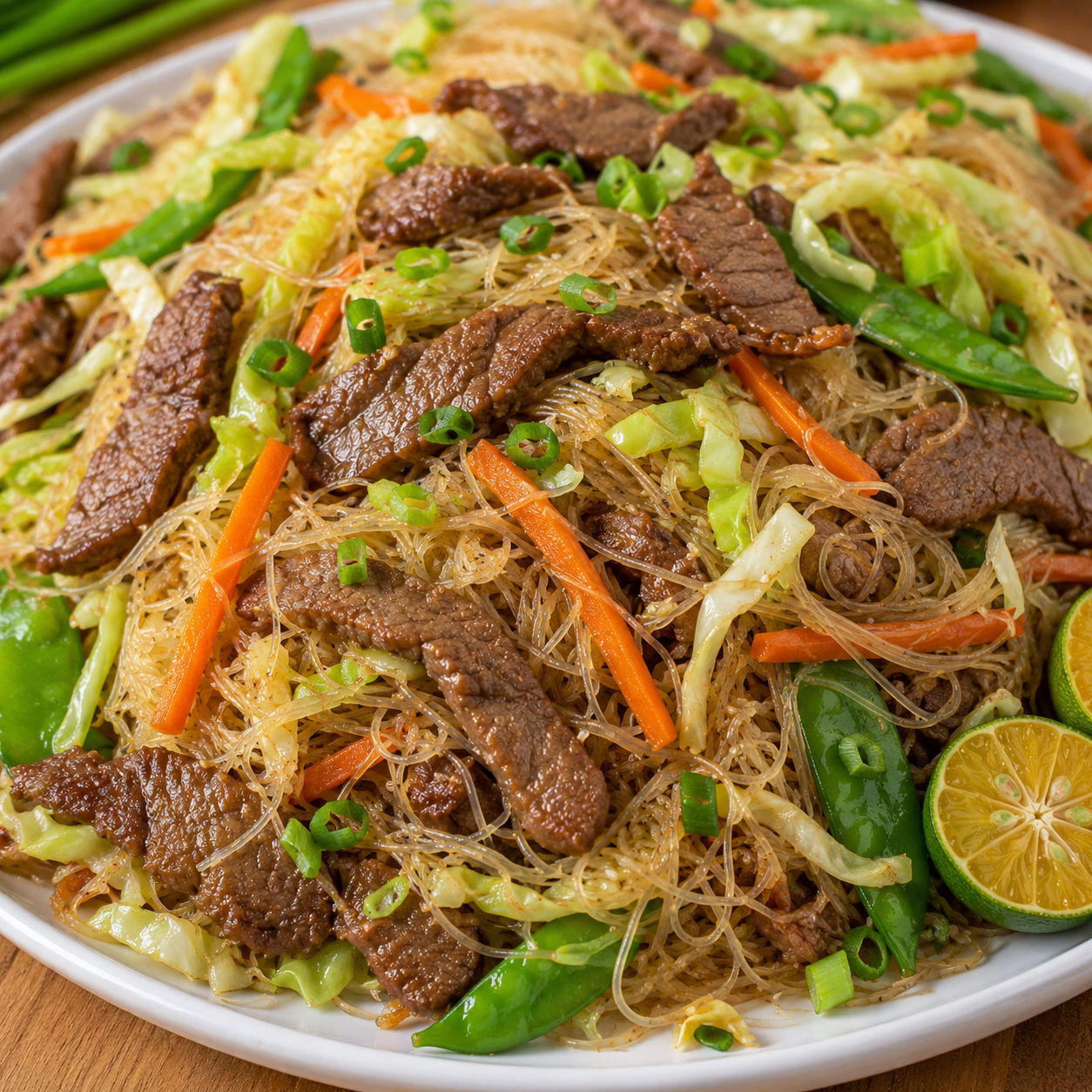
Filipino Pancit with Beef is the kind of noodle dish that disappears fast at the table. The bihon noodles drink up the broth, the beef stays tender, and the cabbage and carrots keep the whole platter fresh instead of heavy.
I like this version for weeknights because the work is mostly slicing and stirring. Have everything ready before the wok gets hot. Once the garlic hits the oil, the recipe moves quickly.
Beefy Bihon Lineup
Choose thin rice bihon noodles and a tender beef cut that cooks fast. Sirloin, flank steak, or ribeye trimmings all work if you slice them thinly across the grain.
- Bihon rice noodles. Thin noodles soak up the seasoned broth and give pancit its light, springy bite.
- Beef sirloin. Thin strips cook quickly and stay tender when the pan is hot.
- Garlic and onion. These build the first layer of aroma in the oil.
- Cabbage and carrots. They add sweetness, color, and a little crunch.
- Snow peas. A fresh green bite that cooks in minutes.
- Beef broth. This gives the noodles deeper flavor than water alone.
- Soy sauce and oyster sauce. They season the broth and help the noodles turn glossy and savory.
- Calamansi or lemon. A squeeze at the end wakes up the beef and noodles.
Stir-Fry Then Simmer
- Soak the noodles. Cover the bihon with warm water for 8-10 minutes, just until flexible, then drain well.
- Sear the beef. Season the sliced beef with pepper and a little soy sauce, then stir-fry in hot oil until browned at the edges. Move it to a plate before it overcooks.
- Cook the aromatics. Add onion and garlic to the same wok and stir until fragrant. Scrape up the browned bits because they flavor the broth.
- Soften the vegetables. Add carrots, cabbage, and snow peas. Cook only until bright and barely tender.
- Season the broth. Pour in beef broth, soy sauce, oyster sauce, and a little fish sauce if using. Bring it to a steady simmer.
- Finish the noodles. Add the drained bihon and toss until the noodles absorb the liquid. Return the beef, add scallions, and serve with calamansi or lemon.
Filipino Pancit With Beef
Pancit is flexible by nature, but the best plates still have balance. The noodles should taste seasoned all the way through, not plain noodles with sauce sitting on top. That is why the bihon goes into the simmering broth after the vegetables start to soften. The noodles absorb the liquid as they finish cooking, so every strand takes on the beef, soy, garlic, and onion flavor. Panlasang Pinoy has a helpful overview of classic bihon technique in its pancit bihon guide.
The Noodle Moisture Test
Bihon can go from bouncy to broken if it is soaked too long. You want the noodles bendable before they hit the wok, not fully soft. If a strand wraps around your finger without snapping, drain it. The pan should have enough broth to hydrate the noodles, but not so much that they boil like soup. Add a splash more broth only if the noodles are still firm and the pan is dry. If you like beef with glossy noodles, try this same quick-pan mindset with Oyster Sauce Beef Onion Stir-Fry or Quick Easy Korean Ground Beef.
Keeping The Beef Tender
The beef only needs a short time over high heat. Give it space in the pan so it browns instead of steaming. If your wok is small, cook the beef in two batches. Pull it out while the center is still just cooked, then return it at the end to warm through. For food safety, whole cuts of beef should reach at least 145°F with a rest, according to FoodSafety.gov. Thin strips usually reach that point quickly, so watch the texture as much as the clock.
Smart Swaps
No calamansi nearby? Lemon or lime gives the same needed lift. Green beans can replace snow peas, and celery leaves or cilantro can stand in for kinchay. For a gluten-free version, use tamari instead of soy sauce and check the oyster sauce label. For a lighter platter, increase the cabbage and reduce the noodles by a few ounces. If you want another noodle dinner with beef, Asian Noodle Beef Salad is cooler and brighter, while Easy Mongolian Ground Beef Noodles is sweeter and saucier.
Storage And Reheating
Store leftover pancit in an airtight container for up to 3 days. The noodles firm up in the fridge, so reheat them gently in a skillet with a spoonful of broth or water. Toss with tongs until steamy. The microwave works for single servings, but cover the bowl with a damp paper towel so the bihon does not dry out. Add fresh scallions and a new squeeze of lemon after reheating.
Summary
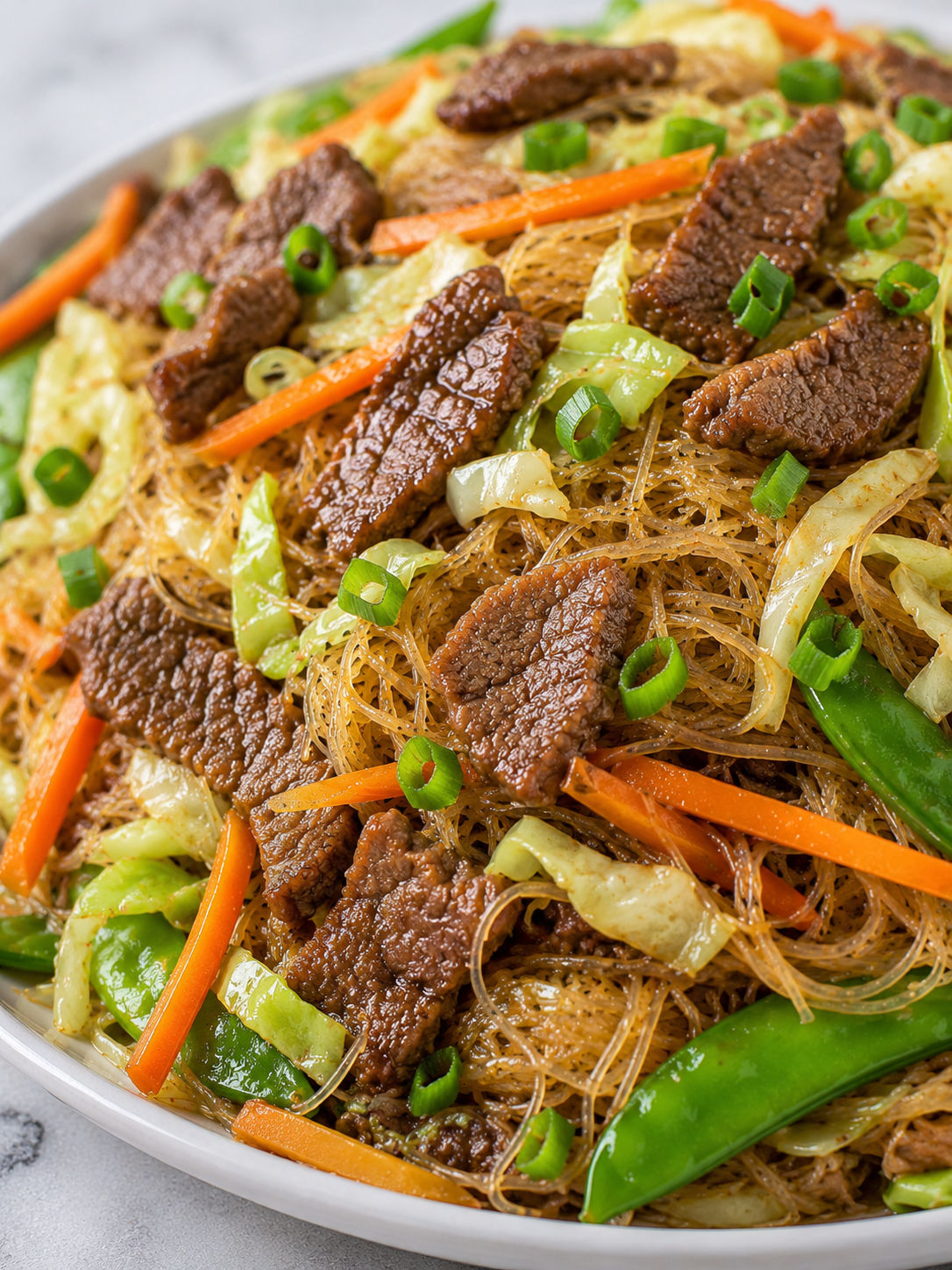
This beef pancit is best served hot with calamansi or lemon wedges and extra black pepper at the table.
FAQs
- What noodles are best for Filipino Pancit with Beef?
Use bihon, which are thin rice vermicelli noodles. They soften quickly and absorb the beef broth without needing a long boil. If you use thicker canton noodles, you will need a little more liquid and a longer cooking time.
- Can I use ground beef instead of sliced beef?
Yes, but the texture will be different. Brown the ground beef well, drain excess fat if needed, then continue with the vegetables and broth. Thinly sliced sirloin gives a cleaner stir-fry texture.
- How do I keep pancit from turning mushy?
Soak the bihon only until bendable, not soft all the way through. Let the noodles finish cooking in the seasoned broth, and stop once the pan looks almost dry. Over-soaked noodles break apart fast.
- Can beef pancit be made ahead?
You can slice the beef and vegetables a day ahead. Cook the pancit close to serving time if possible. Leftovers keep well, but the noodles are at their best right after they absorb the sauce.
- Is this recipe gluten-free?
The rice noodles are usually gluten-free, but regular soy sauce and oyster sauce often contain wheat. Use gluten-free tamari and a gluten-free oyster sauce if you need the whole dish to be gluten-free.
- What do you serve with beef pancit?
Calamansi or lemon wedges are the most important finishing touch. For a bigger meal, serve it with lumpia, cucumber salad, or a simple fruit plate. It also works well as the main dish for a casual family dinner.
