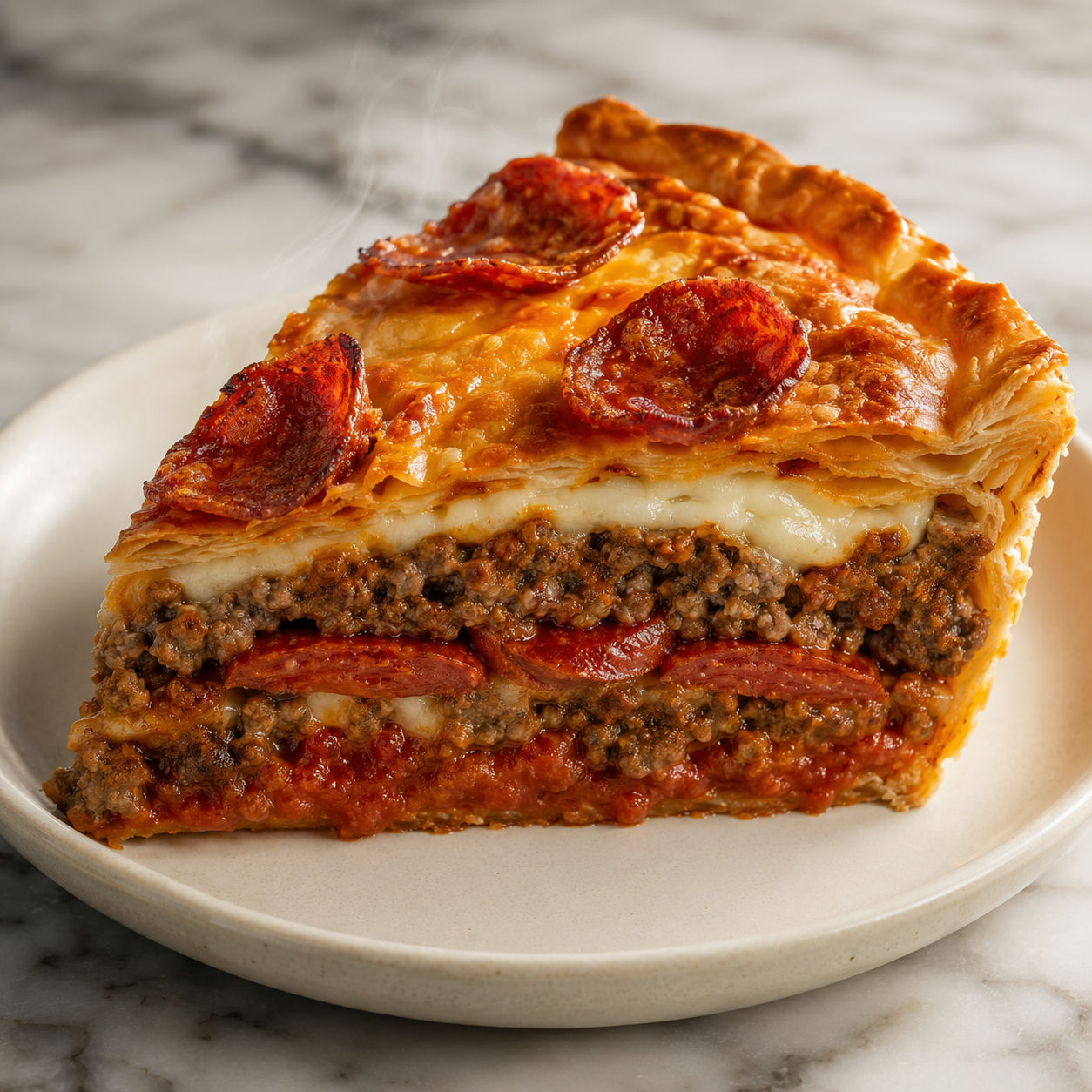
 Pin it
This is the kind of dish that gets requests every game day and potluck night. It has all the flavors of a loaded meat pizza but the heft and portability of a real pie you can cut into thick, satisfying wedges. One slice and people ask for the recipe.
The layering order is what makes it work. Mozzarella goes down first on the raw crust, which acts as a barrier between the juicy filling and the pastry. Then the meat, the pepperoni, the sauce, and more cheese on top. Nothing soggy, nothing falling apart when you cut it.
Start to finish it takes about 40 minutes, most of which is hands-off oven time. If you want something this satisfying on a weeknight, this is the recipe to have on hand.
Three meats, one killer filling
This pie keeps the ingredient list focused. Good pizza sauce carries a lot of the flavor here, so pick one you would eat on its own. The mozzarella and cheddar blend gives you stretch and sharpness in every bite.
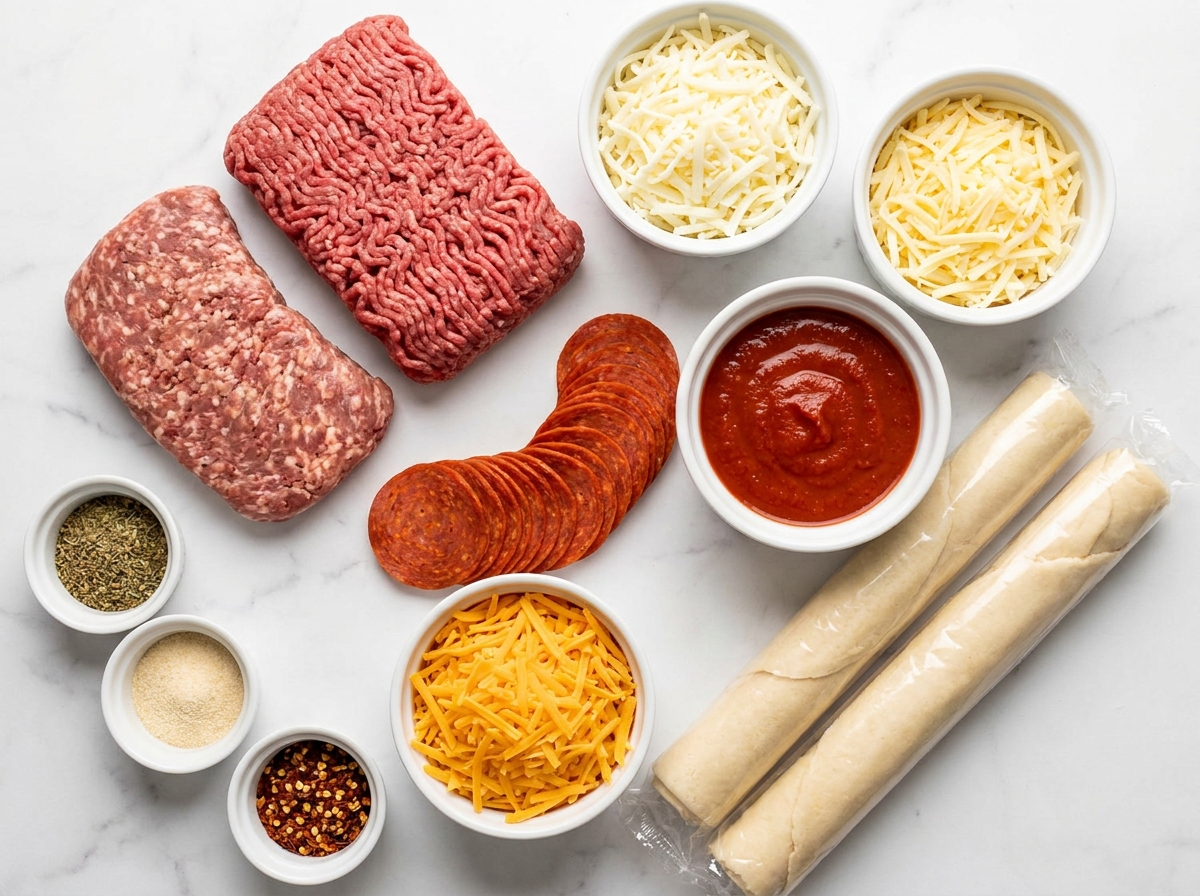
- Ground beef. The backbone of the filling. Use 80/20 for enough fat to stay juicy without going greasy.
- Italian sausage. Adds fennel and herb notes that ground beef alone cannot match.
- Pepperoni. Punchy and salty. Half goes inside the filling, half sits on top to crisp and curl in the oven.
- Pizza sauce. The binding flavor that ties all three meats together. A good jarred marinara works just as well as homemade.
- Mozzarella. Goes on first to protect the crust from the wet filling, then again on top for a melty finish.
- Cheddar or provolone. The second cheese brings sharpness and helps the top layer brown.
- Pie crusts. Two per pie, one for the base and one for the lid. Refrigerated deep-dish crusts bake up well here.
Layering it all together
- Preheat and chill the crust. Heat the oven to 425°F (220°C). Press one pie crust into a 9-inch deep-dish pie pan, pushing it up the sides. Return it to the fridge while you make the filling.
- Brown and drain the meats. Cook the ground beef and Italian sausage together in a large skillet over medium-high heat, breaking them up as they cook, until no pink remains, about 6 to 8 minutes. Drain off all the fat and season lightly with salt and pepper.
- Lay the cheese base. Scatter 1 cup of mozzarella evenly across the bottom of the cold crust. This layer seals the pastry and keeps it from going soggy once the filling goes in.
- Build the filling. Spread the drained meat evenly over the cheese. Arrange half the pepperoni over the meat. Pour the pizza sauce across everything, then dust with garlic powder, Italian seasoning, and red pepper flakes.
- Finish with cheese and pepperoni. Scatter the remaining mozzarella and all the cheddar over the sauce. Arrange the remaining pepperoni on top.
- Cap and bake. Drape the second pie crust over the filling, crimp the edges firmly to seal, and brush with egg wash. Cut 4 or 5 vents about an inch long. Bake for 22 to 25 minutes until the crust is deep golden and cheese is bubbling through the vents.
- Rest before slicing. Let the pie sit for 8 to 10 minutes. The filling firms up during that time and slices hold together cleanly on the plate.
Why cheese goes on first
The instinct is to put the meat in first, but that is what leads to a soggy bottom crust. When mozzarella hits the cold raw pastry, it melts into a near-watertight seal before the wet filling ever touches it. By the time the pie comes out of the oven, that bottom layer has fused with the crust into something sturdy enough to hold a clean wedge on a plate.
One detail that matters: the crust should be cold when you add that first cheese layer. A warm crust starts softening before it even reaches the oven and you lose the protective effect before it can set. Keep it in the fridge right up until you are ready to build.
If you enjoy this kind of layered savory construction, the Buttery Crust Stuffed Pepperoni Sausage Beef Pie takes it a step further with a fully stuffed crust edge loaded with filling.
Swaps that still taste great
The three-meat version is the one people keep coming back to, but the recipe is forgiving. Swap the ground beef for ground turkey and you get something leaner without losing the satisfying density of the filling. Hot Italian sausage instead of mild adds real heat throughout every bite.
For a bigger pepperoni punch, overlap the top layer so every slice gets a few crispy curled pieces. Want more pizza flavor and less sausage? Swap the cheddar for provolone and add a handful of sliced black olives or banana peppers between the meat and sauce layers. The pie holds its structure either way.
For a crustless option with the same flavor and none of the pastry carbs, the Keto Pepperoni Pizza Casserole covers that ground well.
Crust options that actually work
Refrigerated pie crusts are the practical choice and they bake up genuinely well. If you want to make your own, a basic shortcrust is straightforward: 2 cups flour, a half teaspoon of salt, 3/4 cup cold butter cut into small cubes, and 4 to 6 tablespoons of ice water. Work it just until the dough comes together, then rest it in the fridge for 30 minutes before rolling.
Homemade crust has more flavor and better flakiness, but it adds about 45 minutes to your prep. A third option worth knowing: crescent roll dough pressed into the pan gives the whole pie a softer, more pull-apart character and bakes in the same time. It is different from a classic pastry pie but very good in its own way.
Storing and reheating leftovers
Leftover slices keep well for up to 4 days wrapped tightly in the fridge. The best way to reheat them is in a 350°F oven for 12 to 15 minutes. The crust gets most of its crispness back and the filling heats through evenly. The microwave works in a pinch but turns the crust soft.
For freezing, wrap individual slices in foil after they have cooled completely. They keep for up to 2 months. Reheat from frozen at 350°F, covered in foil for the first 20 minutes and uncovered for another 10 to 15 so the crust crisps back up. When reheating, confirm the filling reaches 165°F, as the USDA safe temperature guidelines recommend that internal temperature for all reheated leftovers. The filling tastes richer on day two once the flavors have had time to settle.
For another meat-and-crust dinner that reheats just as well, the Deep Dish Hamburger Pie with Sausage and Pepperoni is the open-faced version worth keeping in rotation alongside this one.
FAQs
- Can I make this pie ahead of time?
Yes. Assemble the pie fully but leave it unbaked, cover tightly, and refrigerate for up to 24 hours. When you are ready to bake, add 3 to 5 minutes to the bake time since it goes in cold from the fridge.
- Do I need bulk sausage or can I use links?
Bulk Italian sausage is the easiest option since you just brown it directly in the pan. If you only have links, split the casings and squeeze the meat out before cooking. Mild or hot Italian sausage both work well here depending on how much heat you want in the filling.
- How do I keep the bottom crust from getting soggy?
The first thing you spread on the raw crust is cheese, not filling. That mozzarella layer melts and seals the pastry before the saucy meat goes in. Draining the browned meat thoroughly is the other key step. Any fat left in the pan will make the filling wet and the pastry soft.
- Can I freeze this pie?
Yes, baked or unbaked. Wrap it tightly in plastic wrap and foil and freeze for up to 2 months. Thaw overnight in the fridge, then reheat a baked pie in a 350°F oven for 20 to 25 minutes, covered for the first 15 minutes and then uncovered so the crust firms back up.
- What cheese combination works best?
Mozzarella for melt and stretch, cheddar or provolone for sharpness and depth. Provolone gives the pie a more Italian deli character while cheddar leans toward American comfort food. Both work, and you can use them in equal parts or adjust to your preference.
- Can I make this without a top crust?
Absolutely. Skip the second crust, pile the cheese and pepperoni higher, and bake at the same temperature for the same amount of time. It turns into something very close to a deep-dish meat pizza in a pie pan, which is a worthwhile dish on its own.
- What safe temperature should the ground meat reach during cooking?
The ground beef and sausage are fully cooked on the stovetop before they go into the pie, so they have already passed the safe mark. The USDA safe temperature guidelines recommend ground beef reach an internal temperature of 160°F during cooking to eliminate harmful bacteria.
