 Pin it
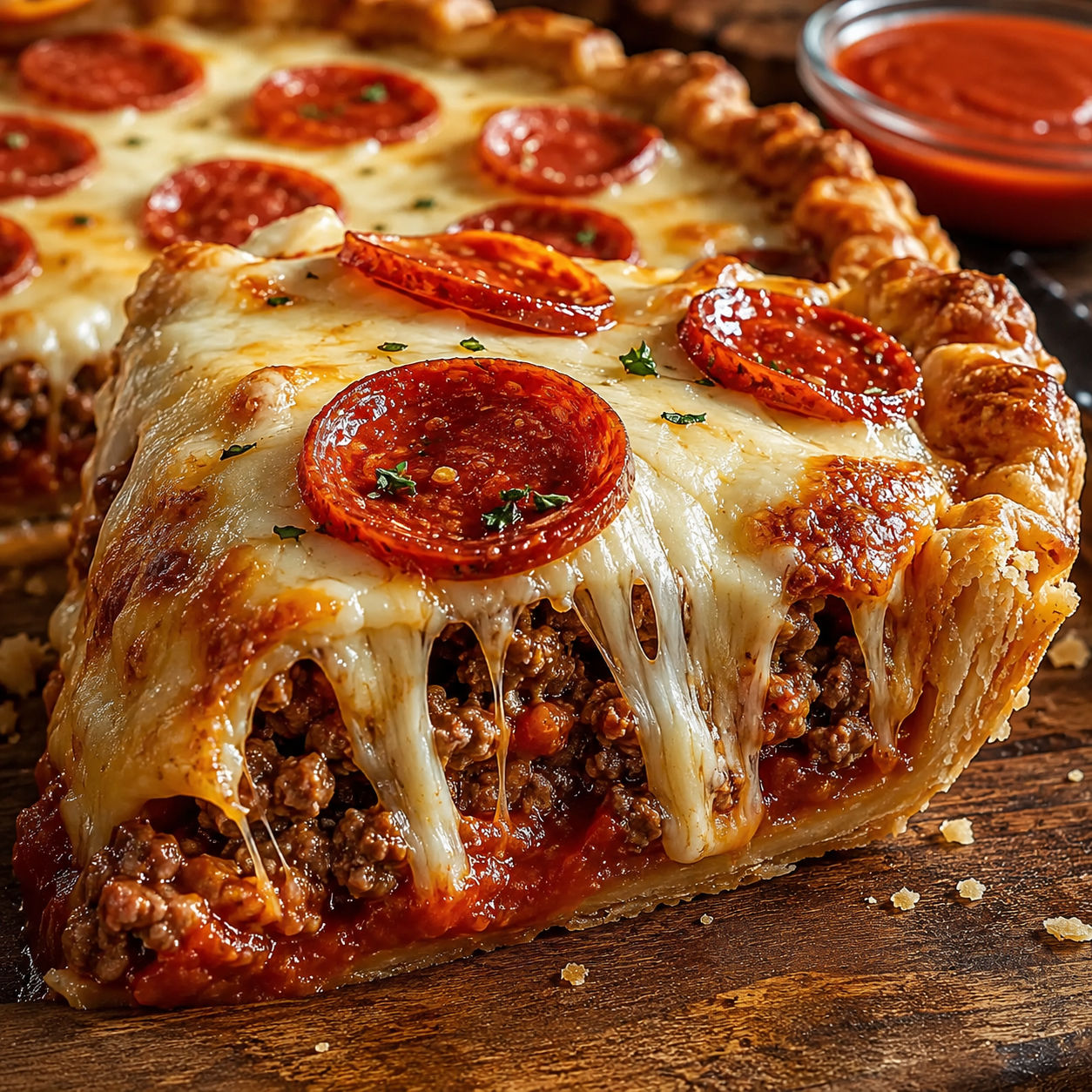
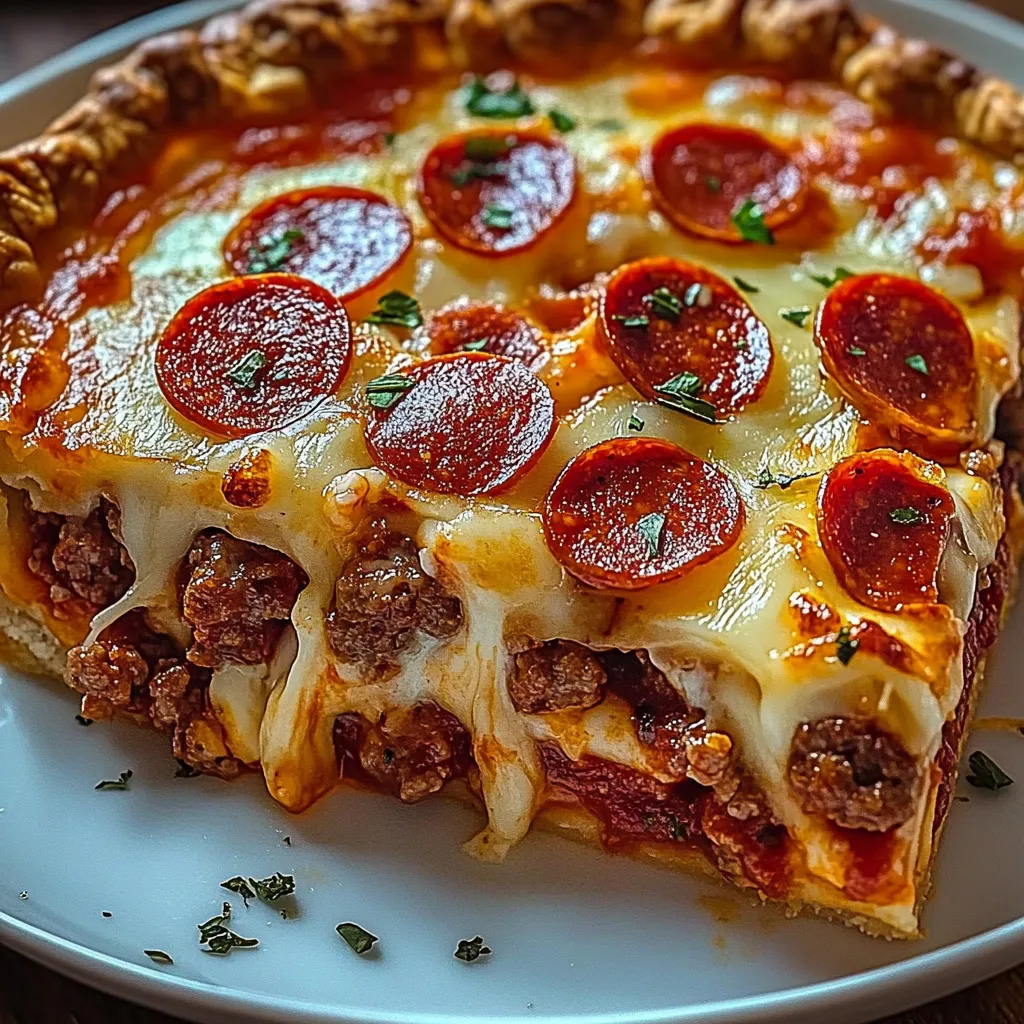
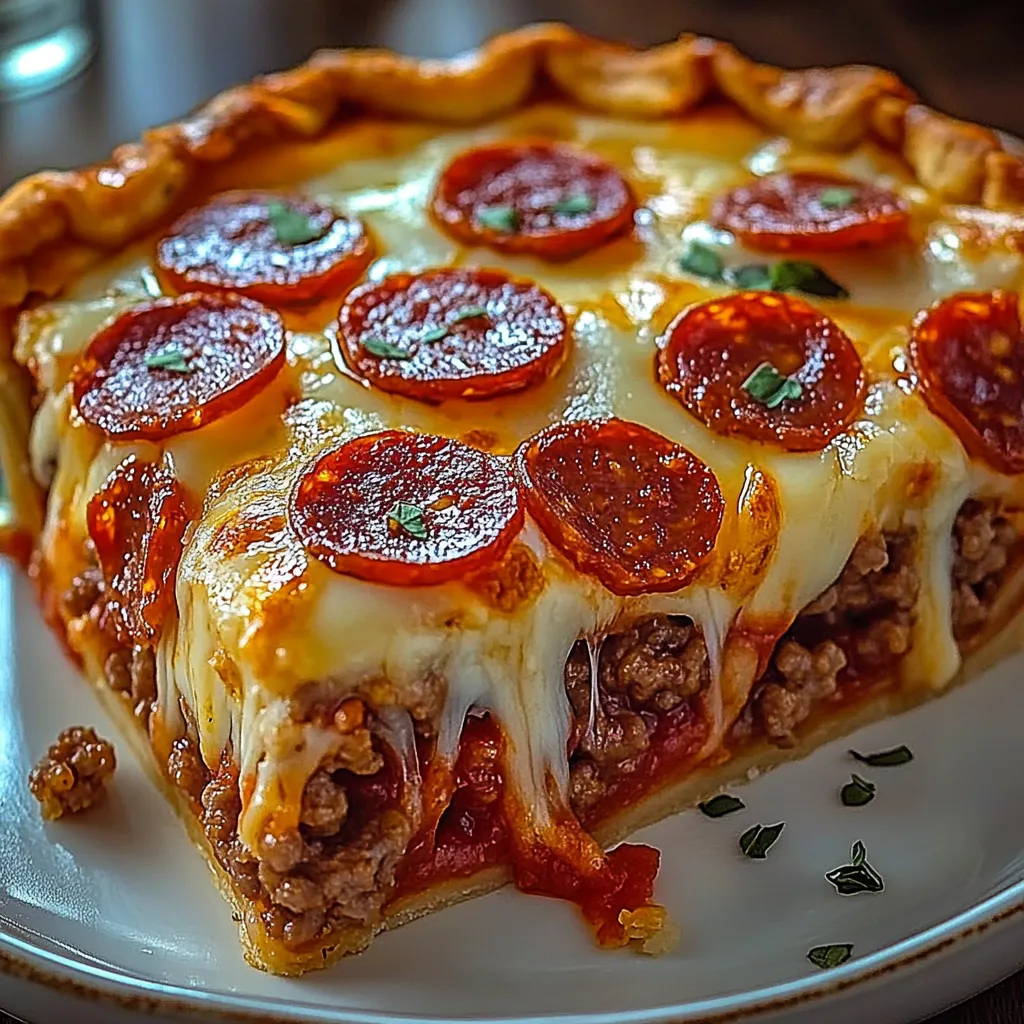
Buttery Crust Stuffed Pepperoni Sausage Beef Pie is what I make when pizza night needs to feed like dinner. It has the familiar pull of mozzarella, the salty snap of pepperoni, and a flaky crust that turns the whole thing into thick, sliceable comfort food.
The trick is not complicated. Cook the meats first, drain them well, and give the pie a short rest after baking. That keeps the bottom crust sturdy instead of oily.
Inside The Buttery Pie
This pie works best with a firm, buttery double crust and meats that have already been browned. Use whole-milk mozzarella if you can, and choose pepperoni with enough spice to stand up to the beef.
- Double pie crust. Holds the heavy filling and bakes into a flaky shell.
- Ground beef. Gives the pie its hearty base and meaty bite.
- Italian sausage. Adds fennel, garlic, and extra richness without needing many spices.
- Pepperoni. Brings smoky, salty pizza flavor and crisp edges near the top.
- Pizza sauce. Ties the filling together with tomato and herbs.
- Mozzarella. Melts into stretchy layers that help the slices hold.
- Provolone or cheddar. Adds sharper flavor and deeper color.
- Melted butter. Brushes over the top crust so it browns glossy and crisp.
Build The Stuffed Pie
- Brown the meats. Cook the beef and sausage in a skillet until no pink remains, then drain the fat well so the crust stays crisp.
- Line the pan. Press one crust into a deep 9-inch pie dish and let a little dough hang over the edge for sealing.
- Start with cheese. Scatter mozzarella across the bottom crust to create a barrier between the pastry and sauce.
- Layer the filling. Add the cooked meats, pepperoni, sauce, seasonings, and the remaining cheeses in even layers.
- Seal and vent. Lay the second crust on top, crimp the edges tightly, and cut a few small vents so steam can escape.
- Bake and rest. Brush with butter and bake until golden, then wait at least 10 minutes before slicing.
Why Draining Matters
The biggest mistake with a meat-filled crust pie is leaving too much fat in the skillet. Ground beef, sausage, pepperoni, and cheese all release oil as they bake. If the meat goes in wet, the bottom crust softens before it has a chance to brown.
After browning, tilt the pan and spoon off the fat, or pour the meat onto a paper towel-lined plate for a minute. The filling should look juicy, not shiny with oil. For food safety, cook ground meats thoroughly. The USDA safe temperature chart lists 160°F for ground beef and pork.
A Better Cheese Layer
Put part of the mozzarella directly on the bottom crust before the meat. It melts into a thin shield and helps keep the sauce from soaking the pastry. This is the same idea that makes stuffed crust pepperoni pizza taste rich without collapsing under the toppings.
For flavor, I like mozzarella plus provolone. Cheddar works if you want a sharper, cheeseburger-style bite. Avoid very watery fresh mozzarella here. It tastes lovely on pizza, but it can make a deep pie loose.
Getting The Crust Golden
Cold pastry bakes up flakier than warm pastry. Keep the top crust chilled while you build the filling, then brush it with melted butter right before baking. A few small vents in the center let steam escape, which helps the top stay crisp instead of ballooning.
If you are making your own dough, the King Arthur pie baking guide is a useful reference for chilling and handling crust. Store-bought crust is fine too. This is a big-flavor dinner pie, not a pastry exam.
Smart Filling Swaps
You can make this pie hotter with spicy sausage, crushed red pepper, or pepper jack. For a milder family version, use sweet Italian sausage and regular pizza sauce. If you want more vegetables, add cooked mushrooms, bell peppers, or onions, but cook off their moisture first.
The same beef and pepperoni combination shows up in pizza enchiladas pepperoni beef, while deep hamburger sausage pie leans more classic and less pizza-like. Use those ideas when you want the same comfort in a different shape.
Storage And Reheating
Let the pie cool before packing leftovers. Refrigerate slices in an airtight container for up to 4 days. The oven is the best way to bring back the crust, about 12-15 minutes at 350°F.
The microwave works when you are in a hurry, but the crust softens. For a crisper edge, reheat slices on a hot sheet pan or in an air fryer at 325°F until the cheese bubbles again.
Summary
This savory pie is rich, cheesy, and best served warm in thick wedges with something crisp on the side.
FAQs
- Can I use homemade pie crust?
Yes. Use enough dough for a double-crust 9-inch deep-dish pie. Keep the dough cold before assembly so the butter stays firm and the crust bakes flaky.
- How do I keep the bottom crust from getting soggy?
Drain the cooked beef and sausage very well. A layer of mozzarella on the bottom also helps shield the pastry from sauce and meat juices.
- Can I make this pie ahead?
You can cook the meat filling up to two days ahead and keep it chilled. Assemble the pie close to baking time so the crust does not absorb moisture in the fridge.
- What can I use instead of Italian sausage?
Use all ground beef, ground turkey, or mild chicken sausage. If the swap is lean, add a little olive oil and extra Italian seasoning so the filling still tastes full.
- What should I serve with pepperoni sausage beef pie?
A crisp green salad, roasted broccoli, or simple cucumber tomato salad cuts through the richness. Garlic bread is good too, but the pie is filling enough to stand alone.
- Can I freeze leftovers?
Yes. Wrap cooled slices tightly and freeze for up to two months. Reheat from thawed in a 350°F oven until hot in the center and crisp at the edges.
