 Pin it
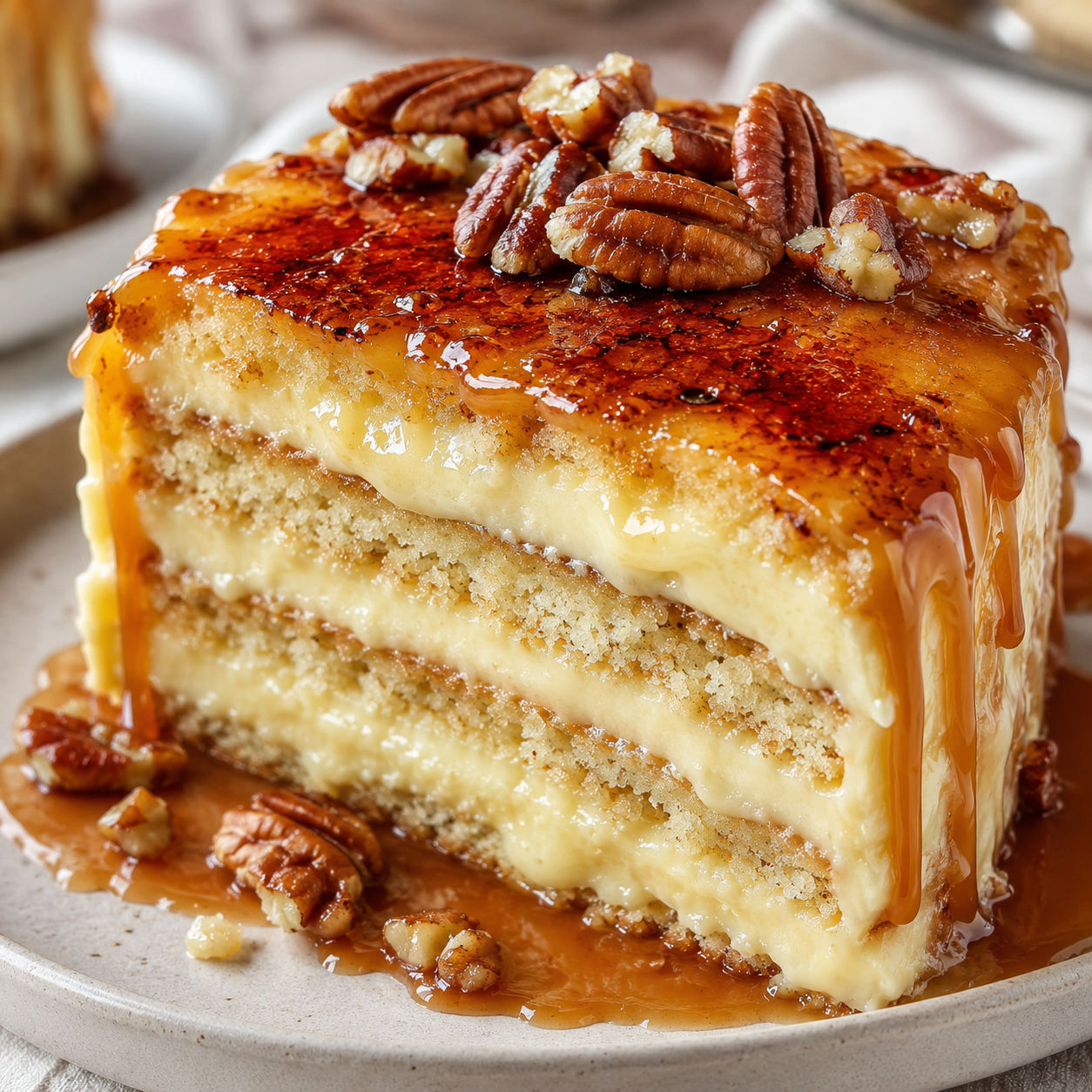
Silky Crème Brûlée Cake with Caramel and Pecans is the kind of dessert you make when a plain layer cake feels too quiet. The fork goes through crisp caramelized sugar, soft vanilla cake, thick custard cream, and buttery pecans.
The filling matters most here. It needs the flavor of crème brûlée, but enough body to sit between cake layers without sliding out. A cooked yolk custard with a little cornstarch gives you that smooth spoonable texture.
I like this best when the cake layers and custard are fully cold before assembly. Warm cake melts the filling and soft caramel runs everywhere. Cold parts stack neatly.
Vanilla, caramel, and toasted pecans
This cake leans on familiar baking staples, so freshness shows. Use good butter, fresh eggs, real vanilla, and pecans that smell sweet after toasting.
- All-purpose flour. Gives the cake layers enough structure to hold custard and caramel.
- Unsalted butter. Creams with sugar for a tender crumb and also enriches the caramel.
- Granulated sugar. Sweetens the cake, thickens the custard, builds the caramel, and creates the brûlée shell.
- Eggs and yolks. Whole eggs set the cake while yolks make the filling rich and silky.
- Whole milk and heavy cream. Keep the cake moist and make the custard taste like crème brûlée.
- Cornstarch. Helps the custard hold as a cake filling without turning stiff.
- Vanilla. Gives the cake and custard their warm crème brûlée flavor.
- Pecans. Add buttery crunch between the creamy layers.
- Salt. Keeps the caramel and custard from tasting flat.
Build the layers cleanly
- Bake the cakes. Cream the butter and sugar until pale, add eggs and vanilla, then alternate dry ingredients with milk. Bake until the centers spring back.
- Cook the custard. Whisk yolks, sugar, cornstarch, and salt, then temper with hot milk and cream. Cook until thick and glossy.
- Toast the pecans. Warm them in the oven until fragrant, then chop them so every slice gets a little crunch.
- Make the caramel. Melt sugar to amber, whisk in butter, then add warm cream slowly. Let it cool until thick but pourable.
- Stack the cake. Layer cake, custard, pecans, and caramel. Keep the filling inside the edge so it does not bulge.
- Brûlée the top. Spread a thin custard layer over the top, sprinkle with sugar, and torch until glassy.
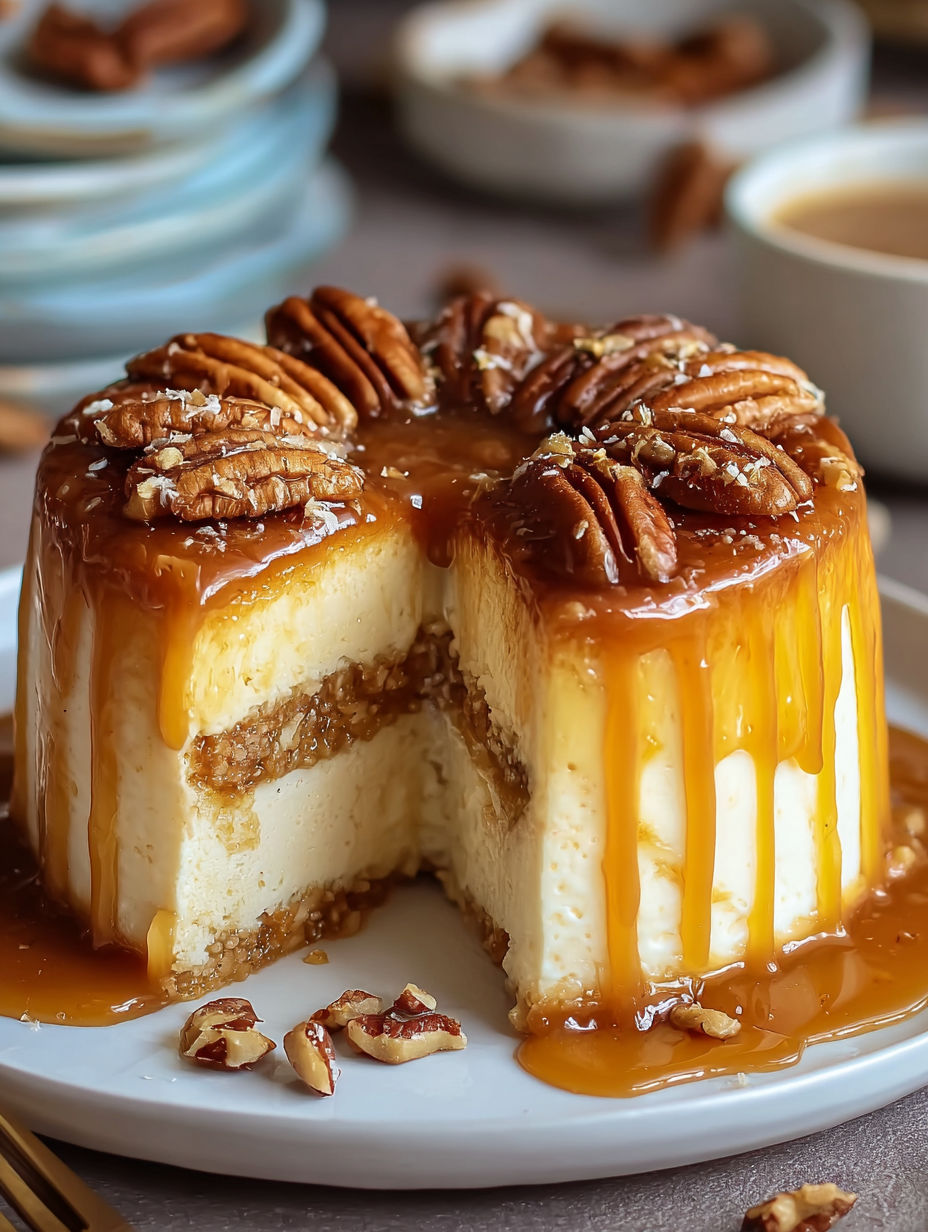
Silky crème brûlée cake details
The custard should be thicker than a sauce but softer than buttercream. When it is ready, a whisk leaves lines that hold for a second before relaxing. If you have made pudding, that is the texture you want. Straining it is worth the extra bowl because it catches any tiny bits of cooked egg and leaves the filling smooth.
This version is richer than a standard vanilla layer cake but still slices like cake. For another caramel-forward dessert on the site, the Crème Brûlée Caramel Pecan Cake follows the same flavor family, while Caramel Cream Cheese Pound Cake is sturdier and less fussy.
Torching without scorching the top
Use a thin, even coat of superfine sugar if you have it. Regular granulated sugar works, but rub it lightly between your fingers to break up clumps before sprinkling. Move the torch in small circles and keep it a few inches above the surface. You want amber glass, not black spots.
If you use the broiler, chill the assembled cake first and place it on the upper rack for a very short blast. Watch the whole time. Egg-based fillings should be handled carefully, and FoodSafety.gov lists 160°F as the safe temperature for egg dishes in its minimum temperature chart.
Caramel that pours neatly
Caramel is easiest when everything is measured before the sugar melts. Use a heavy pan and warm the cream slightly so it does not seize as aggressively when it hits the hot sugar. The mixture will bubble hard, so add the cream slowly and whisk with care.
Let the caramel cool until it drips slowly from a spoon. If it is hot and loose, it will run down the cake and pool on the plate. If it gets too thick, warm it in short bursts until glossy again. The same caramel-pecan mood shows up in Salted Caramel Kentucky Butter Cake and Butter Pecan Praline Poke Cake.
Make-ahead plan
This cake is easier when you break it into parts. Bake the layers the night before, wrap them well, and keep them at room temperature if your kitchen is cool. The custard can chill overnight with plastic wrap pressed against the surface. Caramel can also be made ahead and refrigerated.
On serving day, bring the caramel back to a pourable texture, stack the cake, and let it chill for at least 1 hour. That rest firms the layers and helps the slices stand tall. King Arthur Baking has useful basics on mixing, measuring, and cake structure in its baking guide section.
Clean slices and servings
Use a long thin knife and wipe it between cuts. If the caramel is sticking, dip the knife in hot water and dry it before slicing. Serve small wedges because this cake is rich. Coffee, black tea, or a bowl of tart berries all help balance the sweetness.
For a dessert table, pair it with something fruitier like Fruit Pound Cake with Strawberries and Pineapple. The contrast keeps the caramel and custard from feeling too heavy.
FAQs
- Can I make Silky Crème Brûlée Cake with Caramel and Pecans ahead?
Yes. Bake the cake layers and make the custard one day ahead. Assemble the cake several hours before serving, then torch the sugar topping shortly before you bring it to the table.
- Can I use store-bought caramel sauce?
You can use a thick, good-quality caramel sauce if you are short on time. Warm it just until pourable, then let it cool slightly so it does not melt the custard layer.
- What can I use instead of pecans?
Toasted walnuts are the closest swap because they have a similar rich bite. Hazelnuts also work, but chop them finely so the cake slices cleanly.
- Do I need a kitchen torch?
A torch gives the neatest brûlée top because you can control the heat. A broiler can work, but keep the cake very cold and watch it closely because the sugar can burn fast.
- Why is my custard filling loose?
It was likely undercooked or not chilled long enough. Cook it until it bubbles gently and thickens like pudding, then chill until cold before spreading it between the layers.
- How should I store leftovers?
Cover the cake and refrigerate it for up to 3 days. The sugar crust softens over time, so the texture is best on the day it is torched.
