 Pin it
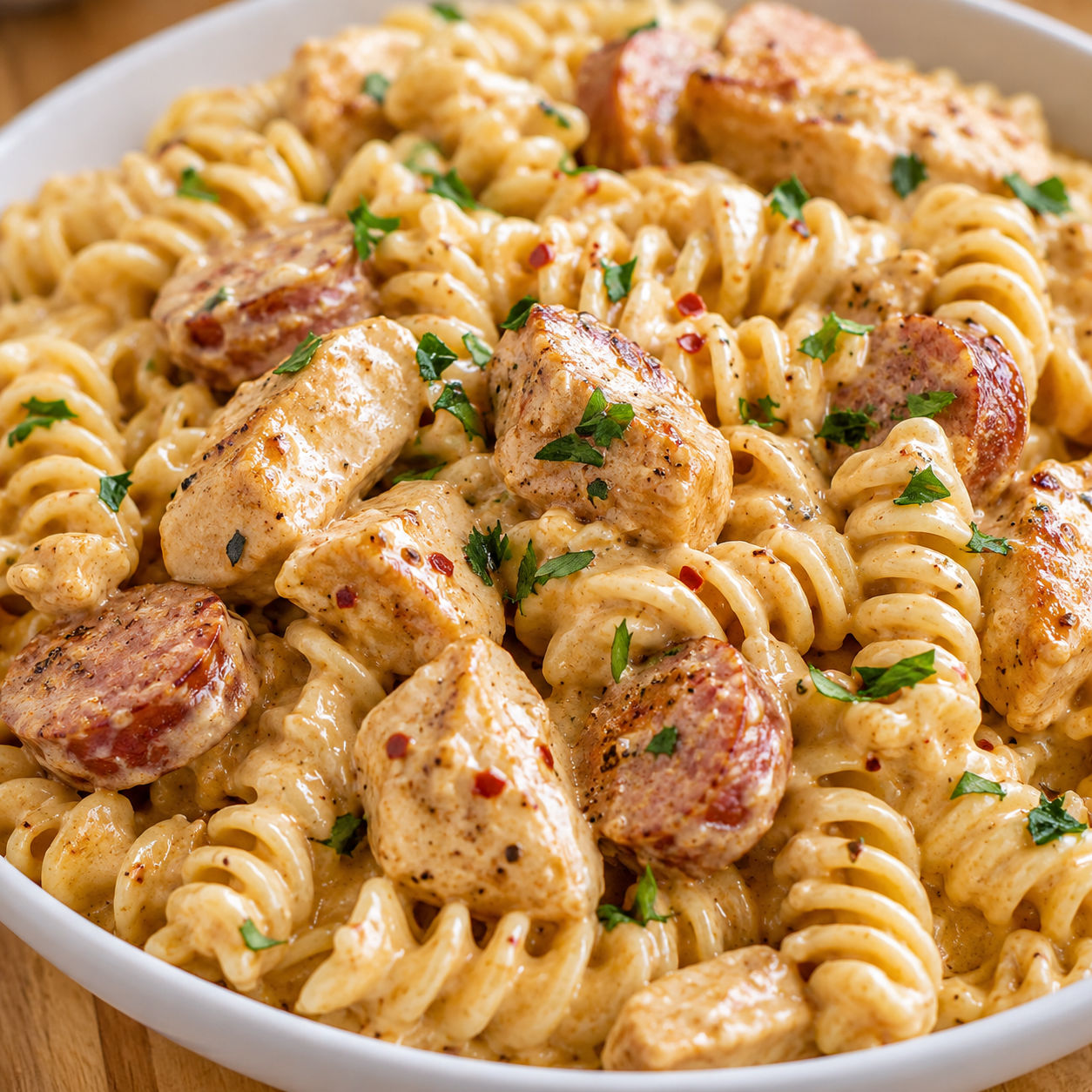
Creamy Pepper Jack Pasta with Chicken & Sausage is the kind of skillet dinner that feels big and cozy without asking much from you. The sausage gives the sauce a smoky base, the chicken makes it hearty, and pepper jack melts into a gentle kick that stays creamy.
I like this with rotini or penne because the sauce gets into every ridge and hollow. Keep the heat low once the cheese goes in and the sauce stays smooth instead of grainy.
What Makes It Creamy
The best version starts with smoky sausage, plain chicken breast, and a cheese that melts with a little peppery heat. Shred the pepper jack yourself if you can, because it blends into the cream faster and gives the sauce a cleaner texture.
- Chicken sausage. Adds smoke, salt, and browned edges that season the sauce from the start.
- Chicken breast. Makes the pasta filling and soaks up the garlic, onion, and seasoning.
- Short pasta. Rotini, penne, or cavatappi grab the creamy sauce better than thin noodles.
- Chicken broth. Loosens the sauce and lifts the browned bits from the skillet.
- Heavy cream. Gives the sauce body so the cheese melts into something silky.
- Pepper jack cheese. Brings the creamy melt and mild chile heat that defines the dish.
- Parmesan cheese. Adds salty depth and helps the sauce cling to the pasta.
- Onion and garlic. Build a savory base before the liquids go in.
- Italian seasoning. Adds a simple herb note that keeps the cream sauce from tasting flat.
- Parsley. Freshens the rich skillet right before serving.
Build The Skillet Sauce
- Boil the pasta. Cook the pasta in well-salted water until just shy of al dente. Save 1/2 cup of the pasta water, then drain.
- Brown the sausage. Sear sliced chicken sausage in olive oil until the cut sides are deep golden. Move it to a plate.
- Cook the chicken. Add diced chicken, onion, garlic, Italian seasoning, salt, and pepper to the same skillet. Cook until the chicken reaches 165°F and the onion softens.
- Simmer the base. Return the sausage to the pan. Stir in chicken broth and heavy cream, scraping the browned bits from the bottom.
- Melt the cheeses. Lower the heat and stir in pepper jack a handful at a time. Add Parmesan and stir until the sauce looks smooth.
- Toss and rest. Add the pasta and toss until coated. Use a splash of pasta water if needed, then let it sit off the heat for 2 minutes before adding parsley.
Keep The Cheese Smooth
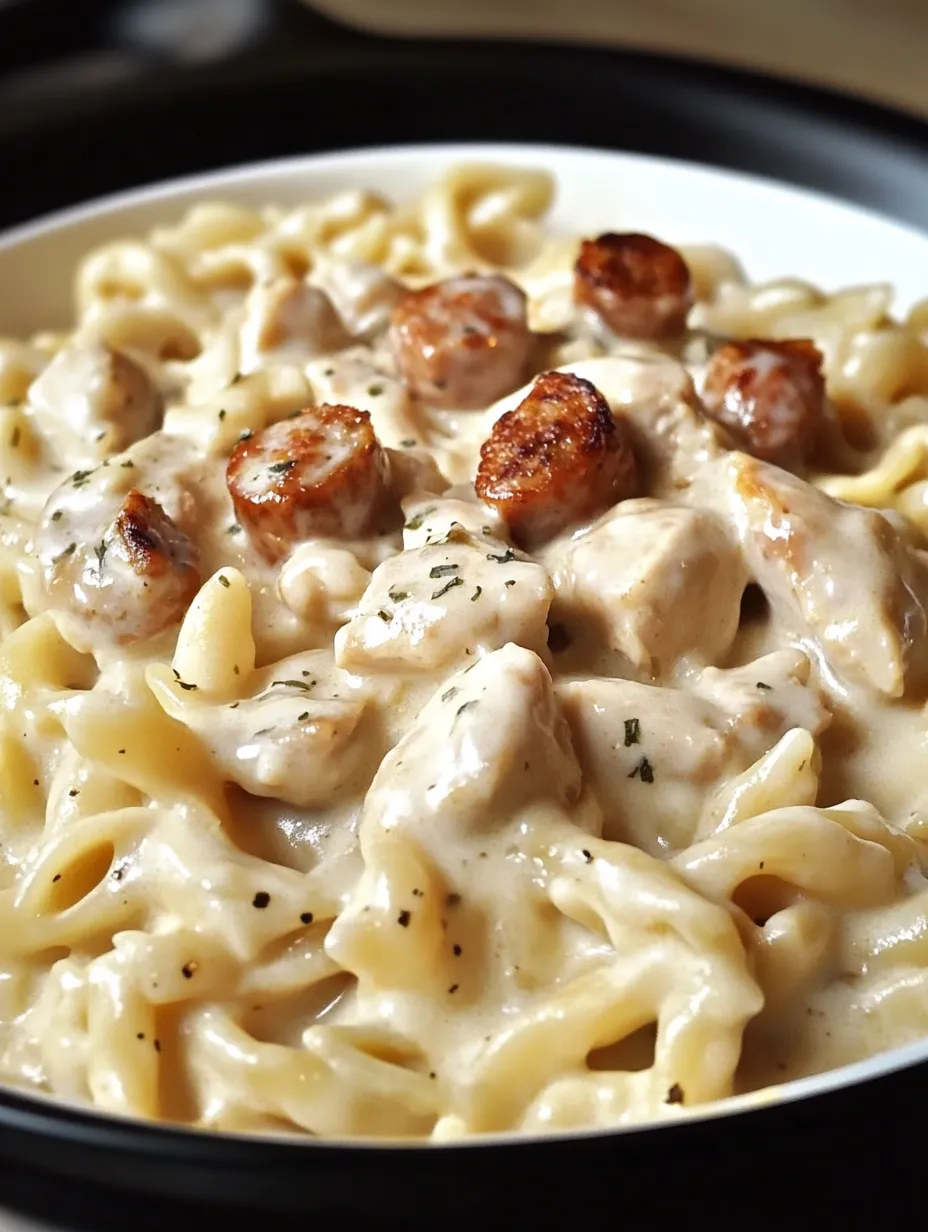
Pepper jack melts well, but it still needs gentle heat. If the cream is bubbling hard when the cheese goes in, the fat can separate and the sauce may look rough. Pull the skillet to low heat, add the cheese slowly, and stir until each handful melts before adding more.
Freshly shredded cheese makes a real difference here. Bagged shredded cheese is convenient, but the coating that keeps it from clumping can make a cream sauce feel dusty. If you love saucy skillet pasta, the same low-heat cheese method helps with creamy Cajun chicken and sausage Alfredo and creamy garlic chicken penne.
Brown First, Then Simmer
The browned sausage is not just for looks. Those caramelized edges leave flavor in the skillet, and the broth pulls it into the sauce. Give the slices space in the pan so they brown instead of steaming.
The chicken should be cut into small, even pieces so it cooks fast and stays tender. The USDA lists 165°F as the safe internal temperature for poultry, which you can confirm in the USDA safe temperature chart. Once the chicken is cooked through, stop pushing the heat. The sauce stage is about melting and coating, not reducing hard.
Easy Swaps That Fit
Use smoked turkey sausage, andouille, kielbasa, or mild Italian sausage. Each changes the mood a little. Andouille makes it bolder and closer to one-pot creamy Cajun chicken pasta. Mild chicken sausage keeps it family-friendly.
For vegetables, add sliced bell peppers with the onion, mushrooms after the chicken starts browning, or a few handfuls of spinach at the very end. If you want more heat, add diced jalapeño with the garlic or finish with red pepper flakes. For a milder skillet, use Monterey Jack and a small spoonful of cream cheese for body.
Serving The Skillet
This pasta is rich, so I like a crisp side rather than another heavy dish. A green salad, roasted broccoli, or simple garlic bread all work. If you want to keep dinner in the same comfort lane, pair it with something lighter than sausage pepper pasta, since both dishes lean smoky and hearty.
Let the skillet sit for a couple of minutes before serving. The sauce tightens slightly and clings better to the pasta. Finish with parsley while it is still hot so the color stays bright.
Leftovers Without Dry Pasta
Store leftovers in an airtight container in the fridge for up to 4 days. The pasta will absorb sauce as it sits, so add a splash of milk, cream, or broth before reheating. Warm it slowly in a skillet and stir often.
The microwave works for lunch portions. Heat in short bursts and stir between each one. Freezing is possible, but cream sauces can separate after thawing. If you freeze it, reheat gently and stir in a small handful of fresh cheese to bring the sauce back together.
Summary
This creamy chicken and sausage pasta is rich, lightly spicy, and built for busy nights. Freshly shredded pepper jack, a little Parmesan, and a splash of pasta water make the sauce glossy and easy to toss.
FAQs
- What pasta shape works best for pepper jack chicken and sausage pasta?
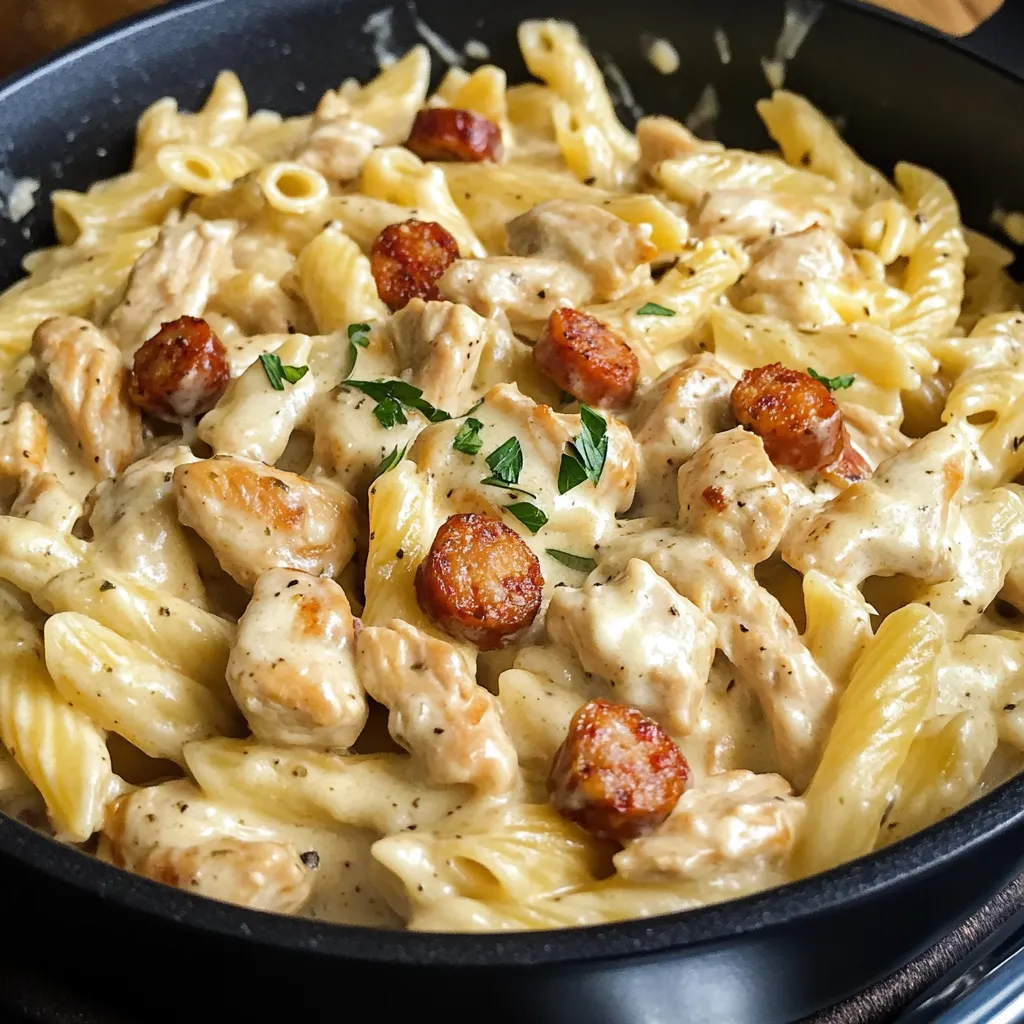
Short pasta works best because it catches the thick sauce. Penne, rotini, cavatappi, shells, and bow ties all hold up well. Cook it just shy of al dente so it can finish in the skillet without getting soft.
- Can I use a different cheese instead of pepper jack?
Yes. Monterey Jack gives you the same smooth melt with less heat. You can also use half Monterey Jack and half cheddar, then add a pinch of red pepper flakes or diced jalapeño if you still want a little spice.
- How spicy is this pasta?
It is mild to medium, depending on your pepper jack and sausage. For a softer heat, use mild chicken sausage and skip red pepper flakes. For more bite, use andouille or spicy Italian sausage.
- Can I make it ahead?
You can cook the chicken and sausage a day ahead and refrigerate them. For the best texture, cook the pasta and melt the cheese sauce right before serving. Fully cooked leftovers still reheat well with a splash of milk or broth.
- Why did my cheese sauce turn grainy?
The sauce likely got too hot or the cheese was added too fast. Lower the heat before stirring in the cheese and add it by handfuls. Freshly shredded cheese melts smoother than bagged shredded cheese.
- Can I add vegetables to this pasta?
Yes. Bell peppers, spinach, mushrooms, broccoli, or peas all work. Cook firm vegetables with the onion, then stir in spinach at the end so it wilts without turning dull.
