 Pin it
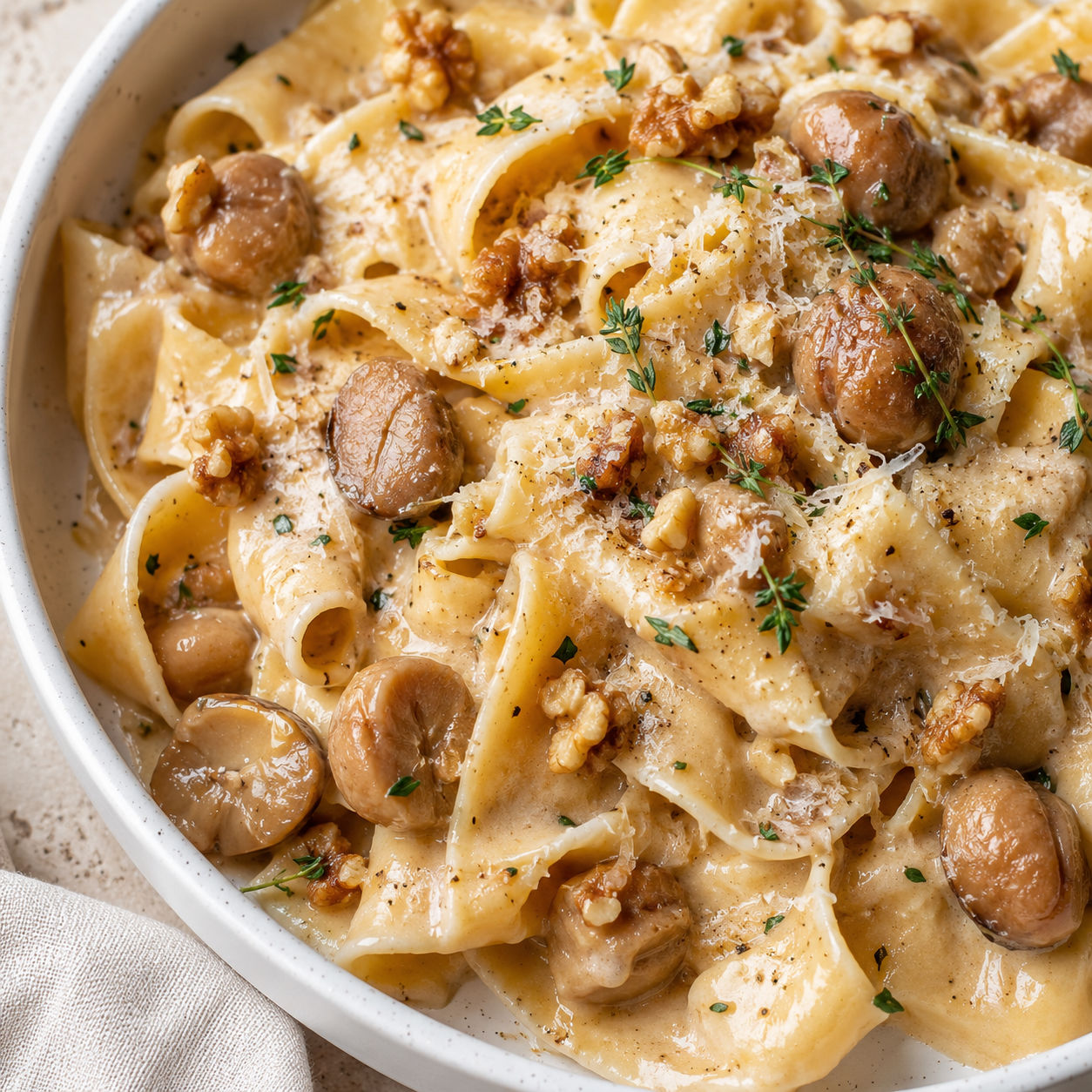
Creamy Chestnut Pasta with Parmesan, Garlic, and Thyme is the kind of dinner that feels tucked away in a small Italian restaurant, but it is very doable on a weeknight. Cooked chestnuts give the sauce a soft sweetness and a thick, velvety body without needing a long simmer.
I like this most with pappardelle or fettuccine because the wide ribbons catch little bits of chestnut and thyme. The garlic stays mellow, the Parmesan brings salt and depth, and a spoonful of pasta water pulls everything together.
Chestnut Pasta Building Blocks
The sauce works best when the chestnuts are already cooked and soft. Vacuum-packed roasted chestnuts are steady and convenient, but jarred chestnuts also work if you drain them well.
Use freshly grated Parmesan if you can. It melts more smoothly than the shelf-stable grated kind and gives the sauce a cleaner savory finish.
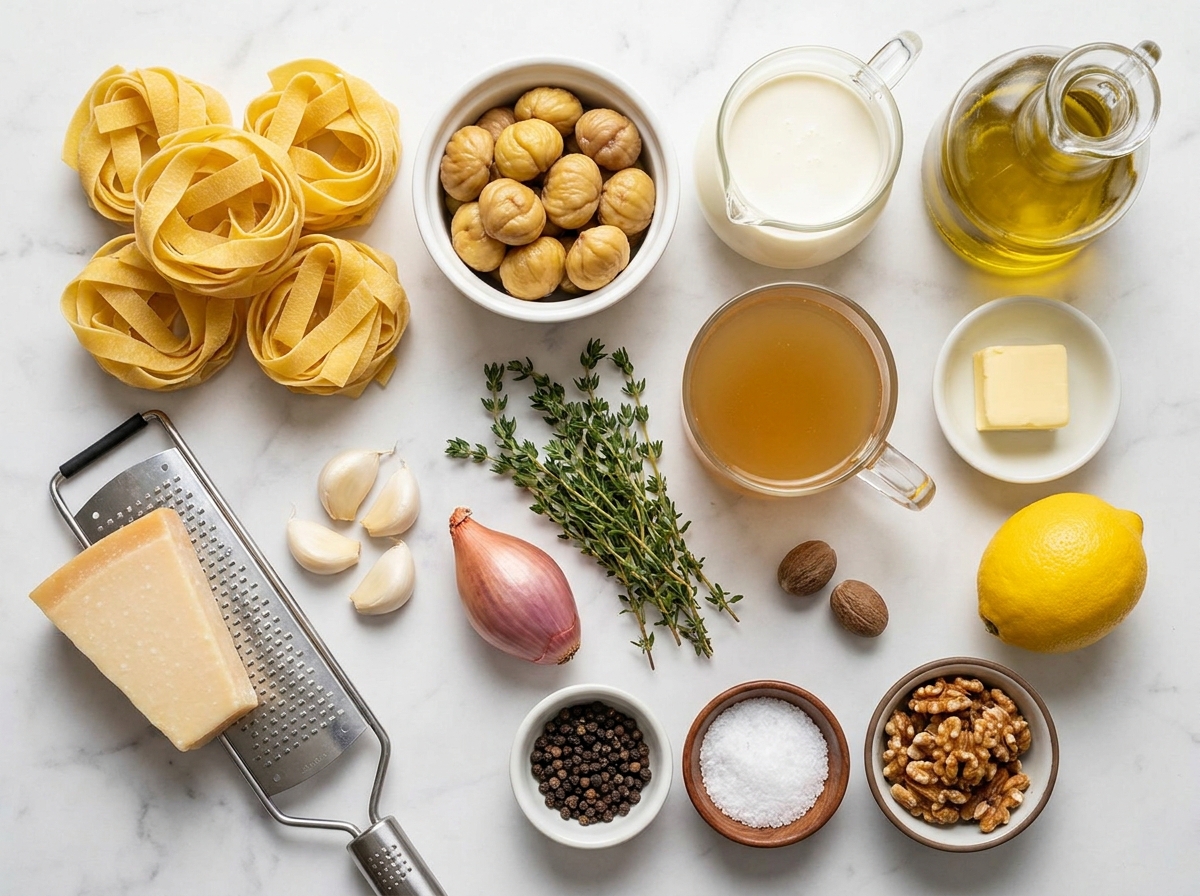
- Wide pasta. Pappardelle or fettuccine gives the creamy chestnut sauce plenty of surface to cling to.
- Cooked chestnuts. They add gentle sweetness, nutty flavor, and body to the sauce.
- Butter and olive oil. The mix softens the aromatics and keeps the butter from browning too fast.
- Shallot. It brings a mild sweetness that fits the chestnuts better than a sharp onion.
- Garlic. It adds warmth and keeps the sauce from tasting flat.
- Fresh thyme. The leaves cut through the cream with a woodsy, clean aroma.
- Heavy cream and broth. Cream makes the sauce silky, while broth loosens it and adds savory depth.
- Parmesan. Freshly grated cheese seasons the sauce and helps it cling to the noodles.
- Lemon zest. A small amount brightens the finish without making the pasta taste lemony.
- Toasted walnuts. They add crunch and echo the nutty chestnut flavor.
Cook It Until Glossy
- Boil the pasta. Cook the pasta in well-salted water until just shy of al dente. Save 1 cup of the starchy water before draining.
- Soften the aromatics. Warm butter and olive oil in a wide skillet. Cook the shallot with a pinch of salt until soft, then add garlic and thyme for the last minute.
- Warm the chestnuts. Stir in the chopped chestnuts and let them toast gently. Mash a few pieces with the spoon so they thicken the sauce later.
- Simmer the sauce. Add broth and cream. Let it bubble gently until slightly thickened, then stir in Parmesan, black pepper, and lemon zest.
- Toss the pasta. Add the drained pasta to the skillet. Toss with splashes of pasta water until the sauce looks loose and shiny.
- Finish and serve. Taste for salt, spoon into warm bowls, and top with more Parmesan, thyme, and toasted walnuts.
The Chestnut Sauce Texture
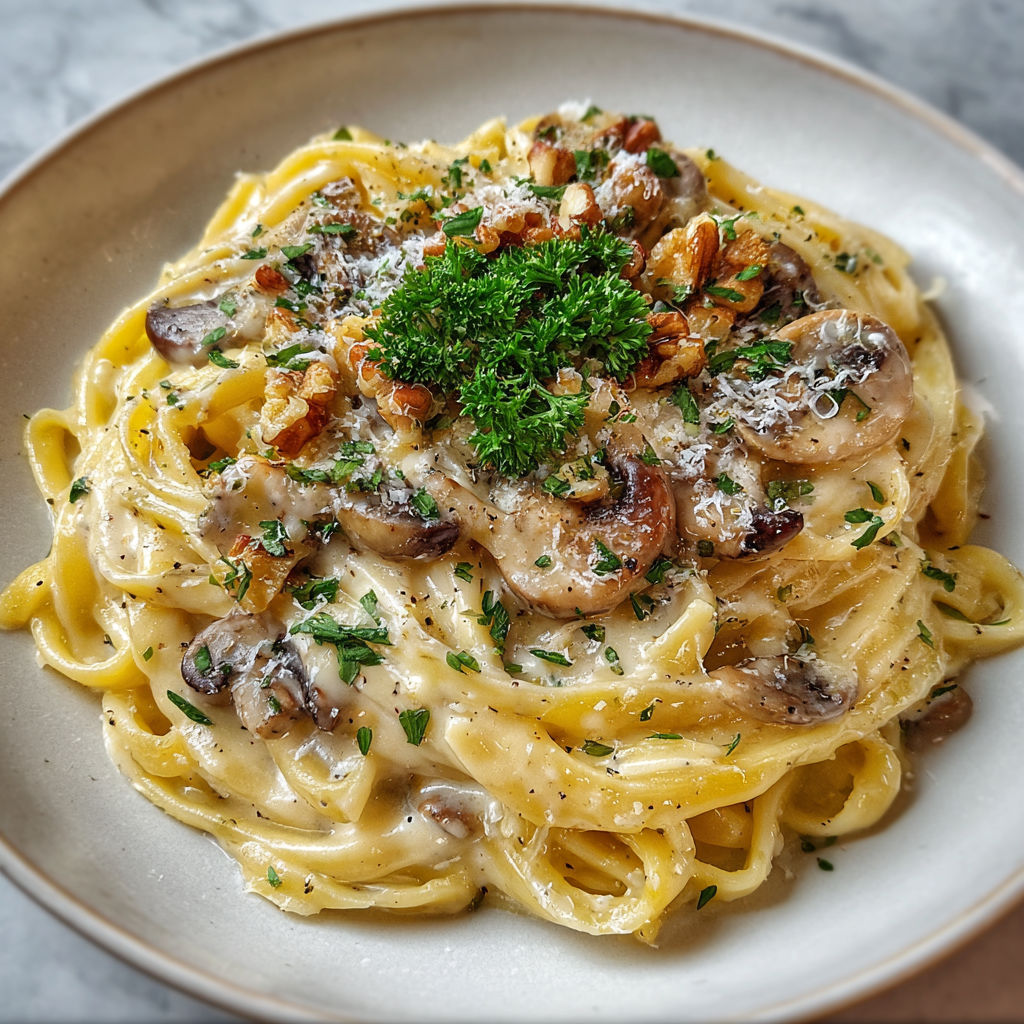
Chestnuts are starchy, so they thicken cream in a different way than cheese does. If every piece stays whole, the sauce tastes good but can feel separate from the pasta. Mash a quarter of the chestnuts against the side of the skillet while they warm. Those soft bits melt into the cream and make the sauce feel fuller.
Do not boil the cream hard once the Parmesan goes in. Keep the heat low and stir until the cheese melts. If you love garlic-forward creamy pasta, the same gentle heat helps in Garlic Parmesan Pasta and Creamy Pesto Pasta with Parmesan and Basil.
Smart Swaps For Chestnuts
If you only have whole roasted chestnuts from the shell, peel away every bit of papery skin before chopping. Any tough skin left behind tastes bitter. No shallot in the drawer? Use 1/4 cup finely chopped yellow onion and cook it slowly until sweet.
For a deeper winter version, add browned cremini mushrooms or a small handful of chopped sage. For a lighter plate, use half-and-half and add more pasta water at the end. The USDA FoodData Central database is a useful place to compare ingredients like chestnuts and dairy if you track nutrition, and you can find it at USDA FoodData Central.
What Usually Goes Wrong
The main mistake is draining the pasta too well and losing all the cooking water. Plain water will loosen the sauce, but it will not help the cream and Parmesan cling in the same way. Scoop out the pasta water before you drain, even if you think you will not need it.
The second mistake is over-salting early. Parmesan, broth, and pasta water all bring salt. Season the shallot lightly, then adjust at the end after the sauce has reduced and the cheese has melted.
Storage And Reheating
Creamy chestnut pasta is best right after tossing, when the sauce is glossy and loose. Leftovers still taste good, but the chestnuts and noodles soak up liquid in the fridge. Store them in an airtight container for up to 3 days.
Reheat gently in a skillet with a splash of milk, cream, or broth. Stir often and stop as soon as the pasta is hot. For general leftover timing and cooling advice, the USDA leftovers guide is a reliable reference.
How To Serve It
This pasta is rich, so keep the sides crisp or green. A lemony salad, roasted asparagus, or garlicky vegetables make the bowl feel balanced. For a related meatless side, Garlic Cauliflower and Mushrooms with Parsley and Parmesan fits the same cozy flavor family.
If you are planning a pasta night, serve smaller portions beside Creamy Chestnut Pasta with Garlic for a chestnut-focused menu, or add roasted mushrooms and a sharper salad to keep the meal from feeling too heavy.
Summary
Serve this creamy chestnut pasta right away with extra Parmesan, black pepper, and a crisp green salad. Leftovers reheat best in a skillet with a splash of broth or milk.
FAQs
- Can I use vacuum-packed cooked chestnuts?
Yes. Vacuum-packed cooked chestnuts are the easiest choice here because they are peeled, tender, and consistent. Break up any large pieces with your fingers before adding them to the skillet.
- What pasta shape works best with chestnut cream sauce?
Pappardelle, fettuccine, tagliatelle, and mafaldine all work well because wide noodles hold the thick sauce. Short ridged pasta like rigatoni is fine too, especially if you want a fork-friendly version.
- Can I make this chestnut pasta without heavy cream?
You can use half-and-half for a lighter sauce, but simmer it gently so it does not split. For a dairy-free version, use oat cream or cashew cream, olive oil instead of butter, and a dairy-free Parmesan-style cheese.
- How do I keep the sauce from getting too thick?
Reserve pasta water before draining the noodles. Add it a few tablespoons at a time while tossing, and stop when the sauce coats the pasta in a loose, glossy layer.
- Can I make creamy chestnut pasta ahead?
The sauce can be made one day ahead and chilled. Rewarm it gently with a splash of broth, then toss with freshly cooked pasta for the best texture.
- What can I serve with this pasta?
A bitter green salad, roasted broccolini, or garlicky mushrooms balances the richness. If you want a bigger meal, serve smaller portions beside roasted chicken or pork.
- Can I add mushrooms to this recipe?
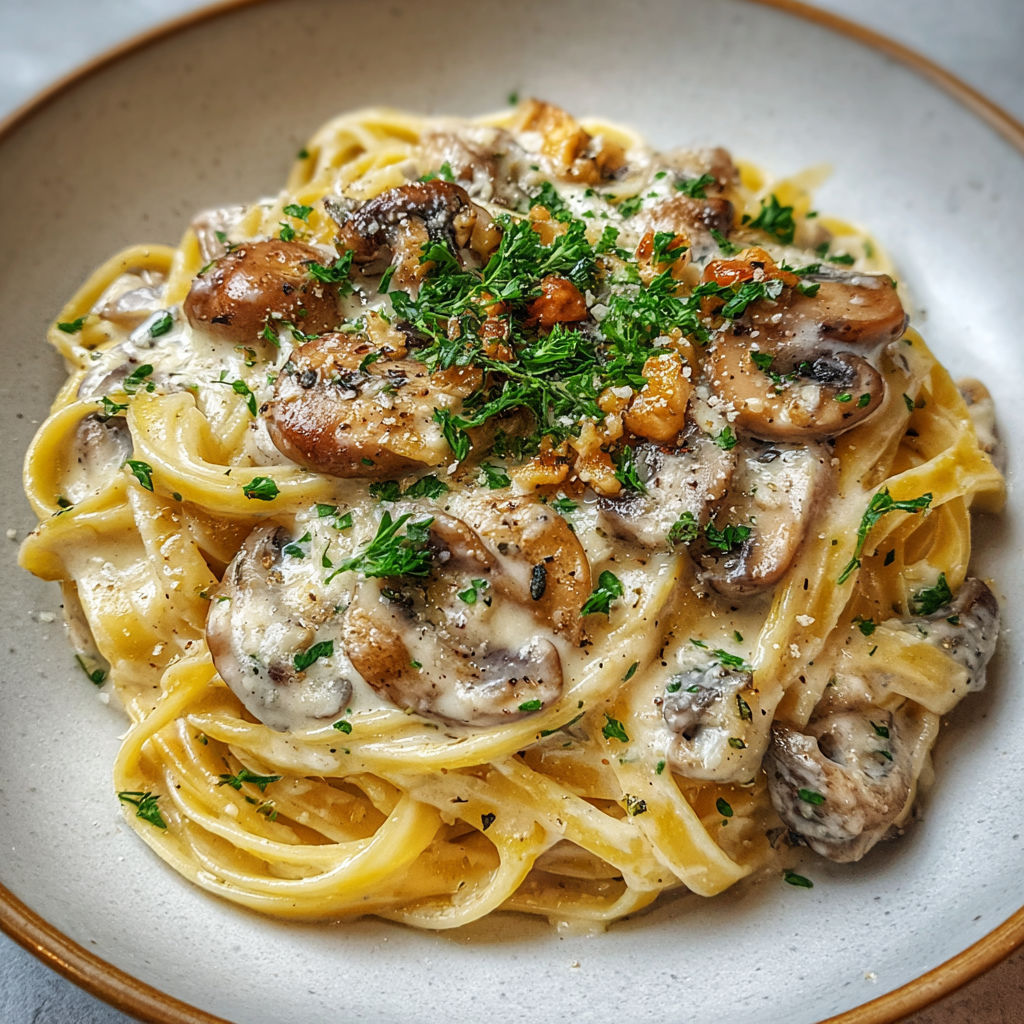
Yes. Brown 8 ounces of sliced cremini mushrooms before the onion and garlic, then move them to a plate and add them back with the pasta. They make the dish earthier and less sweet.
