 Pin it
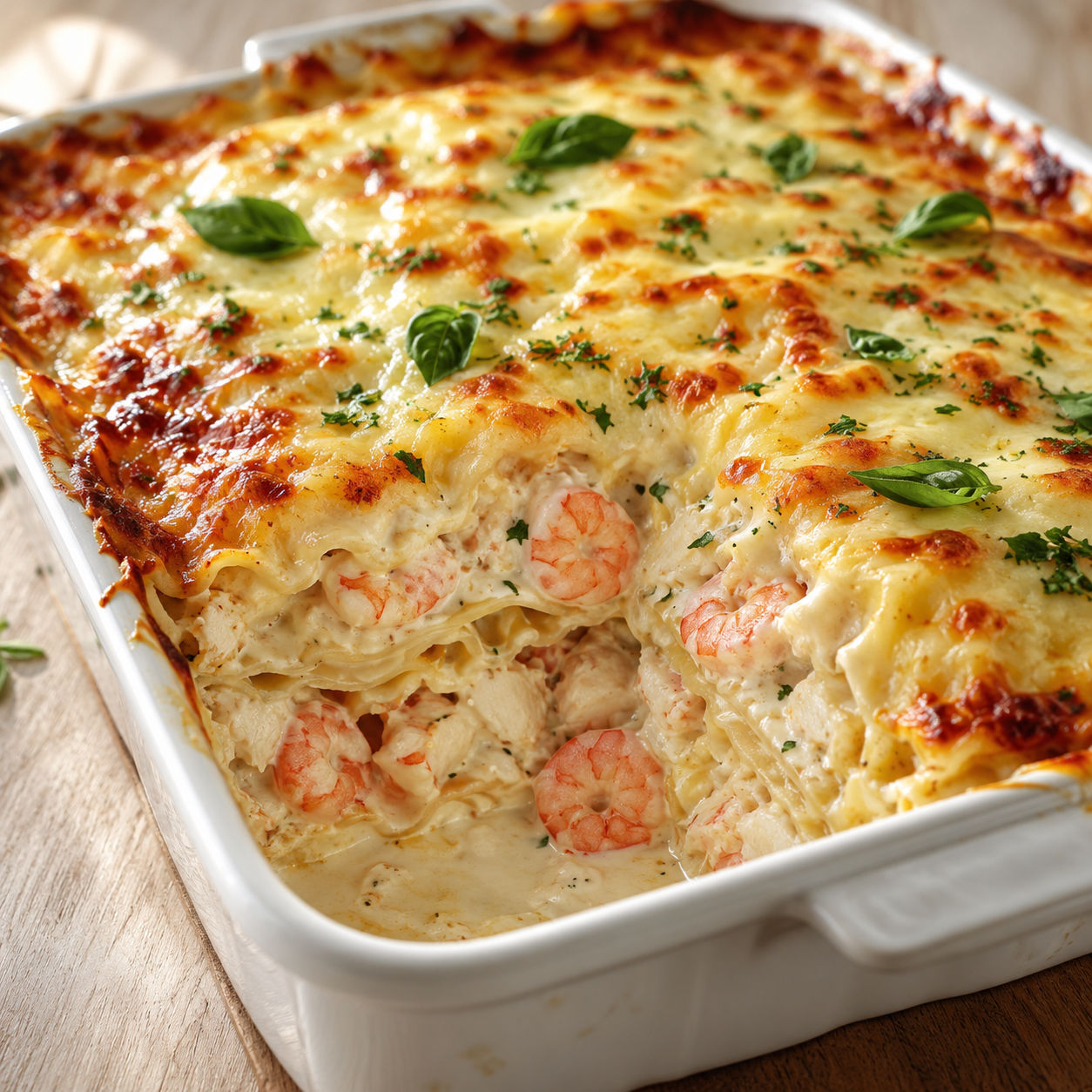
This is the lasagna I make when I want to impress without relying on a red sauce. A creamy Alfredo base carries sweet lump crab and tender shrimp through every layer, and the ricotta mixture keeps the middle rich and sliceable. It looks elaborate, but the steps are straightforward. The hardest part is waiting the full fifteen minutes before you cut into it.
If you have eaten seafood Alfredo at a coastal restaurant, this is that same indulgent idea stretched into a communal bake. Serve it for a birthday, a date night, or any Sunday when you want something special on the table.
What fills the layers
Quality matters here because the sauce is mild and lets the seafood speak. Buy real lump crab meat if you can find it. Pre-cooked shrimp saves time, but raw works if you give them a quick saute first. The rest is standard pasta-bake territory: a good block of Parmesan, whole-milk ricotta, and no-boil or regular lasagna noodles.
- Lasagna noodles. Cook them until just flexible so they finish soft but never mushy in the oven.
- Lump crab meat. The sweet, briny center of every bite. Drain it well and pick through for shell fragments.
- Large shrimp. Cut into chunks so they distribute evenly and do not overwhelm a single slice.
- Unsalted butter and heavy cream. The Alfredo foundation. Unsalted butter lets you control the final seasoning.
- Garlic. Four cloves minced fine carry the sauce without needing extra accents.
- Whole milk ricotta. Mixed with an egg and herbs so it sets into a creamy layer instead of leaking out the sides.
- Fresh parsley and basil. A bright finish that cuts through the richness.
Building the layers
- Cook the noodles. Boil in well-salted water until just shy of al dente. Drain and lay them flat on oiled parchment so they do not stick together.
- Make the Alfredo sauce. Melt butter in a large pot, cook the garlic for one minute, then whisk in flour for one minute more. Pour in milk and cream slowly while whisking, then simmer until the sauce coats the back of a spoon. Stir in grated Parmesan off the heat.
- Prep the seafood. If your shrimp are raw, saute them in a little butter until pink and opaque, about two minutes. Chop them into bite-sized pieces and gently toss with the drained crab meat.
- Mix the ricotta. Stir together ricotta, egg, chopped parsley, basil, salt, and pepper until smooth.
- Assemble. Spread a cup of Alfredo sauce on the bottom of a 9 by 13 inch dish. Add a layer of noodles, half the ricotta, half the seafood, one cup of mozzarella, and another ladle of sauce. Repeat once more, then finish with a final noodle layer, remaining sauce, mozzarella, and Parmesan.
- Bake. Cover with foil and bake at 375 degrees Fahrenheit for twenty-five minutes. Remove the foil and bake another twenty minutes until the top is bubbly and lightly golden. Let it rest for fifteen minutes before slicing.
The sauce that stays silky
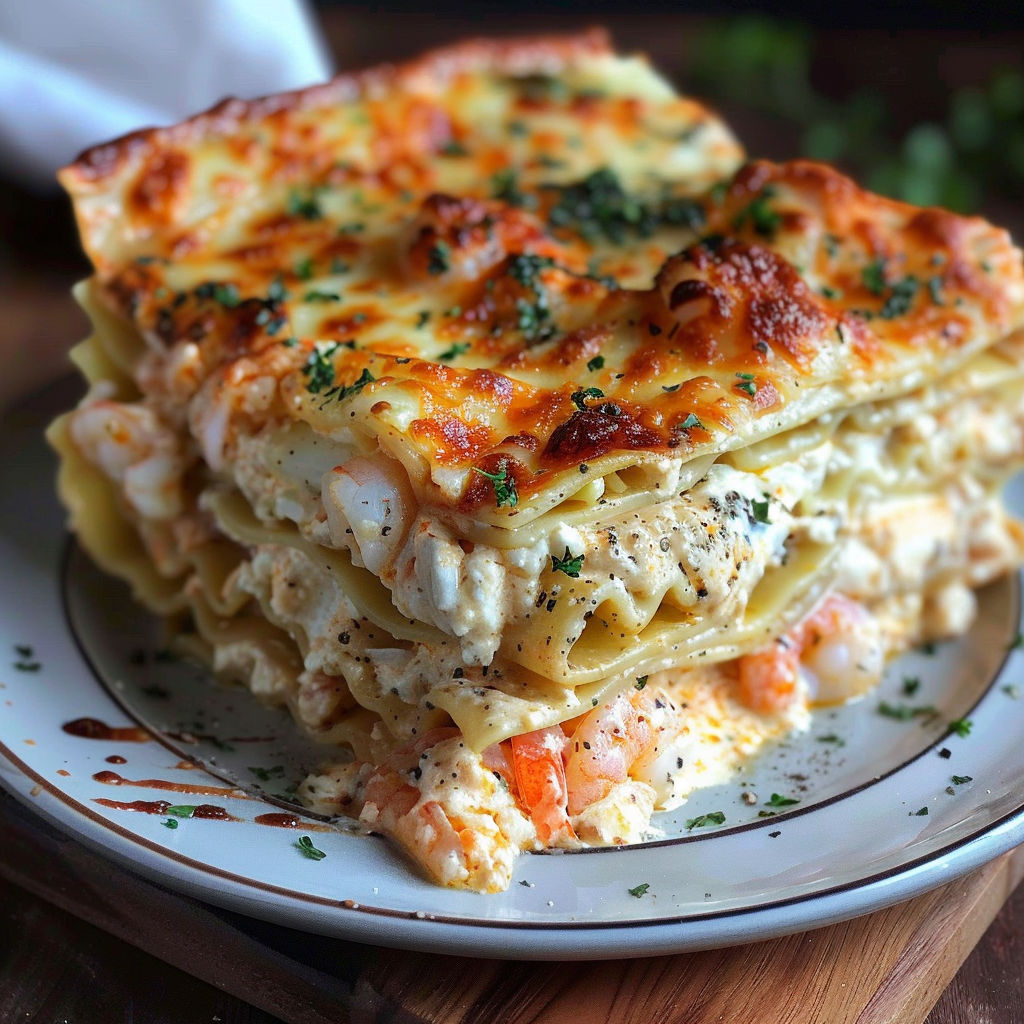
The difference between a watery white lasagna and a sliceable one is a stable Alfredo base. I build a light roux with butter and flour before adding the dairy. That small amount of flour keeps the sauce from breaking in the oven and helps it cling to the noodles instead of pooling at the bottom. If you want a different seafood pasta with the same creamy approach, shrimp Alfredo pasta uses the same technique on a weeknight timeline.
Crab choices that matter
Fresh lump crab from the seafood counter is ideal, but pasteurized refrigerated crab works well too. Imitation crab can fill in if budget is tight, though the flavor will be milder and sweeter. The key step most people skip is pressing the crab meat in a paper towel for a few seconds. Excess moisture turns a neat slice into a soupy mess, no matter how good your sauce is. If you enjoy crab in creamy pasta, creamy crab fettuccine Alfredo is a faster way to get that same flavor.
Why resting is non-negotiable
The fifteen-minute rest is not optional. It gives the ricotta and cheese time to firm up so your layers hold their shape when you lift them out. Cut too early and the filling slides out the sides. While it rests, the temperature equalizes so you do not burn your tongue on molten cheese. If you are feeding a crowd, this dish pairs well with a crisp green salad and garlic bread. For another layered pasta option, seafood lasagna with shrimp and crab offers a tomato-based variation on the same idea.
Storing and reheating
Refrigerate leftovers in an airtight container for up to three days. Reheat individual slices in a 350 degree Fahrenheit oven covered with foil for fifteen to twenty minutes. The microwave works in a pinch but can toughen the shrimp. You can also freeze the fully baked lasagna whole or in portions. Wrap tightly in plastic and foil and freeze for up to two months. Thaw overnight in the refrigerator before reheating.
Serving and pairing
This lasagna is rich, so keep the sides light. A simple arugula salad with lemon vinaigrette or steamed asparagus with a little salt works best. For wine, a chilled Pinot Grigio or Vermentino cuts through the cream without competing with the seafood. The U.S. FDA recommends cooking seafood to safe internal temperatures and checking for freshness before you start, see the FDA seafood safety guide.
FAQs
- Can I use imitation crab instead of lump crab?
Yes. It will be sweeter and softer, but it still works. Chop it roughly and press out excess moisture with a paper towel before layering so the bake stays sliceable.
- Can I make this lasagna ahead of time?
Absolutely. Assemble it unbaked, cover tightly, and refrigerate for up to twenty-four hours. Bake straight from the fridge, adding about ten minutes to the covered time.
- What size shrimp should I buy?
Large or extra-large shrimp are easiest. You want them to stay juicy after chopping and baking, so avoid tiny salad shrimp that can disappear into the cheese.
- Why did my Alfredo sauce turn grainy?
Grainy sauce usually means the Parmesan was added over high heat or pre-grated anti-cake agents were used. Always grate a real block of Parmesan and stir it in off the heat for a smooth finish.
- Can I add vegetables to the layers?
Yes. Sauteed spinach or roasted zucchini both work well. Just cook and drain them thoroughly first so they do not water down the bake.
- Is this lasagna freezer-friendly?
It is. Bake it fully, cool completely, then wrap individual portions or the whole dish in plastic and foil. Freeze for up to two months and thaw overnight before reheating.
- Can I substitute cottage cheese for ricotta?
You can. Cottage cheese gives a slightly looser texture. Drain it well and blend it smooth if you prefer a creamier consistency in the layers.
