 Pin it
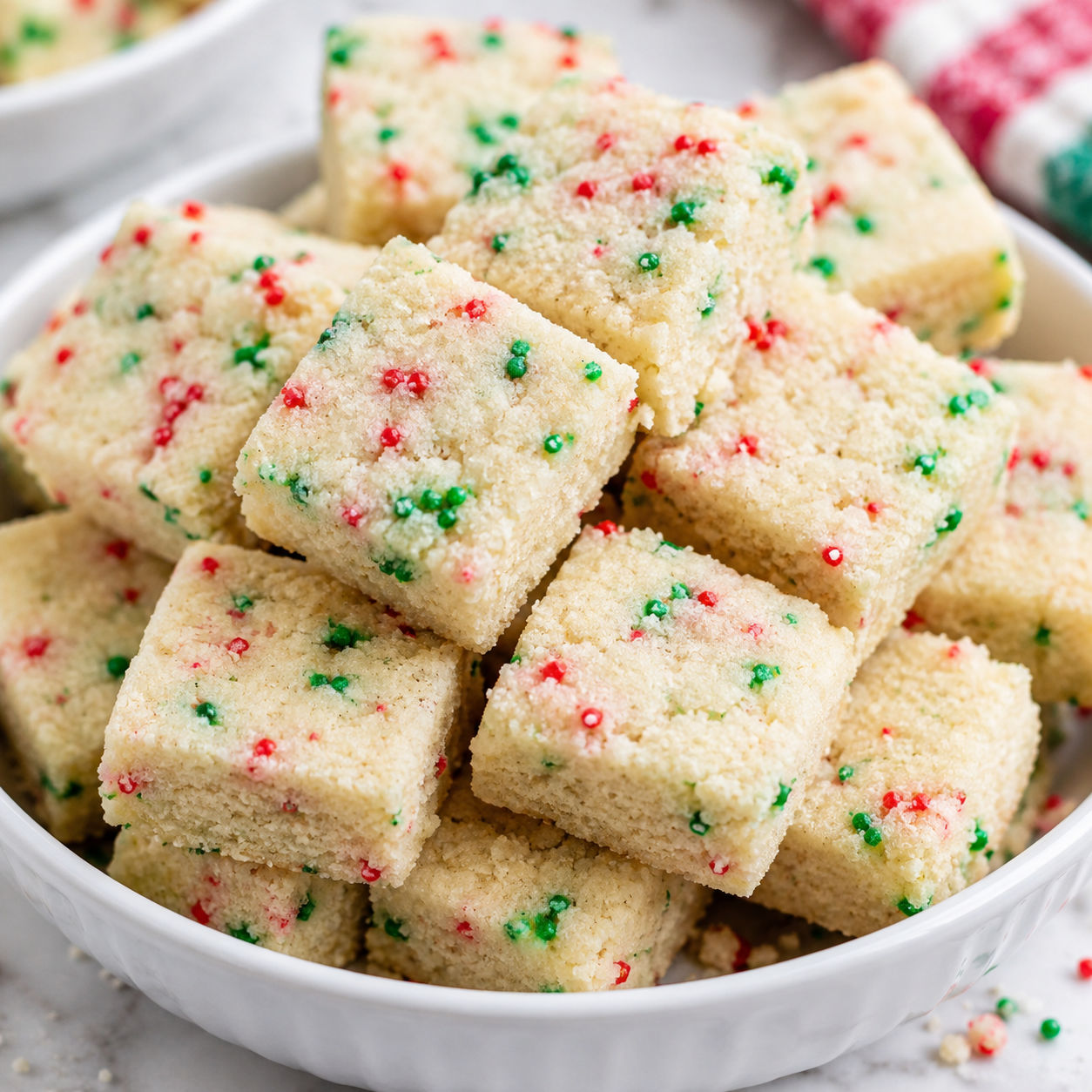
Christmas Shortbread Bites are the kind of cookie I like to keep in a covered tin during December. They are small enough to nibble with coffee, sturdy enough for a cookie box, and pretty without needing icing.
The dough is simple, but the texture depends on two things. Use soft butter, not melted butter, and chill the dough before you cut it into tiny squares. That gives you neat little bites with sandy edges and a rich butter flavor.
The Tiny Holiday Lineup
Shortbread does not hide weak butter, so use one you like eating. Measure the flour with a light hand and keep the sprinkles small so the dough cuts into tidy bites.
- Unsalted butter. Gives the cookies their rich flavor and sandy bite. It should be soft enough to dent, not shiny or melted.
- Granulated sugar. Sweetens the dough without making it chewy.
- Vanilla extract. Rounds out the butter and makes the cookies smell like a holiday cookie tin.
- All-purpose flour. Builds the shortbread structure. Spoon and level it so the dough does not turn dry.
- Fine salt. Keeps the cookies from tasting flat.
- Christmas sprinkles. Add color and a light crunch. Red and green nonpareils or small jimmies work best.
Shape, Chill, Cut, Bake
- Cream the butter. Beat the soft butter, sugar, salt, and vanilla until smooth and creamy. Stop once it looks even and pale.
- Mix the dough. Add the flour on low speed and mix until the dough looks crumbly but starts forming soft clumps. Fold in most of the sprinkles.
- Press and chill. Pat the dough into an even 1/2-inch-thick slab on parchment. Scatter the remaining sprinkles over the top and press them in gently. Chill until firm.
- Cut the bites. Move the chilled dough to a board and cut it into small 1/2-inch squares with a sharp knife.
- Bake gently. Arrange the squares with a little space between them and bake at 325°F until the bottoms are barely golden, about 13-16 minutes.
- Cool completely. Let the bites sit on the pan for 10 minutes before moving them to a rack. They are delicate while hot.
The Chill Matters
Warm shortbread dough smears under the knife. Cold dough cuts into clean cubes and keeps its little square shape in the oven. I like to chill the pressed slab until it feels firm all the way through, usually 30-45 minutes. If your kitchen is warm, slide the cut squares back into the fridge while the oven heats.
This same cold-dough habit helps with other buttery holiday bakes too, especially Christmas maraschino cherry shortbread cookies and classic shortbread cookies.
Measure Flour Lightly
Too much flour is the fastest way to make shortbread bites dry. Fluff the flour in the bag, spoon it into the measuring cup, then level it. For the most reliable batch, weigh it. A cup of all-purpose flour is commonly measured at 120 grams in the King Arthur Baking ingredient weight chart.
The finished dough should look crumbly at first, then hold together when pressed. Do not knead it like bread dough. A few gentle presses are enough.
Flavor Swaps That Fit
Vanilla is the safest choice for a mixed cookie tray, but these little bites take small flavor changes well. Use almond extract for a bakery-style flavor, peppermint for a candy cane note, or orange zest for a brighter batch. Keep the additions modest because shortbread is meant to taste buttery first.
If you want more color on the dessert table, pair these with best soft Christmas cookies or blue Christmas truffles. The textures play nicely together.
Baking Without Browning
The goal is pale tops with just a little color on the bottoms. If the bites brown all over, they will taste toasted instead of tender. Bake one tray at a time in the center of the oven. Check early if your squares are smaller than 1/2 inch.
Let the cookies cool on the pan before moving them. Hot shortbread breaks easily because the butter is still soft. Once cool, the bites firm into crisp-edged, melt-away little squares.
Storage And Cookie Boxes
Store Christmas Shortbread Bites in an airtight container at room temperature for up to a week. Place parchment between layers if you are packing them into tins. They freeze well too. I freeze them in a firm container, not a bag, so the corners stay neat.
For gifting, let the cookies cool fully before closing the lid. Trapped warmth makes condensation, and condensation softens shortbread. Add them to boxes last if you are packing them beside softer cookies or fudge.
Summary
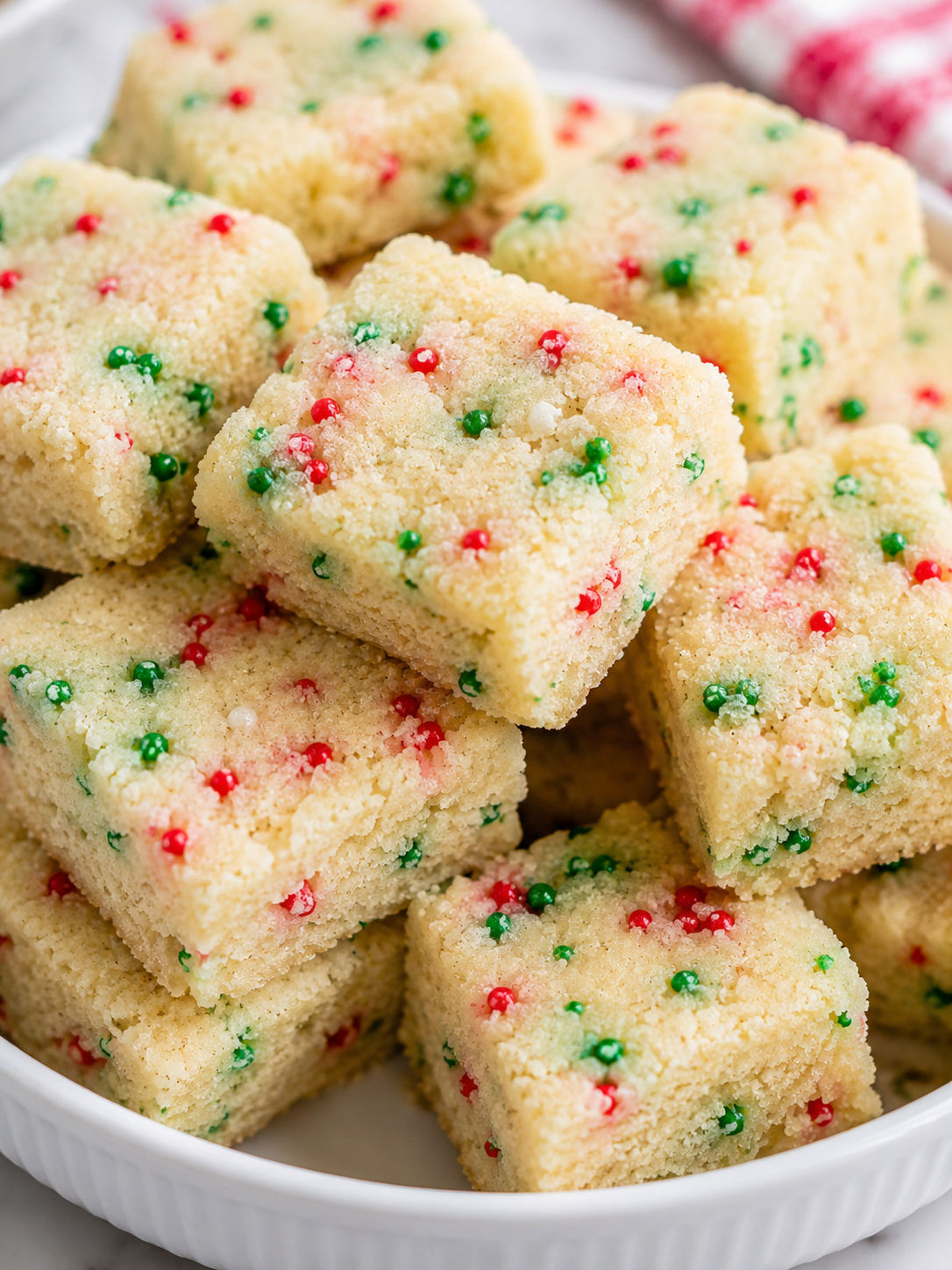
These mini shortbread cookies are simple, festive, and easy to make ahead for holiday trays.

FAQs
- Can I make Christmas Shortbread Bites ahead of time?
Yes. Bake them up to one week ahead and store them in an airtight tin at room temperature. You can also freeze the baked bites for about two months, then thaw them still covered so they do not pick up moisture.
- Why is my shortbread dough crumbly?
Shortbread dough often looks sandy before it comes together. Keep mixing until it forms clumps, then press it gently with your hands. If it is still dry after that, your flour may have been packed too tightly.
- Can I use salted butter instead of unsalted?
Yes, but reduce the added salt to a small pinch. Salted butter varies by brand, so taste can shift a little. Unsalted butter gives you the most control.
- What kind of sprinkles work best?
Use small nonpareils or jimmies in red, green, and white. Avoid large sugar pearls because they make these tiny bites harder to cut cleanly. If your sprinkles bleed color easily, fold them in at the very end.
- How do I keep shortbread bites tender?
Do not overmix once the flour is added, and do not bake until the tops are brown. Pull the pan when the bottoms and edges are just lightly golden. The cookies firm as they cool.
- Can I flavor these with peppermint or almond?
Yes. Replace the vanilla with 1/2 teaspoon peppermint extract or 1 teaspoon almond extract. Both are stronger than vanilla, so start small. You can also add a little orange zest for a brighter cookie.
