 Pin it
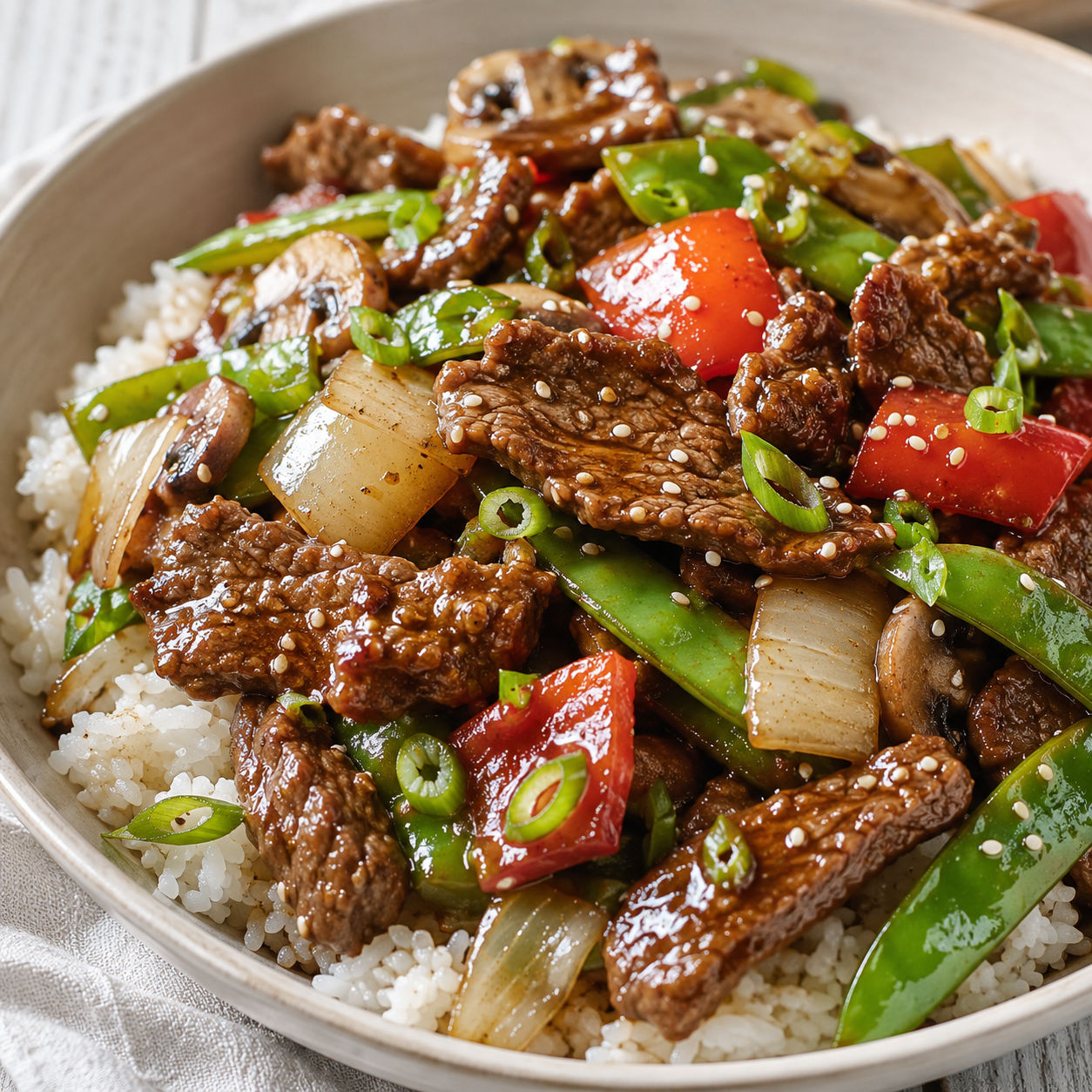
Chinese Pepper Steak with Fresh Vegetables is the kind of dinner that rewards a little prep. Once the steak is sliced and the sauce is whisked, the whole skillet moves quickly.
I like this version with red and green bell peppers, onion, snow peas, and mushrooms because it tastes fresh instead of heavy. The beef stays tender, the vegetables keep a little snap, and the sauce clings instead of pooling at the bottom of the pan.
Colorful Skillet Lineup
Choose a steak with visible grain and bright vegetables that feel firm and heavy. The sauce is simple, so fresh garlic, ginger, and plenty of black pepper matter.
- Flank steak. Slices into tender strips when cut across the grain.
- Bell peppers. Bring sweetness, color, and crisp edges.
- Yellow onion. Softens just enough to make the sauce taste round and savory.
- Snow peas. Add a fresh snap that keeps the stir-fry from feeling heavy.
- Mushrooms. Give the pan a deeper, beefy flavor.
- Garlic and ginger. Build the warm base of the sauce.
- Soy sauce and oyster sauce. Make the sauce salty, glossy, and deeply savory.
- Cornstarch. Tenderizes the beef and thickens the final sauce.
Fast Wok-Style Cooking
- Slice and coat the beef. Cut the steak thinly across the grain, then toss it with soy sauce, cornstarch, and black pepper so it browns quickly and stays tender.
- Mix the sauce. Whisk broth, oyster sauce, soy sauce, sugar, sesame oil, and cornstarch in a small bowl before the pan gets hot.
- Sear in batches. Cook the beef in a thin layer until browned at the edges, about 60-90 seconds per side, then move it to a plate.
- Cook the vegetables. Stir-fry the onion, bell peppers, mushrooms, and snow peas until bright and crisp-tender.
- Finish glossy. Add garlic and ginger, return the beef, pour in the sauce, and toss until everything is shiny and coated.
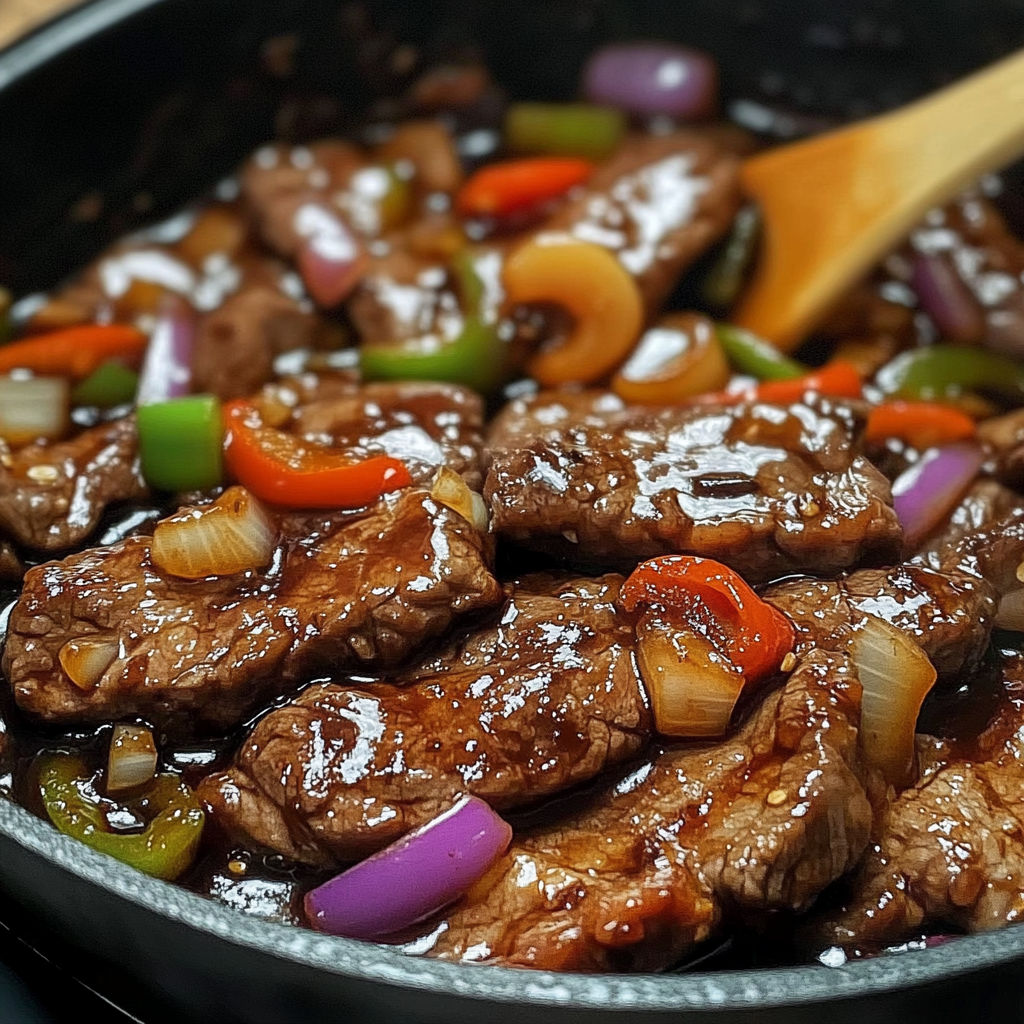
Chinese Pepper Steak with Fresh Vegetables
The best versions of this dish taste quick and fresh, not saucy in a heavy way. The Food Network pepper steak method uses thin steak, bell peppers, onion, ginger, garlic, soy, and a cornstarch-thickened sauce, which is the same reliable structure used here in a faster weeknight style. You can read their version at Food Network if you want a longer marinated approach.
This recipe leans harder into fresh vegetables. Snow peas and mushrooms make the skillet fuller without stretching the sauce too thin. If you want a simpler beef and peppers version, try the site's Chinese Pepper Steak Stir-Fry another night.
Keep The Vegetables Crisp
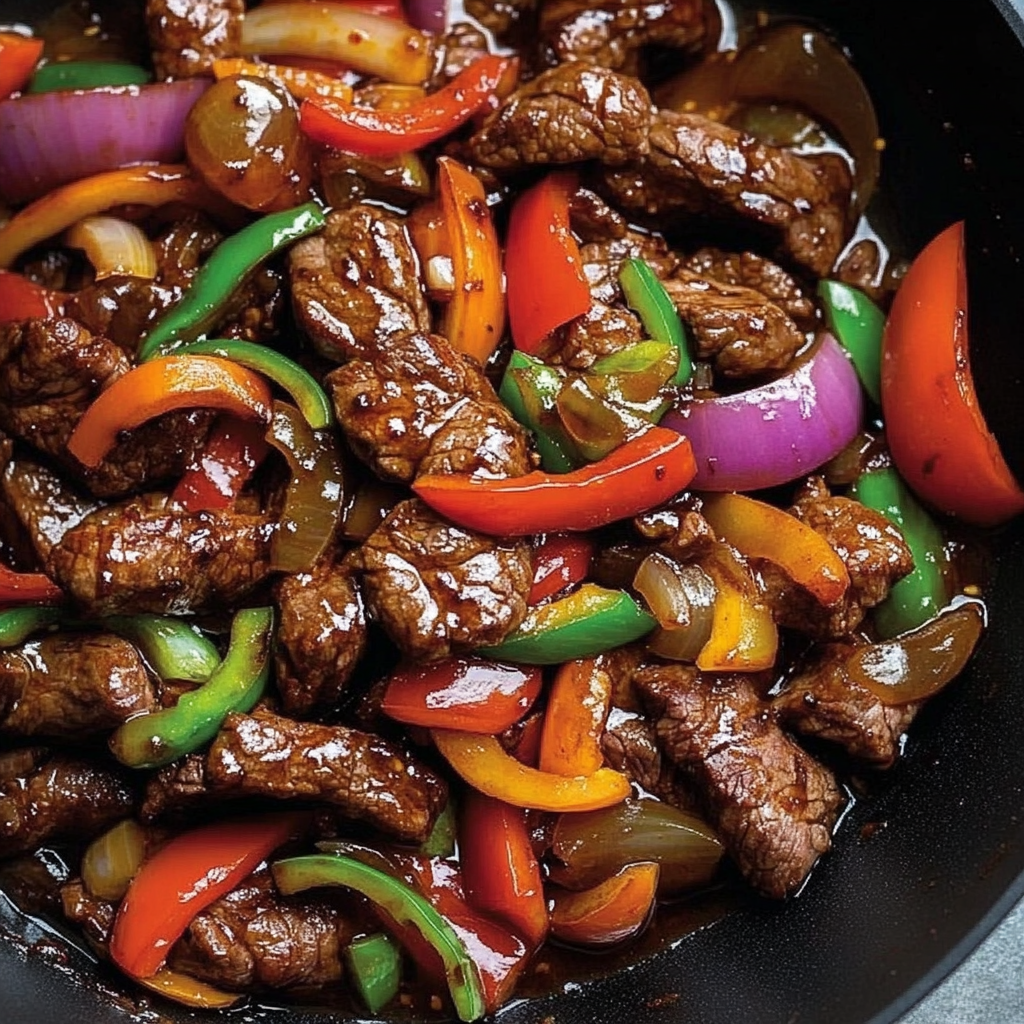
High heat is what keeps the peppers glossy and sweet instead of soft. Let the pan heat before the vegetables go in, then keep them moving. They should soften at the edges but still have color and bite.
If your skillet is small, cook the vegetables in two rounds. It feels fussy, but it is faster than waiting for a crowded pan to boil off moisture. For another quick skillet dinner with peppers, the Shrimp and Bell Pepper Stir-Fry follows the same quick-cook idea.
Sauce That Clings
The sauce should look loose when you whisk it, then turn glossy as it hits the hot pan. Cornstarch thickens fast, so stir the sauce again right before pouring. If it gets too tight, add a tablespoon or two of water and toss until it relaxes.
Do not add extra cornstarch at the end unless the sauce is truly watery. It can turn pasty. The shine comes from heat, constant tossing, and just enough starch to coat the beef and vegetables.
Easy Swaps That Work
Sirloin is a good swap for flank steak. Skirt steak works too, but slice it extra thin. For vegetables, broccoli florets, carrots cut into matchsticks, bok choy stems, or baby corn can replace the snow peas or mushrooms.
For heat, add sliced fresh chile with the garlic or stir in a spoonful of chili garlic sauce. If you prefer chicken, the sauce style is close to Easy Chinese Black Pepper Chicken Stir Fry, but the beef version needs a harder sear.
Serving And Storing
Serve pepper steak as soon as the sauce turns glossy. Rice is the easiest base, but lo mein noodles are good when you want something more takeout-style. The Shrimp Lo Mein With Red And Green Pepper is a useful pairing idea if you are building a larger dinner.
For food safety, cook beef steaks to 145°F with a rest when checking thicker pieces, according to Foodsafety.gov. Thin stir-fry strips cook so fast that color and texture matter too. Store leftovers for up to 3 days and reheat gently in a skillet.
Summary
Serve this pepper steak right away with steamed rice, noodles, or cauliflower rice. Leftovers reheat best in a skillet so the vegetables do not go limp.
FAQs
- What cut of beef is best for Chinese pepper steak?
Flank steak is my first choice because it slices cleanly and cooks fast. Sirloin, skirt steak, or flat iron also work well if you cut them thinly across the grain.
- Can I use frozen vegetables?
Fresh vegetables give the best texture, especially bell peppers and snow peas. If you use frozen stir-fry vegetables, thaw them and pat them dry first so they do not water down the sauce.
- How do I keep the steak tender?
Slice the beef thinly across the grain and cook it in batches over high heat. Crowding the pan makes the meat steam, which can turn it gray and chewy.
- Can I make this gluten-free?
Yes, but you need to choose gluten-free tamari instead of regular soy sauce and check the oyster sauce label. Cornstarch is naturally gluten-free, but packaged sauces can vary.
- How long do leftovers keep?
Store leftovers in an airtight container in the fridge for up to 3 days. Reheat them in a skillet over medium heat with a splash of water or broth to loosen the sauce.
- What should I serve with pepper steak?
Steamed jasmine rice is the classic choice because it catches the sauce. You can also serve it over noodles, brown rice, or cauliflower rice for a lighter plate.
