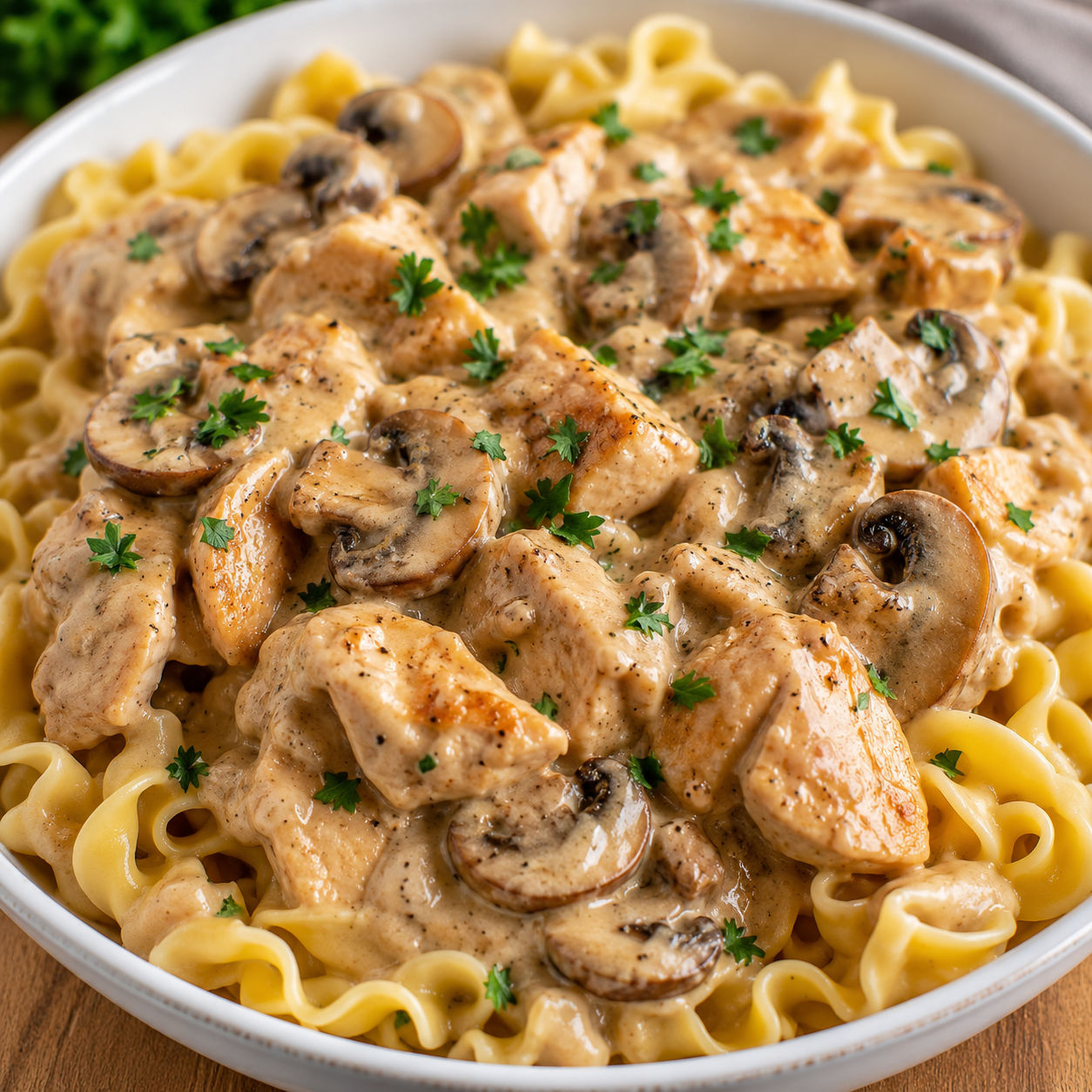
 Pin it
Some nights call for something creamy and filling without a long grocery list. This chicken stroganoff fits that mood exactly. It has the same tangy, savory sauce as the classic beef version but swaps in quick-cooking chicken pieces and pantry staples.
The trick is patience while browning. Give the chicken, mushrooms, and onions enough time to develop real color before you add any liquid. That caramelized base is what makes the sauce taste rich instead of flat.
What builds the sauce
The ingredient list is short, so quality matters here. Use full-fat sour cream for the best texture and real cremini mushrooms for deeper flavor than plain white buttons.
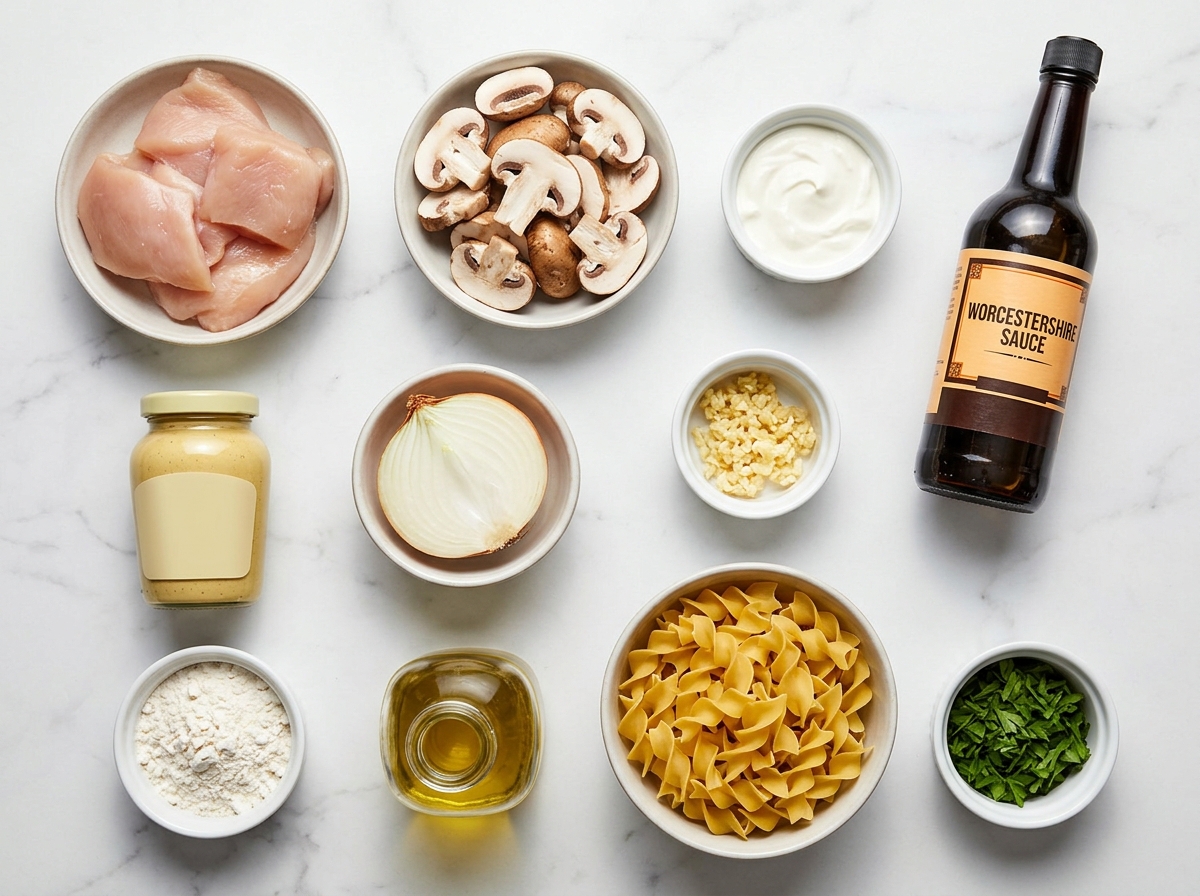
- Chicken breasts. Cut into bite-sized pieces, they cook fast and stay tender when seared quickly.
- Cremini mushrooms. Their earthy, meaty depth carries the sauce better than milder white mushrooms.
- Sour cream. The signature tang and creaminess that defines a true stroganoff sauce.
- Dijon mustard. A small amount adds sharp complexity without tasting mustardy.
- Worcestershire sauce. Brings savory umami that rounds out the sour cream.
- All-purpose flour. Coats the chicken and thickens the sauce as it simmers.
How the dish comes together
- Prep and dredge. Cut the chicken into one-inch pieces. Toss with garlic powder, salt, pepper, and a light coating of flour so each piece browns evenly.
- Sear the chicken. Cook in batches in a hot skillet with olive oil, about three minutes per side, until deeply golden and cooked through. Transfer to a plate.
- Brown the vegetables. Melt butter in the same pan, then add mushrooms and onions. Cook six to eight minutes until their liquid evaporates and they turn golden.
- Build the sauce base. Stir in Dijon, Worcestershire, and garlic for one minute. Pour in chicken broth and scrape up every browned bit from the pan bottom.
- Finish with sour cream. Return the chicken to the pan, then stir in sour cream over low heat until just warmed through. Season and serve over egg noodles.
Why browning matters most
Stroganoff lives or dies by the color you build before the liquid goes in. Pale mushrooms and barely-cooked chicken give you a bland, watery sauce. Deeply browned surfaces create fond, those stuck-on bits that dissolve into the broth and add real body.
Cook the chicken in two batches so the pan stays hot. Crowding drops the temperature and the meat steams instead of sears. Do the same with the mushrooms. Let them sit undisturbed for a couple of minutes so they can caramelize before you stir.
Smart swaps that still work
Boneless chicken thighs work beautifully here if you prefer darker meat. They stay moist even if you cook them a minute longer. If you need a gluten-free version, swap the all-purpose flour for a one-to-one gluten-free blend or skip the dredge and thicken the finished sauce with a cornstarch slurry.
No sour cream on hand? Full-fat Greek yogurt is the closest substitute, though it can curdle more easily so keep the heat low. If you enjoy creamy chicken pasta dishes, our creamy garlic herb chicken pasta uses a similar technique with a different flavor profile. For another stroganoff variation, try our chicken mushroom stroganoff or the rich meatball stroganoff.
Keep the sauce silky
Sour cream can break if it boils, so the final step needs a gentle touch. Lower the heat before you stir it in and keep the sauce at a bare simmer. A broken sauce still tastes fine but looks grainy and thin.
If your sauce turns out thicker than you like, thin it with a splash of pasta water or extra broth. If it is too thin, let it bubble gently for a few minutes before adding the sour cream to reduce it.
Store and reheat gently
Leftovers keep in an airtight container in the refrigerator for up to three days. Reheat slowly in a skillet over low heat, stirring often. The microwave works in a pinch but can overheat the sauce and cause it to separate. Add a tablespoon of water or broth to loosen it as it warms.
What to serve with it
Wide egg noodles are the classic choice because their broad surface catches the sauce. Buttered noodles are even better. Mashed potatoes or steamed rice both work if you want something different.
A simple green salad or steamed green beans cuts the richness. If you want another creamy chicken dinner in your rotation, our chicken stroganoff is a slightly different take worth bookmarking. The USDA recommends cooking poultry to 165°F for safe eating.

FAQs
- Can I use chicken thighs instead of breasts?
Yes. Boneless, skinless chicken thighs stay juicy and forgiving. Cut them into similar bite-sized pieces and sear them the same way. They may take an extra minute or two per side.
- What can I substitute for sour cream?
Full-fat Greek yogurt is the best substitute, but it is more delicate. Stir it in over very low heat and do not let it boil. Cream cheese softened with a little milk also works for a thicker, richer sauce.
- How do I keep the sauce from curdling?
Keep the heat low when you add the sour cream and stir it in at the end. Avoid boiling the sauce once the dairy is in. Room temperature sour cream is less likely to curdle than cold.
- Can I make this ahead of time?
You can prep the chicken and chop the vegetables up to a day ahead. Store them separately in the refrigerator. The actual cooking takes about thirty minutes, so it is best done right before serving.
- What noodles work best?
Wide or extra-wide egg noodles are traditional. Medium egg noodles, fettuccine, or pappardelle also cling to the sauce nicely. Cook them in well-salted water and toss with a little butter before topping.
- Can I freeze leftover chicken stroganoff?
Freezing is not ideal. The sour cream sauce can separate and turn grainy when thawed. If you must freeze it, cool it completely and reheat very gently, whisking in a little fresh sour cream at the end to bring it back together.
