 Pin it
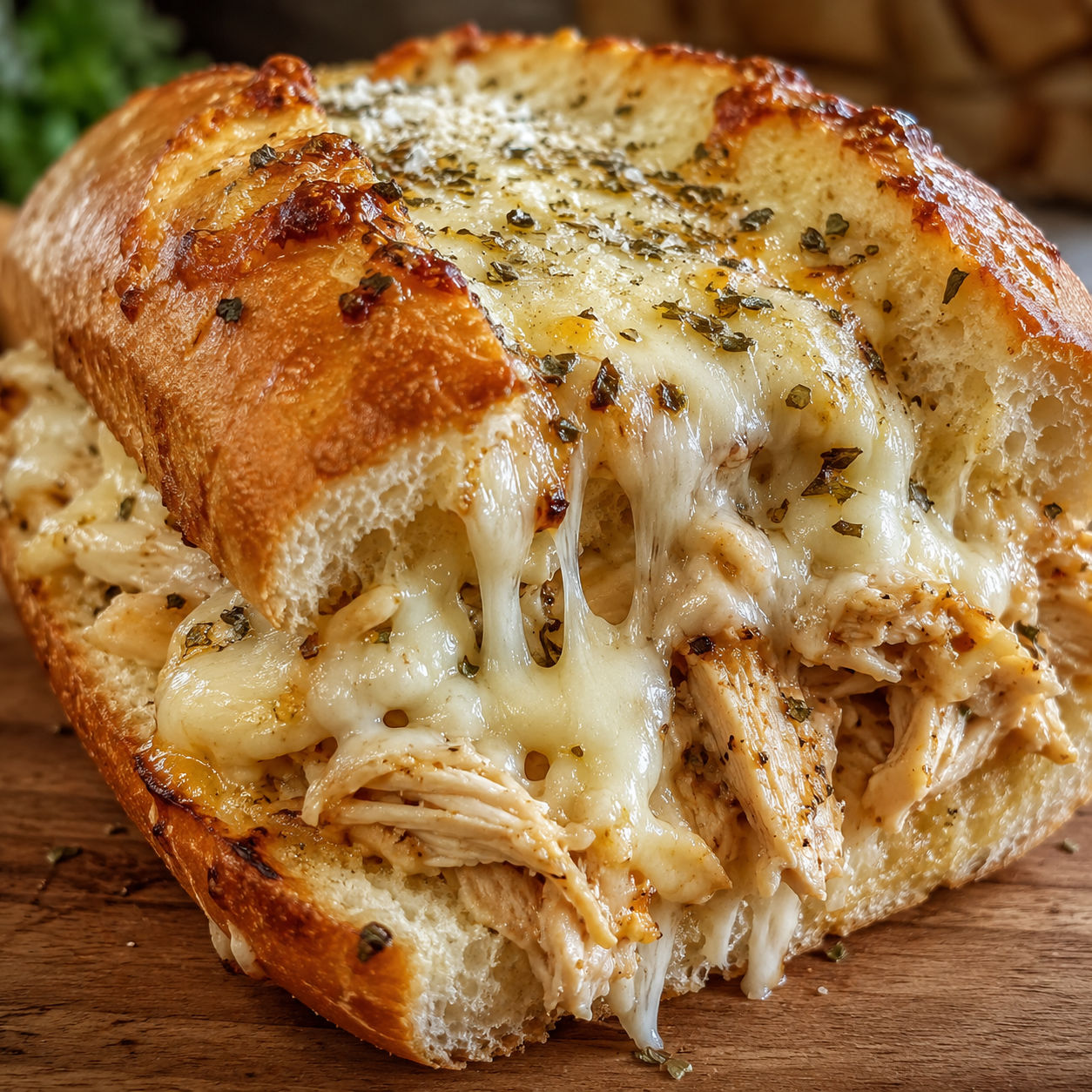
This sandwich is what I make when I want something that feels like a weekend treat on a Tuesday night. You start with everyday bread, turn it into garlic bread, then load it with chicken and cheese and bake it until the edges are crisp and the center is molten.
The whole thing takes about twenty minutes if you already have cooked chicken on hand, which makes it ideal for using up leftovers or a rotisserie bird. It is messy in the best way, so serve it on a plate with a knife and fork or just lean over the sink like I do.
What builds the flavor
You do not need a long list here, but the quality of each part matters. Use a sturdy loaf that can handle butter and heat without falling apart, and grate your own cheese so it melts smoothly instead of turning rubbery.
- Cooked chicken. Shredded rotisserie chicken or leftover grilled thighs both work. You want about two cups packed loosely.
- Crusty bread rolls or a small baguette. Something with a firm crust holds up to the garlic butter and filling without going soggy.
- Unsalted butter. Softened so it spreads easily and carries the garlic without adding extra salt.
- Fresh garlic. Minced fine and cooked just until fragrant. It is the backbone of the whole sandwich.
- Mozzarella. Low-moisture shredded mozzarella melts into those long pulls everyone wants. A little grated parmesan on top adds a salty crust.
- Dried oregano or Italian seasoning. A small pinch brings in an herby note that ties the garlic and cheese together.
- Black pepper and a pinch of salt. To season the chicken layer before the cheese goes on.
How to stack and bake
- Make the garlic butter. Mash the softened butter with minced garlic, a pinch of salt, and oregano until it is well combined. Set it aside while you prep the rest so the garlic flavor infuses the fat.
- Prep the bread. Slice your rolls or baguette in half lengthwise without cutting all the way through, or use thick slices of sturdy bread. You want a sturdy base that will not collapse under the filling.
- Toast lightly. Spread the garlic butter on the cut sides and toast them under the broiler for two to three minutes until the edges just start to turn gold. Keep a close eye on it because garlic burns fast.
- Season the chicken. Toss the shredded chicken in a bowl with black pepper and a tiny splash of the garlic butter if you have extra. This keeps the meat from tasting dry in the center of the sandwich.
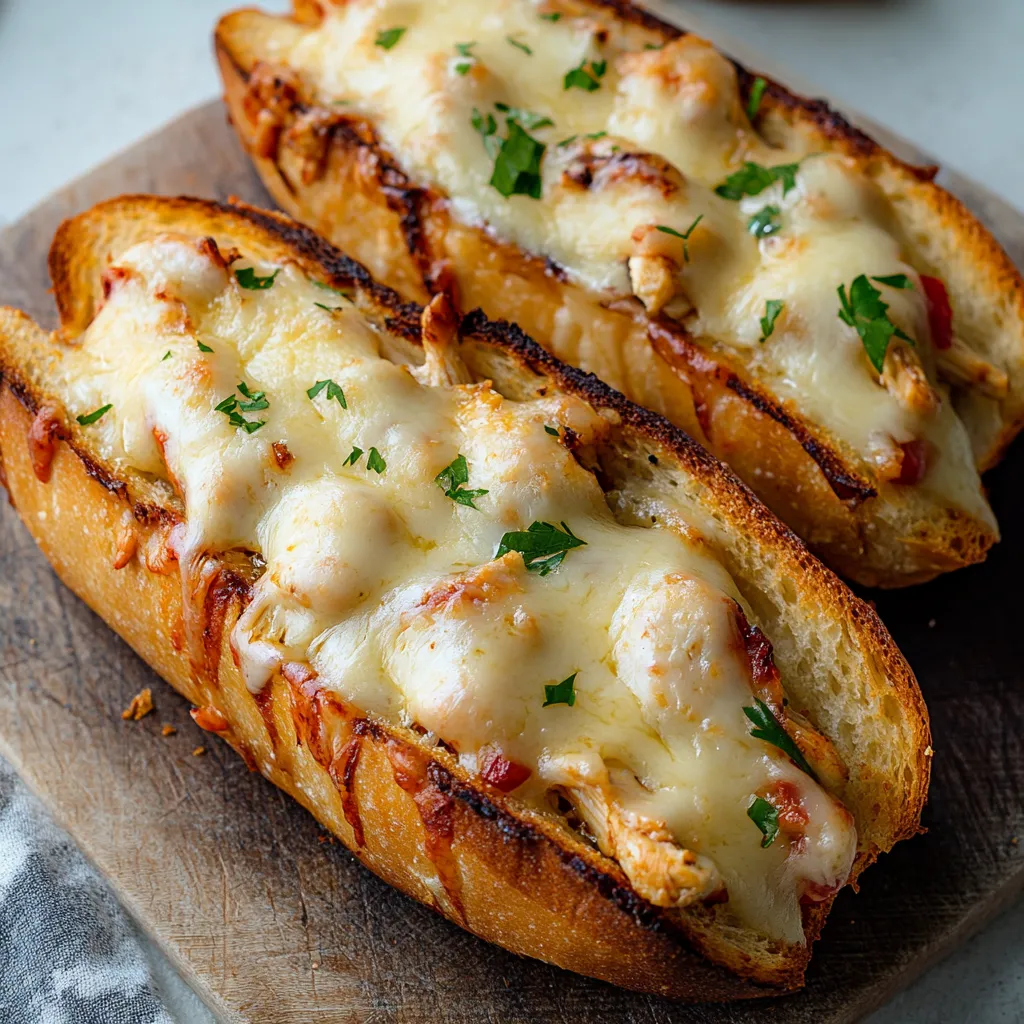
- Layer and load. Pile the chicken onto the bottom half of the bread, then cover it with a thick layer of mozzarella and a sprinkle of parmesan. Place the top half of the bread over the cheese and press down gently.
- Bake until golden. Transfer the sandwiches to a baking sheet and bake at 400°F (200°C) for eight to ten minutes until the cheese is fully melted and the top is crisp. If you want extra color, run them under the broiler for the last minute.

The chicken shortcut
This recipe was basically built for leftovers. Rotisserie chicken is my go-to because it is already seasoned and stays moist, but any cooked chicken will do. If you only have raw chicken, poach two boneless thighs in simmering water for fifteen minutes, then shred them with two forks while they are still warm. That method keeps the meat tender and gives you just enough plain chicken to absorb the garlic butter.
If you want to plan ahead, cook a double batch of creamy garlic chicken earlier in the week and set aside a portion for these sandwiches. The flavor only gets better.
Garlic butter without the burn
The biggest mistake people make with garlic bread is treating the garlic like an afterthought. Raw garlic is too harsh, and browned garlic turns bitter in the oven. I mix minced garlic into softened butter and let it sit for ten minutes so the flavor spreads through the fat without needing high heat. When the bread goes under the broiler, the butter toasts and the garlic cooks gently inside it.
If you are short on time, you can use a good-quality store-bought garlic butter. For a similar base, our Easy Cheesy Garlic Bread uses the same butter technique and can be made alongside this sandwich for a crowd.
Mozzarella and its best partners
Low-moisture shredded mozzarella is the move here because fresh mozzarella holds too much water and can make the bread soggy. I like to mix in a handful of sharp cheddar or gruyere for depth, plus a dusting of parmesan on top so the surface turns crisp and savory in the oven. Avoid pre-shredded cheese coated in anti-caking agents. It does not melt as smoothly and can leave a waxy film.
Oven vs skillet finish
Baking gives you the most even melt and lets the cheese bubble all the way through without squishing the bread flat. A skillet works if you want a pressed, panini-style sandwich, but you will need a lid or a foil tent to trap heat so the cheese melts before the crust burns. I prefer the oven method because I can make four sandwiches at once on a single sheet pan, which is handy when everyone is hungry at the same time.
Serve it right
These sandwiches are rich, so I like to cut them in half and serve them with something acidic on the side. A quick pickle, a vinegary slaw, or just a few pepperoncini help balance the cheese. For a heartier meal, pair them with a simple tomato soup or a green salad with lemon dressing.
If you are feeding a group, set out small bowls of marinara or ranch for dipping. The Cheesy Garlic Bread Shrimp Grilled Cheese on our site uses the same dunking idea with a seafood twist.
Storing and reheating
Wrapped tightly in foil, these sandwiches keep in the fridge for up to two days. Reheat them in a 350°F oven for ten minutes so the bread recovers its crunch. The microwave works in a pinch but softens the crust into something closer to plain bread. I do not recommend freezing them because the texture of the garlic butter changes once thawed.
FAQs
- Can I start with raw chicken?
Yes, but cook it first. Pan-sear two boneless thighs or a breast over medium heat until the internal temperature reaches 165°F. Let it rest for five minutes, then shred or slice. The U.S. Department of Agriculture recommends checking poultry with a thermometer, see the USDA chicken safety guidelines.
- What kind of bread holds up best?
Look for crusty rolls, a small baguette, or thick slices of sourdough. Soft sandwich bread tends to compress and turn soggy under the garlic butter and melted cheese. A sturdy base gives you that crisp edge.
- Can I assemble these ahead of time?
Absolutely. Build the sandwiches up to four hours ahead, wrap them in foil, and refrigerate. Bake straight from the fridge and add two to three minutes to the cooking time so the cheese melts through completely.
- How do I stop the garlic from burning?
Mix minced garlic into softened butter off the heat and let it infuse for ten minutes. When you broil the bread, watch it closely and pull the pan as soon as the edges turn light gold. Burnt garlic turns bitter fast.
- What cheese works besides mozzarella?
Provolone, gouda, or fontina all melt beautifully. I still recommend keeping some mozzarella in the mix for the stretch, but a blend gives you better flavor. Skip fresh mozzarella because its high water content can make the bread wet.
- Can I add vegetables?
Yes. Sauteed spinach, roasted red peppers, or caramelized onions slide right into the chicken layer. Just cook off most of their moisture first so it does not pool in the bread.
- How do I store and reheat leftovers?
Wrap leftover sandwiches in foil and refrigerate for up to two days. Reheat in a 350°F oven for about ten minutes to restore the crisp crust. The microwave softens the bread and is best avoided.
- Is this sandwich freezer-friendly?
I do not recommend freezing them. The garlic butter and cheese separate when thawed, and the bread loses its crisp texture. These are best made fresh or a few hours ahead.
