 Pin it
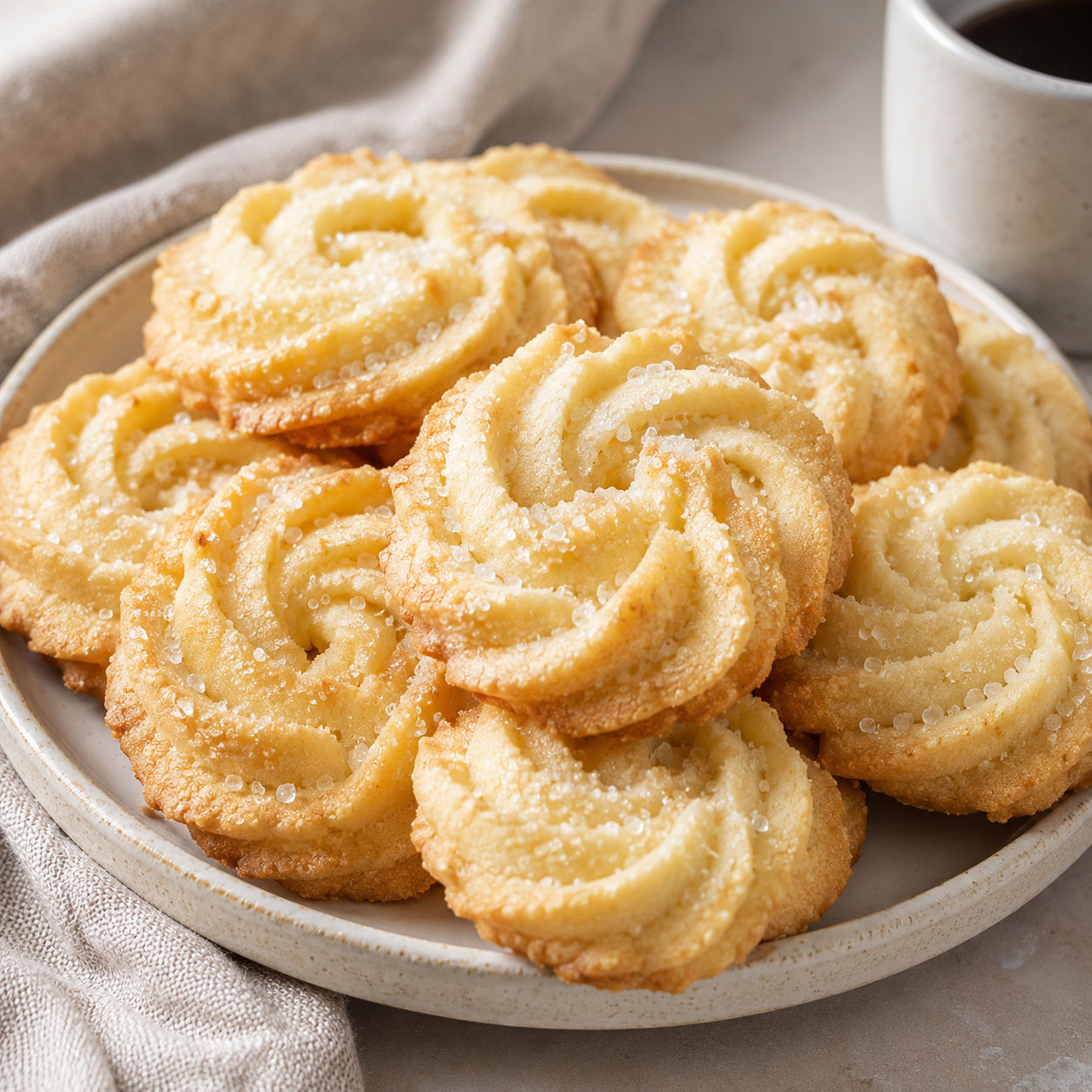
These are the cookies I bake when I want something simple that still feels like a small celebration. They come together with six ingredients you probably already have, and the result is a crisp, buttery bite that shatters gently and then melts on your tongue.
The trick is patience. You cream the butter until it is nearly white, chill the dough until it is firm, and bake low enough that the edges barely color. Rush any of those steps and you get a decent cookie. Respect them and you get the kind people try to hide from the rest of the family.
The short list that matters
Good butter and real vanilla do almost all the work here. Use a European-style butter if you can find it. The slightly higher fat content gives a richer flavor and a more delicate crumb. For the flour, measure with a scale or the spoon-and-level method so you do not accidentally add too much. A heavy hand with flour is the main reason butter cookies turn out dry and sandy instead of crisp and light.
- Unsalted butter. The foundation of the cookie. Softened enough to cream but not melted or greasy.
- Powdered sugar. Dissolves quickly into the butter and creates a finer, more tender crumb than granulated sugar alone.
- Egg yolk. Adds richness and helps bind the dough without introducing extra moisture from the white.
- Vanilla extract. Use the real stuff. It is one of only a few flavors here, so imitation vanilla will show.
- All-purpose flour. Provides the structure. Measured carefully, it keeps the cookie crisp without turning tough.
- Cornstarch. A small amount tenderizes the dough and gives that classic melt-in-your-mouth texture.
- Sea salt. Just a pinch to balance the sweetness and deepen the butter flavor.
Mix, chill, and bake
- Cream the butter and sugar. Beat the butter with powdered sugar on medium-high speed for three to four minutes until the mixture is pale and fluffy. Scrape the bowl once or twice so everything creams evenly.
- Add the yolk and vanilla. Mix on low until just combined. Do not over-beat here or the dough can become greasy.
- Fold in the dry ingredients. Whisk the flour, cornstarch, and salt together, then add to the butter mixture. Mix on low until a soft dough forms and no dry streaks remain.
- Chill thoroughly. Shape the dough into a disk, wrap it well, and refrigerate for at least one hour. This firms the butter so the cookies hold their shape in the oven.
- Shape the cookies. Transfer the chilled dough to a piping bag fitted with a large star tip and pipe rosettes onto parchment-lined sheets. Or roll the dough into a log, coat it in sanding sugar, and slice into rounds.
- Bake low and slow. Bake at 325°F until the edges are just barely golden, about twelve to fourteen minutes. Let them cool on the pan until firm before moving to a wire rack.
Why chilling changes everything
Chilling is not optional. When the dough is cold, the butter solidifies again and the gluten relaxes. That means the cookies spread less in the oven and keep the clean edges you worked for. It also gives the flour time to fully hydrate, which improves the texture. If you have ever had butter cookies that spread into puddles or lost their piped ridges, the dough was probably too warm. I chill even slice-and-bake logs so the knife cuts cleanly without squishing the shape.
Pipe, roll, or press
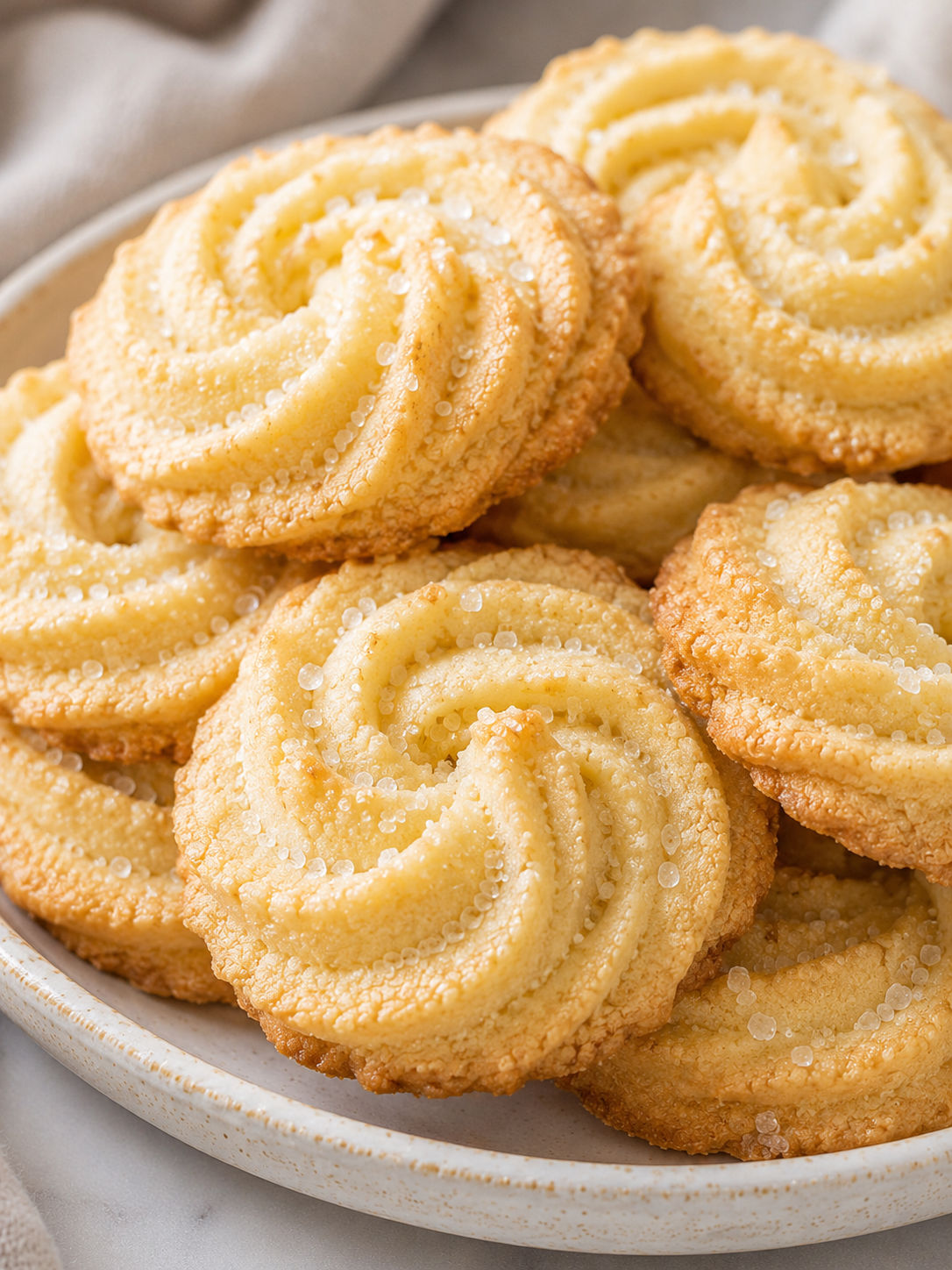
This dough is versatile. Piping with an open star tip gives you the classic bakery rosette with ridges that toast lightly in the oven. If you do not have a piping bag, roll the dough into a log about one and a half inches across, coat the outside in coarse or sanding sugar for crunch, and slice into quarter-inch rounds. A cookie press also works, though you may need to chill the dough briefly if it feels too soft to hold a pattern. For a fun twist, you can stamp out shapes with cutters and decorate with a simple glaze once baked. If you enjoy shaped cookies, our soft Christmas sugar cookies use a similar rolling technique with a softer result.
Storage that keeps the crunch
Once the cookies are completely cool, layer them in an airtight container with parchment paper between each tier. They stay crisp at room temperature for up to two weeks. Avoid refrigerating baked cookies. The moisture in the fridge softens them quickly. For longer storage, freeze the baked cookies in a freezer bag for up to two months and thaw uncovered at room temperature. You can also freeze the shaped raw dough on a baking sheet, then transfer the frozen rounds to a bag and bake straight from frozen. Add an extra two minutes to the bake time.
Finishes and flavors
These cookies are excellent plain, but a few simple upgrades work beautifully. Dip half of each cooled cookie in melted dark chocolate and let it set on parchment. Add the finely grated zest of one lemon or half an orange to the dough with the vanilla. You can also sprinkle the unbaked cookies with flaky sea salt right before they go into the oven. If you want a nutty variation, fold in two tablespoons of very finely ground almonds with the flour. For more buttery inspiration, try our French butter cookies with their sandy texture, or the rich brown butter chocolate chunk cookies when you want something heartier. And if you love the snowy look, our buttery pecan snowballs use a similar dough rolled in powdered sugar.

FAQs
- Can I use salted butter instead of unsalted?
Yes, but omit the added sea salt in the recipe. The cookies may taste slightly different depending on how salty your butter brand is.
- Why did my butter cookies spread too much?
The butter was likely too soft when you started, or the dough did not chill long enough. Make sure the butter is soft but not greasy, and chill the dough until it feels firm like modeling clay.
- Can I make the dough ahead of time?
Absolutely. Wrap the dough tightly and refrigerate it for up to three days, or freeze it for up to two months. Thaw frozen dough overnight in the fridge before shaping and baking.
- What is the difference between butter cookies and sugar cookies?
Butter cookies contain a higher ratio of butter to sugar and usually no leavening, which gives them a crisp, dense texture. Sugar cookies often include baking powder and more sugar, making them softer and puffier.
- Can I use a cookie press with this dough?
Yes. If the dough feels too soft to hold a pattern, chill it for twenty to thirty minutes first. Press the cookies onto a cool, ungreased baking sheet for the cleanest release.
- How should I store baked butter cookies?
Layer them in an airtight container with parchment between the tiers. Store at room temperature for up to two weeks. Do not refrigerate baked cookies or they will soften from moisture.
- Can I freeze baked butter cookies?
Yes. Cool them completely, then freeze in a rigid container or freezer bag for up to two months. Thaw uncovered at room temperature so condensation does not soften them.
