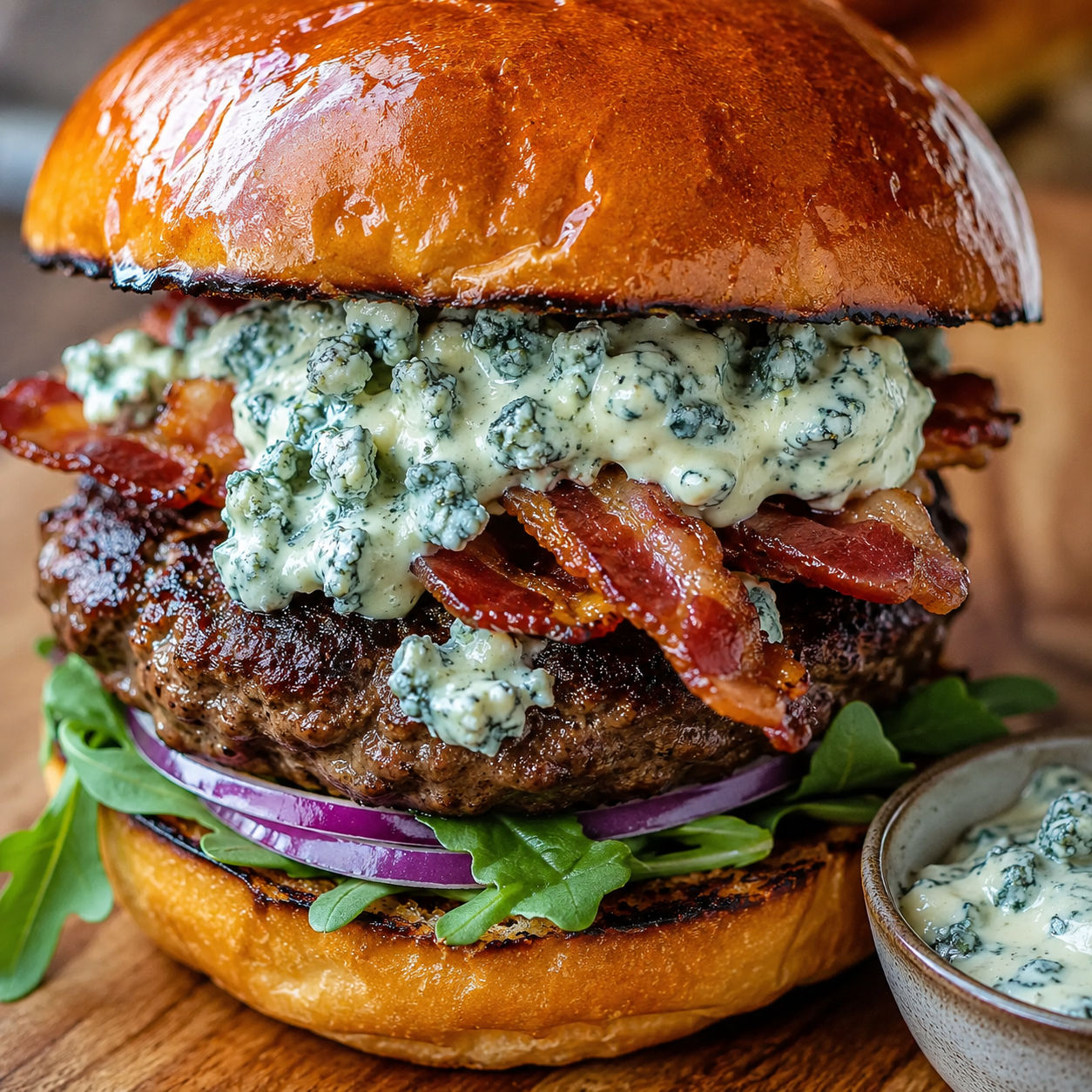
 Pin it
Gourmet Blue Cheese Burgers with Pancetta are for the night you want a burger that feels like steakhouse food without making dinner fussy. The beef stays simple, the pancetta turns crisp and salty, and the blue cheese melts into a tangy sauce that cuts through all that richness.
I like these with arugula and a little red onion because the burger needs something sharp and fresh. Toast the buns well. That small step keeps the sauce from soaking straight through.
The rich burger lineup
Use 80/20 ground beef if you can. Lean beef sounds tidy, but it dries out fast on a hot grill. Choose a blue cheese that crumbles easily and save the strongest varieties for people who already love that deep, peppery bite.
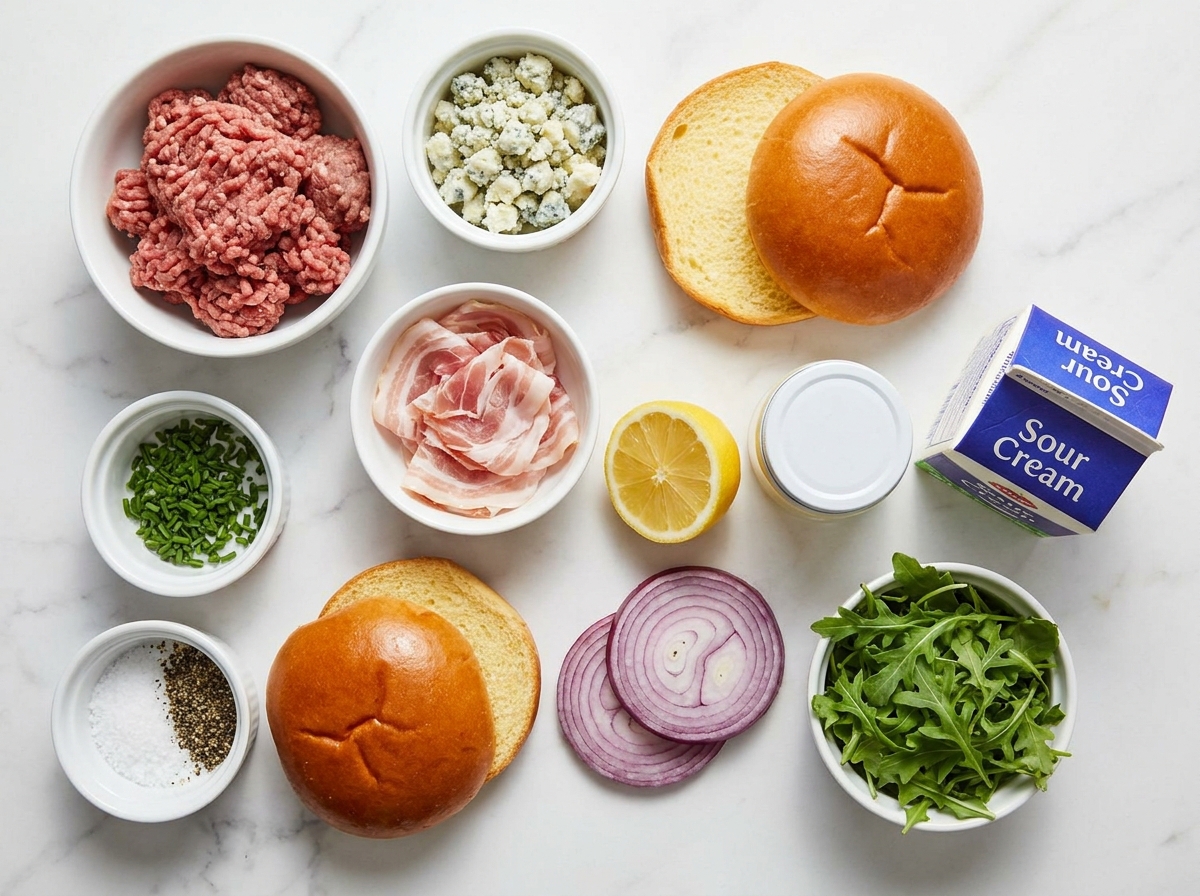
- Ground beef. An 80/20 blend gives the patties enough fat to stay juicy.
- Blue cheese. It melts into a tangy sauce and adds bold flavor on top.
- Pancetta. Thin slices cook crisp and bring salty, savory crunch.
- Brioche buns. Their soft, buttery crumb balances the sharp cheese.
- Arugula. Peppery greens keep the finished burger from tasting too heavy.
- Red onion. Thin slices add bite and a clean finish.
- Mayonnaise and sour cream. These smooth the blue cheese into a spoonable sauce.
- Chives and lemon. Freshness and acidity wake up the sauce.
Gourmet Blue Cheese Burgers with Pancetta
- Make the sauce. Mash blue cheese with mayonnaise, sour cream, chives, lemon juice, and black pepper until creamy but still a little chunky.
- Shape the patties. Divide the beef into 4 loose patties, season the outsides well, and press a shallow dimple in the center so they cook evenly.
- Crisp the pancetta. Cook the slices in a skillet until browned and crisp, then move them to paper towels. Save the skillet if cooking indoors.
- Cook the burgers. Grill or sear the patties over medium-high heat for 4-5 minutes per side, or until they reach your preferred doneness.
- Toast and stack. Toast the buns, spread sauce on the bottom, add arugula, the patty, pancetta, onion, more sauce, and the top bun.
Keep the patties tender
The best burger texture comes from doing less. Break the beef apart with your fingers, form it into loose mounds, then press only enough to hold the patties together. If the meat starts looking smooth and compact, you have worked it too much. That is when burgers turn springy instead of juicy.
Season the outside right before cooking. Salt mixed deep into ground beef can change the texture if it sits too long. A shallow thumbprint in the center helps the patty stay flat as it cooks. For a different burger night with a crisp bacon edge, try these Smash Burgers with Bacon Mayo.
Blue cheese without overload
Blue cheese can take over quickly. I use it mostly in the sauce instead of packing the patty full of crumbles. That gives you the sharp flavor in every bite while the beef still tastes like beef. If your cheese is very strong, start with half the amount in the sauce and add more after tasting.
The sauce should be thick enough to sit on the burger, not run down your wrist. If it feels stiff, loosen it with a teaspoon of milk. If you already love the flavor, you may also like the simpler Blue Cheese Burgers on the site, or the sweet-savory balance in Pear Blue Cheese Salad.
Cooking temperature matters
Use a thermometer if you want dependable results. The safe minimum internal temperature for ground beef is 160°F according to the FoodSafety.gov temperature chart. The USDA ground beef guide also explains why color alone is not a reliable doneness test.
If you like a medium burger, use freshly ground beef from a trusted source and make that choice knowingly. For most home kitchens, the thermometer gives the cleanest answer. Pull the burgers off the heat, rest them for 3 minutes, then build while the patties are still hot.
Pancetta, buns, and balance
Pancetta cooks faster than thick bacon, so watch it closely. It goes from crisp to hard in a short window. Lay the slices in a single layer and move them as soon as the edges curl and the centers turn golden. They will crisp more as they cool.
Brioche is rich, but it works here because the blue cheese is sharp and the arugula is peppery. Toasting is not optional for me. It adds structure and keeps the sauce from turning the bun soft. If you want another stacked beef sandwich with pub flavor, the Irish Pub Burgers with Whiskey Aioli make a good next cook.
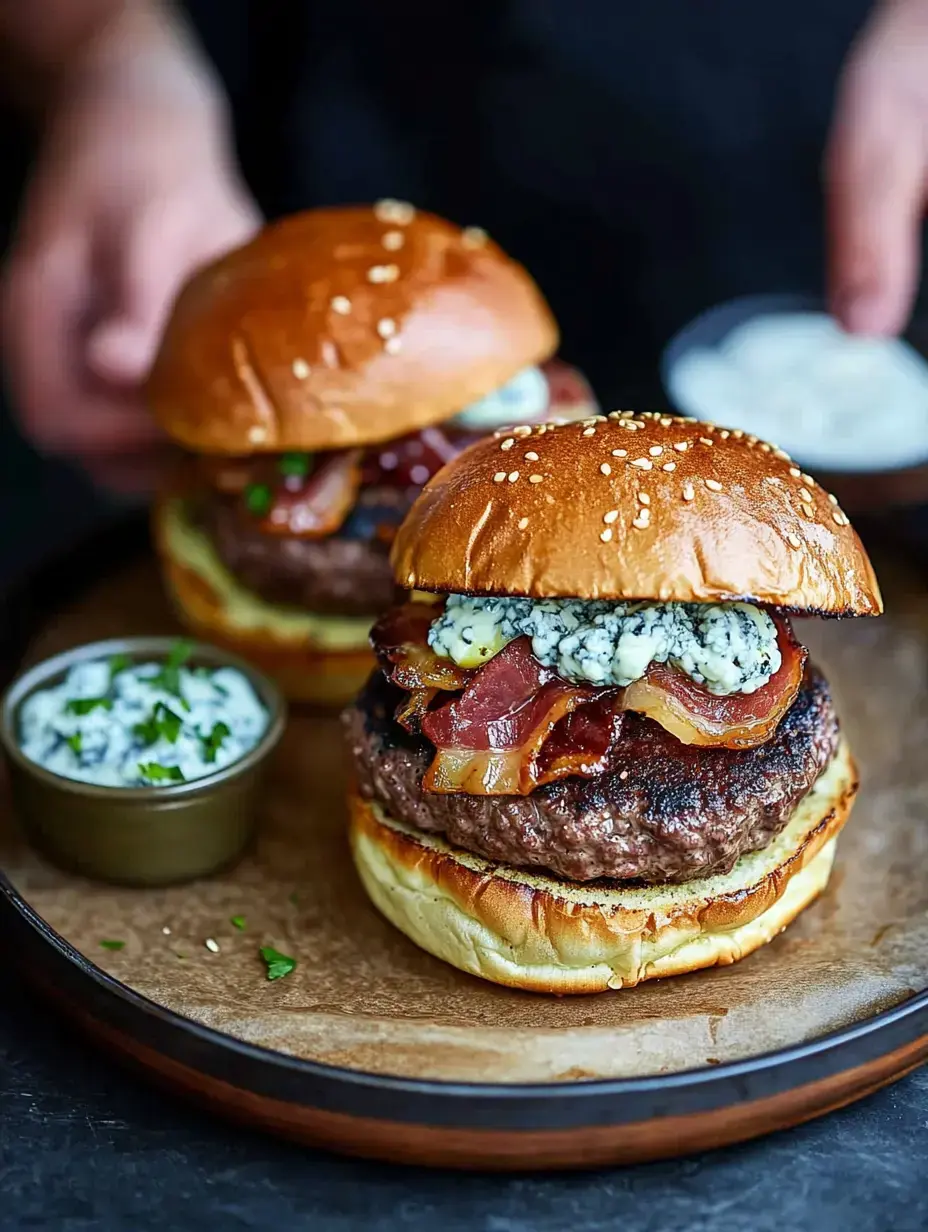
Summary
Use cold, gently shaped patties, crisp the pancetta first, and build each burger right before serving so the bun stays warm and the cheese sauce stays creamy.

FAQs
- What kind of blue cheese is best for burgers?
A creamy but not too sharp blue cheese works best. Danish blue, Gorgonzola dolce, or Cashel-style blue melt nicely and give you tang without overpowering the beef.
- Can I use bacon instead of pancetta?
Yes. Bacon is smokier and a little sweeter, while pancetta tastes more savory and porky. Cook either one until crisp, then drain it well so the burger does not feel greasy.
- Can these burgers be cooked in a skillet?
Yes. Use a heavy cast iron skillet over medium-high heat and cook the patties for about 4 minutes per side. Turn on a vent fan because the pancetta and beef both render fat.
- How do I stop blue cheese burgers from falling apart?
Use 80/20 beef, handle it lightly, and chill the shaped patties for 15 minutes before cooking. Do not mix a lot of cheese into the meat because melted pockets can weaken the patty.
- How should I store leftovers?
Store cooked patties, pancetta, sauce, and buns separately. The patties keep for up to 3 days in the fridge, and the sauce reheats best over low heat with a small spoonful of milk or cream.
- What sides go well with these burgers?
Serve them with fries, a crisp salad, grilled corn, or a simple slaw. A blue cheese burger is rich, so a sharp or crunchy side works better than another heavy dish.
