 Pin it
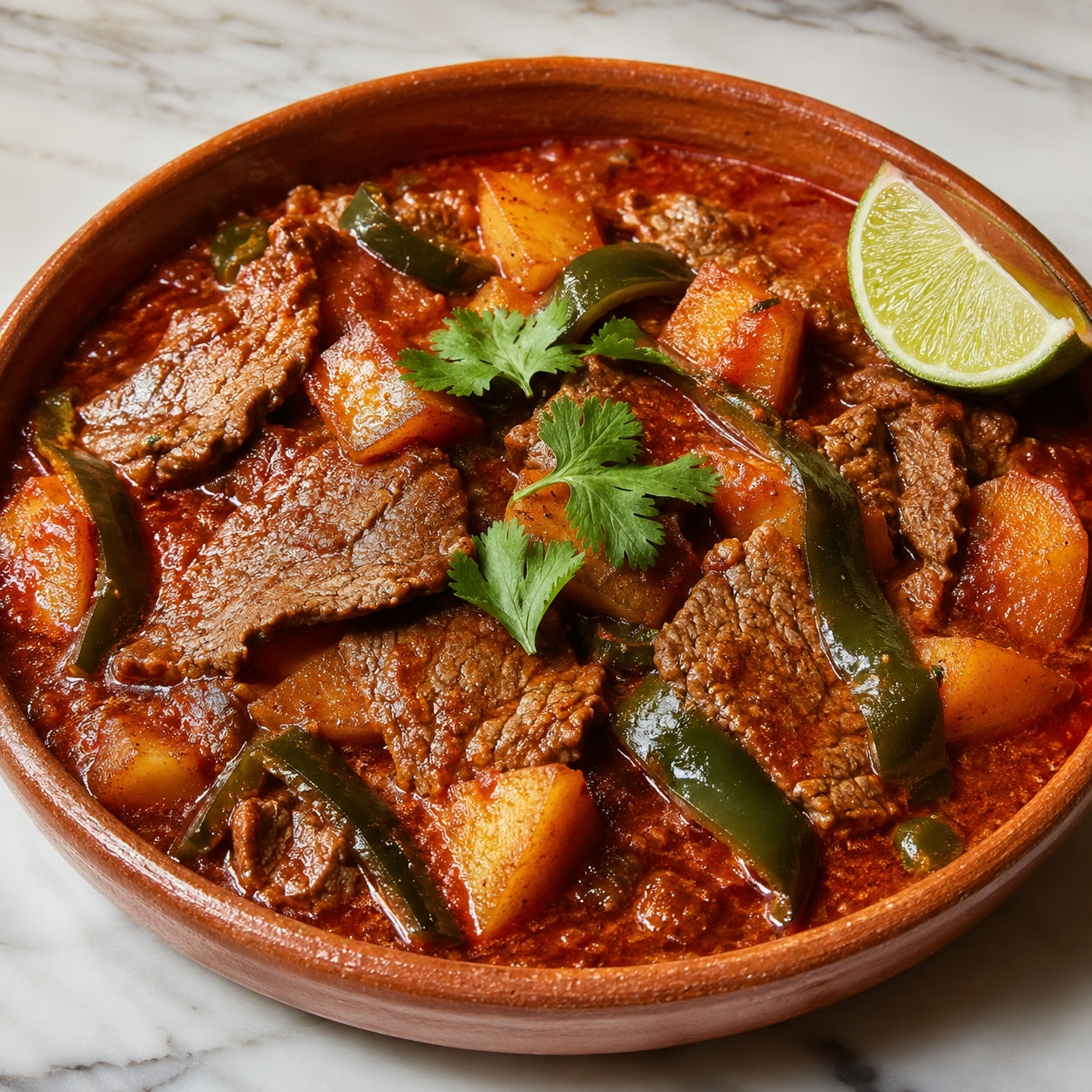
Bistec ranchero is one of those dishes that proves a short ingredient list can produce something genuinely bold. Thin-sliced beef. A charred tomato salsa. Potatoes that drink up every bit of that sauce. It is northern Mexican home cooking at its most honest, and it has earned its place on stovetops from Chihuahua to Chicago.
The thing people miss when they first make it is the char. Roasting the tomatoes, jalapeños, and onion directly on a dry, screaming-hot surface until they blister and soften is what makes the ranchero salsa taste like something real. That smokiness and the natural sweetness that charring pulls out of the vegetables is what separates a good bistec ranchero from a forgettable one. Give that step its full time and the rest follows naturally.
If you have never made it before, don't let the two-stage process put you off. The salsa takes about 15 minutes and the beef braises mostly unattended. You end up with a full, deeply savory dinner that feels far more involved than it actually was.
The Ingredients Behind the Flavor
You need good beef and ripe, real tomatoes. Everything else is pantry-level. Buy your beef from a Mexican butcher if you can because they slice it to the right thickness and know the cut. For the tomatoes, Roma or vine-ripened give you better char than watery beefsteak varieties.
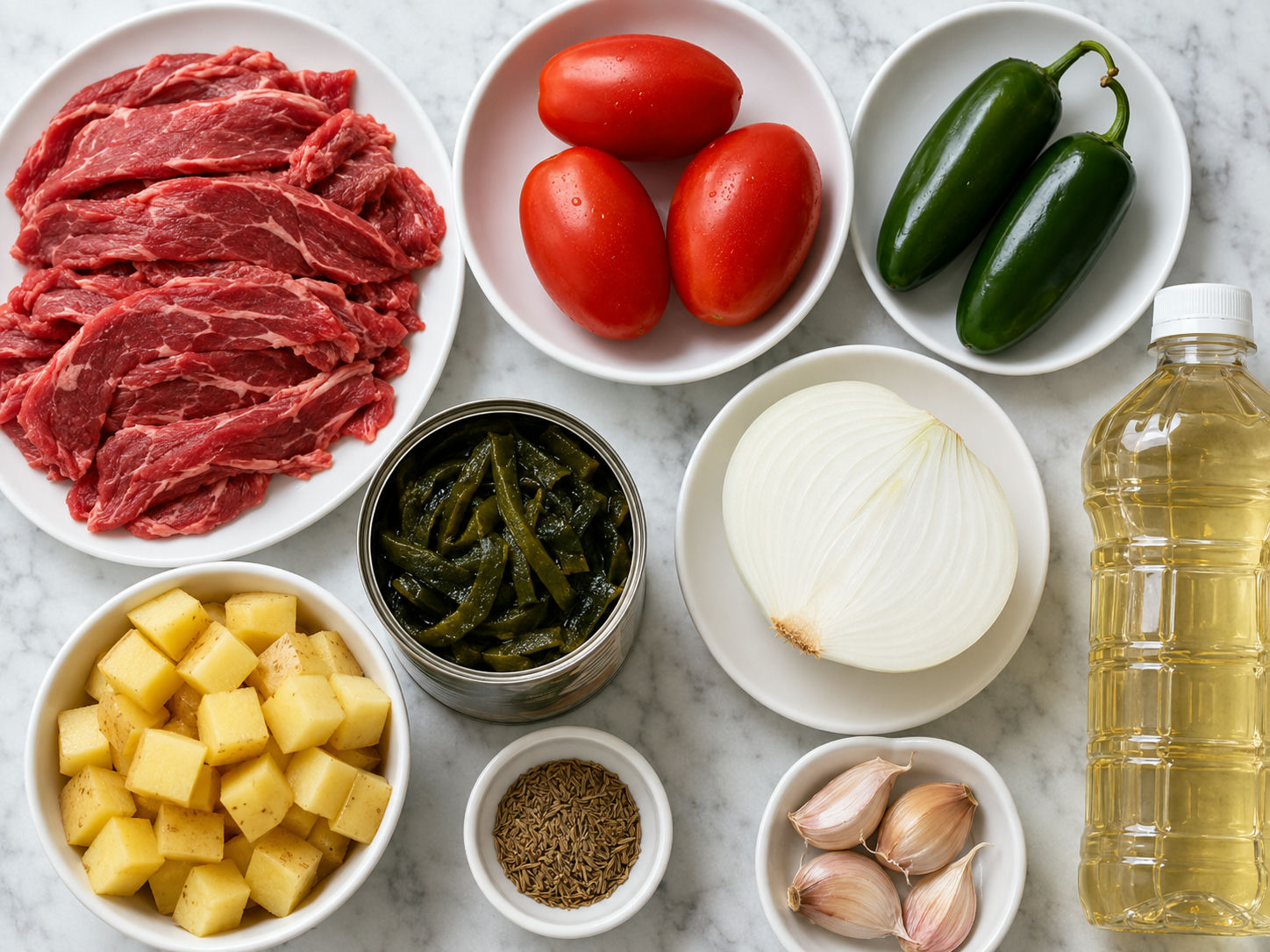
- Thinly sliced beef steak. The protein and soul of the dish. Sirloin, round, or skirt steak sliced to about 1/4 inch keeps things tender without an overly long braise.
- Roma tomatoes. The base of the ranchero salsa. Charring them brings out a smokiness and concentrated sweetness that raw tomatoes cannot match.
- Jalapeños. Two gives a moderate kick. They go on the comal right next to the tomatoes and char the same way.
- White onion. One large onion splits its duties: half goes into the salsa, half cooks with the beef and potatoes near the end.
- Garlic. Four cloves roasted unpeeled until soft give the salsa a mellow, rounded depth.
- Yukon Gold or Russet potatoes. Cut into 1-inch cubes, they cook through in about 10 minutes and absorb the sauce like a sponge.
- Canned roasted poblano peppers. A 7-oz can, drained and stirred in near the end. They are mild and add a roasted sweetness the salsa alone doesn't have.
- Ground cumin and garlic powder. For seasoning the beef before it hits the hot pan. Simple and effective.
- Olive oil. For searing. Neutral vegetable oil works just as well.
Building the Dish in Two Stages
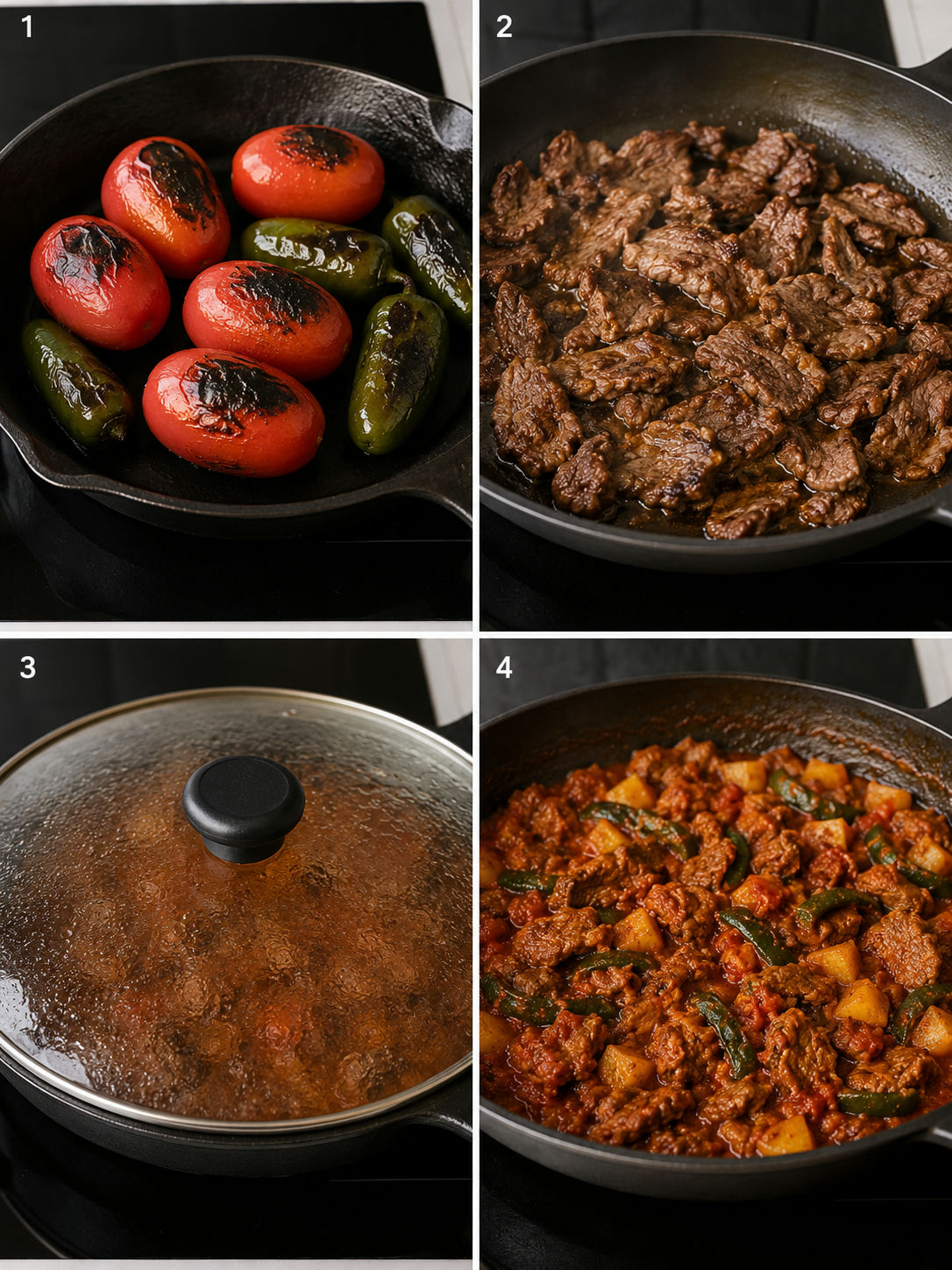
- Char the salsa vegetables. Set a dry comal or cast-iron skillet over high heat until it smokes. Add the whole tomatoes, halved jalapeños cut side down, the onion half cut side down, and the unpeeled garlic cloves. Char without moving for 4 to 5 minutes, then turn everything and char another 3 to 4 minutes. The skin should blister and blacken in spots and the vegetables should feel soft.
- Blend the ranchero salsa. Peel the garlic. Add it to a blender with the charred onion half, cumin, a pinch of salt, and 1/2 cup water. Blend for 1 minute, then add the charred tomatoes and jalapeños and pulse 2 to 3 times only. You want a coarse, rustic salsa with visible texture, not a smooth puree. Set aside.
- Season and sear the beef. Pat the beef slices very dry with paper towels. Season both sides with salt, garlic powder, cumin, and black pepper. Heat oil in a heavy skillet or Dutch oven over high heat until shimmering. Sear the beef in a single layer for about 1 minute per side until browned. Work in batches to avoid crowding the pan.
- Braise low and slow. Return all the beef to the pan, cover tightly, and reduce the heat to its lowest setting. Cook for 25 to 30 minutes until the beef is genuinely tender. If the pan looks dry after 15 minutes, add 2 to 3 tablespoons of water to create steam and continue cooking.
- Add the onion and potatoes. Push the beef to one side. Add the remaining diced onion and the potato cubes and stir over moderate heat for 2 minutes to coat them in the pan drippings.
- Pour in the salsa and finish. Add the ranchero salsa and enough water to just cover everything. Bring to a boil, stir in the drained canned poblano peppers, then cover and cook over medium-low heat for 10 to 12 minutes until the potatoes are fork-tender. Taste, adjust salt, and serve.
Why the Char Changes Everything
Dry-charring on a comal does something a saucepan of sautéed vegetables never will. The high, direct heat draws out natural sugars in the tomato skin and caramelizes them right at the surface. The jalapeño softens and loses most of its raw harshness while holding onto its heat. The onion chars at the cut face and turns genuinely sweet through the center.
When you blend those charred vegetables only briefly, all of that flavor locks into a sauce that smells and tastes nothing like generic salsa from a jar. Don't shortcut this step. If your comal or skillet isn't hot enough to actually blacken the skin in 4 to 5 minutes, wait longer before adding the vegetables. An under-charred salsa tastes thin and flat no matter how long the beef braises.
Choosing and Preparing the Beef
The cut matters more than most people think. Skirt steak gives you the most flavor thanks to the fat marbling and it slices beautifully thin. Round steak is leaner and more economical. Both work well here. Avoid anything pre-cut into stew cubes because those don't sear the same way and take longer to become tender.
If you're slicing your own beef rather than buying pre-cut bistec, freeze the piece for 20 minutes first. The partial freeze firms up the muscle fibers so you can cut 1/4-inch slices cleanly without the meat bunching under the knife. If you enjoy bold Mexican beef dishes, homemade picadillo is a great companion recipe that uses many of the same spices with ground beef and is just as satisfying on a weeknight.
Getting the Potato Timing Right
Potatoes go in late for a reason. Add them too early and they turn to mush before the beef and sauce have developed any real flavor. Ten to twelve minutes in a covered pan over medium-low heat is enough for one-inch cubes of Yukon Gold or Russet to cook through completely while soaking up every bit of that ranchero sauce.
Cut them uniform. Uneven pieces mean some will still be hard while others have dissolved into the sauce. If you want to save a few minutes, microwave the cubes for 3 minutes before adding them to the pan. They finish in 5 to 7 minutes at that point instead of the full 10 to 12, which helps on busy nights.
Swaps and Substitutions That Work
No canned poblanos on hand? Char a fresh poblano directly over a gas flame or under the broiler, let it steam in a covered bowl for 10 minutes, then peel, seed, and slice it. The flavor is genuinely better than canned. For heat-sensitive eaters, swap both jalapeños for a single Anaheim pepper with the seeds removed. It will be mild but still gives the salsa its character.
If you don't have a comal, a cast-iron skillet over the highest burner heat you have works just as well. Avoid thin stainless pans because they don't hold enough heat once the vegetables land and you'll end up steaming rather than charring. For more ideas on working with dried and fresh chiles in Mexican cooking, the approach behind these stacked red chile enchiladas is a useful companion to this recipe.
Storing and Reheating Leftovers
Bistec ranchero keeps well in the fridge for up to 3 days in an airtight container. The sauce thickens overnight as the potatoes absorb it. To reheat, add a small splash of water or chicken broth and warm gently over medium-low heat, stirring carefully so the potatoes hold their shape and don't break apart.
The USDA recommends reheating cooked beef to 165°F before serving again. See the USDA beef food safety guide for full storage and reheating guidelines. This dish also freezes well without the potatoes: freeze the beef and sauce for up to 2 months and add freshly cooked potatoes when you reheat it.

FAQs
- What cut of beef is best for bistec ranchero?
Thin-sliced sirloin, round steak, or skirt steak all work well. The target thickness is about 1/4 inch so the slices sear quickly and turn genuinely tender during the braise. Many Mexican grocery stores sell beef pre-sliced and labeled "bistec", that cut is exactly what you want. If you're slicing your own, freeze the piece for 20 minutes first so it firms up and cuts cleanly.
- Can I use canned tomatoes instead of fresh for the ranchero salsa?
You can, but you lose the charred flavor that makes ranchero sauce distinctive. If you go that route, use fire-roasted canned tomatoes (drained) and still char your jalapeños and onion on a dry skillet before blending. That char is the backbone of the sauce, so find it wherever you can.
- Can I make bistec ranchero ahead of time?
Yes, and it actually improves overnight. The beef and potatoes absorb more of the salsa as they sit and the flavors meld considerably. Make it up to two days ahead, store in an airtight container in the fridge, and reheat gently on the stove with a small splash of water or broth to loosen the sauce.
- How spicy is bistec ranchero, and can I adjust the heat?
With two jalapeños the heat is moderate but present. For a milder version, remove the seeds and membranes before charring, or swap one jalapeño for an Anaheim pepper. For more heat, add a serrano to the salsa alongside the jalapeños. The canned poblano peppers are mild and add roasted sweetness rather than burn.
- Can I leave out the potatoes?
Absolutely. Potatoes are traditional in many versions but not universal. Without them the braise is lighter and the sauce becomes the main focus. You can add sliced zucchini or chayote in the last 10 minutes for texture, or just serve the beef over rice and let the salsa be the side.
- What do I serve with bistec ranchero?
White rice and warm corn tortillas are the classic pairing. The rice soaks up the sauce and the tortillas double as scoops. Refried beans round out the meal nicely. For a fresh contrast, creamy Mexican street corn cups alongside the steak make the whole meal feel complete without much extra work.
- Can I make bistec ranchero in a slow cooker?
You can braise the beef in a slow cooker, but still sear it first on the stovetop and make the ranchero salsa on the comal beforehand. Cook on low for 4 to 5 hours and add the potatoes for the last 2 hours so they don't turn to mush. The flavor will be there. You just miss some of the caramelization you get from stovetop control.
- Is bistec ranchero gluten-free?
The dish itself contains no gluten. Every main ingredient is naturally gluten-free: beef, tomatoes, peppers, potatoes, onion, garlic, oil, and the spices used are all safe. Just check the label on any canned chiles you buy since a few brands add modified starch thickeners. Serve with corn tortillas instead of flour tortillas to keep the whole meal gluten-free.
