 Pin it
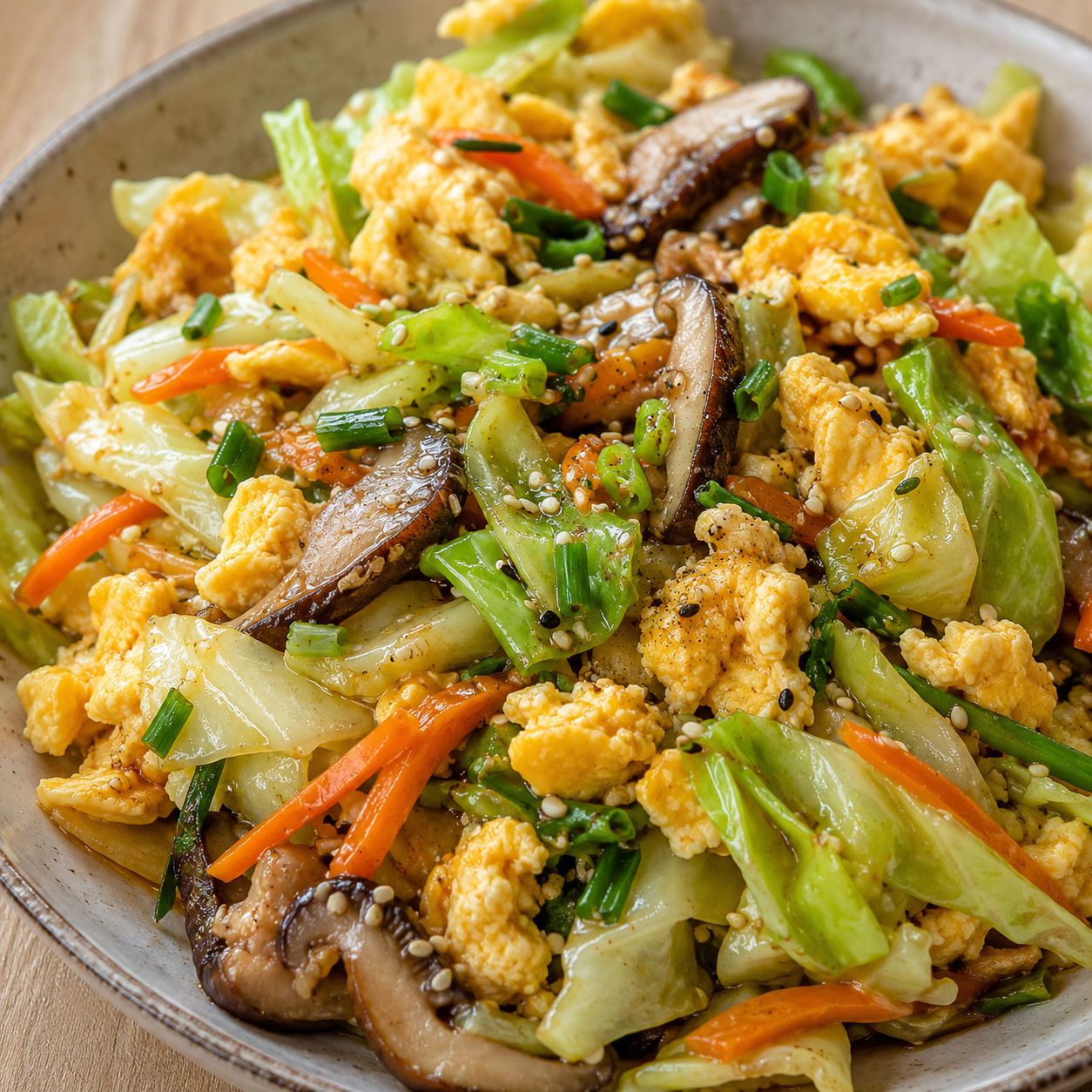
Easy Asian Cabbage Stir Fry with Eggs is what I cook when the fridge looks bare but I still want dinner to feel fresh. A half head of cabbage turns sweet at the edges, eggs make it filling, and the sauce is only a few pantry splashes.
The trick is order. Scramble the eggs first, cook the vegetables quickly in the hot pan, then bring the eggs back at the end so they stay soft instead of rubbery.
Cabbage, eggs, and sauce
Use firm green cabbage with crisp leaves and eggs that are fresh enough to scramble into soft curds. Mushrooms add savory depth, while scallions, ginger, garlic, tamari, rice vinegar, and sesame oil make the pan smell like dinner in minutes.
- Green cabbage. The main vegetable, sliced thin so it softens quickly while keeping a little crunch.
- Eggs. Add protein and soft texture that catches the sauce.
- Mushrooms. Bring a savory, meaty bite without adding meat.
- Carrot. Adds sweetness, color, and a little snap.
- Scallions. Cooked whites flavor the oil, while the greens finish the dish fresh.
- Garlic and ginger. Build the warm, sharp base that makes the stir fry taste lively.
- Tamari. Seasons the pan with salty depth and keeps the recipe gluten-free when certified.
- Rice vinegar. Brightens the cabbage and balances the eggs.
- Toasted sesame oil. Goes in at the end so its nutty aroma stays clear.
Fast wok-to-plate cooking
- Whisk the eggs. Beat the eggs with a pinch of salt until the whites disappear. This helps them cook into tender curds.
- Scramble and remove. Cook the eggs in a hot skillet with a little oil until softly set, then slide them onto a plate.
- Start the aromatics. Add more oil, then cook scallion whites, garlic, and ginger just until fragrant. Keep them moving so the garlic does not brown.
- Stir fry the vegetables. Add mushrooms, carrot, and cabbage. Cook over high heat until the cabbage wilts at the edges but still has bite.
- Sauce the pan. Stir in tamari and rice vinegar. Toss hard so the cabbage is coated and the pan smells savory.
- Finish with eggs. Fold the eggs back in with sesame oil and scallion greens. Taste before adding more salt.
Easy Asian Cabbage Stir Fry with Eggs
The best version of this dish tastes cooked, not boiled. That means heat matters. Cabbage carries a lot of water, so use the widest skillet you own and let it get properly hot before the vegetables go in.
Once the cabbage hits the pan, stir often but not nonstop. A few quiet seconds against the metal gives the edges color. That little bit of browning is where the sweet cabbage flavor comes from. If you want a meatier version next time, the same cabbage-first rhythm works in Chicken Cabbage Stir-Fry.
Keep the eggs tender
Eggs are easy to overcook in a stir fry because the pan stays hot even after the burner is off. Pull them out while they still look slightly soft. They should be fluffy pieces, not dry crumbles.
This is the same reason the eggs go back in last. You only need to warm them and coat them in sauce. For another egg-forward idea with a bolder finish, try Spicy Chili Garlic Eggs. For food safety, the FDA has a helpful egg safety guide covering storage and cooking basics.
Sauce swaps that behave
Tamari keeps this gluten-free, but regular soy sauce is fine if that is what you have. Coconut aminos make the stir fry sweeter, so add a little more vinegar. If you like a glossy takeout-style finish, spoon in a tablespoon of All-Purpose Stir Fry Sauce during the last minute.
Chili crisp, sriracha, or a pinch of red pepper flakes can bring heat. Add them at the table if you are feeding kids or anyone who likes it mild.
Serving it without fuss
This stir fry is good straight from the skillet, but it also loves a bowl of steamed jasmine rice. For a lighter plate, serve it with cucumber salad or spoon it over cauliflower rice. If you are building a bigger dinner, pair it with Quick Asian Cabbage Stir Fry or a simple miso soup.
Stir frying moves quickly, so have everything sliced and measured before the pan heats. Serious Eats has a useful overview of basic stir-fry technique if you want to sharpen the heat and timing side of the method.
Leftovers and reheating
Store leftovers in an airtight container in the refrigerator for up to 3 days. Reheat in a skillet over medium heat with a teaspoon of water to loosen the sauce. The microwave works for lunch, but use short bursts so the eggs do not toughen.
I do not freeze this one. Cabbage softens too much after thawing, and the eggs lose their pleasant texture. Prep the sliced vegetables ahead instead, then cook the stir fry fresh in about 12 minutes.
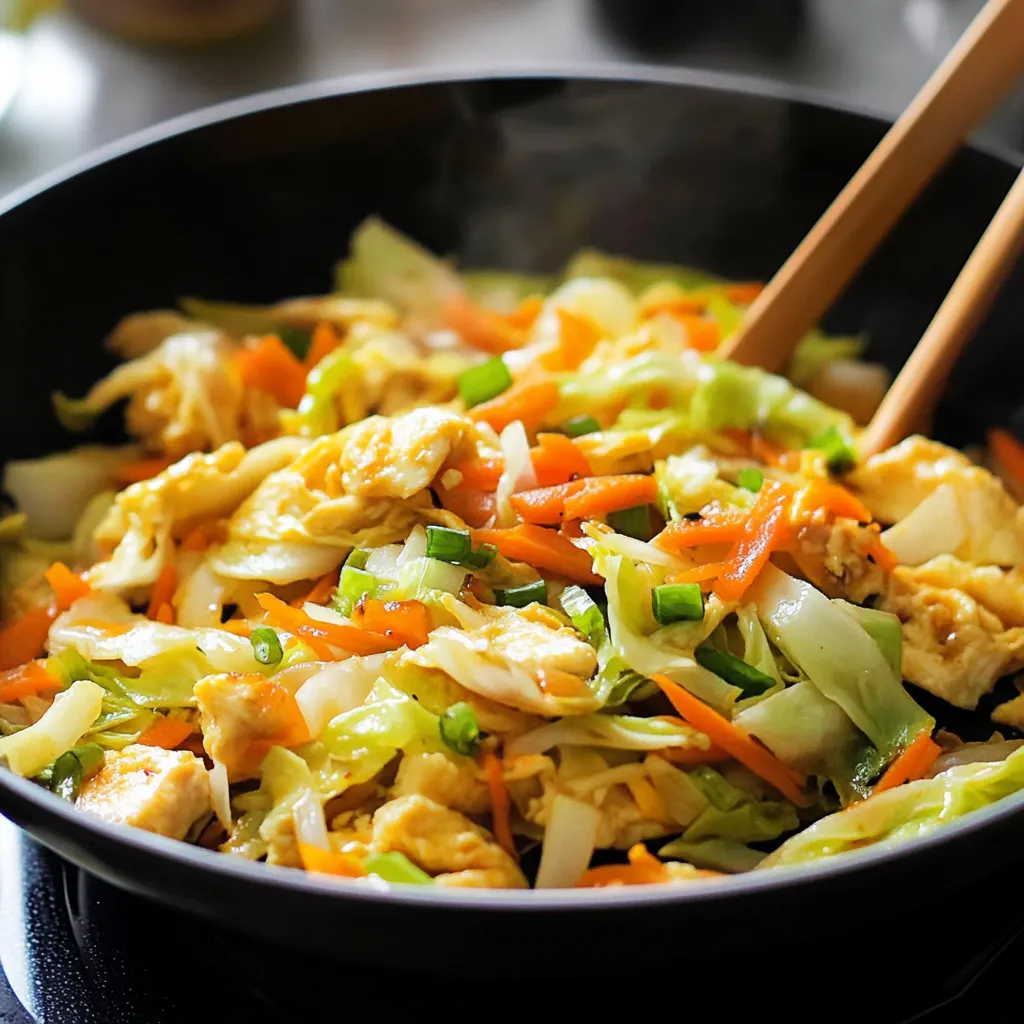
Summary
This quick cabbage and egg stir fry is best served hot from the pan with rice, noodles, or a spoonful of chili crisp on top.
FAQs
- Can I use napa cabbage instead of green cabbage?
Yes. Napa cabbage works well, but it cooks faster and releases more moisture. Add it after the mushrooms soften and stir fry for only 2-3 minutes so the leaves do not collapse.
- How do I keep the eggs fluffy?
Cook the eggs first over medium heat and stop while they still look slightly glossy. They finish warming through when you add them back to the pan, so fully cooking them at the start can make them firm.
- Can I make this cabbage stir fry ahead?
You can slice the cabbage, mushrooms, scallions, garlic, and ginger up to a day ahead. The finished stir fry is best fresh, but leftovers keep for 3 days in the refrigerator.
- What can I use instead of tamari?
Low-sodium soy sauce works if gluten is not a concern. Coconut aminos also work, though they taste a little sweeter, so you may want an extra splash of rice vinegar.
- Is this stir fry a main dish or a side dish?
It can be either. With four eggs, it is filling enough for a light meal, especially over rice. As a side, serve smaller portions with another stir fry or grilled protein.
- Why did my cabbage turn watery?
The pan was likely crowded or not hot enough. Use a large skillet or wok, keep the heat high once the cabbage goes in, and let the cabbage sit for short bursts so the edges sear instead of steam.
