 Pin it
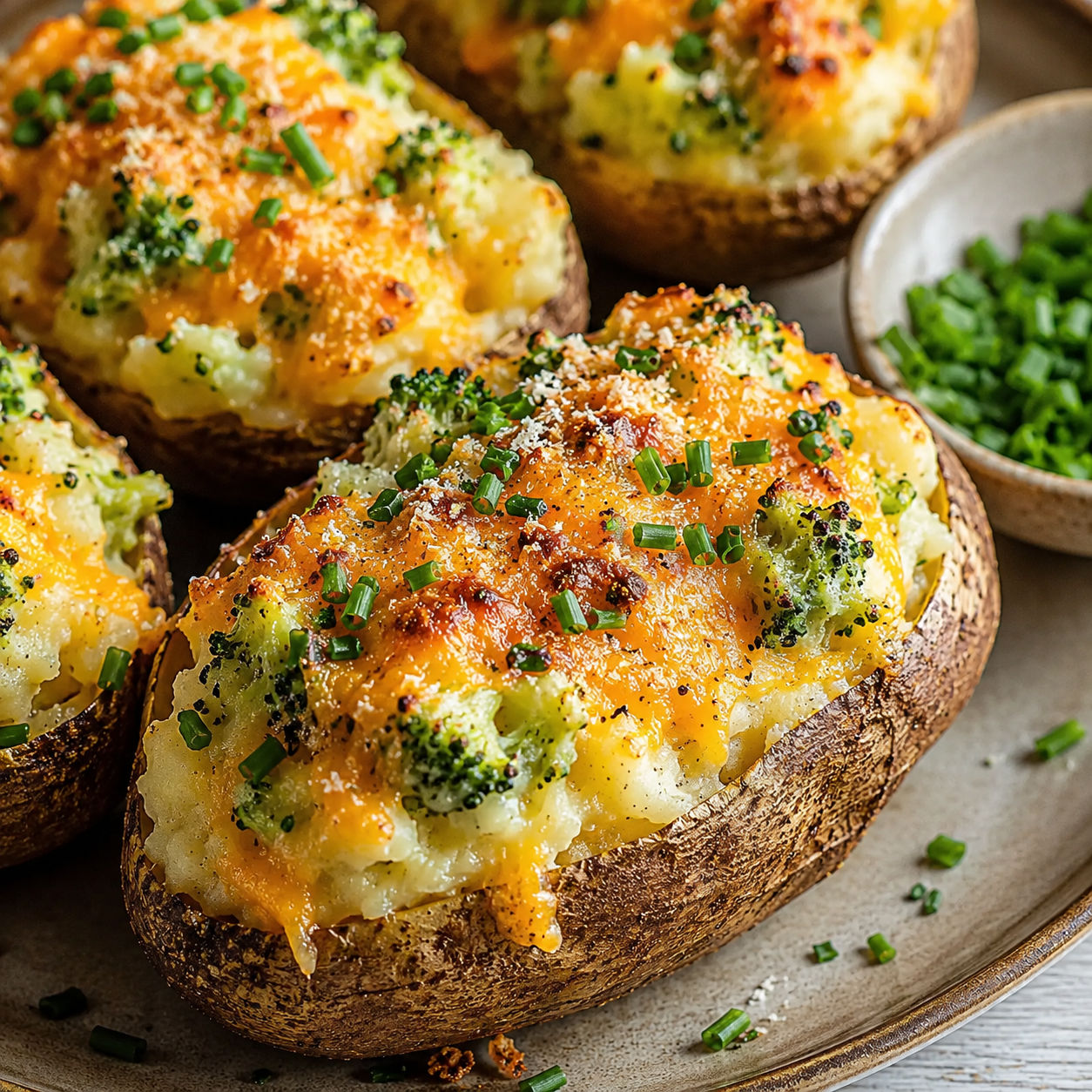
Twice-Baked Potatoes with Cheddar and Broccoli are what I make when I want baked potatoes to feel like the whole point of dinner. The skins get crisp, the centers turn fluffy and creamy, and the broccoli keeps the cheese from feeling too heavy.
The best version starts with russet potatoes because their thick skins hold up after scooping. I like roasting the broccoli instead of boiling it. You get little browned edges and less water in the filling.
Twice-Baked Potatoes With Cheddar And Broccoli
Look for large russet potatoes with firm skins and no green spots. A block of sharp cheddar is worth grating by hand because it melts into the hot potato instead of sitting stiff and waxy.
Cut the broccoli small so every bite gets some green. If the florets are too big, they make the filling lumpy and harder to spoon back into the shells.
- Russet potatoes. Their fluffy centers mash easily and their sturdy skins survive the second bake.
- Broccoli florets. They add color, texture, and a mild green bite that balances the cheese.
- Sharp cheddar. It brings the main cheese flavor and melts into a golden top.
- Sour cream. It makes the filling creamy with a light tang.
- Butter. It softens the potato and gives the filling a richer taste.
- Whole milk. It loosens the mash so it stays fluffy instead of dense.
- Garlic. A small amount makes the filling savory without taking over.
- Dijon mustard. It sharpens the cheese flavor in the background.
- Parmesan. It adds salty depth and helps the top brown.
- Chives. They finish the potatoes with a fresh oniony lift.
The Second Bake Matters
- Bake the potatoes. Rub the potatoes with oil and salt, prick them with a fork, and bake until a knife slides into the center without resistance.
- Roast the broccoli. Toss tiny florets with oil, salt, and pepper, then roast beside the potatoes near the end so they brown a little.
- Scoop the shells. Halve the potatoes lengthwise and scoop the centers into a bowl, leaving a sturdy border so the skins do not collapse.
- Mash the filling. Mash the hot potato with butter, sour cream, milk, garlic, Dijon, cheddar, Parmesan, and chopped broccoli until creamy but not gluey.
- Fill and top. Spoon the mixture back into the shells and mound it slightly. Sprinkle with more cheddar.
- Bake again. Return the filled potatoes to the oven until hot through, puffed at the edges, and bubbling on top.
Keep The Potato Shells Strong
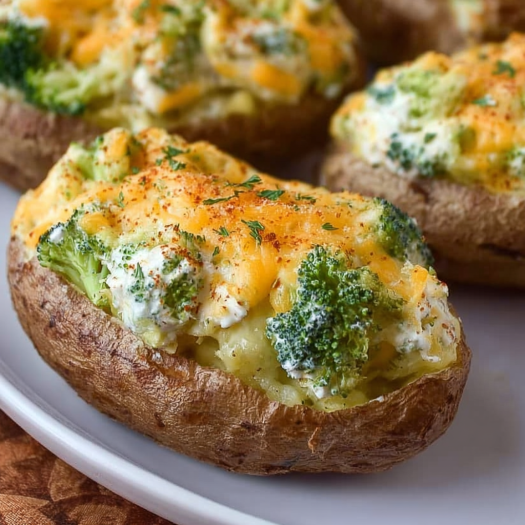
The shell is the part that makes a twice-baked potato feel tidy instead of messy. Do not scrape it paper-thin. Leave a small layer of potato attached to the skin so each half can hold the filling and lift cleanly from the pan.
Hot potatoes are easier to mash, but they are harder to handle. I split the difference by resting them for 10 minutes, then scooping with a towel in my hand. If you like a thicker potato skin, try the same sturdy approach in Air Fryer Twice Baked Potatoes.
Why Roasted Broccoli Works
Steamed broccoli is fine, but roasted broccoli tastes better here because it brings drier edges and a deeper flavor. Moisture is the enemy of a good stuffed potato. Too much water turns the filling loose and dulls the cheddar.
Cut the florets smaller than you think. They should tuck into the potato rather than sit on top like a side vegetable. I picked up the sheet-pan broccoli idea while comparing versions like this broccoli cheddar twice-baked potato recipe, then kept the method simple for home cooking.
Make Ahead Without Drying Out
These potatoes handle make-ahead cooking well. Fill the shells, cool them, and refrigerate in a covered dish for up to 2 days. Add the final cheddar right before baking. Cold potatoes need extra time in the oven, usually 25-30 minutes at 375°F.
Leftovers keep in the refrigerator for 3-4 days. The USDA has a helpful leftovers and food safety guide if you want storage timing. Reheat covered at first, then uncover for the last few minutes so the cheese wakes up again.
Easy Swaps For Dinner
You can push these toward dinner without changing the base. Stir in chopped cooked chicken, crisp bacon, or diced ham if you want more protein. For a vegetarian plate, keep the filling as written and serve it with a bright salad or roasted vegetables.
Cheese swaps are easy too. Use white cheddar for a sharper bite, Monterey Jack for a softer melt, or smoked Gouda for a deeper flavor. If you want another broccoli-cheddar side for snacking, Crispy Baked Broccoli Cheese Balls use the same comfort-food flavors in a smaller bite.
What To Serve Beside Them
These potatoes are rich, so they like something crisp or saucy nearby. Roast chicken, steak bites, salmon, or a bowl of soup all work. For another potato side on the same table, Roasted Potatoes with Baked Feta and Garlic gives you a saltier, garlicky option.
If you are serving a holiday meal, plan one half potato per person as a side. For a casual meatless dinner, two halves per person feels right. Add extra chives at the end so the plate tastes fresh, not just cheesy.
Summary
These broccoli cheddar twice-baked potatoes are creamy, sturdy, and easy to prep ahead. Serve them with roast chicken, steak, soup, or a simple salad.
FAQs
- Can I make twice-baked potatoes with cheddar and broccoli ahead of time?
Yes. Bake, scoop, mix, and fill the potato shells up to 2 days ahead. Cover and refrigerate them, then add the final cheese topping right before baking so it melts cleanly.
- Can I use frozen broccoli?
Frozen broccoli works if you thaw it and squeeze out extra moisture first. Chop it small and add it to the filling. It will be softer than roasted fresh broccoli, but it still tastes good with the cheddar.
- How do I keep the potato skins from tearing?
Let the potatoes cool for about 10 minutes before scooping. Leave a 1/4-inch wall of potato inside each shell and use a spoon with a gentle edge. If one tears, patch it with a little filling before the second bake.
- What cheese melts best in these potatoes?
Sharp cheddar gives the strongest flavor and melts well when shredded from a block. Monterey Jack, Colby, or Gruyere also work. Avoid very dry pre-shredded cheese if you want the smoothest filling.
- Are these potatoes gluten free?
The recipe is naturally gluten free as written. Check the labels on sour cream, mustard, and shredded cheese if you are cooking for someone with celiac disease, since packaged foods can vary.
- What should I serve with broccoli cheddar twice-baked potatoes?
They are rich enough to serve with a simple main like grilled chicken, salmon, or steak. For a meatless meal, add a crisp green salad or tomato soup to balance the creamy potato filling.
