 Pin it
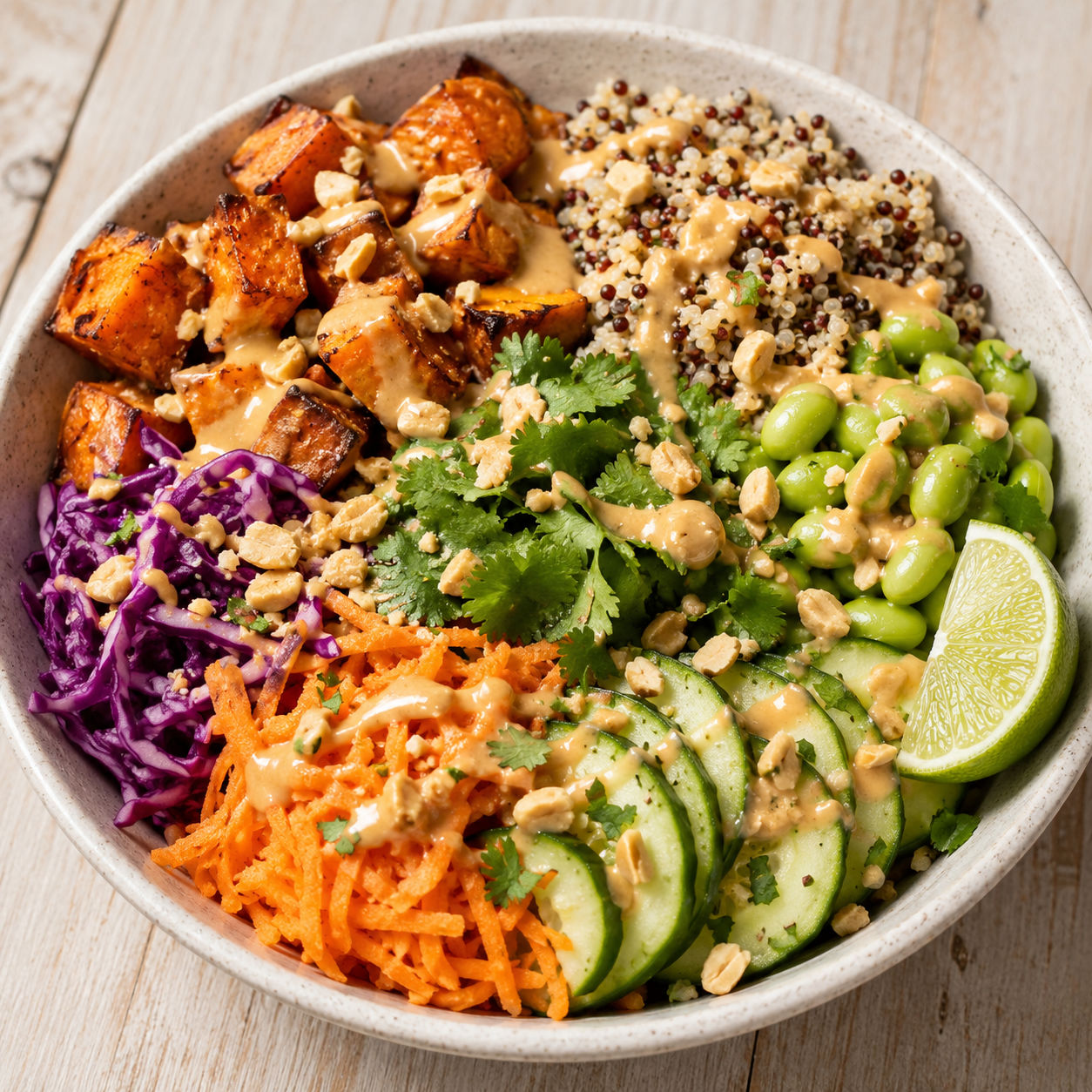
A Thai Peanut Sweet Potato Buddha Bowl is the kind of dinner that feels calm but still has plenty going on. You get caramelized sweet potato edges, cool cucumber, crisp cabbage, chewy quinoa, and a peanut sauce that pulls the whole bowl together.
The sauce matters most. It should be creamy, salty, tangy, and just sweet enough to flatter the roasted potatoes. If it looks too thick at first, do not worry. A spoonful or two of warm water turns it glossy.
Thai Peanut Bowl Building Blocks
Choose firm sweet potatoes with smooth skins and use a natural peanut butter that tastes good on its own. The vegetables should stay crisp, so slice them close to serving if you like a snappy bowl.
- Sweet potatoes. They roast into tender cubes with browned edges and a natural sweetness that loves peanut sauce.
- Quinoa. The grain base adds protein and a light, nutty chew.
- Edamame. A quick plant protein that makes the bowl more filling.
- Red cabbage. Thin shreds bring crunch and a sharp bite against the creamy sauce.
- Carrots. They add sweetness, color, and a fresh crisp texture.
- Cucumber. Cool slices keep each bite from feeling too rich.
- Peanut butter. The body of the sauce. Use creamy peanut butter for the smoothest finish.
- Lime juice. It brightens the peanut sauce and balances the roasted sweet potatoes.
- Tamari. A salty gluten-free seasoning that deepens the sauce.
- Ginger and garlic. Fresh aromatics make the sauce taste lively instead of flat.
- Cilantro and peanuts. A fresh, crunchy finish for the top of each bowl.
Roast, Whisk, Build
- Roast the sweet potatoes. Toss the cubes with oil, salt, pepper, and paprika, then roast until the edges brown and the centers are tender.
- Cook the quinoa. Simmer it until the grains open and look fluffy, then let it rest covered so it finishes steaming.
- Whisk the sauce. Stir peanut butter, coconut milk, lime, tamari, maple, vinegar, ginger, garlic, and sriracha until smooth. Thin it with warm water until pourable.
- Prep the vegetables. Shred the cabbage, cut the cucumber, grate the carrots, and warm the edamame.
- Assemble the bowls. Spoon quinoa into each bowl, add roasted sweet potatoes and vegetables, drizzle with sauce, and finish with cilantro, peanuts, and lime.
Roast For Brown Edges
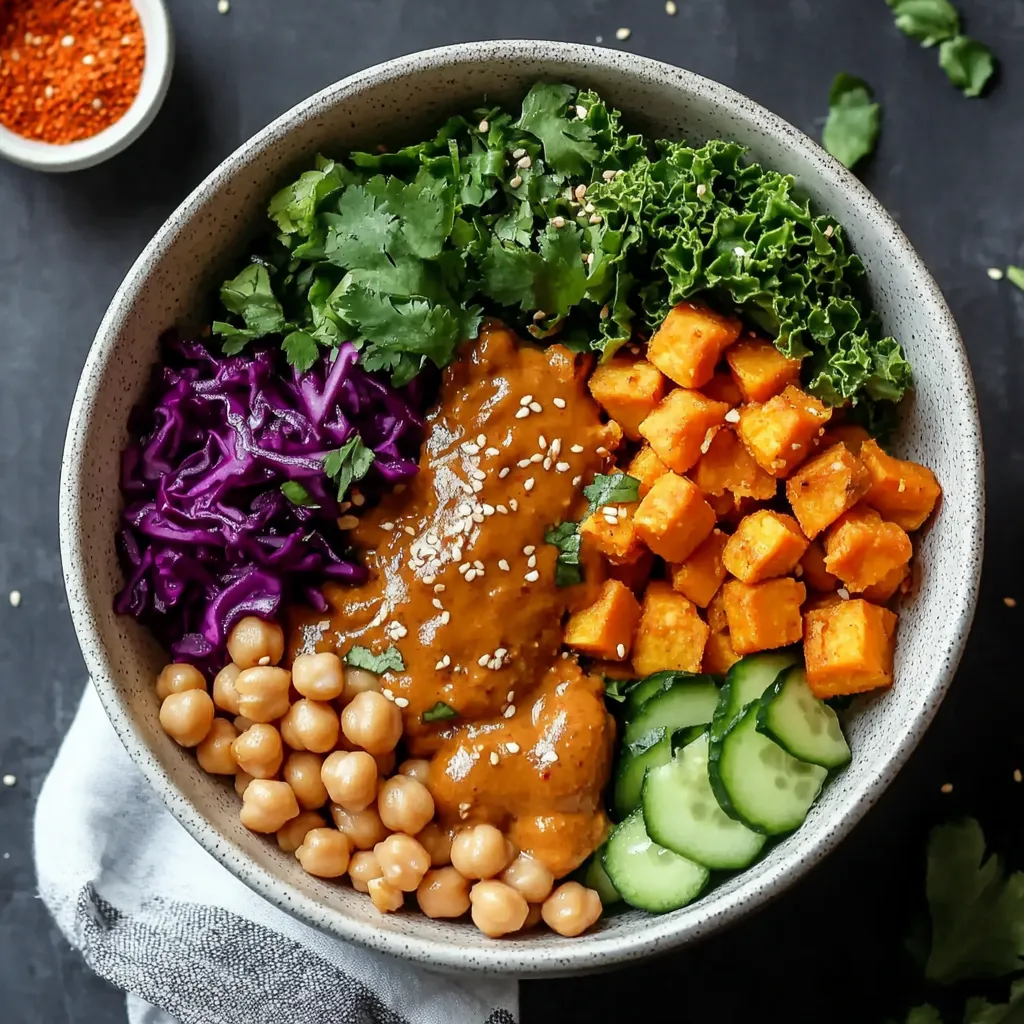
The sweet potatoes need space. If the cubes touch too much, they steam and soften before they can brown. Use a large sheet pan and turn the pieces once halfway through roasting. The browned sides give the bowl its deeper flavor.
A little smoked paprika is not traditional Thai cooking, but it works here because it adds warmth without taking over. If you want the bowl to taste closer to the peanut sauce, use plain salt and pepper instead. For another meatless sweet potato dinner with a different flavor path, try the Sweet Potato Taco Bowl.
Make The Sauce Silky
Peanut sauce can look broken when you first start whisking. Keep going. The lime and tamari loosen the peanut butter, then coconut milk rounds it out. Warm water is the final adjustment, and it should go in slowly. Stop when the sauce ribbons off the spoon.
Taste the sauce before it touches the bowl. Add lime if it tastes heavy. Add tamari if it tastes dull. Add maple syrup only if the peanut butter is very salty. If peanut sauces are your thing, the Spicy Peanut Chili Oil Noodles lean richer and hotter.
Smart Swaps
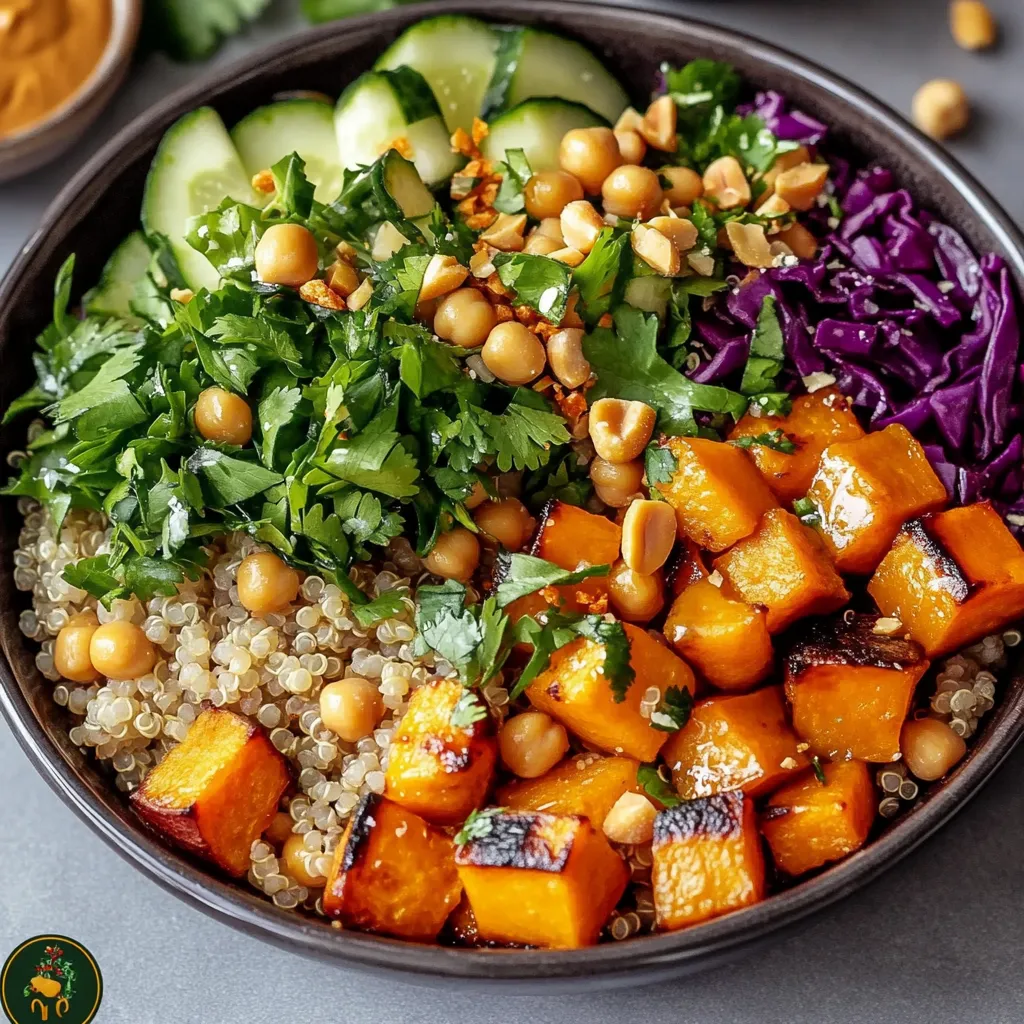
This bowl is forgiving. Brown rice gives it a softer, cozy base. Chickpeas can replace edamame if that is what you have. Almond butter works in the sauce, though it tastes less classic. Sunflower seed butter is a good peanut-free option, but you may need more lime to brighten it.
For more sweet potato bowl ideas, the Miso Tahini Sweet Potato Bowl uses a deeper savory dressing. Sweet potatoes also bring fiber and vitamin A, which the Harvard Nutrition Source sweet potato guide explains in more detail.
Meal Prep Without Soggy Bowls
Store the quinoa, roasted sweet potatoes, vegetables, and sauce in separate containers when you can. The sweet potatoes keep their shape better, and the cucumber stays crisp. The sauce thickens in the fridge, so stir in a splash of warm water before serving.
Cooked grains and roasted vegetables are best used within 3 to 4 days. The USDA has a useful leftovers and food safety guide if you meal prep often. For a similar peanut profile with chicken, see Easy Slow Cooker Thai Peanut Chicken.
Summary
Serve these bowls warm or at room temperature with extra lime and peanuts. They hold well for lunches if you store the sauce separately.
FAQs
- Can I make this Thai Peanut Sweet Potato Buddha Bowl ahead?
Yes. Roast the sweet potatoes, cook the quinoa, and whisk the sauce up to 4 days ahead. Keep the cucumber and herbs separate if you want the freshest texture.
- What can I use instead of quinoa?
Brown rice, jasmine rice, farro, or cauliflower rice all work. Use cauliflower rice only if you want a lighter bowl, since it will not be as filling as quinoa or rice.
- Can I make the peanut sauce without coconut milk?
Yes. Use warm water for a lighter sauce, or use unsweetened oat milk for a creamier texture. Add the liquid slowly so the sauce stays smooth and does not become thin.
- How spicy is this bowl?
As written, it is mild with a little warmth from sriracha. Add more sriracha, chili-garlic sauce, or red pepper flakes if you want heat. Leave it out for a family-friendly bowl.
- Is this recipe gluten-free?
It is gluten-free if you use tamari instead of regular soy sauce and check the label on your sriracha or chili sauce. Quinoa, sweet potatoes, vegetables, and peanuts are naturally gluten-free.
- How do I keep the sweet potatoes from getting mushy?
Cut them into even 1-inch cubes and spread them out on the pan. Crowding traps steam, so use two pans if needed. Roast until the cut sides have browned edges.
