 Pin it
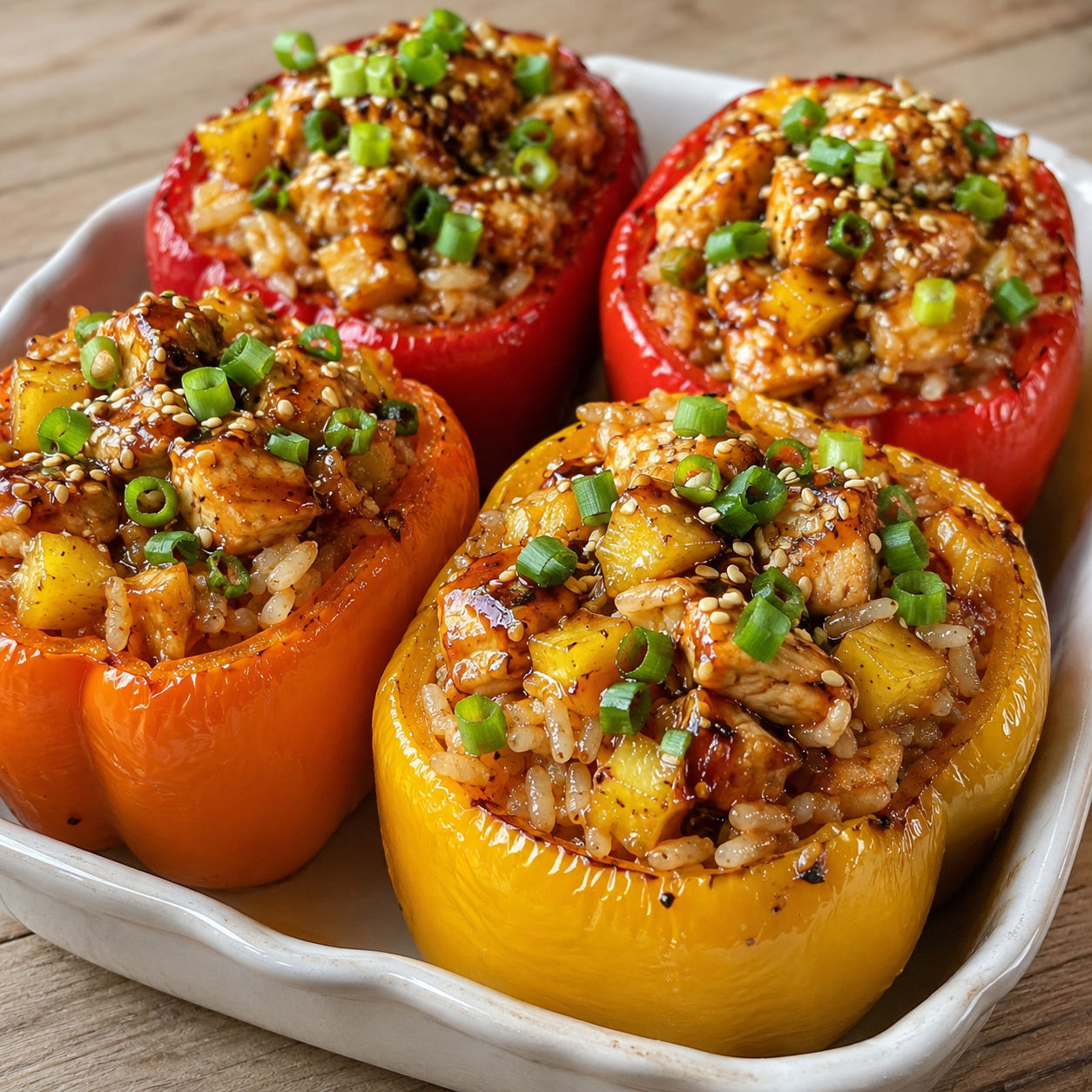
Teriyaki Pineapple Chicken with Rice Stuffed Bell Peppers is the kind of dinner that looks more involved than it really is. You get saucy chicken, sweet pineapple, fluffy rice, and roasted peppers in one tidy meal.
I like this version because the peppers are pre-baked just long enough to soften. The filling is cooked before it goes in, so the final bake is about melding everything together instead of hoping raw chicken and peppers finish at the same time.
Saucy Pepper Filling Basics
The filling leans on cooked rice, tender chicken, and pineapple that has been simmered with teriyaki sauce until shiny. Use firm bell peppers with flat bottoms if you want them to stand neatly in the baking dish.
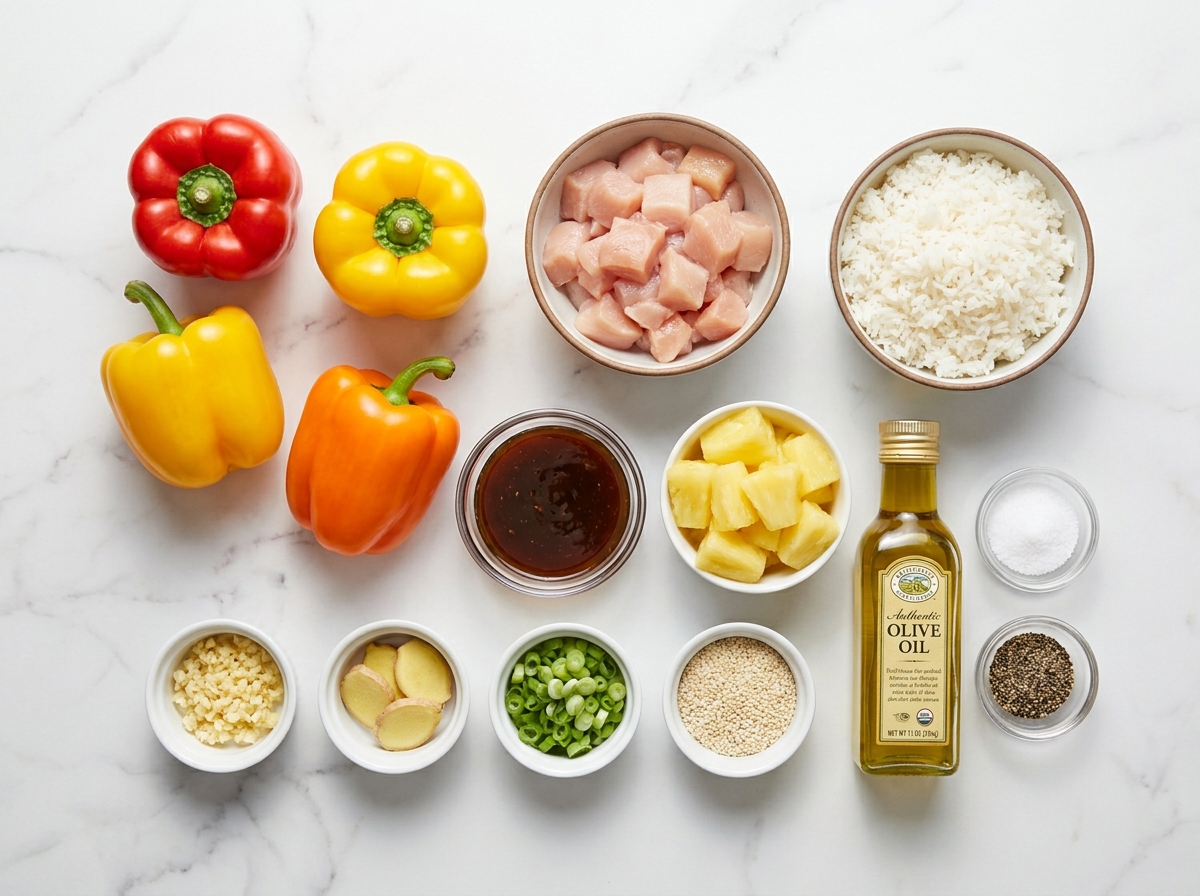
- Bell peppers. They turn sweet in the oven and hold the chicken and rice filling like edible bowls.
- Chicken thighs or breast. Thighs stay a little juicier, while breast keeps the dish lean and clean-tasting.
- Cooked rice. It gives the filling body and soaks up the teriyaki pineapple sauce.
- Pineapple chunks. They add sweetness and a little tang that keeps the sauce from tasting flat.
- Teriyaki sauce. The main seasoning, salty-sweet and glossy once it simmers with the chicken.
- Garlic and ginger. They make the filling taste fresh instead of bottled.
- Green onions. They add a sharp, clean finish after baking.
- Sesame seeds. A small garnish that gives the tops a nutty bite.
Teriyaki Pineapple Chicken Stuffed Peppers
- Soften the peppers. Cut off the tops, remove the seeds, and bake the empty peppers for 10 minutes so they start tenderizing before they are filled.
- Brown the chicken. Cook diced chicken in a hot skillet with a little oil, salt, and pepper until the edges take on color.
- Make it glossy. Stir in garlic, ginger, pineapple, and teriyaki sauce. Simmer for a few minutes until the sauce clings to the chicken.
- Fold in the rice. Add cooked rice and part of the green onions. Stir gently so the rice gets coated but does not turn mushy.
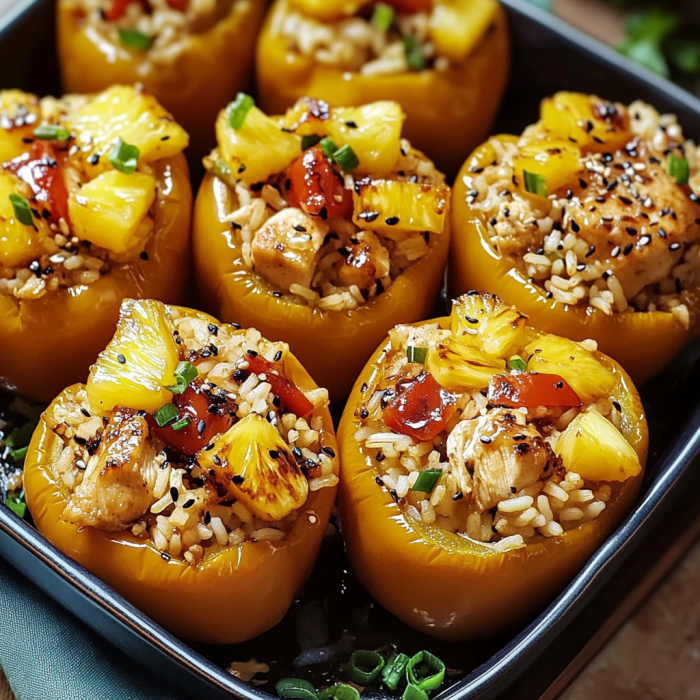
- Fill and bake. Spoon the mixture into the peppers, cover the dish, and bake until the peppers are tender. Finish uncovered for a few minutes if you want the tops less steamy.
Why Pre-Baking Matters
Raw bell peppers take longer to soften than the cooked filling needs to heat through. A short pre-bake fixes that. The peppers relax, lose a little moisture, and become sweet without splitting apart. If you skip this step, the filling can dry out before the pepper walls taste done.
This same idea is useful for other stuffed pepper dinners, including Classic Stuffed Bell Peppers with Italian Sausage and Rice. Give the vegetable a head start, then let the filling finish gently.
Getting The Sauce Right
Teriyaki sauce thickens fast when it hits a hot pan, especially with the natural sugar from pineapple. Keep the heat at medium after the chicken browns. You want a shiny coating, not a sticky layer burning on the skillet. If the pan looks dry before the rice goes in, add one or two tablespoons of pineapple juice or water.
For a close cousin with the same sweet-savory profile, try Teriyaki Pineapple Chicken Peppers. This stuffed version is heartier because the rice is baked right into the peppers.
Chicken Safety And Texture
Dice the chicken small enough to cook quickly, about 1/2 inch pieces. That size browns well and fits neatly inside the peppers. FoodSafety.gov lists 165 F as the safe minimum internal temperature for poultry, which is a good number to remember when checking larger pieces. See the safe minimum temperature chart if you want a quick reference.
Easy Swaps That Fit
Brown rice works well if you like a chewier filling. Jasmine rice gives a softer, more fragrant bite. For extra vegetables, stir in finely diced carrots, peas, or chopped broccoli after the chicken cooks. If you want heat, add chili garlic sauce or crushed red pepper with the teriyaki sauce.
You can also turn the same flavor idea into a bowl by borrowing from Delicious Pineapple Chicken And Rice, or go grilled with Hawaiian Chicken Pineapple Kebabs when the weather is good.
Storing Without Soggy Peppers
Leftovers keep in the fridge for up to four days in an airtight container. For the best texture, reheat covered in the oven until hot, then uncover for the last few minutes. The microwave works for lunch, but use medium power and pause once to rotate the pepper.
For freezer meals, bake the peppers first and cool them completely. Wrap each one tightly and freeze for up to two months. Thaw overnight in the fridge before reheating so the pepper warms evenly.
Summary
These stuffed peppers are sweet, savory, and practical for weeknights. Use cooked rice, simmer the filling until glossy, and bake until the peppers are tender.
FAQs
- Can I use leftover rice for stuffed peppers?
Yes. Leftover chilled rice works especially well because it holds its shape when mixed with the saucy chicken. Break up any clumps before adding it to the skillet.
- Can I make these teriyaki pineapple chicken peppers ahead?
You can cook the filling and pre-bake the peppers up to a day ahead. Store them separately, then fill and bake when you are ready to eat.
- What can I use instead of pineapple?
Mango chunks or mandarin orange segments give a similar sweet note. If you want less sweetness, use diced zucchini or carrots and add a small splash of rice vinegar to brighten the sauce.
- Do I need to cook the chicken before stuffing the peppers?
Yes, cook the chicken first for better texture and safer timing. The oven step is mainly for tenderizing the peppers and letting the filling settle together.
- Can I make this gluten-free?
Use a certified gluten-free teriyaki sauce or a tamari-based sauce. Regular teriyaki sauce often contains wheat, so check the label before cooking.
- How should I reheat leftovers?
Cover the peppers and reheat in a 350 F oven until hot in the center, about 15-20 minutes. For a faster lunch, microwave one pepper loosely covered and add a spoonful of water to keep the rice moist.
